Are you going to decorate your car for the World Cup? See what could result in a fine
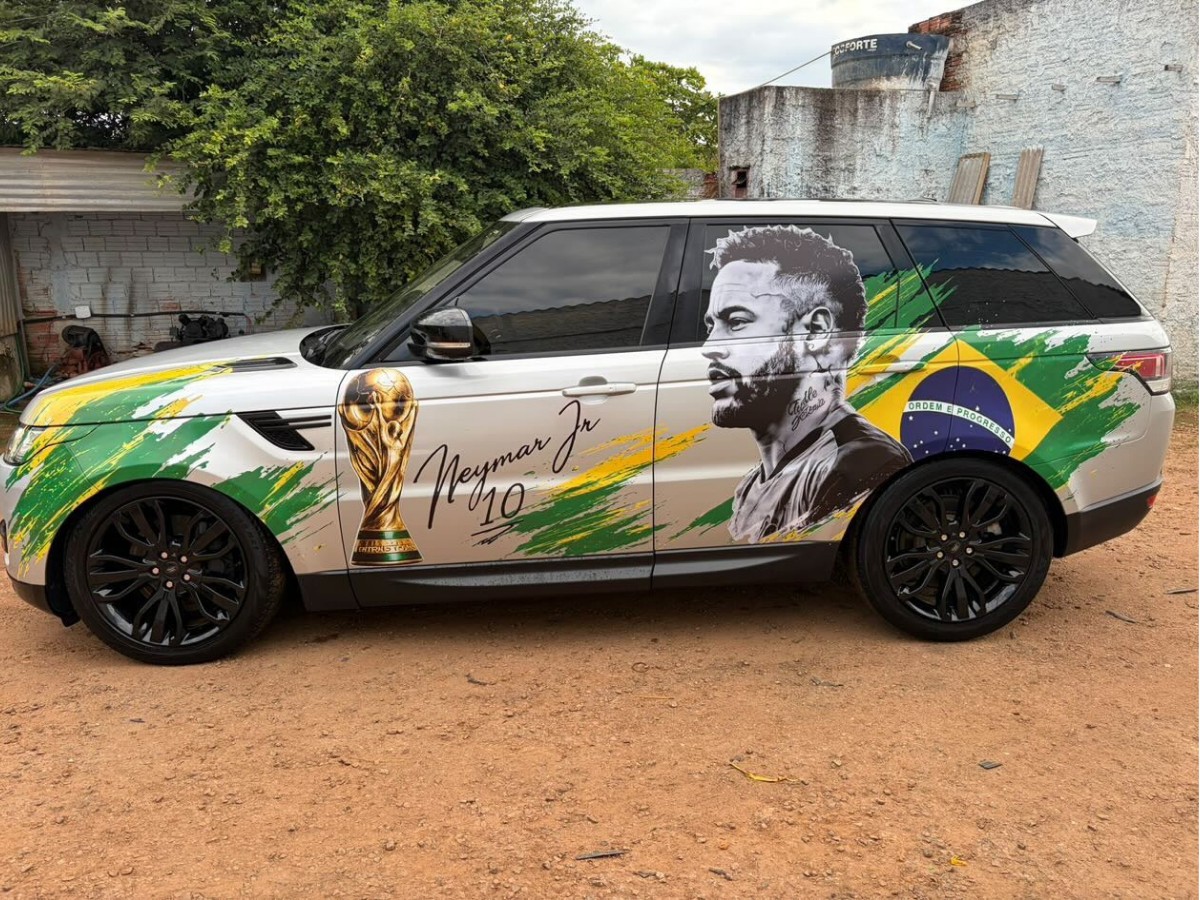
Businessman creates giant plot of Neymar in car for the World Cup
Reproduction/personal collection
The Brazilian football team faces Haiti this Friday (19) in the World Cup, and the excitement of the fans is reflected in the streets. Flags, stickers and decorations in green, yellow and blue are spread across cars in circulation.
However, drivers need to pay attention to the rules established by legislation to avoid fines and problems during inspection. A recent ordinance from the City of São Paulo authorized the use of decorations alluding to the tournament for taxis, vans and transport vehicles via app, but private drivers must follow strict technical safety limits.
✅ Click here to follow the g1 Carros channel on WhatsApp
According to lawyer and former transport secretary of Porto Alegre (RS), Marcelo Soletti, this type of municipal authorization is a common practice in large capitals during festive periods or major events sports.
As taxi and app-based transport services are regulated by municipalities, city halls have the autonomy to temporarily relax aesthetic requirements and allow a celebratory atmosphere in the local public fleet.
Now on g1
For the common driver, the main criterion to be observed is maintaining visibility and road safety. Lawyer Daniela Poli Vlavianos, partner at Poli Advogados e Associados, explains that the Brazilian Traffic Code allows aesthetic customization as long as it does not interfere with essential driveability components.
Any accessory positioned in such a way as to obstruct the view of the rear view mirrors may result in administrative punishment for the driver of the vehicle.
"Adaptations that interfere with the operation of mandatory equipment, such as seat belts, backrests, are also problematic. headrests and retention systems", says the lawyer.
The use of stickers on windows is one of the points that most require technical attention. Lawyer Marcos Poliszezuk, founding partner of Poliszezuk Advogados, emphasizes that decorations cannot "distract the driver's vision during the act of driving" nor make it difficult to identify the vehicle.
Pietra Valentina wrapped the car in the colors of the Brazilian flag for the World Cup
Personal Archive
Non-compliance with the safety requirements stipulated by the National Traffic Council (Contran) generates the framing in article 230 of the Brazilian Traffic Code (CTB), constituting a serious infraction.
The technical assessment of this transparency in glass is governed by specific federal standards. Marcelo Soletti details that a Contran resolution stipulates limits for the so-called light transmittance, establishing that visibility in the car's essential windows cannot be below 70%.
If the inspection identifies that a commemorative sticker has reduced transparency beyond the permitted limit or blocked the driver's front and side field of vision, the penalty foreseen is a fine in the amount of R$ 195.23, the loss of five points on the National Driving License (CNH) and retention of the vehicle until the irregular material is removed.
Changing the color of the car
The same serious penalty is applied to those who exaggerate the size of the collages on the car's bodywork.
According to another Contran resolution, modifications that change more than 50% of the original predominant color of the body without properly updating the traffic registration leave the vehicle in an irregular situation.
"When the sticker modifies the predominant color of the vehicle by more than 50%, a characteristic change occurs subject to updating the registration with the traffic authority", explains Daniela Poli Vlavianos.
She highlights that the rule covers both permanent stickers and temporary wraps.
Cars drive around the capital of São Paulo with Brazilian flags
André Fogaça/g1
The attachment of external flags and flagpoles is also monitored by public agents.
Poliszezuk considers that small flags fixed properly are usually tolerated, but larger structures or improvised supports, which swing or have a risk of detachment, pose a risk to road safety and pedestrians.
"A flag attached to a mast, for example, can be considered irregular if there is a risk of detachment or if it compromises the stability and safety of the vehicle", says the lawyer.
In addition, external decorations cannot hide identification plates or warning devices. mandatory car lighting, at risk of fines and retention of the vehicle until the situation is fully regularized by the owner.
Shouting and honking
The behavior of passengers and excessive noise during celebrations on public roads are other areas of legal attention. Daniela Poli Vlavianos warns about the risks associated with the conduct of fans who are more enthusiastic about putting parts of their body outside the moving car.
According to the expert, putting the head, arms or torso outside the moving vehicle significantly increases the risk of accidents and serious injuries, which creates direct liability for the driver for transporting passengers in unsafe conditions and can lead to civil and criminal liability in the event of accidents.
Marcelo Soletti reinforces that the CTB prohibits transport of people on external parts of the vehicle and the projection of parts of the body outside the moving car.
Regarding the use of horns and sound equipment at very high volume, Soletti mentions that, although traffic agents usually evaluate the festive context and the plausibility of the moment, abuse near schools, hospitals or after 10pm results in zero tolerance for violating public peace.
Excessive sound attracts the application of environmental and municipal penalties based on São Paulo laws. silence.
Source: G1