Apple increases prices of MacBooks and iPads after soaring memory costs
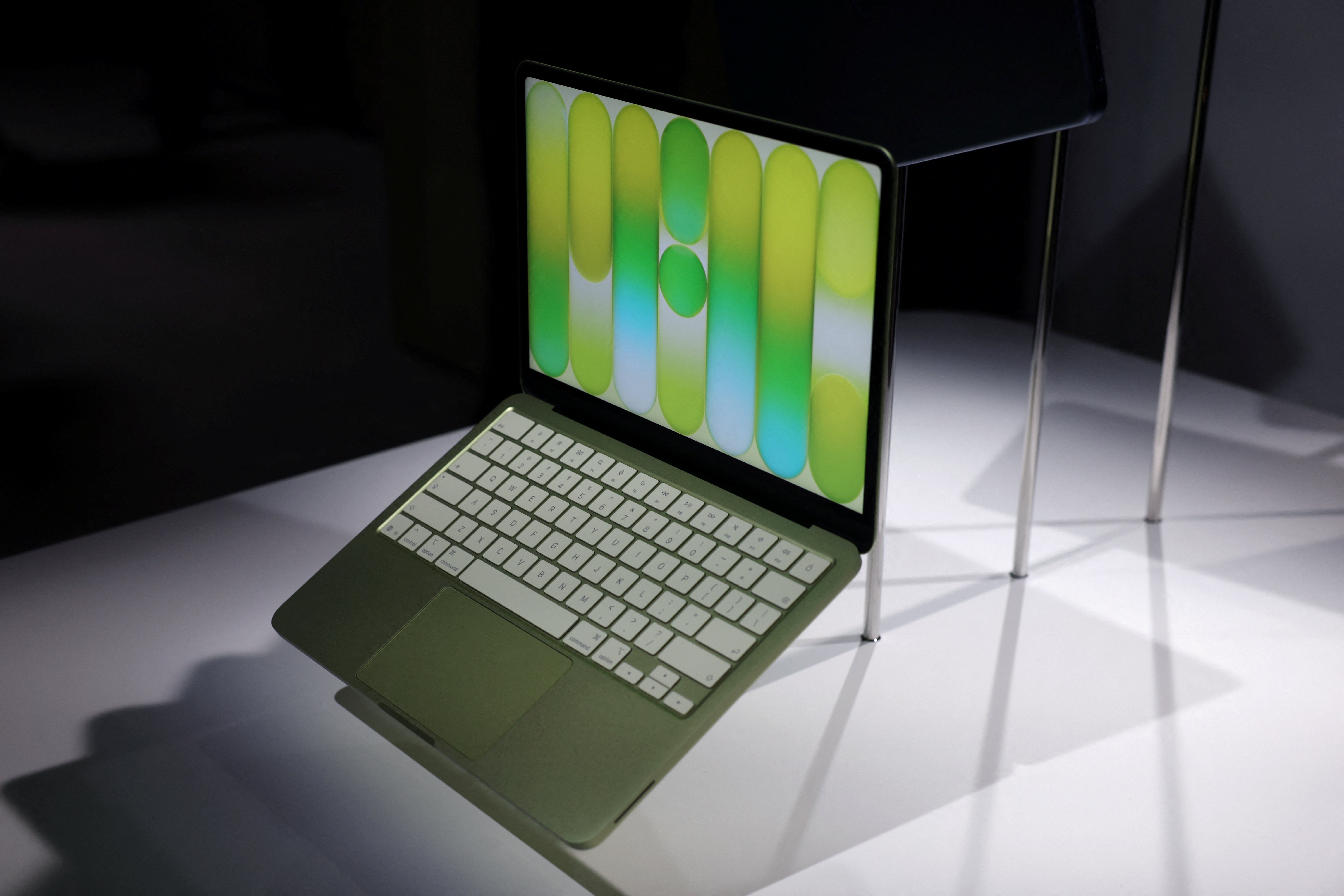
MacBook Neo displayed at an Apple event in New York this Wednesday (04)
Shannon Stapleton/Reuters
Apple announced this Thursday (25) price increases for iPads and MacBooks, stating that it can no longer absorb the sharp rise in the costs of memory and storage chips, driven by the expansion of data centers focused on artificial intelligence.
Do you have any suggestions for a report? Send it to g1
The measure does not affect the iPhone, the company's main product. The MacBook Neo, an entry-level notebook launched to compete with cheaper Windows and Chromebook models, had its initial price raised from US$599 to US$699 (from around R$3,114 to R$3,634, in conversion).
The adjustment shows that not even Apple, considered a reference for the efficiency of its supply chain, has managed to escape the spike in memory prices, which is already beginning to affect the memory market. electronics.
Memory manufacturers, such as Micron, have prioritized supplying AI chip companies, such as Nvidia, which has increased their profits, but reduced supply for computer and smartphone manufacturers.
Now on g1
"We have never seen an increase in the price of components so large and so fast," Apple said in a statement. "So far we have been able to protect our customers from these increases, but we have reached a point where we need to start raising the prices of several products."
Among the main adjustments:
MacBook Neo: from US$599 to US$699 (from R$3,114 to R$3,634);
MacBook Air (512 GB): from US$1,099 to US$1,299 (from R$ 5,715 to R$6,755);
MacBook Pro (1 TB): from US$1,699 to US$1,999 (from R$8,835 to R$10,395);
iPad Air (128 GB): from US$599 to US$749 (from R$3,114 to R$3,894).
The company also raised the prices of both versions of the HomePod and Apple TV. After the announcement, Apple's shares fell almost 5%, while Dell's shares fell more than 8%.
Rivals could raise prices even more
Analysts estimate that other electronics manufacturers may need to make even bigger readjustments than Apple's, as the company has stronger relationships with suppliers and has managed to postpone part of the impact.
"The scenario for memory is difficult and will remain structurally tight for the foreseeable future", said Ben Bajarin, CEO of consultancy Creative Strategies.
Apple had already warned in April that rising memory costs would begin to pressure its profit margins from the end of June.
"We expect significantly higher memory costs," said CEO Tim Cook during a conference call with analysts. According to him, this impact tends to increase in the coming quarters.
Tim Cook, CEO of Apple
Reproduction
Next target could be the iPhone
Apple did not say what other measures it is adopting to contain rising costs besides price adjustments.
Experts believe that iPhones are also likely to become more expensive in the coming months.
"The iPhone will not escape; the price increase is on the way," said Nabila Popal, senior research director at IDC.
According to her, Apple first announced adjustments to Macs and iPads so that, at the launch of the next generation of iPhones, the focus will be on the new features of the devices, and not on prices.
Explosion in memory prices
According to consultancy TrendForce, prices for DRAM memory - used in most electronic devices - rose up to 98% in the first quarter of 2026 and are expected to increase another 58% to 63% in the quarter current.
The surge, dubbed by experts as "RAMageddon", is a consequence of the boom in the construction of AI data centers. Companies like Nvidia have signed long-term contracts with memory manufacturers, who are racing to expand their production capacity.
On Wednesday (24), Micron reported having closed US$22 billion (around R$114.4 billion) in long-term supply contracts to guarantee memory for its customers.
The expectation is that rising costs will put pressure on electronics sales in 2026.
IDC projects that the global smartphone market will record its biggest annual drop in history, of almost 14%, while computer sales are expected to decline 11.3%.
"The scenario for memory is difficult and will remain structurally challenging in the near future", said Ben Bajarin, CEO of consultancy Creative Strategies. "There were already signs that Apple would need to raise prices. And, if a company with a supply chain as efficient as Apple's needed to do that, there is concern that the rest of the industry would have to raise prices even more."
One of the few positive highlights was precisely the MacBook Neo, launched in March. The model helped boost Apple's sales and led part of the market to revise upwards projections for the PC sector.
With the increase to US$699 (R$3,634), however, the notebook lost the US$100 (R$520) advantage it had over the new Dell XPS 13, launched last month for the same price (US$699, or R$3,634), in addition to starting to cost more than some Chromebooks from Lenovo and Asus.
Source: G1