ANM says budget cut threatens inspection of 43 dams
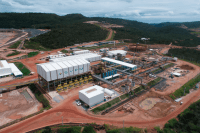
ANM (National Mining Agency) stated that the cut of R$22.6 million in its budget threatens the inspection of 43 dams and 18 mining piles that were scheduled to receive technical inspection by the end of 2026.
According to the agency, the restriction of resources deepens a process of loss of operational capacity and may compromise activities considered essential for the regulation and inspection of mining in the country.
ANM is responsible for managing more than 255,000 active mining processes, supervising dams and other mining structures, collecting and supervising CFEM (Financial Compensation for the Exploration of Mineral Resources) and analyzing procedures necessary for opening new mineral ventures.
According to the agency, the cut limits the travel of technical teams, requires the review of plans and compromises activities that depend on in-person inspection. Among the main impacts highlighted are inspections of dams, piles and other mining structures.
These inspections serve as the basis for technical decisions related to operational safety.
ANM states that some of the structures that may not be inspected require continuous monitoring because of the potential social, environmental and economic impact, including in areas close to environmentally sensitive communities and regions.
The contingency should also affect the analysis of processes linked to new mineral ventures.
According to the agency, the lack of resources compromises procedures necessary for the evaluation of Final Research Reports and PAEs (Economic Development Plans), essential steps to transform a mineral discovery into a productive operation.
In practice, this can delay investments, job creation and the opening of new mines.
The cut occurs at a time when the government is trying to expand Brazil's participation in the global chains of critical and strategic minerals, inputs used in the energy transition, high-technology industry, electric mobility and the production of clean energy equipment.
The agency states that the reduction in operational capacity affects precisely the analysis of projects for these minerals, in a scenario of greater international competition for secure sources of supply.
Another point mentioned by the agency is the inspection of CFEM, the mining royalties distributed to the Union, states and municipalities. Audits and inspections are used to verify information provided by companies and monitor the correct collection of financial compensation.
In ANM's assessment, the reduction of these activities weakens the State's supervisory capacity and may have repercussions on public revenues shared between federative entities.
Digital transformation projects were also affected. The agency cites initiatives to modernize systems, improve remote monitoring and develop traceability mechanisms for the mineral chain, including gold.
According to ANM, the interruption or postponement of these projects compromises important instruments for combating illegal mining, currency evasion and the irregular sale of ore.
In a note, ANM maintains that its responsibilities have increased in recent years, especially in the areas of safety of mining structures, remote inspection, traceability of mineral production, critical minerals agenda and regulatory modernization. The expansion of these responsibilities, according to the agency, was not accompanied by a proportional increase in resources.
Although the contingency affects different federal government bodies, the ANM states that the effects on mining have their own characteristics, due to the territorial extension of the activities, the need for in-person inspection and the agency's role in attracting investments, public revenue and the safety of mining operations.
ANM Budget
ANM tries to move from a historically undersized model to a time when Brazil wants to be a protagonist in critical minerals, raise safety standards, modernize regulation and provide more predictability to investment.
The problem is that institutional ambition has grown faster than operational capacity.
Today, the agency is responsible for central activities for the mineral sector, such as the analysis of mining processes, regulation of the segment, inspection of mining dams, monitoring of tailings piles, collection and inspection of CFEM (Financial Compensation for Mineral Exploration) and combating irregularities in the sector.
However, like other regulatory agencies, ANM has been operating under strong budgetary pressure.
In an audit completed this year, the TCU (Federal Audit Court) stated that cuts and contingencies have compromised supervision, administration, investment in technology and customer service in strategic authorities, including ANM.
The court also highlighted the need to strengthen the budgetary autonomy of these institutions.
In the case of mining, the discussion is even more sensitive because the legislation provides that 7% of CFEM (Financial Compensation for Mineral Exploration) is allocated to ANM.
In practice, however, this legal design does not translate into financial autonomy for the agency. Although the law reserves this portion of the revenue, the resources go through the General Budget of the Union and are subject to the government's fiscal rules, such as contingencies, blocks and budget execution limits.
This means that, even when CFEM raises billions of reais, ANM does not automatically receive the equivalent of 7% of that amount in resources actually available to spend.
In 2025, for example, CFEM totaled R$7.91 billion. If the rule were fully applied in practice, around R$550 million could reinforce the agency's budget.
In the actual execution of the federal budget, however, part of these resources ends up being absorbed by the Union's general fund or limited by fiscal restrictions, which prevents the ANM from fully using the portion provided for by law.
The pressure to strengthen the agency's structure also comes from mining companies and entities in the sector, which see regulatory capacity as a key element in reducing delays, increasing predictability and unlocking investments.
The assessment is that, without a more robust ANM, Brazil runs the risk of losing speed precisely at a time of global race for lithium, rare earths, copper, nickel and other strategic minerals.
Source: CNN