Analysis: Trump wants to leave a "mark" by applying a firm grip on geopolitics
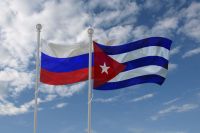
The United States carried out actions in Venezuela, in an operation that resulted in the capture of Nicolás Maduro, and is now turning its attention to Cuba. For CNN International analyst Fernanda Magnotta during CNN 360°, the movement reflects a strategy by American President Donald Trump to leave a "historical mark", associated with the image of a leader with a firm hand in geopolitics.
Magnotta listed a set of reasons that, according to her, help explain the behavior of the current American administration in relation to the region. "See that it's less about foreign policy itself and more about a set of other, more complex elements," he said.
Concrete signs of pressure on Cuba
Magnotta highlighted that Trump had already announced, in March, during an event in Florida, that "Cuba would be next". Since then, objective signs have been accumulating: the indictment of Raul Castro in recent days and the presence of an important aircraft carrier installed in the Caribbean, which even passed through Brazil before arriving in the region. "This is all giving objective signs that, beyond the rhetoric, something may actually happen," said the analyst.
According to her, the perception within American diplomacy is that some type of action will end up happening. Current betting indicates that if the United States decides to act, the most likely option would be an air strike.
Magnotta highlighted, however, that Cuba represents a different challenge than Venezuela: "Venezuela was only possible in the terms it did because there was a betrayal and a division within the Maduro administration, which we don't see happening in the Cuban case."
The motivations behind the actions
The analyst identified at least five layers of motivation for American actions. The first is strategic: the attempt to consolidate the hemispheric power of the United States, transforming the region into a counterpoint to powers such as Russia and China, which have established important alliances in Latin America. Venezuela, Cuba, Panama and the fight against drug trafficking are part of this effort.
The second layer concerns the creation of legacy. Magnotta reported hearing from several sources that Trump "wants to go down in history as the one who did what other presidents didn't have the courage to do."
This logic would explain the actions in Venezuela, Iran and now in Cuba, with the aim of dissociating itself from previous administrations which, in the view of the group closest to the current occupant of the White House, would have had a "weak pulse".
A third dimension involves Trump's closest advisors. Magnotta specifically cited Marco Rubio, the son of Cubans and a figure who built his political career in Florida by dialoguing with the community of Cuban-American dissidents. "If for Trump regime change is not exactly an asset he tends to value, for Rubio it is something important," said the analyst.
Florida electorate and internal focus shift
The fourth motivation pointed out by Magnotta is electoral. Florida, a decisive state in the American elections, is home to the most anti-Castro nucleus in the country, concentrated in Miami and its surroundings.
According to the analyst, this electorate is "paying the bill for effective actions against Cuba." She also highlighted that the current administration is largely made up of figures linked to Florida or who serve the state's interests.
Finally, Magnotta pointed out that the emphasis on foreign policy issues - whether Venezuela, Iran or Cuba - can act as a way to divert attention from more sensitive domestic issues, such as the cost of living, which is "the hottest issue in the United States", and the scandal involving Epstein, according to the Democratic opposition.
Risk of prolonged conflict and the immigration factor
When asked about the impact of a possible intervention on the Cuban population and on Trump's migration agenda, Magnotta says that the sources with whom he has spoken reinforce that any action would tend to be punctual and circumscribed, without dragging on as a more comprehensive conflict.
The analyst also warned of the risk that a possible war would pose to two of Trump's main banners: "Wars raise the cost of living, create inflationary pressure and, above all, can increase immigration. These are the two elements that elected Trump in the last election."
For Magnotta, a broader conflict would therefore be a "backfire" on the American president's own agenda.
The texts generated by artificial intelligence on CNN Brasil are made based on video cuts from the newspapers in its programming. All information is investigated and checked by journalists. The final text is also reviewed by the CNN journalism team. Click here to find out more.
Source: CNN