Analysis: Trump tries to contain Netanyahu's regional escalation
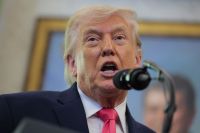
After the exchange of attacks between Israelis and Iranians, a new intervention by American President Donald Trump led to the suspension of new Israeli offensives this Monday (08).
For CNN International analyst Fernanda Magnotta, the disagreements between the leaders of the United States and Israel reveal a split of a tactical nature, but not an ideological one.
Magnotta highlighted that Trump even publicly classified the latest attacks as "stupidity", which, according to her, "also imposes symbolic costs on the Israeli side".
The analyst highlighted, however, that the deterioration in the relationship between the two countries does not equate to a rupture: "We clearly have tactical differences, but not necessarily differences in the strategic field."
Domestic and image concerns
According to Magnotta, Trump is committed to containing a regional escalation and, above all, to avoiding negative developments in the economic and commercial field.
"He is very worried about the domestic effects that this crisis with Iran has had on him in an election year, in a year in which he needs to obtain objective results," said the analyst.
She added that Trump also takes care of his own image as a negotiator, an element he considers central to his leadership.
On the Israeli side, Magnotta points out that domestic factors also help to explain the differences.
"We also have elections on the horizon, a crisis in the popularity of the Israeli prime minister," he noted.
For the analyst, tension between the two countries has varied mainly in relation to the means and timing of actions, and not necessarily in relation to the central objectives in relation to Iran.
Political vulnerability and limits of American influence
The analyst assesses that the vulnerability generated by this divergence is more sensitive in the political field.
By conveying to the world an image of low coordination and cooperation, the two countries run the risk of leading their adversaries to "test certain limits", warned Magnotta.
Still, she considers it premature to talk about a more significant fissure, since "militarily, countries continue to cooperate both from an intelligence point of view and from an operational point of view."
When asked about the fact that Israel stopped attacks on Iran after American pressure, but maintained the offensive in Lebanon, Magnotta said that this shows that the United States exerts influence over its ally, but "clearly does not have total control".
According to her, Netanyahu operates according to a logic in which he is willing to compromise on some issues, but sends Washington "a clear message that he will not necessarily support a military strategy that puts domestic interests and security interests, Israel's vital interests, in the background."
"There is a willingness to dialogue, but there is no space for negotiating autonomy", concluded Magnotta.
The texts generated by artificial intelligence on CNN Brasil are made based on video cuts from the newspapers in its programming. All information is investigated and checked by journalists. The final text is also reviewed by the CNN journalism team. Click here to find out more.
Source: CNN