Analysis: Trump says war with Iran is over
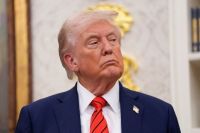
The President of the United States, Donald Trump, declared, this Thursday (11), that the USA "has ended the war with Iran", after claiming to have obtained a commitment that Tehran will never develop a nuclear weapon.
The declaration, however, was immediately contested by Iranian representatives, who denied any definitive resolution and reaffirmed that any treaty must include Lebanon among its clauses.
About five hours separated a threat from Trump to take control of Kharg Island from the publication in which the president announced the suspension of planned attacks, claiming to have reached some understanding with Iran in ongoing negotiations.
The memorandum of understanding
The United States and Iran are moving towards a memorandum of understanding structured in two stages. The first foresees the unblocking of traffic in the Strait of Hormuz within 30 days. The second would establish a 60-day window for discussions on a new nuclear agreement, still under unknown premises and commitments.
Trump even stated that the memorandum could be signed next weekend, with the participation of the American vice-president, JD Vance, in Europe. A spokesman for Iran's Foreign Ministry, however, stressed that the country had not yet made a final decision.
Researcher and professor at UFF (Universidade Federal Fluminense) Vitélio Brustolin noted that the content published about the memo by the Axios and Al Jazeera portals is very similar to the proposal presented by Pakistan in April, which Trump had called "totally unacceptable".
For Brustolin, what is envisioned is, in practice, an extension of the pause that already exists in the conflict. "It feels like a longer pause, an extension of the pause here," he said.
The expert also warned that, if Trump officially declares the end of the war, it will be very difficult to resume an offensive if Iran does not comply with the negotiated terms - especially with regard to the delivery of enriched uranium.
The points of impasse
Harvard researcher and professor of International Relations at USP (University of São Paulo) Hussein Kalout outlined the main obstacles to negotiations. According to him, Iran does not accept negotiating the abandonment of its ballistic missile program, which it considers a conventional defense shield.
It also resists ceasing the financing and arming of armed groups in the region, seen as an extension of its military power. Finally, the Iranians demand concrete counterparts: the release of part of the approximately US$100 billion retained by the United States as a condition for giving up uranium enriched to 60%.
"The progress of the agreement depends on all these variables. What happened between the parties is the intention to discuss these variables. Now, their depth and the commitment around them is still in the process of evolution", declared Kalout.
Domestic pressures and Israel's role
Trump faces significant domestic pressures. A recently released survey shows that 81% of Americans are against the way he has conducted the conflict, and only 27% of the population supports the war, according to Vitelio Brustolin.
Since the beginning of hostilities, the price of a gallon of gasoline has risen by around 50% at American gas stations, and inflation has reached 4.20% - the highest in the last three years. The November legislative elections, which will define control of the House and Senate, put pressure on the Republican to present a speedy resolution.
Senators such as Lindsey Graham, Ted Cruz, Roger Wicker and Mitch McConnell have already publicly criticized the negotiations, comparing them to the agreement reached during the Barack Obama administration - which Republicans have always repudiated.
With regard to Israel, Brustolin highlighted that Prime Minister Benjamin Netanyahu needs to remain in power in the face of four accusations of internal corruption, possible liability for the October 7, 2023 attacks and an arrest order from the International Criminal Court.
"Israel is doing Netanyahu's specific will, which is not necessarily in Israel's interests," he said. Netanyahu conditions the withdrawal from southern Lebanon to the disarmament of Hezbollah - a condition that the armed group refuses, even under pressure from the Lebanese government itself.
Kalout concluded that Trump fears, above all, reaching an agreement that, in the domestic American context, would be perceived as similar to the treaty signed by the Obama administration.
The texts generated by artificial intelligence on CNN Brasil are made based on video cuts from the newspapers in its programming. All information is investigated and checked by journalists. The final text is also reviewed by the CNN journalism team. Click here to find out more.
Source: CNN