Analysis: Trump becomes more cornered by limiting war powers
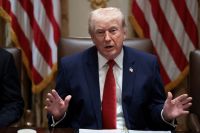
Ahead of the vote in the United States House of Representatives on whether to restrict Donald Trump's war powers toward Iran, House Speaker Mike Johnson implored Republicans to oppose the proposal.
In an interview with CNN, he repeatedly stated that it would be "dangerous" and that it would undermine Trump's negotiating power to reach an agreement that would end the war.
And the fact is: Johnson was right. These votes demonstrate a lack of determination, even within Trump's own party, to continue the war.
But four Republicans voted for it anyway, allowing the resolution to pass 215 to 208 and representing one of the biggest legislative rebukes of Trump during his presidency.
If the resolution passes the Senate - where 50 of the 100 senators appear to support it - Trump would be forced to withdraw troops from Iran or obtain congressional approval for war.
The White House, which has already signaled that it believes the law in question is unconstitutional, could try to ignore the resolution.
But at the very least, the House vote was a striking commentary on how Republicans appear to be losing patience with Trump and his politically damaging war.
It was a sign that a small but clearly significant number of them are less willing to give you time to try to find a way out.
The result is that Trump is increasingly cornered.
And this situation is becoming familiar to the American president, whose approval ratings have fallen to historic lows. With the possibility of imminent destruction for the Republican Party in November and with the war with Iran heading towards a stalemate, Trump is losing control of what is to come.
Retreat from the Kennedy Center and the "anti-gun" fund
The past week has repeatedly shown how Trump is being forced to deal with this more claustrophobic political reality.
First, there was his apparent retreat from control of the Kennedy Center and, more significantly, his administration's change of stance on the "anti-gun" fund to compensate those who claim to have been harmed by the Biden administration.
In response to a federal judge's unfavorable ruling on his name's presence on the Kennedy Center, Trump signaled that he would allow Congress to take control of the performing arts center.
This is a very atypical stance for Trump if ever there was one. This is a president who often governs as if he wishes the other branches of the federal government simply didn't exist. However, there he was, being questioned by the Judiciary and signaling that he would hand everything over to the Legislature.
The most damning example of Trump being cornered, however, comes with the "anti-gun" background.
In addition to yet another unfavorable court ruling, he has seen Republican senators speak out almost in unison against the idea - in a way that could threaten his other legislative priorities.
They appear to fear that Trump will use the nearly $2 billion as an unaccountable slush fund to reward his allies - including the violent defendants in the 2021 Capitol attack who attacked police officers.
Attack on the Capitol on January 6, 2021 - Photo: Shannon Stapleton/Reuters
The situation is reminiscent of Trump's East Wing ballroom, where congressional Republicans refused to provide money Trump requested for what they consider a politically problematic personal project.
Trump and his aides have been sending mixed signals about how far they have actually abandoned the "anti-gun" fund, with acting Attorney General Todd Blanche saying the idea is dead but Trump appearing less convinced.
But there is no doubt that Congress restrained Trump and limited his options in a way it rarely has - just as it did with his war powers against Iran.
Given that Trump has not personally committed to abandoning the fund, there are even those who talk about the possibility of Congress voting to prevent him from pursuing the idea. That option has always been on the table, of course, but Republicans have been reluctant to pursue it for fear of angering Trump.
Political setbacks, from Pulte to the primaries
Trump's political maneuverability is also being limited in other ways.
Trump's selection of Bill Pulte, director of the Federal Housing Finance Agency, as acting director of national intelligence - despite his apparent complete lack of intelligence experience - was met with extreme disgust by Republicans on Capitol Hill.
And there are rumors that due to threats from Democrats, Trump may be forced to backtrack on Pulte's pick if he wants Congress to renew crucial spying powers - Section 702 of the FISA (Foreign Intelligence Surveillance Act) - which expire soon and were already causing problems for Congress.
Trump also suffered a significant setback in this week's primaries. After defeating three high-ranking incumbent congressmen and a number of Republican state senators from Indiana in recent primaries, he saw his supported candidate, Rep. Randy Feenstra, lose the Republican primary for governor in Iowa.
And some of those defeated congressmen are becoming a problem for Trump in Congress now that they don't have to worry about re-election - and they may be understandably disillusioned.
One of them, Representative Thomas Massie of Kentucky, continued to vote against Trump by supporting the war powers resolution.
(After his defeat last month, Cassidy suddenly voted in favor of allowing a war powers resolution to proceed in the Senate.)
There is no good way out of the war with Iran
Not to mention what else is cornering Trump: the war with Iran itself.
Right now, there doesn't seem to be a good way out for the president.
He's acting like he has all the time in the world to let his blockade bleed the Iranian economy and force its leaders to grovel to him for a deal.
But there is little sign that this is happening fast enough for Trump and his domestic political concerns. There are many reasons to doubt that Iran would agree to something that Trump could actually sell as a good deal. And he has bluffed so many times about resuming large-scale military strikes that Tehran appears to no longer be taking this threat seriously.
"A ceasefire there is very different from a ceasefire in other parts of the world," Trump told reporters on Wednesday as he tried to defend ongoing negotiations amid the latest exchange of fire. He even suggested that some kind of deal could be reached this weekend.
Of course, he had already suggested several times that an agreement was close. And apparently the House didn't buy it, with these four Republicans leading one of the most notable efforts yet to restrain Trump.
If the Senate follows the same path, it will truly find itself in a no-win situation.
Source: CNN