Analysis: Israel's attacks on Lebanon make it difficult to end the war
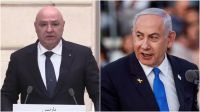
At a time when the United States and Iran were signaling concrete progress towards an agreement to end the conflict in the Middle East, a series of events once again complicated negotiations. CNN's senior International analyst, Américo Martins, comments on Israel's actions against Lebanon.
According to Américo, they appear as a decisive factor in the obstacle to peace negotiations.
Martins highlighted that, at the exact moment that the Americans and Iranians were giving "very clear indications" that they could finally reach an understanding, the region was the scene of events that appear to constitute a deliberate boycott of the negotiations by some local actors.
Netanyahu threatens to resume all-out war in Lebanon
According to the analyst, Israeli Prime Minister Benjamin Netanyahu announced his intention to intensify attacks on Lebanon, including the capital Beirut, in response to Hezbollah's use of drones against northern Israeli territory.
This Tuesday (26), Israeli forces have already resumed bombing Hezbollah positions in the Beqaa Valley and southern Lebanon, a region that, in part, remains under Israeli occupation.
Martins highlighted that the ceasefire between the Israeli defense forces and Hezbollah was not observed regularly: "It is a ceasefire that has been disrespected all the time", he states.
According to him, Netanyahu would be "greatly forced by right-wing extremists in his government", who are pushing for a return to total war in Lebanon.
Israeli radical right wants to boycott US-Iran agreement
The analyst explained that radical right-wing politicians who are part of the Israeli government seek, in every way, to make negotiations between Iran and the United States unfeasible.
The justification presented by these sectors is that Israel's interests are not being considered in the agreement under discussion, and that there is a fear that Iran may, in the future, resume attempts to develop a nuclear weapon.
The alternative defended by this group would be to continue the war and bomb Iran until it almost completely eliminates its military capabilities.
However, Martins considered that such a strategy "would take a long time and would have a huge cost in human lives and also economic", especially given the fact that Hormuz remains blockaded.
Trump wants to end the conflict; Iran also demands peace in Lebanon
Martins pointed out that American President Donald Trump shows interest in ending the war, motivated above all by economic concerns related to the blockade of Hormuz and its impacts on the energy sector.
The Israeli government, in turn, recognizes that it does not have the capacity to fully influence American decisions, even though, according to the analyst, the war was largely driven by the Israelis themselves, who convinced the Americans to participate in the attacks against Iran.
For Iran, any negotiation necessarily involves ending the war not only on its territory, but also in Lebanon, where it seeks to protect its ally Hezbollah.
Given this scenario, Martins concluded that, by attacking Hezbollah and reopening the conflict in Lebanon, Israel "ends up complicating any chance of negotiating a peace agreement."
"What happens on this secondary front of the war, in Lebanon, will greatly complicate all negotiations between Americans and Iranians", says Américo.
The texts generated by artificial intelligence on CNN Brasil are made based on video cuts from the newspapers in its programming. All information is investigated and checked by journalists. The final text is also reviewed by the CNN journalism team. Click here to find out more.
Source: CNN