Analysis: Iran tries to force Ali Khamenei's funeral
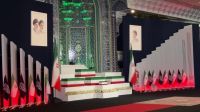
Iran has begun the funeral ceremonies for Ayatollah Ali Khamenei, who was killed four months ago in an attack by the United States and Israel. The processions, which extend across five cities and also include tributes in Iraq, began on Saturday (4), a date that coincides with American Independence Day.
According to correspondent Américo Martins, the event goes far beyond a religious ritual. "Iran wants to show the world and its region, the Middle East, especially the United States and the Israeli government, that the country did not lose the war, although it has, of course, lost its supreme leader," he said.
Martyrdom and continuity of the regime
The Iranian government's strategy is to transform Ali Khamenei into one of the country's greatest martyrs, exploiting the strong tradition of martyrdom in the Shiite branch of Islam. The official narrative is that although Khamenei has died, the regime remains in power. "Iran's dictatorship continues to call the shots in the country", highlighted Américo Martins.
The supreme leader was succeeded by his own son, Mojtaba Khamenei, in a choice aimed at demonstrating continuity.
For analyst Sandro Teixeira Moita, the funeral represents a foundational act of a new moment in the Islamic Republic. "The regime says goodbye to the last architect of the revolution. A new generation is coming," he said.
He highlighted that the figures currently in power were not architects of the revolution like Khamenei's generation, and that the war accelerated this generational change.
International presence and internal tensions
The funeral was attended by representatives from countries such as China, Russia, India, Saudi Arabia, Indonesia and Malaysia, as well as delegations from Afghanistan - including elements from both the Northern Alliance and the Taliban.
Analyst Lourival Sant'Anna highlighted the presence of Medvedev, representing Russia, and explained the strategic interests that link each country to Iran. In the case of India, for example, dependence on the Iranian port of Shahabad is vital for the flow of Indian products towards Afghanistan and Central Asia, as Pakistan and China block this land access.
Despite the attempt to project unity, Sandro Teixeira Moita noted that cohesion among Iranian leaders is far from complete.
Figures such as Mohamed Bagher Ghalibaf, Abbas Araqchi and the group around President Pezeshkian did not demonstrate sufficient alignment to convey the image of unity desired by the regime. Furthermore, the Revolutionary Guard maintains its own positions within the internal political scene.
Mojtaba Khamenei: long-awaited appearance
One of the most anticipated aspects of the ceremonies is the possible public appearance of Mojtaba Khamenei, who has not yet appeared publicly since taking power.
Lourival Sant'Anna explained that the absence has at least one justification within Shiite mysticism: the figure of the "hidden imam", the 12th imam, gives a certain symbolic appeal to the invisibility of a leader. However, he acknowledged that the non-appearance also raises questions about who is actually in charge of the country.
The analyst further added that according to the Iranian Constitution, the National Security Council cannot make decisions without the ratification of the supreme leader - implying that Mojtaba needs to be active to legitimize the decisions already taken.
Israel, USA and the risk of provocation
The coincidence of the start of the processions with the Independence Day of the United States did not go unnoticed.
Sandro Teixeira Moita assessed that the funeral could be seen by Israel as a provocation, especially since, since the beginning of the conflict, Iranian funerals had been kept secret for fear of offering targets for Israeli attacks. The analyst also mentioned recent statements by the Israeli Defense Minister about an alleged planned operation, called "Blue and White", which would demonstrate Israel's ability to act against Iran independently of the United States.
Lourival Sant'Anna warned that high-ranking figures who have not appeared publicly since February 28 must be present at the ceremonies, which increases the risk of attacks.
"Israel has a habit of bombing funerals," he said, citing his own experience in Lebanon during the 2006 war.
However, Sant'Anna highlighted that the United States sent a strong message to Israel not to carry out any attack during the funeral, as this would go against American interests. According to him, Trump negotiates intensively with the Iranians and wants to exit the conflict "in the most honorable way possible."
The texts generated by artificial intelligence on CNN Brasil are made based on video cuts from the newspapers in its programming. All information is investigated and checked by journalists. The final text is also reviewed by the CNN journalism team. Click here to find out more.
Source: CNN