American TV reporter says he doesn't know where Bosnia, the USA's next World Cup opponent, is, and then apologizes
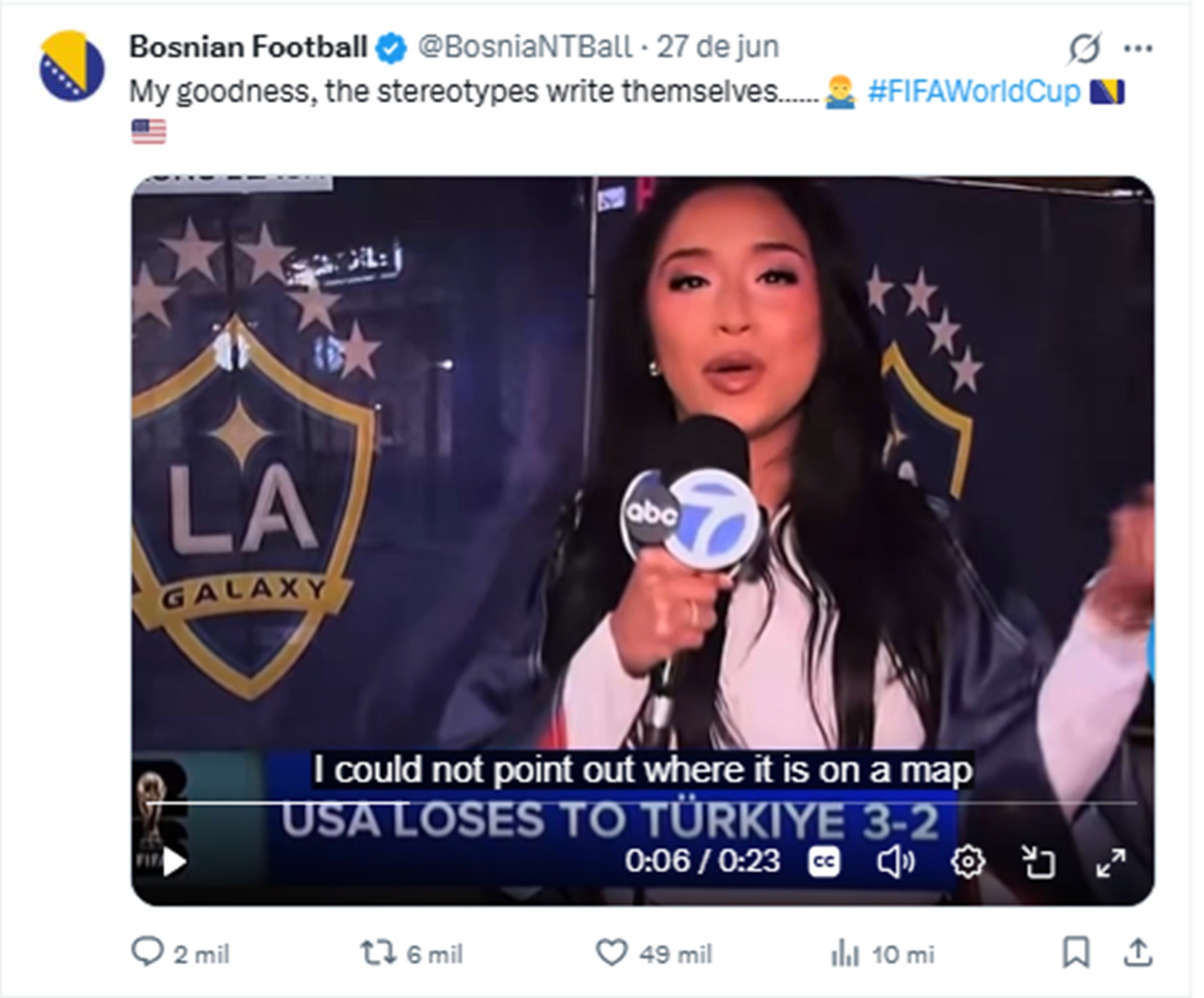
American TV reporter criticizes Bosnia and later apologizes
Reproduction
A reporter from the American TV channel ABC became the target of criticism for comments in a live broadcast about Bosnia, the United States' World Cup opponent.
✅ Follow the g1 international news channel on WhatsApp
After saying that in the next round the United States team will face Bosnia, Abigail Vélez said on air and live who wouldn't know how to point out where the country is on the map, know absolutely nothing about Bosnia and don't want to know.
After the negative repercussion, she published an apology on X. The post, published on June 27, reached more than 3.2 million views.
"In a poorly planned attempt to have some fun with the World Cup competition, I overstepped my bounds and made a thoughtless, insensitive and inappropriate comment live on air. I apologize to the people of Bosnia and the Bosnian football team. The World Cup should serve to unite communities around the world, and my comment did not reflect that spirit. I wish all teams great success in continuing their World Cup journey."
After the backlash, she published an apology on X.
Reproduction
The United States will face Bosnia and Herzegovina next Wednesday (1st).
Divided country
Bosnia and Herzegovina was part of Yugoslavia until the early 1990s, when several separatist movements broke out in the former communist country.
After the independence of Croatia and Slovenia, the Bosniaks, the region's largest ethnic group and mostly Muslim, claimed independence from Belgrade. What followed was one of the bloodiest conflicts in the history of Europe in the post-Second World War.
The Serbs who lived in the country, supported by Belgrade, the Yugoslav capital (current Serbia) opposed and began a military campaign that culminated in ethnic cleansing and the massacre of hundreds of thousands of Bosniaks.
The war lasted from 1992 to 1995 and also involved the Bosnian-Croats, another ethnic group that lived in the territory.
The conflict was marked by mass murders of the civilian population, such as the Srebrenica Massacre in 1995, when Serb forces murdered more than 8,000 Bosniaks.
The country's capital, Sarajevo, was completely destroyed. Serb snipers took over the hills around the city and randomly targeted civilians on the city's avenues.
The current structure of Bosnia and Herzegovina emerged from the 1995 Dayton Peace Agreement. This agreement ended the war between Serbs, Croats and Bosniaks. The country was divided into representative entities divided between the three main ethnicities.
The country is a candidate for membership of the European Union and borders Croatia, Serbia and Montenegro.
Bosnia and Herzegovina
Art/ g1
Read also:
Italy does not have enough evidence to bring the 'human safari' case in Sarajevo to trial, says agency
European Commission proposes Bosnia as a candidate to join the EU
'Srebrenica massacre could happen anywhere'
Source: G1