AI advances in the job market; group creates US$500 million fund to prepare workers
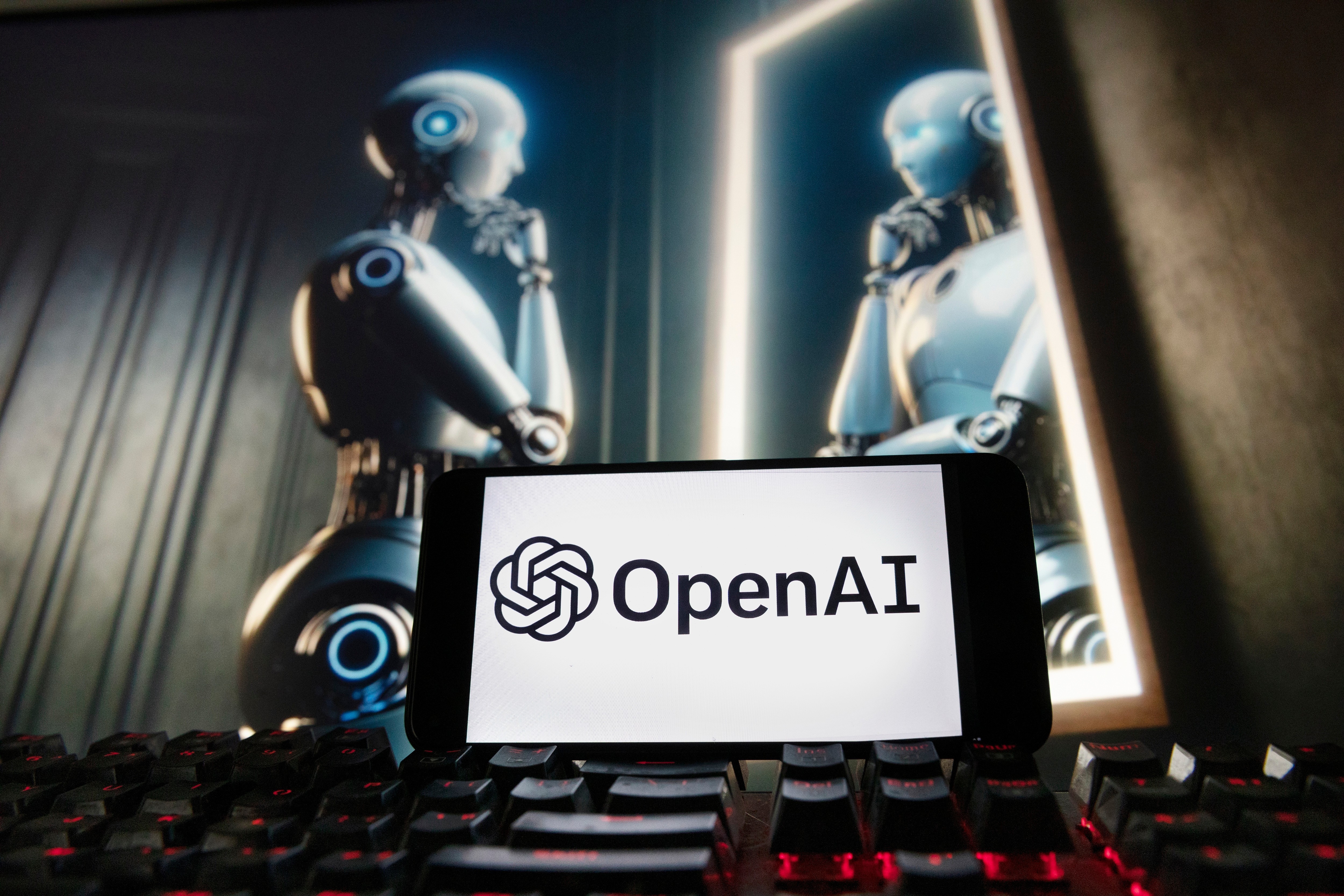
OpenAI logo on a cell phone in front of an image generated by DALL·E, ChatGPT's image creation tool.
Michael Dwyer/AP
The United States has been moving quickly towards a future driven by artificial intelligence, but without a clear plan to avoid what could result in massive job losses.
While critics warn of catastrophic scenarios worthy of science fiction films, technology advocates claim that AI will create so much wealth that there is no reason to worry about millions of layoffs.
Do you have any suggestions for a story? Send to g1
A new non-profit organization, created by members of the two main US political parties, aims to ensure that the country takes advantage of the economic gains promised by artificial intelligence without leaving workers behind.
Named RAISE US, the initiative begins with more than US$500 million to invest in new forms of education and professional training. The strategy prioritizes partnerships with states and large employers, rather than the federal government.
Now at g1
Founded by former Secretary of Commerce Gina Raimondo, a Democrat, and former Indiana governor Eric Holcomb, a Republican, the organization aims to test programs and incentives to help American workers migrate to new careers in an economy increasingly automated by artificial intelligence.
"We are talking about a level of unemployment that could destabilize our country and our democracy," he said Raimondo in an interview. "If we want to lead the world in AI, we need to act to ensure our democracy doesn't fall apart."
Programs begin in four states
Initially, RAISE US will work with governments in Arkansas, Connecticut, Maryland and Utah, as well as some of the largest companies and philanthropic organizations in the United States.
The proposal is to develop policies that bring schools and employers together, so that laid-off workers can be quickly directed to new positions, preferably with higher salaries.
The group is also studying changes to corporate taxes and other incentives to encourage companies to keep their employees employed.
"Good things tend to happen when you turn the have-nots into the haves," Holcomb said.
Companies partnering with the initiative include Amazon, Microsoft, Anthropic, OpenAI Foundation and Bank of America. Also participating are UPS, General Motors, Eli Lilly, Mastercard, AMD, Cisco and IBM.
Raimondo, former governor of Rhode Island and one of the main people responsible for AI policy during the Biden administration, will be the organization's executive director.
The advisory board brings together names such as former president of the House of Representatives Paul Ryan, billionaire investor Stephen Schwarzman, the president of the AFL-CIO union, Liz Shuler, as well as economists David Autor, Erik Brynjolfsson and Raj Chetty.
AI could replace workers in factories and offices
An analysis released in April by the Boston Consulting Group (BCG) estimates that about half of jobs in the United States will be transformed by artificial intelligence in the coming years.
According to the study, up to 25 million jobs could be eliminated in the country over the next five years.
Goldman Sachs estimated, in March, that 25% of hours worked in the USA could be automated by AI.
More than an improved search tool or generator of videos and images, artificial intelligence can put autonomous trucks on the roads, create factories operated by robots and replace office professionals, lawyers and even doctors.
The President Donald Trump showed little concern about the possibility of technology eliminating jobs.
When asked on Tuesday (23), before visiting a Mack Trucks factory in Pennsylvania, whether AI could take jobs away from truck drivers, he replied: "At the moment, no."
Trump is betting on the expansion of data centers and power plants focused on artificial intelligence as engines for job creation and economic growth.
Although investments in AI have boosted the economy, the industrial sector has lost 68,000 jobs, while trucking has eliminated 28,300 jobs since the beginning of Trump's second term, according to data from the US Bureau of Labor Statistics.
"Today we have a lot of jobs available and our biggest problem is finding people to fill them," said Trump. "We are doing very well."
Education and labor policies are out of date
Artificial intelligence experts warn that the education system and worker protection policies were designed for a 20th century economy and are not prepared for the speed and scale of the changes brought about by AI.
"Artificial intelligence is transforming multiple sectors simultaneously, faster than any institution can respond," said Vivienne Ming, neuroscientist and author of the book Robot-Proof: When Machines Have All the Answers, Build Better People. She claims that neither the educational system nor labor policies are developing the human capital needed for the age of artificial intelligence.
Raimondo stated that the organization intends to use states as laboratories to test ideas that, in the future, can be transformed into national policies by Congress, including deeper changes to the tax system and education.
"I don't have much hope that Congress will take bold action on this issue in the coming years, and I don't think we can wait that long," he said.
"History shows that, when the federal government finally acts, it usually looks at what has already worked in the states. I am very confident that they will observe the work we will be doing", he added.
Who is the oldest Apple employee who won shares, now valued at millions
Source: G1