Agriculture, government and the politics of distrust
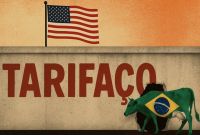
In the United States, in the last presidential election the agricultural states of the Midwest gave President Trump a landslide victory with almost 30 percentage points. Just to compare, in national terms it only got 1.5% ahead.
They are mostly Republicans and, on a national scale, they give 60% approval of Trump's economic policy, while together with all other spectrums of American society, today they have 71% disapproval.
The most striking thing is that rural voters no longer behave like other Republicans. They are almost as pessimistic as the general population: just 32% approve of Trump's economic management, while 68% disapprove. This is despite millions of dollars in emergency aid, which did not prevent a 46% increase in bankruptcies in 2025, even without the harmful effects of the war with Iran in 2026.
There is a similar, silent paradox running through Brazilian politics.
In recent years, a government historically identified with the left has successively expanded the resources of the Safra Plan, strengthened private financing instruments, expanded credit guarantees, accelerated the opening of international markets and helped create conditions for Brazilian agribusiness to continue recording records in production, exports and foreign exchange generation.
At the same time, a large number of rural producers maintain a stance of deep political resistance to the government itself.
Analysis: Geopolitical pressure from the US and EU should weigh on Brazil | CNN AGRO NEWS
At first glance, the situation seems contradictory.
If economic interests were sufficient to shape political preferences, it would be reasonable to expect a rapprochement between the two. After all, few economic activities have received as much public policy attention in the last 20 years as agribusiness.
But contemporary Brazil, like the United States, is showing exactly the opposite. And perhaps this is one of the most revealing political phenomena of our time.
For decades, political scientists, economists and public policy makers have worked with a relatively simple premise: social groups would tend to support governments that favor their economic interests.
Businesspeople would support pro-business governments. Workers would support governments that increased income and employment. Rural producers would support governments that strengthen agricultural activity.
Reality, however, has become more complex.
Agribusiness today accounts for around a quarter of the Brazilian economy, almost half of exports and a growing portion of the wealth generated in hundreds of municipalities spread across the interior of the country.
In recent years, rural credit volumes have reached historic levels. New private financing instruments have been consolidated.
Brazilian agricultural diplomacy opened dozens of markets for meat, fruit, coffee, cotton, grains and processed products. The country expanded its international presence precisely at a time of increasing geopolitical fragmentation of global trade.
The economic results are visible.
The sector continues to be the main responsible for the Brazilian trade balance, for the inflow of foreign currency and for a relevant part of the country's macroeconomic stability, despite the current crisis involving very high interest rates and the crisis resulting from the balance of world stocks and ongoing wars.
Still, this does not translate into political support. Why?
The easiest answer would be to attribute everything to ideological polarization. But this explanation is insufficient. What is at stake is not just agricultural policy. It's trust.
Over the last twenty years, Brazilian agribusiness has built something much bigger than an economic sector. Built an identity.
An identity associated with entrepreneurship, technological innovation, productivity, meritocracy, private property and global insertion.
In many interior regions, agriculture is no longer just an economic activity. It became a worldview.
In this environment, political decisions began to be influenced by factors that go far beyond rural credit, interest rates or the opening of markets.
Issues related to legal security, property rights, environmental legislation, land demarcations, customs, religion and the role of the State began to occupy space as important or more important than the economic results themselves.
The consequence is that economic benefits no longer automatically produce political support.
But there is a second, less discussed paradox.
If part of the agricultural sector distrusts the government, part of the political and financial elites ("Faria Lima") and Brazilian intellectuals also seem to distrust agriculture.
A view still persists in certain urban segments that associates the sector with stereotypes constructed decades ago, ignoring its profound technological, business and environmental transformation.
It is often ignored that Brazil is home to some of the most efficient agricultural systems in the world. The role of tropical research, genetic innovation, precision agriculture and the increasing integration between production and sustainability is ignored.
The result is a kind of mutual incomprehension. On the one hand, producers who often see threats even when they receive concrete support.
On the other, political sectors that often see privileges where there are real gains in competitiveness.
Both reinforce their own narratives. Both feed their own suspicions. Both deepen the distance.
Perhaps the most interesting aspect of this phenomenon is what it reveals about the transformation of contemporary politics.
For much of the 20th century, economic results were capable of building political legitimacy. Today they are no longer.
Governments can expand credit, create programs, finance investments, open markets and stimulate economic growth without necessarily gaining trust. Because confidence and economic performance are no longer the same thing.
Trust began to depend on something more difficult to build: predictability, coherence, recognition and belonging.
And this is precisely where a broader reflection arises.
While Brazil remains trapped in internal disputes between the State and the productive sector, the world is rapidly reorganizing.
The United States subsidizes its industry and protects its agriculture, despite the current crisis. The European Union combines productive support with increasing environmental demands.
China integrates food security, industrial policy, infrastructure and geopolitics into a long-term national strategy. India follows a similar path.
The great powers understood that their strategic sectors cannot be treated as permanent political adversaries. They need to be incorporated into national projects.
Brazil, in turn, continues to oscillate between economic cooperation and political distrust.
That might be the real question.
It's not a question of why a left-wing government doesn't win the support of agribusiness.
No need to ask why part of agribusiness rejects a government that expands credit and opens markets. In the crisis, both Trump's right-wing government and Lula's left-wing government are receiving the same treatment.
The most relevant question is another.
How can a country that depends so much on its ability to produce food, energy, fiber and environmental solutions still not manage to build a shared vision on one of its greatest strategic assets?
Because the biggest risk for Brazil is not the lack of credit, markets or technology. It is its inability to transform its economic advantages into minimal national consensus.
In a world increasingly marked by geopolitical competition, the fight for natural resources, food security and new environmental demands, countries that manage to align State, society and strategic sectors expand their influence.
Those who remain trapped in polarization waste opportunities, and this is what we sadly see minute by minute in Brazil.
Brazilian agribusiness, like American agribusiness, continues to produce wealth on a global scale.
The question is whether Brazil will be able to produce, on the same scale, something even more valuable: trust. The United States is missing out on this on a global scale, wouldn't this be our biggest opportunity?
We need to start inside.
Source: CNN