Agreement between the US and Iran is put into question in less than two weeks; see the chronology
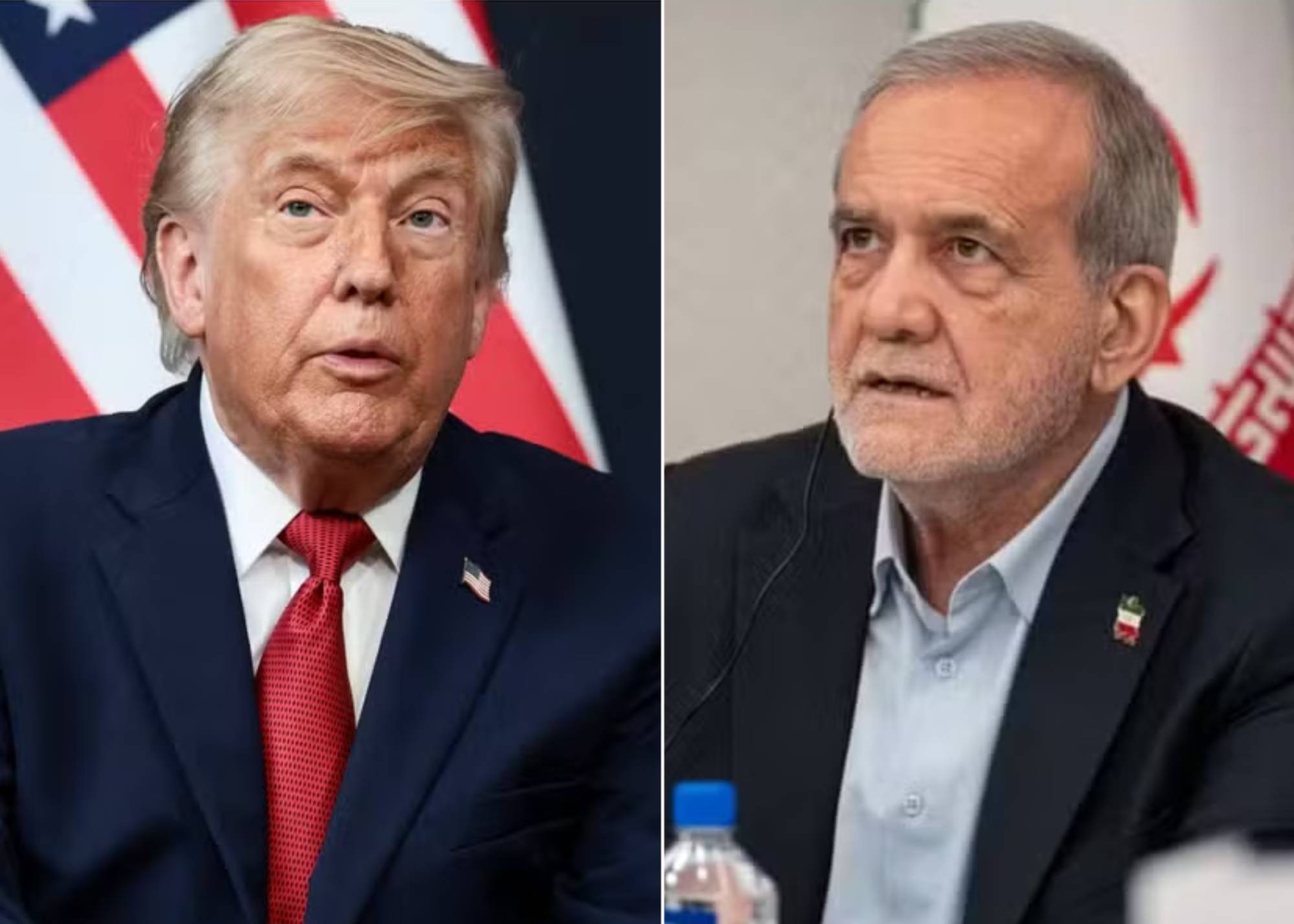
US President Donald Trump and Iranian President Masoud Pezeshkian
Evelyn Hockstein/Reuters and Angelina Katsanis/AP Photo
The memorandum of understanding signed between the United States and Iran on June 17 to end hostilities in the region was short-lived as an indication of a possible truce. In less than two weeks, the agreement came into question due to new impasses between the two countries.
✅ Follow the g1 international news channel on WhatsApp
Disagreements over the movement of ships in the Strait of Hormuz and the continuation of clashes between Israel and Hezbollah gave rise to a series of threats, attacks and accusations of non-compliance with the agreement.
This Saturday (27), the crisis gained a new chapter. Washington attacked targets on Iranian territory, Tehran launched missiles and drones against US military bases in the Gulf, and Donald Trump once again threatened to eliminate the Iranian leadership.
Next, g1 shows how an understanding that was born with the promise of reducing tensions in the region reached, in a few days, a scenario of risk of direct confrontation.
Now on g1
Signing of the agreement
The signing of the memorandum took place in stages. The first accessions were made electronically, and the official formalization of the agreement took place on June 17th.
The objective was to immediately halt hostilities and create mechanisms to reduce tensions in the region.
June 14
US Vice President JD Vance and the Speaker of the Iranian Parliament, Mohammad Bagher Qalibaf, authorized by Supreme Leader Mojtaba Khamenei, electronically signed the document.
The following day, Trump confirmed the agreement during the G7 summit, while Iranian President Masoud Pezeshkian classified the memorandum as an important step, but stated that a lasting peace would still depend on new advances.
June 17
The agreement was officially formalized, with in-person signatures from Trump, during dinner with Emmanuel Macron in Versailles, and from Pezeshkian, in Tehran.
The memorandum provided for an immediate end to hostilities in all countries. fronts - including Lebanon -, the reopening of the Strait of Hormuz, the lifting of the American naval blockade, the release of frozen Iranian assets and the creation of a US$300 billion reconstruction fund financed by Gulf countries.
20 and 21 June
Tehran announced that it could close the strait again, claiming that the US had not guaranteed a ceasefire in Lebanon, where Israel continued to carry out attacks against Hezbollah.
Trump responded by saying that if the strait were closed, Iran would "no longer have a country."
At the same time, JD Vance began technical negotiations with Iranian representatives, under the mediation of Qatar and Pakistan, in an attempt to preserve the agreement.
A drone image shows vessels in the Strait of Hormuz, from Musandam, Oman, on June 15, 2026
Stringer/Reuters
Maritime crisis
The escalation of tensions between the US and Iran has begun to affect navigation in the Strait of Hormuz again, increasing the risks for vessels crossing the route.
24 June
In light of this, the UN Maritime Agency launched an evacuation scheme to remove hundreds of vessels and around 11 thousand sailors stranded in the region.
25 June
The United Kingdom Maritime Trade Operations Office (UKMTO) reported that a vessel belonging to the Taiwanese company Evergreen Marine was hit by a projectile of unknown origin in the Strait of Hormuz.
On a visit to the Gulf, US Secretary of State Marco Rubio stated that Iran's collection of fees in international waters could cause "total chaos".
On the same day, Iran's deputy foreign minister declared that the safe passage of vessels would depend on direct coordination and authorization from Tehran.
Faced with the increased risks, the UN suspended the evacuation plan.
Military confrontation returns
27 June
The crisis was no longer restricted to the diplomatic field this Saturday (27), when a Panamanian-flagged oil tanker was hit by an Iranian drone.
In response, the US carried out air strikes against Iranian military targets, including installations linked to drones and mining operations in the port city of Sirik.
The Ministry of Iran's Foreign Affairs said it had carried out "defensive" attacks against military targets linked to the United States. Iranian state media classified the action as a "decisive response" to the American bombings that hit a communications tower in Sirik.
June 28
In the early hours of Saturday to Sunday (28), Iran launched missiles and drones against American military bases in Kuwait and Bahrain. In Bahrain, a residential building in the city of Muharraq was damaged.
On social media, Donald Trump stated that the time may come to "complete the job militarily" and declared that, if this happens, the Islamic Republic of Iran "will cease to exist".
Despite the de-escalation agreement signed between Israel and the Lebanese government the previous day, Israel once again attacked Hezbollah militants, claiming that they were carrying rocket launchers. rockets.
Source: G1