After all, what does it mean to be a woman?
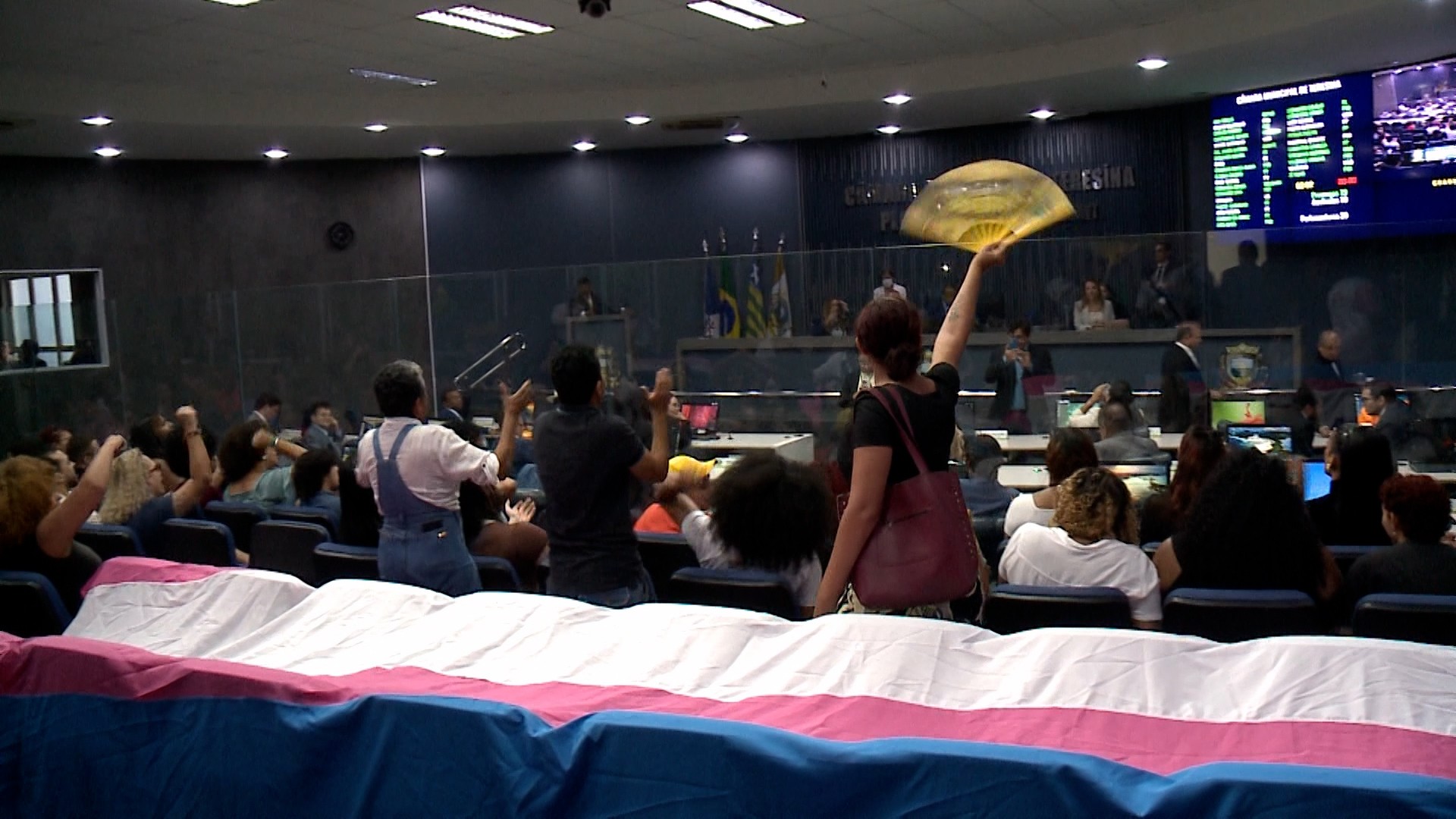
Trans protesters protest against the bill that restricts the use of women's bathrooms in Teresina
TV Clube
The word "woman" has provoked a wave of controversies inside and outside Brazil. On the one hand, there are those who argue that the term refers exclusively to those born with a vulva. On the other hand, there are those who say that it is a self-declared identity, and may also include people with penises.
In Brazil, since 2018, anyone of legal age can request to change their gender and name on their birth certificate.
The subject causes divergence among researchers. From philosophy to medicine, there is no consensus on what it means to be a woman, as experts interviewed by DW explain.
"Sciences are being renewed and new lines appear to define and readapt perspectives", explains Suzana Veiga, specialist in women's history and professor at the University of Pernambuco (UPE).
She says that even feminism is divided, with activists disagreeing among themselves about who their movement represents.
Now on g1
Political impact
This conflict of definitions has been directly reflected in Brazilian politics - and could gain more momentum as the general elections approach. One of the main topics in dispute has been access to spaces such as changing rooms, prisons and, above all, public bathrooms.
In Niterói (RJ) and Teresina (PI), bills are currently being processed to prohibit the use of women's bathrooms by trans women - that is, people who were born with a penis and who declare themselves to be women. The proposals are similar to another law recently sanctioned in Campo Grande (MS).
Fear of crimes and risk situations
Proponents of restrictive measures argue that self-declaration of gender opens the door for female spaces to be frequented by anyone, including female attackers. The fear is that men could pretend to be trans to commit crimes in these environments.
On the other hand, critics claim that this type of law fuels transphobia and exposes trans women to risky situations. They argue that many fear suffering violence in male spaces, as the trans population is also often victims of crimes committed by cisgender men - a term used for those who identify with the gender assigned at birth.
Another case that generated national repercussions this year was the appointment of federal deputy Erika Hilton to the presidency of the Commission for the Defense of Women's Rights in the Chamber of Deputies. A trans woman, she has received criticism from groups that contest her feminine identity or argue that only people born with a vulva should assume a position like this, aimed at creating feminine policies.
"My gender and my identity do not depend on anyone's license", said Erika, at the time, in a Commission session held after her inauguration.
Erika Hilton's inauguration continues to generate discussions. This Wednesday (17/06), she received from the São Paulo Court the right to show on SBT a video responding to presenter Ratinho's statements. In March, he stated on his program that Hilton "is not a woman, she is trans", which was understood as an offense in addition to the political criticism in the court decision. "What is repressed (...) is not the divergence, but the way it was expressed on the national network. An offense is not an opinion, it is an illegal act", says the text.
Deputy Erika Hilton (PSOL)
Zeca Ribeiro/Chamber of Deputies Source: Agência Câmara de Notícias
The act of identifying as a woman
The concept of gender identity is based on the principle that no sexual organ defines someone as a woman, man or another identity. The focus is on the way each person recognizes themselves.
There are trans women who resort to surgeries and hormonal treatments to change their physical appearance, getting closer to a body historically seen as feminine. But there are also trans people who, whether by choice or lack of access to medical resources, do not change their anatomy.
What then makes someone identify as a woman?
There is no universal answer.
This is what Letícia Carolina Nascimento, author of Transfeminismo, researcher on gender and professor at the Federal University of Piauí (UFPI) explains.
"Being a woman involves a social construction of what is attributed to the female gender", says Nascimento, citing norms culturally associated with femininity. An example of this is makeup. "Being a woman isn't just about putting on lipstick. But for many women, the experience of lipstick is important."
"It is not possible to define all experiences of 'womanhood' from a single biological axis", she says, and believes it is important to "leave open" the question of what it means to be a woman.
Female stereotypes
Because it is so broad, the concept of gender identity is often contested. Critics say it reinforces stereotypes.
"The idea is sexist by definition", says activist Clarice Saadi, director of MATRIA (Association of Women, Mothers and Workers of Brazil), a female collective that opposes the concept of gender identity.
"Accepting that a man can become a woman because he says he 'feels' that way because he wears long hair, dresses or makeup is reducing women to a set of stereotypes", he continues.
"When a family says that a boy is trans because he likes to play with dolls or wear pink clothes, they are reinforcing that certain toys, clothes, colors and tastes would belong to a girl", says Saadi. "It's a step backwards."
The idea is refuted by activist Deborah Sabará, who is secretary of human rights at ANTRA (National Association of Transvestites and Transsexuals) and director of ABGLT (Brazilian Association of Lesbians, Gays, Bisexuals, Transvestites, Transsexuals and Intersexes). linked to femininity, such as delicacy.
Self-declaration in the legislature
In the legislative field, part of the discussion revolves around possible abuses in self-declaration of gender.
Internationally, a controversial case is that of Marla-Svenja Liebich, a member of a German neo-Nazi group. Until 2023, Liebich identified as male and offended the trans population. But, after being convicted of libel and defamation, she changed her document - based on the German law on gender self-determination. With this, she gained the right to serve her sentence in a women's prison.
"It's shocking that many people are agreeing that the definition of a woman can be ethereal", says Maria Carolina Medeiros, professor at Fundação Getulio Vargas (FGV) and researcher on female socialization.
"What would policies for the elderly be like if there was no definition that an elderly person is someone aged 60 or over? Of course, you can discuss this age, but this needs to be well defined."
Nascimento, the author of Transfeminism, says that each public policy has a specific audience. For example, issues related to pregnancy do not include trans women, but may involve trans men (people born with a vulva who declare themselves male).
She also states that cases of legislative abuse are often exploited in ways that produce "moral panic" and generalizations about the trans community.
Genitalia as a demarcation
One argument used by trans activism is that not all cis women share the same biological characteristics, such as fertility and uterus.
Critics of self-declaration, in turn, say that exceptions of this type do not interfere with the way women are socialized from birth.
In the view of some experts, restricting the meaning of "woman" to one genitalia would be reducing the female population to reproductive function, which would endorse misogyny and contribute to the maintenance of patriarchal thoughts.
"When they bet on biology as a universal experience of women, there is a setback in decades of feminist studies", says the professor Birth.
For other scholars, unlinking these factors harms both the recognition and the fight against gender inequality. "The oppression of women is linked to biological sex", says Professor Medeiros, mentioning problems such as obstetric violence and menstrual dignity. "There is a huge disparity between being born a man and being born a woman. "
Culture and biology
Sociologist and author of the trilogy Images of women in the modern West, Isabelle Anchieta explains that the clash of definitions of women has been treated in a polarized way in recent times, which she considers dangerous for the advancement of the discussion itself.
"We have both things acting on us: culture and biology. This cannot be ignored", she says. "Whoever bets that a woman is [just] a uterus is wrong, but she is also not just culture."
Like Anchieta, professor Suzana Veiga analyzes the current polarization of the debate with concern. "I have seen a scenario of war between historically oppressed groups," he says.
According to Veiga, the debate has been held shallowly, mainly on social media. "People without great [theoretical] depth discuss profound topics", he summarizes.
But the tendency is for this polarization to only intensify, according to experts. They also highlight that divergences directly affect the development of public policies, production of statistics and the identification of different forms of violence.
Source: G1