Adjustment of electrical energy puts pressure on production costs in agribusiness
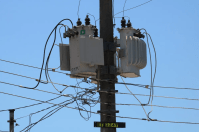
The adjustments in electricity tariffs approved by the National Electric Energy Agency (Aneel) in 2026 are expected to impact agribusiness production costs.
In different states, rural producers must face increases ranging from just over 3% to almost 23% for rural consumers served at low voltage, increasing production costs in activities highly dependent on energy, such as irrigation, grain storage, poultry farming, swine farming, dairy farming, fish farming and agro-industries.
The adjustment approved for Copel in the state of Paraná was 20.51%, a higher rate than that initially proposed by the regulatory agency.
The most emblematic case is that of Paraná, where the FAEP System (Agricultural Federation of the State of Paraná) classified the adjustment authorized for Copel as "abusive" and began a political mobilization to try to reverse the decision.
The entity states that the increase occurs precisely at a time when producers have been living for years with frequent interruptions in energy supply and million-dollar losses caused by blackouts in rural areas.
According to the president of the FAEP System, Ágide Eduardo Meneguette, the approved adjustment even exceeds the inflation recorded in 2025, of 4.26%, without any improvement in the quality of the service.
"The adjustment rate that Aneel is approving is even higher than the initial proposal, which was already absurd. We will work to reverse this decision", he stated.
The entity also informed that it will officiate Senator Sergio Moro to seek, with Aneel, alternatives that will allow reversing or at least reducing the impact of the increase.
FAEP's position comes after a series of public hearings held in Curitiba and Brasília, in which representatives of the agricultural sector presented data on the losses caused by constant fluctuations and interruptions in the supply of electricity to rural properties.
According to the entity, producers have been living for years with production losses, damage to equipment, interruptions in milking, stoppage of irrigation systems and losses in farms and poultry houses due to instability in the electrical network.
Meanwhile, FAEP highlights, Copel recorded a net profit of R$2.66 billion in 2025.
"We cannot accept that rural producers start paying even more for light that often does not arrive. Aneel ends up rewarding a service that continues to present serious problems", says Meneguette.
Paraná records one of the biggest readjustments in the country
For the productive sector, the increase worsens a scenario of loss of competitiveness, especially for activities that operate practically continuously and have large energy consumption.
Among them are:
- irrigation systems;
- grain drying and storage;
- confinements;
- milk production;
- poultry farms;
- pig farms;
- fish farming;
- agribusinesses located in rural areas.
FAEP argues that any tariff adjustment should be conditional on improving the quality of supply, something that, according to the entity, did not occur.
São Paulo will see an increase of close to 9% for rural Enel consumers
Rural producers in São Paulo served by energy distributors will see an increase in their electricity bills as a result of the tariff adjustments approved by Aneel. In the Enel São Paulo concession area, which serves the capital and part of the Metropolitan Region, the average approved adjustment was 10.18%. For rural consumers classified as low voltage (group B2 Rural), the increase will be 8.85%.
According to the agency, Enel's readjustment was mainly influenced by the increase in sectoral charges, the increase in transmission costs, expenditure on energy purchases and the update of the financial components of the electricity sector.
The agency emphasizes that a large part of these costs does not remain with the distributor, being used to finance public policies and the payment of charges and services for the national electricity system.
In the interior of São Paulo, producers served by CPFL Santa Cruz will face an even more significant increase. The distributor, responsible for supplying energy to around 528 thousand consumer units, had an average adjustment of 18.89%.
For low voltage rural consumers, the approved increase reached 22.85%, one of the highest rates recorded among the distributors analyzed by Aneel.
Mato Grosso do Sul also records a double-digit increase
In the Energisa Mato Grosso do Sul concession area, the Agency approved an average tariff adjustment of 12.11%. The index was reduced after the distributor requested a tariff deferral, a mechanism that mitigated part of the increase. Without this measure, the average adjustment would have reached 12.61%.
For low voltage consumers, a group in which the majority of rural producers are included, the average increase approved was 11.98%.
According to Aneel, the adjustment was mainly driven by the increase in the costs of the CDE (Energy Development Account), sectoral charges, financial components accumulated from previous tariff cycles and expenses with energy transmission.
Mato Grosso will have a 6.86% increase in energy tariffs
In Mato Grosso, the largest producer of soybeans, corn, cotton and beef in Brazil, the National Electric Energy Agency (Aneel) approved an average tariff adjustment of 6.86% for consumers served by Energisa Mato Grosso.
Although the approved percentage is lower than those recorded in states such as Paraná, Mato Grosso do Sul and part of São Paulo, the impact on agribusiness in Mato Grosso tends to be significant.
The state concentrates the largest agricultural production in the country and has a structure highly dependent on electricity for irrigation, drying and storage of grains, seed processing, cotton gins, slaughterhouses, cattle confinements, farms, water pumping systems and agro-industries.
Bahia has the lowest adjustment among the cases analyzed
At Neoenergia Coelba, which serves around 6.9 million consumer units in Bahia, the average adjustment approved was 5.18%.
For low voltage consumers, where most rural properties are located, the average adjustment was 3.42%.
According to Aneel, the percentage was not higher because the distributor brought forward resources related to the UBP (Use of Public Goods), a mechanism that significantly reduced the tariff effect. Without this measure, the average adjustment could reach around 12.43%.
Low-carbon agriculture gains space in Brazil
Source: CNN