A new horizon for energy management in Brazil
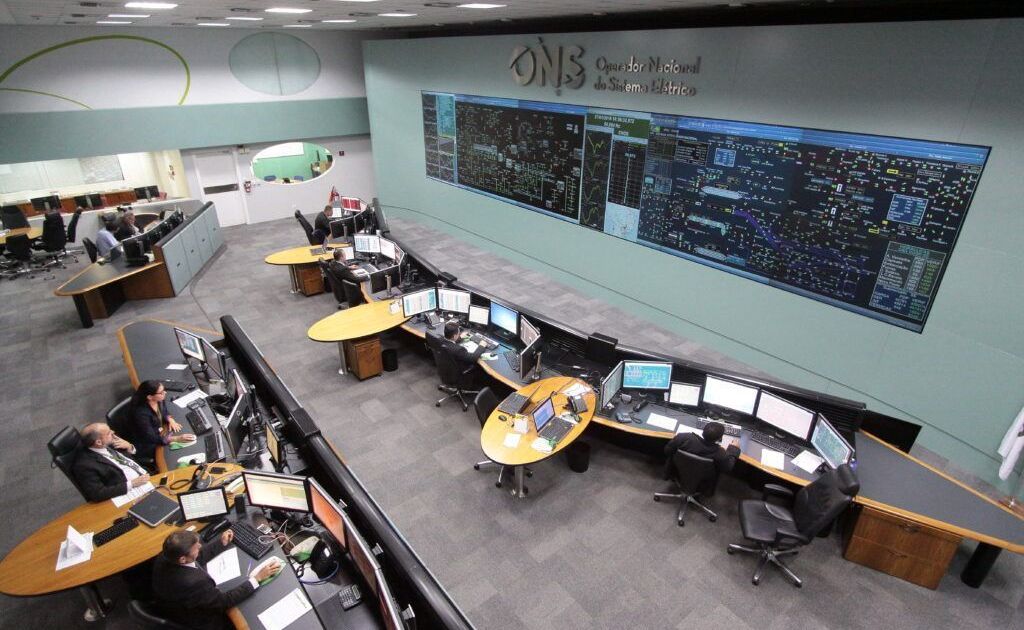
At the beginning of June, the ONS (National Electric System Operator) activated an emergency plan for the first time in history - and not due to a lack of energy, but due to an excess. Distributed solar generation had grown so much that the system was unable to absorb everything that was being produced. The ONS then had to cut 1,000 megawatts of generation between 10 am and 2 pm to avoid instability in the network.
Unprecedented, the episode precisely illustrates the new center of debate in the Brazilian electricity sector. With the expansion of renewable sources, especially solar and wind, generating more energy is no longer the country's main challenge, and the system has become more complex and more subject to variations in supply. Those who consume feel this in the bill and in the predictability.
I have been following the electricity sector for more than two decades. In 2001, while still at Telefônica, I was asked to negotiate targets with distributors during rationing because I was the engineer closest to the matter. There, I realized that energy has always been a business decision. The sector was slow to treat it like this.
For companies, this understanding is now a management necessity. Historically treated as an unmanageable fixed cost, energy today requires closer monitoring. The value of the account, its fluctuation and the contracting model, therefore, become part of the core of business decisions.
For years, this type of management was the privilege of large companies, with the structure to operate in the free market or invest in their own solutions. I saw this window open. In the early 2000s, I helped structure the first operations of what is now called the free energy market, when the term was not yet circulating in the sector. The logic was simple, but radical for the time: the customer could choose who to buy energy from.
This choice, which seemed absurd to many at the time, became the basis of an entire market. Today, the free market accounts for around 42% of all energy consumed in Brazil, with more than 83 thousand consumers - almost 19 thousand of them migrated in 2025 alone. What is starting to consolidate now is a new chapter in this story, with the democratization of access to energy management. Digitization reduces barriers by simplifying operations and bringing smaller companies closer to alternatives that were previously out of reach.
Law No. 15,269/2025 established a concrete schedule for this. Smaller commercial and industrial consumers will be able to migrate to the free market from November 2027, and residential consumers from November 2028. This transformation of the sector also involves the adoption of new technologies in the Brazilian electrical infrastructure itself. One example is BESS. The federal government has scheduled two unprecedented auctions for December to contract battery energy storage systems - a structural response to the system's variability problem. There are 2 gigawatts to be contracted, with investments estimated at around R$10 billion.
With this, the traditional path to energy efficiency is also changing. Reducing energy costs is not linked to infrastructure works and interventions. Models that connect generation and consumption through digital platforms are gaining ground, with less operational complexity and lower technical requirements for the customer. It is possible, for example, to convert the energy generated in solar farms into digital credits, which allows energy from renewable sources to be brought to companies without the bureaucracy that previously marked this process.
The price environment still remains under pressure and subject to variations. For many companies, especially small and medium-sized ones, the challenge involves both the amount paid and the difficulty of predicting this cost over time. There are already solutions on the market that allow significant reductions in energy bills, without the need for initial investment.
This path changes the way energy costs enter financial planning. Predictability becomes an asset. Knowing how much energy will represent in the budget has a direct influence on operational decisions and growth capacity.
There is also a change in the relationship between consumption and company positioning. Access to renewable sources, previously restricted to large corporations, is expanding and reaching smaller businesses, following consumers who are more aware of the impact of what they consume.
Over more than two decades in the sector - from Telefônica to GDSolar, the largest distributed generation company in Brazil, until Matrix Energia -, I learned that technology only has value when it solves a real problem. The question that guides me from the beginning is always the same: what am I solving in the client's life? When the answer is objective, the conversation about energy stops being technical and becomes strategic.
The sector needs to move towards a model in which energy is configured as a service, with continuous monitoring, use of data and greater integration between technology and consumption. Brazil starts from a favorable base, with a mostly clean matrix. Advancement now depends less on expansion and more on organization, on how this energy reaches, in a simple and structured way, those at the forefront.
Energy efficiency is no longer a distant agenda or restricted to large companies. Now, it is a management instrument, with a direct impact on cost, risk and competitiveness.
* By Alexandre Gomes, commercial vice-president of Matrix Energia
The articles published by CNN Infra seek to stimulate debate, reflection and shed light on views on the main challenges, problems and solutions faced by Brazil and other countries in the world. The texts published in this space do not necessarily reflect the opinion of CNN Brasil.
Source: CNN