6×1: government supporters criticize "alarmism" and businesspeople target post-election issues
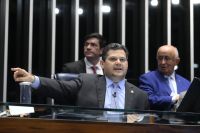
Governors defended this Wednesday (1st) the proposal to end the 6x1 work schedule as a societal agenda and criticized the "alarmism" of sectors opposed to the matter.
In a debate in the Senate plenary, members of the opposition and representatives of the economic sector claimed that the proposal was electorally motivated and asked for the text to be analyzed after the elections.
"There is no reason to be alarmed about the impacts of the end of the 6×1 scale", stated Minister Guilherme Boulos, from the General Secretariat of the Presidency. He argued that ensuring greater rest for workers should generate an increase in productivity.
The minister also made an appeal for the proposal to advance in the Senate, where it has been without progress for more than a month. The PEC (Proposed Amendment to the Constitution) was approved in the Chamber at the end of May. The text guarantees two days of rest for workers, without loss of salary, and provides for the reduction of the current 44-hour week to 40 hours.
"It's an agenda that doesn't belong to President Lula's government, it doesn't belong to the Brazilian Legislature. This is an agenda for the country, for the Brazilian working class, which President Lula courageously embraced, paying the price for it", declared Boulos.
In the same vein, the Minister of Labor and Employment, Luiz Marinho, also reinforced that the Brazilian economy is capable of tolerating a reduction in working hours.
"The impact that arises is fully possible to be calculated and absorbed by Brazilian society, in an economy that has been growing. Some talk about catastrophes do not cope with the reality that we are seeing in the Brazilian economy", said Marinho.
On another front, Paulo Skaf, president of Fiesp (Federation of Industries of the State of São Paulo), stated that reducing working hours is a "complex" topic and should be discussed in more depth. "We can debate, but not on the eve of an election, not with electoral motivation, not taking away the freedom of senators or deputies to vote within their conscience", he declared.
According to Ricardo Alban, president of the CNI (National Confederation of Industry), the productive sectors are not against the debate, but are critical of the "format" of the discussion of the PEC (Proposed Amendment to the Constitution). "The commitment of the productive sector is to really discuss and find the solution in time and in the appropriate way so that we can truly be competitive", he said.
In response to Skaf, Senator Teresa Leitão (PT-PE), leader of the government in the Senate, denied that the proposal is electoral and recalled that the issue has been discussed in the Chamber since 2019.
"The debate on reducing working hours must be treated as a strategic agenda for the country. The Senate has the opportunity to conduct this debate as it is conducting. And I'm sorry, Dr. Paulo [Skaf], the PEC was filed in 2019, it is not an 'out of the box' PEC", stated the senator.
The senator also criticized the so-called "alternative PEC" sponsored by the opposition and which creates a flexible remuneration scheme for hours worked. The proposal was presented precisely to oppose the end of the 6×1 scale. For Teresa, this PEC "brings back aspects that the workers' struggle has already left aside: the flexibilization of labor relations."
Author of the alternative PEC and leader of the opposition in the Senate, senator Rogério Marinho (PL-RN), highlighted that the work schedule is defined according to the "typicality" of each category and cannot be subject to a general rule.
"The diversity of the job market is not being taken into consideration, either out of levity, or because the speech is electoral. And what we defend is that this speech takes place outside the contamination of the electoral process", said the senator.
The debate in the plenary this Wednesday was the first formal discussion of the PEC at the end of the 6×1 since the text was sent by the Chamber. In parallel, the proposal had already been discussed in closed meetings by the president of the Senate, Davi Alcolumbre (União-AP). In May, he received businesspeople and this morning he spoke with representatives of trade unions.
Alcolumbre, however, has not yet indicated when it should proceed with the proposal and define an analysis calendar. In the plenary session on Tuesday (30), he complained about the charges received for not following what he called "electoral texts". He also repeated that the Senate will not be a "rubber stamp" House.
Alcolumbre will not vote on the end of the 6x1 scale until recess | BEHIND THE SCENES CNN
Source: CNN