2026 World Cup: understand the new format and how new rules work, from 'Vini Jr law' to turbocharged VAR
New rules and format for the 2026 World Cup.
REUTERS/David Klein
The 2026 World Cup promises to be different from all the previous ones. In addition to being the biggest in history, and the first hosted by three countries - the United States, Mexico and Canada -, the tournament will also introduce a series of changes to football rules. The new features include measures to combat "wax", increase the time the ball is rolling and the new "Vini Jr rule." against racism.
See all the World Cup shirts and choose the most beautiful one
Favorite g1 on Google and follow the main news of the day
Most of them have already been approved by the International Football Association Board (IFAB), the body responsible for the laws of the game. Some of them have even been tested in recent matches, such as the friendly between Brazil and Panama, at Maracanã.
This report brought together the main changes from the 2022 World Cup, in Qatar, to the 2026 World Cup.
2026 World Cup: see the main changes
Less time to wax
One of the main complaints from FIFA and IFAB in recent years is the amount of time lost during the matches. Therefore, the 2026 World Cup will have new measures to speed up the game.
At throw-ins and goal kicks, the referee will be able to start a five-second visual countdown when he understands that a player is taking excessively long to put the ball back into play. If the deadline ends:
the full-back passes to the opposing team;
the goal kick becomes a corner for the rival.
The measure did not exist in the Qatar Cup and was created precisely to reduce delays considered strategic.
Now on g1
New "Vini Jr rule." against racism
Another new feature of the 2026 World Cup is a rule aimed at combating discrimination, which is being called by some the "Vini Jr rule.". Players who cover their mouths to hide racist, homophobic offenses or other discriminatory behavior may receive a red card.
The measure gained strength after an episode involving the Brazilian national team star and Argentine Gianluca Prestianni, in a match between Real Madrid and Benfica in the Champions League. After an investigation, UEFA (Union of European Football Associations) suspended the Argentine player for six matches for discriminatory conduct.
Prestianni puts his shirt in his mouth in an argument with Vini Jr.
PATRICIA DE MELO MOREIRA / AFP
Substitutions will have a timer
Another important change involves substitutions.
From the 2026 World Cup onwards, the player who is leaving will have up to ten seconds to leave the pitch after the sign is raised. If this time is exceeded, the punishment will be collective: the substitute will need to wait a minute - and wait for the ball to come out - to enter the field at the next stoppage, leaving the team temporarily with one player less.
In the 2022 World Cup there was no specific limit for athletes to leave.
READ ALSO: When are the Brazilian games and who are the opponents? See
Medical care now generates temporary punishment
Another measure aimed at combating wasted time involves medical care.
Now, players who receive care on the field will need to remain out of the game for at least one minute after the match resumes. The rule has exceptions, such as cases involving goalkeepers, head impacts and more serious situations.
According to the IFAB, the intention is to reduce interruptions caused by athletes who simulate or exaggerate injuries to cool down the match.
In addition, injured goalkeepers will no longer allow so-called "informal technical stops", used by coaches to provide guidance during medical care.
VAR gains more powers
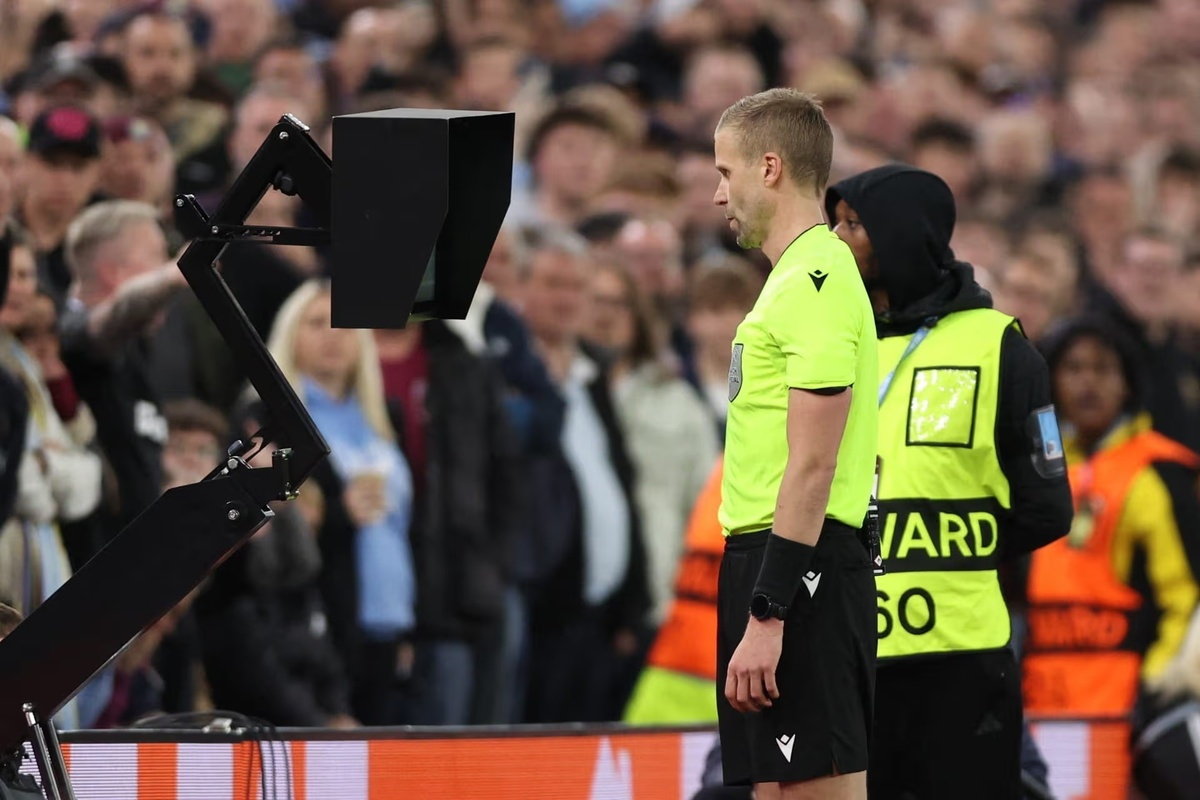
If in the 2022 World Cup VAR already played an important role, in 2026 he will have even more influence.
One of the main new features is the possibility of reviewing expulsions for a second yellow card. Until then, the protocol did not allow this type of intervention.
Another change allows the video referee to quickly notify the field judge when there is a clear error in the marking of corners or goal kicks.
In many cases, the correction can be made without the need for review on the monitor at the edge of the pitch.
The protocol also now provides for reviews of fouls committed before dead ball kicks that result in a goal, penalty or disciplinary punishments.
VAR decided on dubious World Cup moves.
EPA via BBC
Cup will have more teams and an extra knockout stage
In addition to the changes to the rules, the 2026 World Cup will also have a new format. For the first time, the tournament will feature 48 teams - 16 more than in Qatar, in 2022.
The main changes are:
48 teams, compared to 32 in the last World Cup;
12 groups of four teams each;
classification of the two best in each group and the eight best third-placed teams;
creation of an extra knockout stage before the round of 16;
increase in the total number of games to 64 to 104.
With the new structure, the champion will need to play eight matches to lift the cup. In the Qatar Cup, seven were needed. The change is part of FIFA's strategy to expand the participation of countries and make the World Cup more global.
Source: G1