2026 World Cup: is the company obliged to release employees to watch games? Understand
Will there be a day off for the Brazil games? What the labor law says
Brazil's first game on a working day takes place this Friday (19), and companies across the country have already prepared for changes in the work routine during the games.
The national team's matches rekindle frequent doubts among workers and employers: are companies obliged to release employees? Is it allowed to watch games during working hours? Can the hours be compensated?
Do you have any suggestions for reporting? Send it to g1
In addition to today's game, Brazil will play another group stage game on a working day, but both are at night, Brasília time. If the team advances in the tournament, new matches may once again coincide with working hours.
Although it is common for companies to make schedules more flexible or reduce working hours during the World Cup, labor legislation does not provide for mandatory time off on game days. (see below how it works)
A survey by Catho, carried out with 420 companies, shows that only 5% intend to maintain normal working hours during the Brazilian team's games. The majority say they should adopt some type of flexibility for employees.
According to the survey, 76% of companies say that the World Cup impacts, at least in part, their corporate routine.
In addition, 60% say that the games coincide with working hours - a scenario that tends to mainly affect sectors that operate at night, such as supermarkets, shopping malls, bakeries, retail, food and service provision.
Among the most adopted measures, 26% of companies say that they will broadcast the games in the workplace, while 24% intend to release employees before the matches.
For Patricia Suzuki, HR director at Redarbor Brasil, the group responsible for Catho, the tendency is for companies to seek to balance productivity and employee experience during events of great collective interest.
"There is a greater perception among companies that making the routine more flexible at specific times can contribute to engagement, organizational climate and even productivity, especially in teams that work longer shifts or at night", he says.
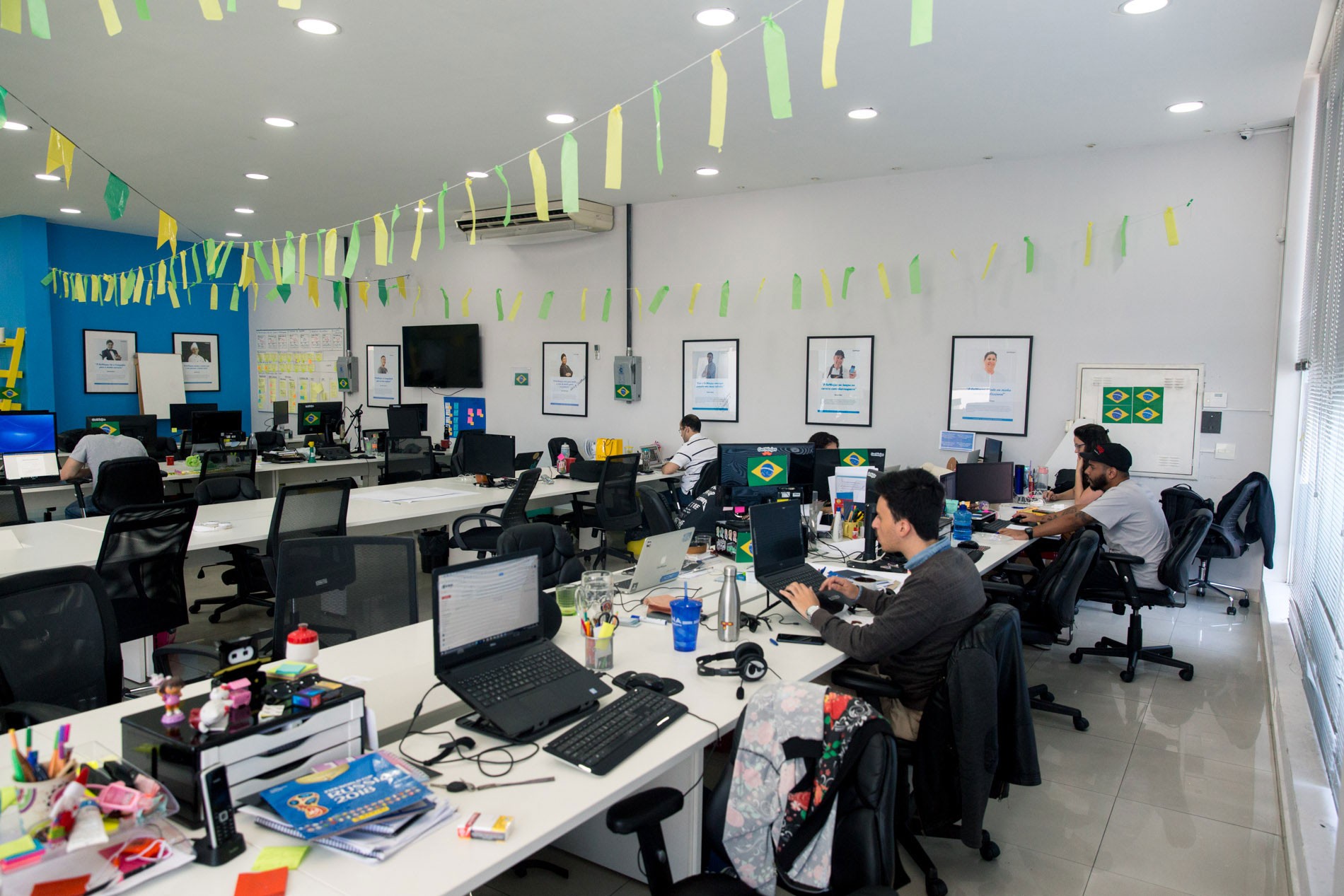
The startup GetNinjas is already decorated for the World Cup; employees will see games on big screen
Marcelo Brandt/G1
Is time off during the World Cup mandatory?
Despite the tradition in World Cup years, game days for the Brazilian team are not holidays. Labor legislation does not provide for any specific rules for the World Cup and, therefore, normal working hours continue to apply.
In practice, this means that the company is not obliged to release employees, reduce working hours or make working hours more flexible because of the games. When release occurs, the decision comes exclusively from the employer.
Some companies choose to release employees without a salary deduction, while others allow workers to watch matches in their own workplace. There are still companies that maintain normal working hours.
When the dismissal occurs without salary deduction, the time off is considered paid. In other cases, the hours may be compensated later.
Labor lawyer Marcel Zangiácomo, partner at the firm Galvão Villani, Navarro, Zangiácomo e Bardella Advogados, explains that compensation may be required when the company decides to partially or completely release employees during working hours.
According to him, compensation needs to be agreed in advance and respect the limits set out in labor legislation.
"Compensation cannot exceed two hours of overtime per day and the agreement needs to be clear to prevent the worker is surprised later", he states.
According to the lawyer, compensation can occur within up to one year, as long as the appropriate type of agreement is signed - individual verbal, individual written or collective, depending on the case.
Unjustified absence on game days continues to be treated as a common absence. The worker may suffer a salary deduction and even lose paid weekly rest.
Warnings and suspensions may also occur in cases of repeat offenses.
Even so, experts emphasize that missing just to watch a match, without prior notice or negotiation, does not constitute an automatic reason for just cause.
For professionals who work on a shift basis or in essential sectors - such as health, transport, security and public service - the rules tend to be stricter.
According to Zangiácomo, activities considered essential cannot be interrupted because of the games. "The company cannot compromise essential activities because of the World Cup. Therefore, planning and dialogue are important to minimize impacts", he says.
In these cases, individual agreements tend to be more frequent, with assessment of the operational conditions of each team.
The lawyer also warns that watching the games without authorization, even within the work environment, can be interpreted as indiscipline.
"If the company has determined that there will be no break, the employee must comply with the guidance. Otherwise, he or she may be subject to a warning and even suspension", he states.
Experts highlight that, given the absence of a single rule, dialogue between company and worker is the best alternative to avoid conflicts and guarantee safety for both sides.
Employees work at the startup GetNinjas, which decorated the work environment for the World Cup games
Marcelo Brandt/G1
Source: G1