
Leia a noticia completa
The Ministry of Agriculture and Livestock (Mapa) argues that it is largely up to the productive sector to create mechanisms to meet European Union requirements against the use of antimicrobials in livestock farming.
At the beginning of June, the European Union officially removed Brazil from the list of countries considered capable of complying with the bloc's rules for controlling the use of antimicrobials in animal production. As a result, the country will be prevented from exporting meat to the European market from September 3rd.
Antimicrobials are substances used to treat and prevent infections in animals. Some of these medicines can also be used as growth promoters, a practice restricted by European legislation.
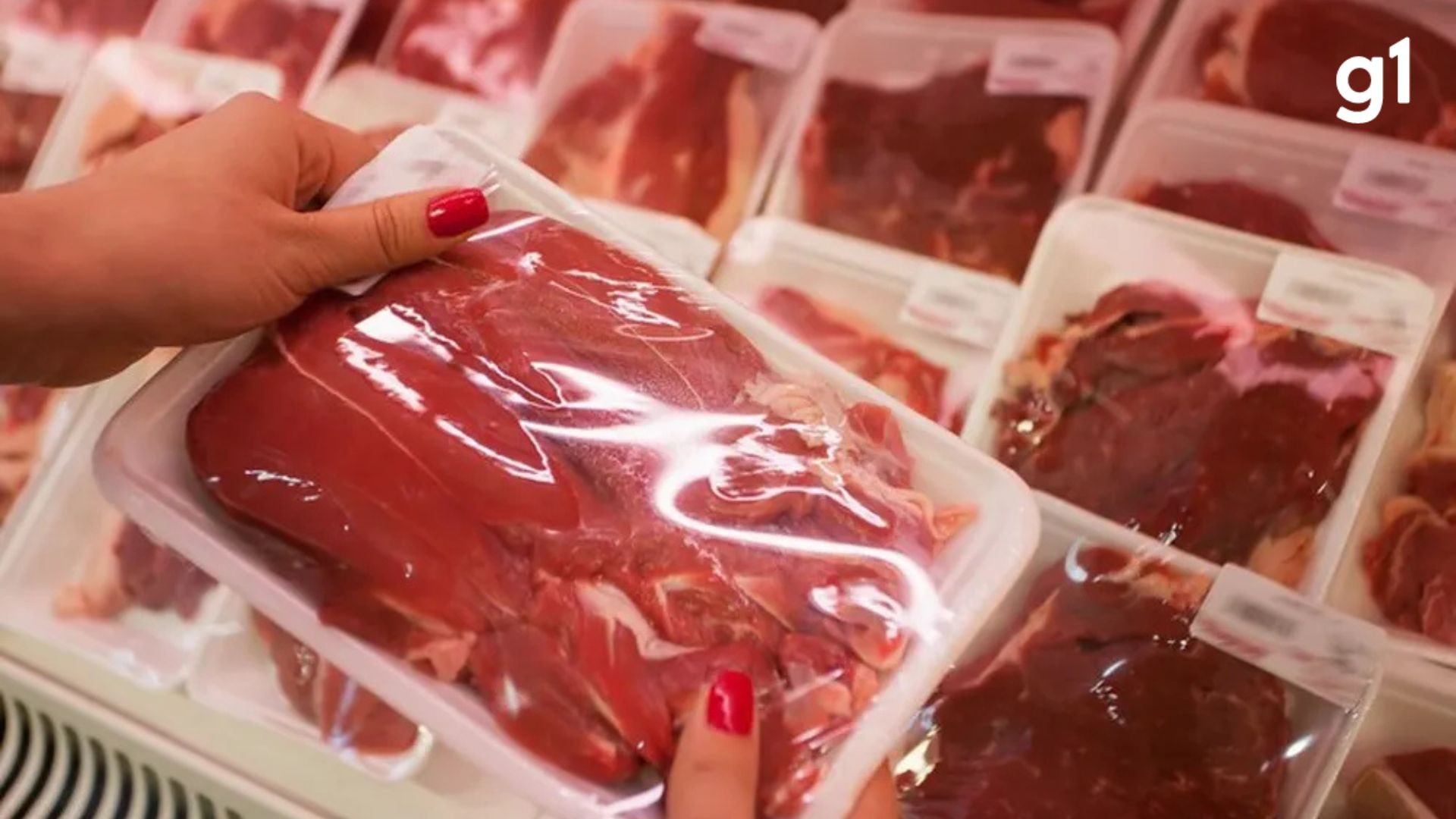
EU bans meat from Brazil from September 3rd
In the list released in 2024, Brazil was authorized to export beef, chicken and horse meat, in addition to tripe, fish and honey. In the most recent update, the country was excluded in all these categories.
"Therefore, the measures necessary to make exports viable depend, to a large extent, on the development and implementation, by the productive sector, of private control systems capable of guaranteeing the segregation of production in accordance with European Union requirements", stated the ministry in a response sent to the Chamber of Deputies. The information was initially released by the Lusa portal and confirmed by g1.
The Brazilian government argues that part of the antimicrobials banned by the European Union remain authorized in Brazil for use in cattle farming, meat and laying poultry farming and pig farming.
According to Mapa, these products have "relevant veterinary purposes for livestock production systems".
In the document sent to Congress, the Ministry states that, in June 2023, the Secretariat of Agricultural Defense brought together representatives of potentially affected sectors to warn about the need to create mechanisms capable of ensuring that animals intended for export to the European Union were not treated with antimicrobials vetoed by the bloc.
Also according to the ministry, this warning was reiterated in meetings later. The ministry argues that the necessary control systems are of a private nature, since the government did not intend to ban, at a national level, the use of antimicrobials restricted by European legislation. to the requirements of the European Union, but says that the first proposals were considered insufficient.
Export of beef
Ministry of Agriculture/Disclosure
Timeline
According to the ministry, on April 28, 2026, a protocol for the beef chain was sent to the Directorate-General for Health and Food Safety of the European Commission (DG SANTE), supplemented on May 15.
On May 20, during meeting with the Brazilian ambassador, DG SANTE informed that it would not comment on the protocol nor would it accept the transition period proposal presented by Brazil, in addition to reiterating concerns regarding the bovine chain.
In a new meeting, on May 29, the European Commission requested a more detailed document on the regulatory situation of antimicrobials in Brazil and on the control mechanisms that would guarantee compliance with European rules.
On the same day, Mapa approved, through an ordinance, the Protocol for the Export of Cattle Free of Antimicrobial Medicines.
Although the European Union has removed Brazil from the list of countries authorized to export meat to the bloc, the government states that negotiations continue.
In response to Congress, Mapa reported that it met again with technicians from DG SANTE on June 29 and committed to sending an updated version of the documentation, reinforcing the measures of control.
g1 contacted the Brazilian Association of Meat Exporting Industries (Abiec), which did not respond.
Ban of antimicrobials
The concern that people develop infections caused by antibiotic-resistant bacteria is one of the reasons that led the European Union to demand greater control from its importers over the use of antimicrobials in animal husbandry.
This is a topic that began to be debated by the EU in the 90s and that culminated in a series of regulations in the following years. In 2006, for example, the bloc banned the use of any antibiotic in animal feed as a growth promoter.
As of 2019, the bloc expanded these requirements with the publication of new regulations that established stricter criteria for the production of meat, milk, eggs and other products of animal origin destined for the European market.
Under the rules, countries that export to the European Union cannot use:
antimicrobials to promote growth or increase productivity of animals;
and/or antimicrobials that contain substances reserved for the treatment of infections in humans.
Behind these requirements is the fear that the use of antimicrobials in animals favors the emergence of antibiotic-resistant bacteria, reducing the effectiveness of these medicines in treating infections in people.
In 2022, in fact, the EU classified antimicrobial resistance (AMR) as one of the main threats to human health.
The topic is also part of a European Union campaign called One Health, launched in 2023, and which defends integrated actions for human, animal and environmental health, considering that they are directly connected.
Source: G1




Toque agora.
As músicas que o Mundo está tocando agora
-
1
 Balancê
Sara Tavares
Balancê
Sara Tavares
-
2
 Majestade
Carlos A. Moyses
Majestade
Carlos A. Moyses
-
3
 It's A Great Day (for Me To Whoop Somebody's Ass)
Paul Thorn
It's A Great Day (for Me To Whoop Somebody's Ass)
Paul Thorn
-
4
 Paraíso
Danilo Santos
Paraíso
Danilo Santos
-
5
 Yesterday
Petula Clark
Yesterday
Petula Clark
-
6
 Maybe someday
The Cure
Maybe someday
The Cure
-
7
 Un Trocito De Cielo
Jaci Velasquez
Un Trocito De Cielo
Jaci Velasquez
-
8
 Call Me Up
Ezio
Call Me Up
Ezio
-
9
 Por Onde Anda Você?
Nina Fernandes
Por Onde Anda Você?
Nina Fernandes
-
10
 Con El Cielo
Hillsong Worship
Con El Cielo
Hillsong Worship
-
11
 Vem Com Teu Fogo
Adorazione
Vem Com Teu Fogo
Adorazione
-
12
 Excelente
Lucas Santos Tiago
Excelente
Lucas Santos Tiago
-
13
 Fake Amor
Melody
Fake Amor
Melody
-
14
 Rock And Roll In The Hay
Brad Cotter
Rock And Roll In The Hay
Brad Cotter
-
15
 Nunca Había Sentido Tanto Miedo
Alejandro Neri
Nunca Había Sentido Tanto Miedo
Alejandro Neri
-
16
 Hipnose
Manu Gavassi
Hipnose
Manu Gavassi
-
17
 Hey, Good Lookin'
Dean Martin
Hey, Good Lookin'
Dean Martin
-
18
 Augusta, Angélica e Consolação
Tom Zé
Augusta, Angélica e Consolação
Tom Zé
-
19
 Enquanto Cê Não Vem
Eu, Trovador
Enquanto Cê Não Vem
Eu, Trovador
-
20
 Pelo Teu Nome
Leonardo Campos
Pelo Teu Nome
Leonardo Campos

Historias das musicas em destaque
 Historia da musica
Learn to play Yesterday, by Petula Clark, and discover a beautiful classical interpretation
07/07/2026
Singer Petula Clark built a career marked by elegant interpretations and hits that spanned decades. His version of "Yesterday" presents...
 Historia da musica
Learn to play Call Me Up, by Ezio, and discover folk music full of personality
07/07/2026
The Ezio group is recognized for its compositions that combine folk, rock and sophisticated melodies. The song "Call Me Up" draws atten...
 Historia da musica
Learn to play Maybe Someday, by The Cure, and improve on the guitar
07/07/2026
Among alternative rock's most influential bands, The Cure has built a career full of memorable songs. "Maybe Someday" is one of the son...
 Historia da musica
Learn to play It's a Great Day for Me to Whoop Somebody's Ass by Paul Thorn
07/07/2026
With great humor and a vibe that mixes country, blues and rock, "It's a Great Day for Me to Whoop Somebody's Ass", by Paul Thorn, becam...
 Historia da musica
Learn to play Balancê, by Sara Tavares, and discover all the richness of Lusophone music
07/07/2026
Singer Sara Tavares marked international music with her unique identity, mixing African, Portuguese influences and contemporary sounds....
 Historia da musica
Learn to play Majestade, by Carlos A. Moyses, on the guitar with more emotion and technique
07/07/2026
Some songs manage to cross generations carrying messages of faith, hope and adoration. "Majesty", performed by Carlos A. Moyses, is one...
 Historia da musica
Learn to play Quem Você Exalta, by ExaltaSamba, on the guitar
07/07/2026
For those who like samba and pagode, "Quem Você Exalta", by ExaltaSamba, is a great song to develop new guitar skills. With a character...
 Historia da musica
Learn to play Con el Cielo, by Hillsong Worship, and strengthen your worship repertoire
07/07/2026
Hillsong Worship's "Con el Cielo" is an excellent choice for musicians who enjoy congregational worship and want to develop a solid gui...
 Historia da musica
Learn to play Por Onde Anda Você, by Nina Fernandes, and improve on the guitar
07/07/2026
The song "Por Onde Anda Você", performed by Nina Fernandes, conquers with the delicacy of the melody and the way it conveys feelings th...
 Historia da musica
Learn to play Para Só, by Danilo Santos, on the guitar with more emotion and technique
07/07/2026
If you're looking for an exciting song to expand your guitar repertoire, "Para Só", by Danilo Santos, is an excellent choice. The song...
Mais noticias para voce
 Noticia
08/07/2026
PT makes Camilo Santana official as new leader in the Senate
The PT bench in the Senate announced this Wednesday (8) the choice of senator Camilo Santana (PT-CE) as the group's new leader. The party made the decision offi...
 Noticia
08/07/2026
RJ: Civilian police officers are shot in an attack by drug dealers on Avenida Brasil
Two civil police officers were shot during a shooting attack carried out by drug dealers in Favela do Muquiço, in Guadalupe, in the North zone of Rio de Janeiro...
 Noticia
08/07/2026
FBI investigates Argentine Federation for million-dollar transactions in the USA
Argentina's national team advances to the quarter-finals of the 2026 World Cup while its football federation (AFA) is the target of an intense investigation. Th...
 Noticia
08/07/2026
Driving in Singapore requires a US$100,000 certificate; understand
Car buyers in Singapore will now need to shell out almost US$100,000 for a certificate to own a small car, as costs under the city-state's vehicle quota system...
 Noticia
08/07/2026
Corinthians seeks to end a streak without victories over Palmeiras in the Brazilian Under-20 Championship
- By Mirella Ramos / Central do Timão Editorial Corinthians will face Palmeiras again this Wednesday (8), at 3pm (Brasília time), at Fazendinha, in the first ga...
 Noticia
08/07/2026
Corinthians will have 'reinforcements' of the professional in decisive Derby for the Under-20 Brasileirão
By Felipe Sales and Luis Fabiani on 08 de July 2026 at 12:15 On Wednesday afternoon, Corinthians begins the search for a place in the semi-finals of the Brazili...
Participe da conversa
Seu comentario ajuda a manter a discussao viva e ainda convida outros leitores a continuar navegando pelo portal.
Seja o primeiro a comentar esta noticia.