
Leia a noticia completa
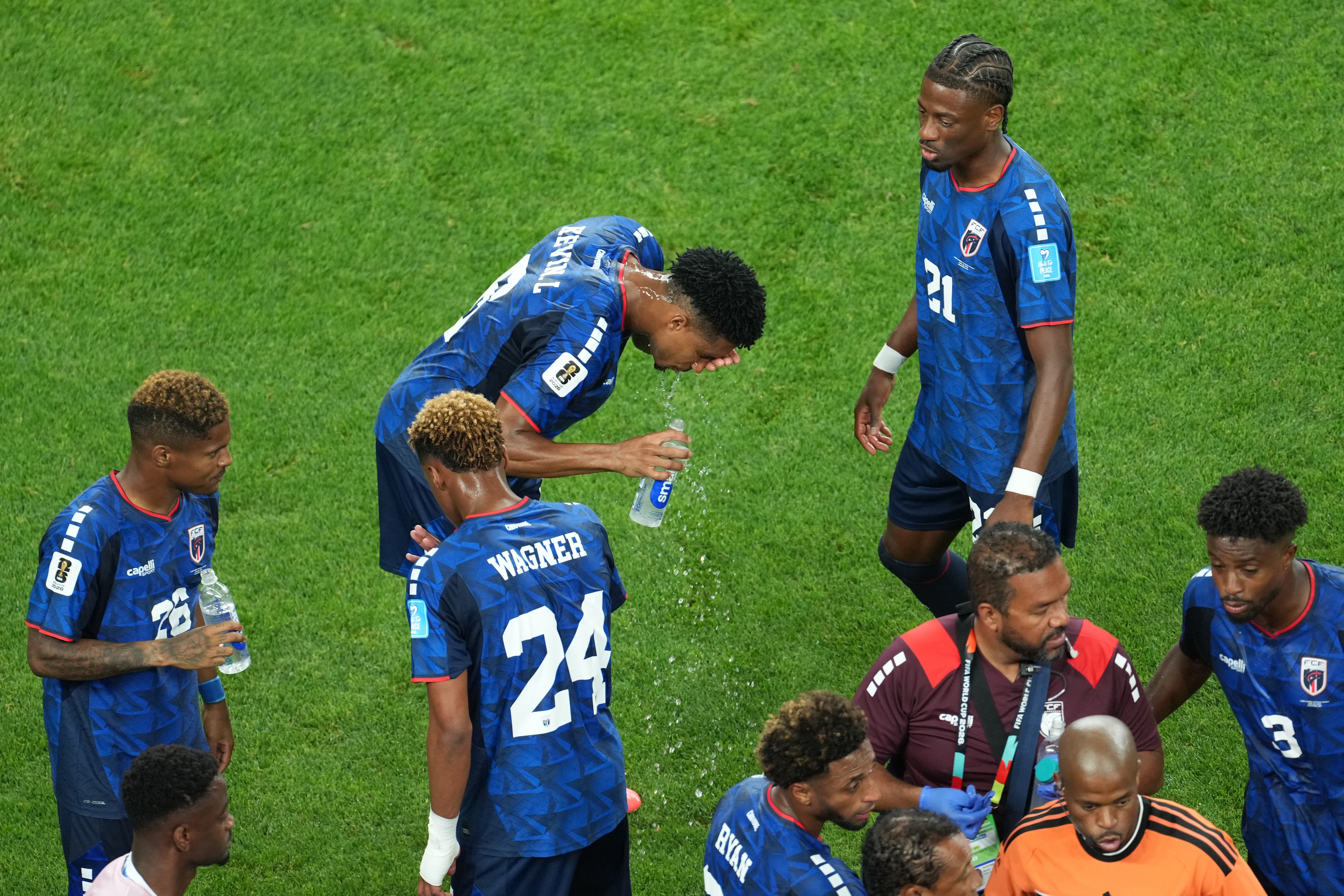
Kevin Pina (6), from Cape Verde, during a hydration break
AP/Eric Gay)
In recent days, videos of players filling their mouths with a drink and then spitting it out, without swallowing, went viral during the 2026 World Cup. On social media, the gesture led to jokes and theories - from that it was water discarded due to excessive heat to speculation about a supposed "secret technique" for performance.
The scene is not exclusive to football: artists in long presentations also resort to similar gestures in short intervals, in a discreet way.
According to Fernando Valente, coordinator of the Diabetes Education Department of the Brazilian Diabetes Society (SBD) and director of the Diabetes Department of the Brazilian Society of Endocrinology and Metabology (SBEM), there is in fact a scientific strategy behind the gesture of spitting liquid - but it does not provide any extra calories to the athlete.
The technical name of the method is "carbohydrate mouth rinse", in scientific literature in English, and its effect, according to the specialist, occurs entirely in the head. Literally.
Now on g1
The brain is tricked, not the body
According to Valente, the practice consists of keeping a carbohydrate-rich solution in the mouth for a few seconds - usually a sports drink concentrated in sugar and electrolytes - and then spitting it out, without swallowing.
Receptors present in the oral cavity identify the presence of carbohydrate and send signals to the central nervous system, stimulating brain areas linked to decision-making, motor control and executive functions, including the prefrontal cortex, a central region for cognitive performance during intense physical effort.
The practical result of this activation is a reduction in the perception of effort and a slight improvement in performance during high-intensity exercise. But the specialist makes a point of separating the sensation from the real fuel: the body does not receive any additional calories.
There is no ingestion, there is no digestion, there is no conversion into energy. What happens is that the brain interprets that there is fuel available and, based on this interpretation, allows the body to sustain a more intense effort - even without actually receiving glucose.
It is this dissociation between sensation and metabolic reality that explains why the technique works even when the athlete is already well fed.
According to Valente, if the athlete had a meal rich in carbohydrates before exercising, the mouthwash continues to produce the same effect - the mechanism depends on the sensory stimulus in the mouth, not the state the athlete's prior nutritional nutrition.
Renato Veiga (13), from Portugal, in the round of 16 match of the World Cup between Portugal and Spain
AP/Julio Cortez
A small but measurable gain
For recreational practitioners, the effect usually goes unnoticed: the performance gain is small and, in the daily lives of those who train for leisure, it may not make a noticeable difference.
The scenario changes when it comes to elite athletes, for whom fractions of a second separate results - like in a cycling time trial. In these contexts, even a small advantage can be decisive.
According to Valente, the performance improvement associated with the technique is around 1% to 3%. This is a modest number in everyday sports practice, but it is shown to be statistically significant in the clinical studies that tested the method - which supports its scientific validity, even though the effects are limited.
A systematic review published in Nutrients reinforces this pattern: when bringing together eleven studies on the subject, the authors found performance improvements in nine of them, with gains that varied from 1.5% to almost 12% in exercises of moderate to high intensity and lasting close to an hour - a range that encompasses the values cited by the specialist.
Most research on the topic has been conducted in cycling and running, with moderate to high intensity sessions lasting between 30 and 75 minutes.
It is this window of time that concentrates the best results demonstrated so far - a relevant fact to understand the limits of the technique when applied to other sports, such as football.
France players during a hydration break in the World Cup round of 16 match against Paraguay, in Philadelphia
AP/Matt Rourke)
And in a 90-minute match, does it make a difference?
A football match lasts 90 minutes and can extend even longer in the case of extra time -one half longer than the window in which carbohydrate mouthwash has demonstrated effectiveness in available scientific studies.
Still, Valente considers that the technique may make sense in specific moments of the match, and not throughout it as a whole.
For the specialist, the benefit tends to be concentrated in high-intensity phases and in the decisive moments of the game, when the athletes' perception of effort is higher - such as in ball disputes at the end of a balanced confrontation or in situations of extreme pressure.
Why spit instead of swallowing
For Valente, the main advantage of not ingesting the carbohydrate is to avoid gastrointestinal discomfort. In high-intensity exercises, ingesting liquids concentrated in sugar can generate nausea and a feeling of a full stomach, harming the performance that the athlete seeks to improve.
The mouthwash, in this sense, works as an alternative: it allows you to obtain part of the benefit of the perception of available energy without overloading the digestive system during physical effort.
When is it better to swallow the carbohydrate
The technique has clear limits, according to the specialist. If the athlete's glycogen reserves are already very low - which usually occurs during very prolonged exercise -, just gulping down the drink won't do the trick, because at that moment the muscle needs a real supply of energy arriving through the bloodstream. This is when effective carbohydrate intake becomes important: the body can no longer be satisfied with the perception of fuel, but actually needs it.
Valente reinforces that swallowing the drink also remains the most recommended strategy in exercises lasting over 75 minutes, or in any situation in which the body already demands real additional energy - scenarios in which glycogen replacement is no longer optional.
Not all spit is carbohydrate mouthwash
Despite the repercussion on social media, Valente avoids claiming that the players caught in videos during the World Cup are necessarily applying this strategy. According to him, the gesture of spitting can have much simpler explanations - from habit and discomfort in the mouth to the simple ingestion or disposal of water during the game. Confirmation that it is indeed carbohydrate mouthwash, according to the expert, would only be possible with information from the teams themselves or the athletes involved.
"Although the technique really exists and it is scientifically valid", says Valente, this does not allow us to conclude that every player caught spitting on the field is using it - even if the proven effects of the method, even if small, are real and measurable.
Source: G1




Toque agora.
As músicas que o Mundo está tocando agora
-
1
 Balancê
Sara Tavares
Balancê
Sara Tavares
-
2
 Majestade
Carlos A. Moyses
Majestade
Carlos A. Moyses
-
3
 It's A Great Day (for Me To Whoop Somebody's Ass)
Paul Thorn
It's A Great Day (for Me To Whoop Somebody's Ass)
Paul Thorn
-
4
 Paraíso
Danilo Santos
Paraíso
Danilo Santos
-
5
 Yesterday
Petula Clark
Yesterday
Petula Clark
-
6
 Maybe someday
The Cure
Maybe someday
The Cure
-
7
 Un Trocito De Cielo
Jaci Velasquez
Un Trocito De Cielo
Jaci Velasquez
-
8
 Call Me Up
Ezio
Call Me Up
Ezio
-
9
 Por Onde Anda Você?
Nina Fernandes
Por Onde Anda Você?
Nina Fernandes
-
10
 Con El Cielo
Hillsong Worship
Con El Cielo
Hillsong Worship
-
11
 Vem Com Teu Fogo
Adorazione
Vem Com Teu Fogo
Adorazione
-
12
 Excelente
Lucas Santos Tiago
Excelente
Lucas Santos Tiago
-
13
 Fake Amor
Melody
Fake Amor
Melody
-
14
 Rock And Roll In The Hay
Brad Cotter
Rock And Roll In The Hay
Brad Cotter
-
15
 Nunca Había Sentido Tanto Miedo
Alejandro Neri
Nunca Había Sentido Tanto Miedo
Alejandro Neri
-
16
 Hipnose
Manu Gavassi
Hipnose
Manu Gavassi
-
17
 Hey, Good Lookin'
Dean Martin
Hey, Good Lookin'
Dean Martin
-
18
 Augusta, Angélica e Consolação
Tom Zé
Augusta, Angélica e Consolação
Tom Zé
-
19
 Enquanto Cê Não Vem
Eu, Trovador
Enquanto Cê Não Vem
Eu, Trovador
-
20
 Pelo Teu Nome
Leonardo Campos
Pelo Teu Nome
Leonardo Campos

Historias das musicas em destaque
 Historia da musica
Learn to play Yesterday, by Petula Clark, and discover a beautiful classical interpretation
07/07/2026
Singer Petula Clark built a career marked by elegant interpretations and hits that spanned decades. His version of "Yesterday" presents...
 Historia da musica
Learn to play Call Me Up, by Ezio, and discover folk music full of personality
07/07/2026
The Ezio group is recognized for its compositions that combine folk, rock and sophisticated melodies. The song "Call Me Up" draws atten...
 Historia da musica
Learn to play Maybe Someday, by The Cure, and improve on the guitar
07/07/2026
Among alternative rock's most influential bands, The Cure has built a career full of memorable songs. "Maybe Someday" is one of the son...
 Historia da musica
Learn to play It's a Great Day for Me to Whoop Somebody's Ass by Paul Thorn
07/07/2026
With great humor and a vibe that mixes country, blues and rock, "It's a Great Day for Me to Whoop Somebody's Ass", by Paul Thorn, becam...
 Historia da musica
Learn to play Balancê, by Sara Tavares, and discover all the richness of Lusophone music
07/07/2026
Singer Sara Tavares marked international music with her unique identity, mixing African, Portuguese influences and contemporary sounds....
 Historia da musica
Learn to play Majestade, by Carlos A. Moyses, on the guitar with more emotion and technique
07/07/2026
Some songs manage to cross generations carrying messages of faith, hope and adoration. "Majesty", performed by Carlos A. Moyses, is one...
 Historia da musica
Learn to play Quem Você Exalta, by ExaltaSamba, on the guitar
07/07/2026
For those who like samba and pagode, "Quem Você Exalta", by ExaltaSamba, is a great song to develop new guitar skills. With a character...
 Historia da musica
Learn to play Con el Cielo, by Hillsong Worship, and strengthen your worship repertoire
07/07/2026
Hillsong Worship's "Con el Cielo" is an excellent choice for musicians who enjoy congregational worship and want to develop a solid gui...
 Historia da musica
Learn to play Por Onde Anda Você, by Nina Fernandes, and improve on the guitar
07/07/2026
The song "Por Onde Anda Você", performed by Nina Fernandes, conquers with the delicacy of the melody and the way it conveys feelings th...
 Historia da musica
Learn to play Para Só, by Danilo Santos, on the guitar with more emotion and technique
07/07/2026
If you're looking for an exciting song to expand your guitar repertoire, "Para Só", by Danilo Santos, is an excellent choice. The song...
Mais noticias para voce
 Noticia
08/07/2026
Russia attacks Kiev for the second time in a row and leaves three dead
Russian attacks killed three people in Ukraine this WednesdayUkrainian emergency service via AFPRussia bombed the Ukrainian capital, Kiev, and other nearby citi...
 Noticia
08/07/2026
Global markets fall after Trump declares end of peace agreement with Iran; oil rises more than 5%
Trump says ceasefire with Iran is overFinancial markets around the world are falling this Wednesday (8), after United States President Donald Trump said that th...
 Noticia
08/07/2026
Lindsay Lohan celebrates 40th birthday with son and husband
Actress Lindsay Lohan celebrated her 40th birthday in a more intimate way, in the company of her son, Luai, 3, and her husband, Bader Shammas, 40. Last Tuesday...
 Noticia
08/07/2026
Morocco coach challenges France after meteoric rise
The coach of the Moroccan national team, Mohamed Ouahbi, has already won a world title as a coach, but the feat happened at the youth level. Now, the commander...
 Noticia
08/07/2026
Exchange of attacks between Iran and the USA: How did we get here?
It was only last month that the United States and Iran signed a long-awaited Memorandum of Understanding in which they agreed to cease hostilities in exchange f...
 Noticia
08/07/2026
Matt Damon reveals routine to "get ripped at 50": "Two years gluten-free"
To play the Greek king Odysseus in "The Odyssey", Matt Damon had to make a sudden change in his diet and exercise routine. The 55-year-old actor has already sai...
Participe da conversa
Seu comentario ajuda a manter a discussao viva e ainda convida outros leitores a continuar navegando pelo portal.
Seja o primeiro a comentar esta noticia.