

Leia a noticia completa
For a long time, the debate about China's economic rise was anchored in familiar clichés, such as cheap labor, artificially devalued exchange rates and the copying of intellectual property. Although these premises carry slices of historical truth, they no longer explain the complexity of the current scenario.
A recent report by the Rhodium Group, published in March 2026, offers a much more sophisticated and therefore disturbing reading. Beijing has structured what analysts have agreed to call an "electro-state", an ecosystem whose global implications the West is still struggling to decipher.
The central thesis of the document is elegant simplicity, but with dizzying developments. China has integrated, into a unique and self-reinforcing chain, three fundamental pillars: the generation of cheap electrical energy, the processing of industrial metals and the manufacturing of green technologies.

Each link acts as a catalyst for the next, so abundant electricity reduces the cost of refining aluminum, copper and lithium. These cheap metals in turn make solar panels, wind turbines and batteries cheaper to produce, while renewables inject even more low-cost energy into the grid. The cycle feeds back into an industrial maelstrom that the rest of the world watches with a mixture of admiration and helplessness.
The data presented by the Rhodium Group impresses and discomforts any Western strategic planner on a scale that defies comprehension.
In 2025, combined solar and wind energy generation in China surpassed total industrial consumption in the United States. In 2026, this same clean production will exceed the sum of American domestic and industrial consumption.

Toque agora.
In the field of fleet electrification, electric vehicles in circulation in China already save the equivalent of 1.76 million barrels of oil per day, progressively shielding the country against geopolitical shocks in the fossil fuel market.
Since the turn of the millennium, the Asian country has accounted for 60% of all growth in global electricity consumption. Even in the face of the recent economic slowdown, imposed by the crisis in the real estate sector, Chinese electrical demand continues to expand at rates that surpass the rest of the world combined. This is a statistical anomaly that challenges traditional economic models, in which energy consumption usually fluctuates in strict symmetry with the Gross Domestic Product.
It would be tempting to package this trajectory as a purely green and triumphant narrative, but the report is surgical in exposing its contradictions. The backbone of this ecosystem rests not on sun or wind, but on coal.
China has expanded the largest fleet of thermoelectric plants on the planet because the mineral is an abundant domestic resource and because basic metallurgy, involving steel, aluminum and copper, requires firm, continuous and predictable energy, something that the intermittency of renewable sources cannot yet ensure in isolation.
The logic is strictly geopolitical and national security. Unlike oil and gas, which are highly dependent on vulnerable import routes, coal is mined, transported and consumed within China's borders. Furthermore, state-owned giants control the entire production chain, which allows cross-subsidization of costs at each stage.
In 2024 alone, 88 gigawatts of coal-fired thermal capacity were added to the Chinese grid, enough to power a medium-sized European nation. This does not nullify the advancement of renewables; For the first time, almost all of the marginal growth in Chinese electrical generation came from clean sources. Coal, however, acts as the anchor that ensures that no climate fluctuations paralyze aluminum smelters or battery gigafactories.
For nations seeking to build their own supply chains in critical minerals, including the United States and the European Union, China has become an almost unattainable paradigm.
The so-called grid effects of the Chinese electric state have been honed over decades, supported by subsidized state credit, rigid long-term targets and a Herculean tolerance for near-zero profit margins.
According to Rhodium Group, the combination of metals processing, energy infrastructure and advanced manufacturing that China has consolidated is almost impossible to fully replicate in any other market in isolation.
For Western economies, decoupling will require severe protective tariffs, the political and economic price of which will be passed on to the end consumer in the form of more expensive products. It's a classic dilemma of collective action, in which one must consider whether the strategic value of autonomy justifies the inflationary cost of independence.
Brazil watches this chess from a position of comfortable but dangerous vulnerability. We are major exporters of iron ore, aluminum, niobium and lithium, but we continue to be importers of high-value-added manufactured products, often produced on Chinese soil with our own inputs. Although the report does not mention Brazil by name, the diagnosis is clear in pointing out that the window of opportunity to verticalize this production is rapidly narrowing.
The country has unique credentials for the game, boasting one of the cleanest electrical matrices on the planet and vast solar and wind potential. However, comparative advantages do not automatically translate into industrial density. What we lack is not natural resources or clean energy, but industrial policy coordination, targeted long-term credit and the political courage to define which strategic bets the country will sustain in the coming decades.
China did not forge its electric state by chance or blind market forces; it did so with dogged central planning, historic patience, and financial resilience. The definitive warning is given: time for the rest of the world to learn this lesson is running out.
*Rinaldo Mancin is an Engineer, Master in Sustainable Development (CDS/UnB) and Director of Sustainability at IBRAM (Brazilian Mining Institute)
Demand for energy will increase 25% by 2034, says government
The articles published by CNN Infra seek to stimulate debate, reflection and shed light on views on the main challenges, problems and solutions faced by Brazil and other countries around the world. The texts published in this space do not necessarily reflect the opinion of CNN Brasil.
Source: CNN
As músicas que o Mundo está tocando agora
-
1
 Kleine Wolke Über Einem Französischen Mädchen
Echt
Kleine Wolke Über Einem Französischen Mädchen
Echt
-
2
 Majestade
Carlos A. Moyses
Majestade
Carlos A. Moyses
-
3
 Balancê
Sara Tavares
Balancê
Sara Tavares
-
4
 Paraíso
Danilo Santos
Paraíso
Danilo Santos
-
5
 Clay
Manatee Commune
Clay
Manatee Commune
- 6 S Engelbewaarder Sasha & Davy
-
7
 Topla Je Smrt
Metalsteel
Topla Je Smrt
Metalsteel
-
8
 Quem é você
Exaltasamba
Quem é você
Exaltasamba
-
9
 It's A Great Day (for Me To Whoop Somebody's Ass)
Paul Thorn
It's A Great Day (for Me To Whoop Somebody's Ass)
Paul Thorn
-
10
 Maybe someday
The Cure
Maybe someday
The Cure
- 11 M Amongst Majestic Mountains Mendy Chanin
- 12 F Subject ffleetwood_macsay_that_you_love_me.crd
-
13
 Call Me Up
Ezio
Call Me Up
Ezio
-
14
 Yesterday
Petula Clark
Yesterday
Petula Clark
-
15
 Por Onde Anda Você?
Nina Fernandes
Por Onde Anda Você?
Nina Fernandes
-
16
 Con El Cielo
Hillsong Worship
Con El Cielo
Hillsong Worship
-
17
 Mundo Malo
Paulino Bernal
Mundo Malo
Paulino Bernal
-
18
 Un Trocito De Cielo
Jaci Velasquez
Un Trocito De Cielo
Jaci Velasquez
-
19
 Vem Com Teu Fogo
Adorazione
Vem Com Teu Fogo
Adorazione
-
20
 Excelente
Lucas Santos Tiago
Excelente
Lucas Santos Tiago

Historias das musicas em destaque
 Historia da musica
Learn to play Yesterday, by Petula Clark, and discover a beautiful classical interpretation
07/07/2026
Singer Petula Clark built a career marked by elegant interpretations and hits that spanned decades. His version of "Yesterday" presents...
 Historia da musica
Learn to play Call Me Up, by Ezio, and discover folk music full of personality
07/07/2026
The Ezio group is recognized for its compositions that combine folk, rock and sophisticated melodies. The song "Call Me Up" draws atten...
 Historia da musica
Learn to play Maybe Someday, by The Cure, and improve on the guitar
07/07/2026
Among alternative rock's most influential bands, The Cure has built a career full of memorable songs. "Maybe Someday" is one of the son...
 Historia da musica
Learn to play It's a Great Day for Me to Whoop Somebody's Ass by Paul Thorn
07/07/2026
With great humor and a vibe that mixes country, blues and rock, "It's a Great Day for Me to Whoop Somebody's Ass", by Paul Thorn, becam...
 Historia da musica
Learn to play Balancê, by Sara Tavares, and discover all the richness of Lusophone music
07/07/2026
Singer Sara Tavares marked international music with her unique identity, mixing African, Portuguese influences and contemporary sounds....
 Historia da musica
Learn to play Majestade, by Carlos A. Moyses, on the guitar with more emotion and technique
07/07/2026
Some songs manage to cross generations carrying messages of faith, hope and adoration. "Majesty", performed by Carlos A. Moyses, is one...
 Historia da musica
Learn to play Quem Você Exalta, by ExaltaSamba, on the guitar
07/07/2026
For those who like samba and pagode, "Quem Você Exalta", by ExaltaSamba, is a great song to develop new guitar skills. With a character...
 Historia da musica
Learn to play Con el Cielo, by Hillsong Worship, and strengthen your worship repertoire
07/07/2026
Hillsong Worship's "Con el Cielo" is an excellent choice for musicians who enjoy congregational worship and want to develop a solid gui...
 Historia da musica
Learn to play Por Onde Anda Você, by Nina Fernandes, and improve on the guitar
07/07/2026
The song "Por Onde Anda Você", performed by Nina Fernandes, conquers with the delicacy of the melody and the way it conveys feelings th...
 Historia da musica
Learn to play Para Só, by Danilo Santos, on the guitar with more emotion and technique
07/07/2026
If you're looking for an exciting song to expand your guitar repertoire, "Para Só", by Danilo Santos, is an excellent choice. The song...
Mais noticias para voce
 Noticia
08/07/2026
FIFA suspends two US officials during the World Cup; understand
The International Football Federation (FIFA) suspended two members of the United States men's national team committee before the match against Belgium, valid fo...
 Noticia
08/07/2026
PM finds rifle in organized crime drug factory in Paraisópolis
A building used as a real organized crime industry was discovered by the police in the community of Paraisópolis, in the south of São Paulo, this Tuesday (7). A...
 Noticia
08/07/2026
Oil prices soar after new attacks between US and Iran and Trump says peace deal is 'over'
War in the Middle East directly affects sectors of Brazilian industry that use petroleum derivatives as raw materialJornal Nacional/ ReproductionAsian stock exc...
 Noticia
08/07/2026
After another exchange of attacks, Trump says peace deal with Iran is 'over'
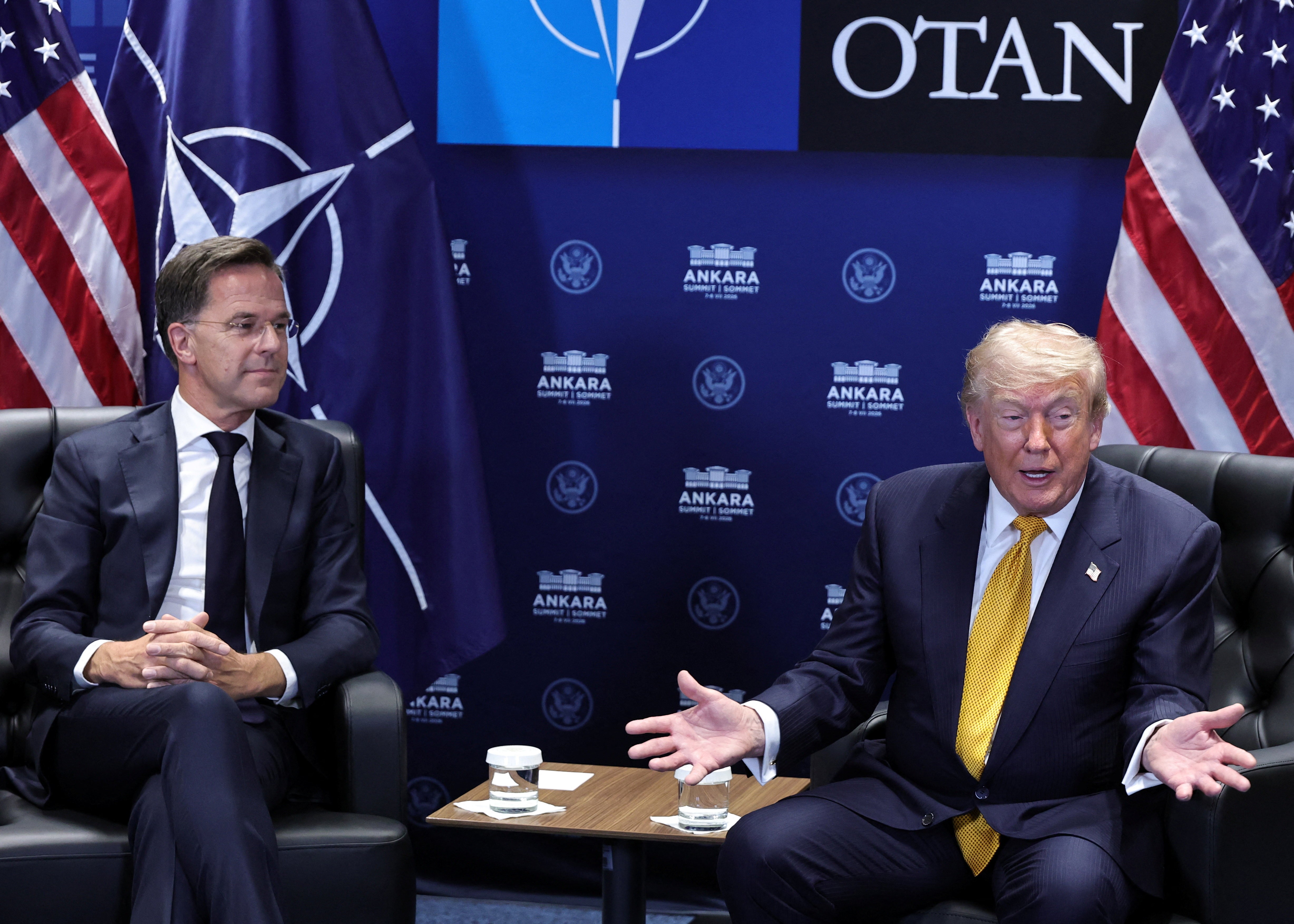
President of the United States, Donald Trump, holds a press conference with NATO Secretary General Mark Rutte, in Ankara, Turkey, on July 8, 2026.FILIP SINGER/P...
Noticia
08/07/2026
Trump again threatens to cut trade relations with Spain; 'We are calm', says Madrid
President of the United States, Donald Trump, holds a press conference with the Secretary General of NATO, Mark Rutte, in Ankara, Turkey, on July 8, 2026.FILIP...
 Noticia
08/07/2026
Gun homicides are the most difficult to solve, study reveals
Homicides committed with firearms are those with the lowest chance of being resolved in Brazil, according to the research "Diagnosis on Homicide Investigation i...
Participe da conversa
Seu comentario ajuda a manter a discussao viva e ainda convida outros leitores a continuar navegando pelo portal.
Seja o primeiro a comentar esta noticia.