
Leia a noticia completa
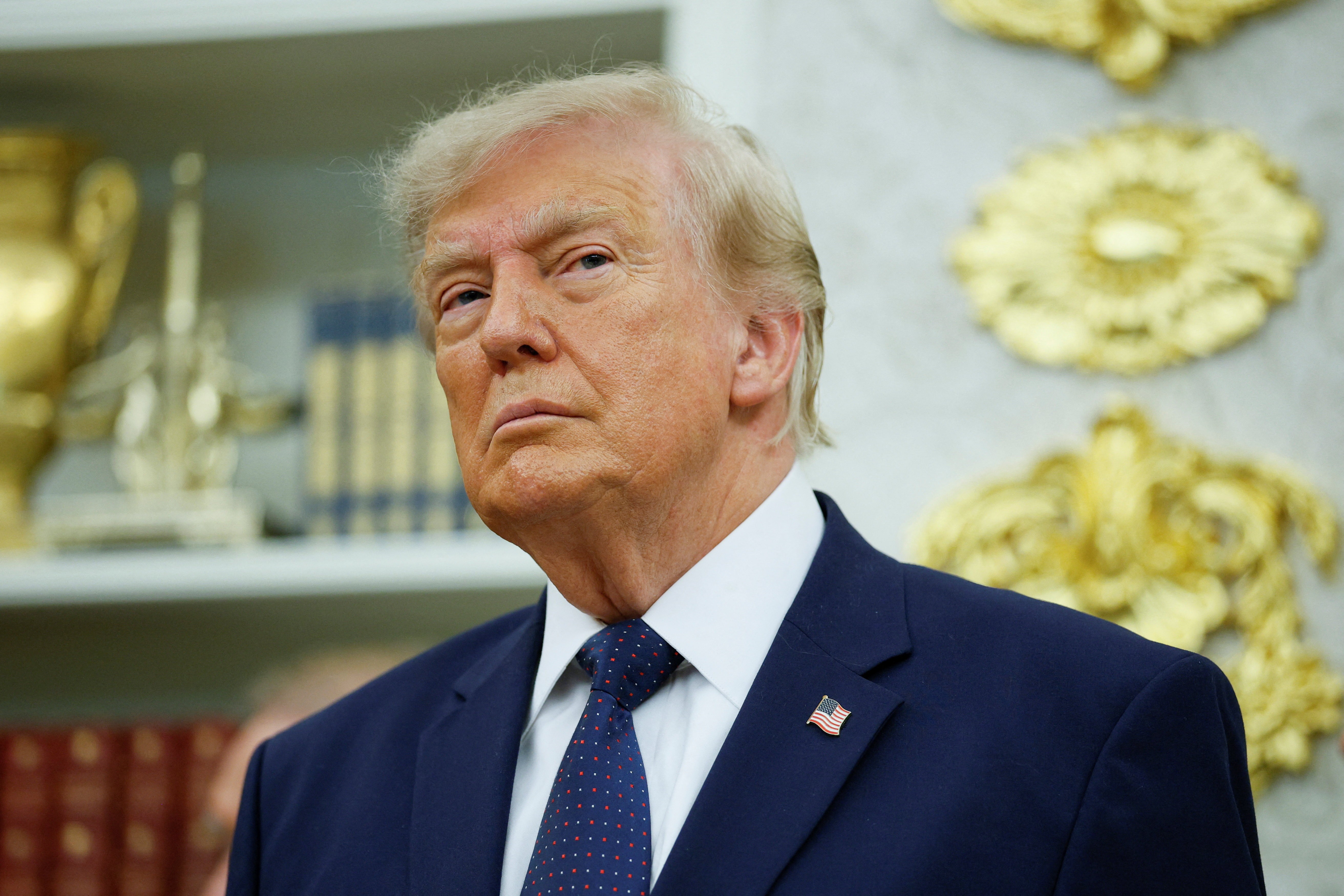
Trump during an event in the Oval Office.
Reuters/Evan Vucci
Last week, US President Donald Trump saw the country's Supreme Court announce several important decisions in cases in which his government was an interested party.
✅ Follow the g1 international news channel on WhatsApp
The outcome was bittersweet for the White House: while judges expanded their power to control regulatory agencies and allowed states to ban transgender athletes from competitions university students, for example, their boldest proposals, such as restricting the right to American citizenship, were blocked by the Court.
Currently, the Court has a conservative majority - with 6 of the 9 judges chosen by Republican presidents (see the current composition below).
For professors consulted by g1, the decisions show exactly a more conservative Supreme Court that Trump helped to form, but in which not all members show blind loyalty to the Republican.
The limits of this loyalty are most evident in the decision against Trump's will to restrict citizenship through the so-called "right of birth" - an understanding of the Constitution that has already been pacified for more than a hundred years.
American justice maintains the rule of automatic citizenship by birth in United States territory
Vitelio Brustolin, professor at Universidade Federal Fluminense (UFF) and Harvard researcher, explains that a conservative group has been organized for decades in the USA, through a group called the Federalist Society.
"They come for years cultivating a generation of judges in favor of an 'originalist' reading of the Constitution", says Brustolin - that is, who defends the reading of the constitutional text according to its original meaning.
"This is a current of US legal thought and it is in line with the so-called 'unitary Executive theory'. appointed three judges linked to the Federalist Society to the Supreme Court, consolidating an absolute majority of six conservative judges on the highest court in the United States. The Court has nine seats in total.
"In this second term, Trump did not need to nominate anyone else to reap the benefits, the court that he helped to ratify is the same one that is deciding the cases of his presidency", says the professor.
Conservative tide
For Brustolin, "Trump won where conservative legal theory had already pointed in that direction for decades."
"He lost where there were textual or institutional barriers strong enough that they could not be ignored", says the professor, who exemplifies with the case of the right to citizenship for all those born in the country, guaranteed by the 14th Amendment of the Constitution - and whose understanding has been consolidated since 1898.
"The issue was so clear that lower court judges who analyzed Trump's executive order considered it blatantly unconstitutional."
Carlos Gustavo Poggio, professor of political science at Berea College, in the USA, sees an alignment not of the Supreme Court as a whole, but of some judges in particular, in relation to Trump.
"On some issues, the Supreme Court has been putting the brakes on some of Donald Trump's attempts at a more authoritarian nature", says Poggio. "Yet you have judges who consistently vote in favor of Trump, as is the case with Clarence Thomas and Samuel Alito."
They both voted in favor of the president to end the 14th Amendment right to citizenship.
The result of the trial, by 6 votes to 3, can be understood as a defeat for Trump, but in Poggio's view "it would be very difficult for Trump to achieve" what he wanted in this case.
However, the professor highlights that when it comes to giving more power to the Executive, the Court has given victories to Trump.
"If we look at what has happened in the decisions of the Supreme Court, the decisions in which Trump asks for a greater concentration of power in the hands of the Executive, the Supreme Court has ceded to the president what he wants", says Poggio.
This is the case of the trial that allowed the president to fire a member of an independent regulatory agency. The decision expanded presidential powers and reversed an understanding of the Court itself from 1935 (read more below).
Check out the current composition of the US Supreme Court:
Clarence Thomas - nominated by George H. W. Bush (1991)
John G. Roberts - nominated by George W. Bush (2005)
Samuel A. Alito, Jr. - nominated by George W. Bush (2006)
Sonia Sotomayor - nomination by Barack Obama (2009)
Elena Kagan - nomination by Barack Obama (2010)
Neil M. Gorsuch - nomination by Donald J. Trump (2017)
Brett M. Kavanaugh - nomination by Donald J. Trump (2018)
Amy Coney Barrett - nomination by Donald J. Trump (2020)
Ketanji Brown Jackson - nomination by Joe Biden (2022)
Trump supporter in front of the US Supreme Court, in Washington, DC
Cheney Orr/Reuters
See, below, what were the main judicial defeats and victories for Trump:
Defeats
Maintenance of the right to citizenship for all people born in the USA
By 6 votes to 3, the Court's judges confirmed a consolidated understanding of the 14th Amendment to the Constitution and concluded that any person born in the country, with very limited exceptions, is a citizen of the United States.
➡ Historically, the United States grants citizenship on the principle of "jus soli", or right to soil: everyone born on American territory is an American citizen, including children of tourists or immigrants. Exceptions are few and specific, such as for children of diplomats from other countries serving in the US.
On the first day of his second term, however, in January 2025, Trump signed an executive order limiting the granting of citizenship.
The Trump administration claimed that automatic citizenship encourages irregular immigration and the so-called "birth tourism", when foreigners travel to the country to have children and guarantee American citizenship for them.
Civil rights groups claim that the measure would serve to take away the rights of immigrants and ethnic minorities in the country. The decision was challenged in lower courts, and finally rejected by the Supreme Court.
In response, Trump asked the US Congress to create new legislation to redefine the concept of American citizenship.
Prohibition of the dismissal of the director of the Fed (equivalent to the US Central Bank) Lisa Cook
The Republican had announced the dismissal of the director last year, increasing pressure on the institution, which acts independently from the government.
The court, however, reversed its decision decision. If he had succeeded, he would be the first president to remove a member of the Fed since its creation in 1913.
Lisa Cook, director of the Fed.
reuters
Allowing counting of mail-in votes after Election Day
Trump had promised last year to end the use of mail-in votes across the country ahead of November's midterm elections, in which his Republican colleagues are seeking to maintain control of Congress.
By 5 votes to 4, however, the Supreme Court reversed the decision of a lower court and ruled that states that so wish will be able to count votes posted in the mail until Election Day and received in the following days.
Rejection of request to overturn the decision on Trump's conviction for sexual abuse
The president wanted to overturn the decision of a jury that, in 2023, concluded that he sexually abused the writer E. Jean Carroll and later defamed her.
But the Supreme Court refused to analyze the appeal.
As a result, Trump's conviction was upheld, which provides for compensation of US$5 million to the victim.
Victories
Permission for the president to fire heads of independent regulatory agencies
The Court granted permission for President Donald Trump to fire a commissioner from the Federal Trade Commission (FTC), the independent federal agency that regulates competition in the country.
The decision expands presidential powers over the government and reverses the understanding itself of the Court in 1935, which had recognized Congress's authority to protect leaders of certain regulatory agencies from presidential removal. Last year, Trump removed Rebecca Slaughter from the FTC over political differences.
Maintaining the right of states to ban transgender athletes from competing in women's college sports
The court found that the state bans in Idaho and West Virginia do not violate the Constitution or the federal law known as Title IX, which prohibits sex discrimination in education. As a result, decisions by lower courts that had ruled in favor of transgender students who challenged these bans fell.
Conservative judge Brett Kavanaugh, rapporteur of the court's analysis, wrote that "states can keep women's and girls' sports reserved for people of the female biological sex."
The decision was unanimous, by nine votes to zero. In other words, even the three liberal judges voted together with their conservative colleagues.
In a post on the Truth Social network, shortly after the announcement, President Donald Trump celebrated the decision. The agenda is part of the so-called "cultural war" waged by the Republican Party against measures considered liberal.
Groups defending the transgender population protest in front of the US Supreme Court, in Washington, DC
Kevin Lamarque/Reuters
End of restrictions on coordinated campaign spending between parties and politicians
The court ruled, by 6 votes to 3, that the spending limit violates the First Amendment of the US Constitution, which protects freedom of expression against restrictions imposed by the government. A lower court had considered these limits constitutional.
The decision benefits Republican candidates, who should have more money for their campaigns. This will be particularly important in the midterm elections next November, when Trumpists will try to maintain the Republican majority in the US Senate and House of Representatives.
Source: G1



Toque agora.
As músicas que o Mundo está tocando agora
-
1
 Kleine Wolke Über Einem Französischen Mädchen
Echt
Kleine Wolke Über Einem Französischen Mädchen
Echt
-
2
 Majestade
Carlos A. Moyses
Majestade
Carlos A. Moyses
-
3
 Balancê
Sara Tavares
Balancê
Sara Tavares
-
4
 Paraíso
Danilo Santos
Paraíso
Danilo Santos
-
5
 Clay
Manatee Commune
Clay
Manatee Commune
- 6 S Engelbewaarder Sasha & Davy
-
7
 Topla Je Smrt
Metalsteel
Topla Je Smrt
Metalsteel
-
8
 Quem é você
Exaltasamba
Quem é você
Exaltasamba
-
9
 It's A Great Day (for Me To Whoop Somebody's Ass)
Paul Thorn
It's A Great Day (for Me To Whoop Somebody's Ass)
Paul Thorn
-
10
 Maybe someday
The Cure
Maybe someday
The Cure
- 11 M Amongst Majestic Mountains Mendy Chanin
- 12 F Subject ffleetwood_macsay_that_you_love_me.crd
-
13
 Call Me Up
Ezio
Call Me Up
Ezio
-
14
 Yesterday
Petula Clark
Yesterday
Petula Clark
-
15
 Por Onde Anda Você?
Nina Fernandes
Por Onde Anda Você?
Nina Fernandes
-
16
 Con El Cielo
Hillsong Worship
Con El Cielo
Hillsong Worship
-
17
 Mundo Malo
Paulino Bernal
Mundo Malo
Paulino Bernal
-
18
 Un Trocito De Cielo
Jaci Velasquez
Un Trocito De Cielo
Jaci Velasquez
-
19
 Vem Com Teu Fogo
Adorazione
Vem Com Teu Fogo
Adorazione
-
20
 Excelente
Lucas Santos Tiago
Excelente
Lucas Santos Tiago

Historias das musicas em destaque
 Historia da musica
Learn to play Yesterday, by Petula Clark, and discover a beautiful classical interpretation
07/07/2026
Singer Petula Clark built a career marked by elegant interpretations and hits that spanned decades. His version of "Yesterday" presents...
 Historia da musica
Learn to play Call Me Up, by Ezio, and discover folk music full of personality
07/07/2026
The Ezio group is recognized for its compositions that combine folk, rock and sophisticated melodies. The song "Call Me Up" draws atten...
 Historia da musica
Learn to play Maybe Someday, by The Cure, and improve on the guitar
07/07/2026
Among alternative rock's most influential bands, The Cure has built a career full of memorable songs. "Maybe Someday" is one of the son...
 Historia da musica
Learn to play It's a Great Day for Me to Whoop Somebody's Ass by Paul Thorn
07/07/2026
With great humor and a vibe that mixes country, blues and rock, "It's a Great Day for Me to Whoop Somebody's Ass", by Paul Thorn, becam...
 Historia da musica
Learn to play Balancê, by Sara Tavares, and discover all the richness of Lusophone music
07/07/2026
Singer Sara Tavares marked international music with her unique identity, mixing African, Portuguese influences and contemporary sounds....
 Historia da musica
Learn to play Majestade, by Carlos A. Moyses, on the guitar with more emotion and technique
07/07/2026
Some songs manage to cross generations carrying messages of faith, hope and adoration. "Majesty", performed by Carlos A. Moyses, is one...
 Historia da musica
Learn to play Quem Você Exalta, by ExaltaSamba, on the guitar
07/07/2026
For those who like samba and pagode, "Quem Você Exalta", by ExaltaSamba, is a great song to develop new guitar skills. With a character...
 Historia da musica
Learn to play Con el Cielo, by Hillsong Worship, and strengthen your worship repertoire
07/07/2026
Hillsong Worship's "Con el Cielo" is an excellent choice for musicians who enjoy congregational worship and want to develop a solid gui...
 Historia da musica
Learn to play Por Onde Anda Você, by Nina Fernandes, and improve on the guitar
07/07/2026
The song "Por Onde Anda Você", performed by Nina Fernandes, conquers with the delicacy of the melody and the way it conveys feelings th...
 Historia da musica
Learn to play Para Só, by Danilo Santos, on the guitar with more emotion and technique
07/07/2026
If you're looking for an exciting song to expand your guitar repertoire, "Para Só", by Danilo Santos, is an excellent choice. The song...
Mais noticias para voce
 Noticia
08/07/2026
Oil rises and bonds fall as attacks resume in the Middle East
Oil prices rose and government bonds were sold this Wednesday (8), as the resumption of clashes in the Middle East and United States sanctions on Iranian oil th...
 Noticia
08/07/2026
Brazil's geopolitical risk depends on US decisions, points out Arko Advice
The geopolitical risk for Brazil is mainly due to the decisions of the President of the United States, Donald Trump. This is what the "Risco Brasil" report poin...
 Noticia
08/07/2026
Buzzi's assistants were aware of reports of harassment, says MPF
Documents obtained by CNN in the administrative process investigating alleged episodes of sexual harassment involving minister Marco Buzzi, of the STJ (Superior...
 Noticia
08/07/2026
What does the weather have to do with your budget? Find out why extreme events began to worry economists
Why are economists talking so much about climate?Phenomena such as El Niño, heat waves, floods and droughts have become part of the projections of the Central B...
 Noticia
08/07/2026
Selling without stock: how to set up a business with little investment and high profit potential
Selling without stock: can you make money this way?Not every business requires the purchase of goods or the formation of stock. For those who want to start a bu...
 Noticia
08/07/2026
Oil price soars after new attacks between US and Iran
War in the Middle East directly affects sectors of Brazilian industry that use petroleum derivatives as raw materialJornal Nacional/ ReproductionAsian stock exc...
Participe da conversa
Seu comentario ajuda a manter a discussao viva e ainda convida outros leitores a continuar navegando pelo portal.
Seja o primeiro a comentar esta noticia.