

Leia a noticia completa
Supporter of Roberto Sánchez raises a 'No to fraud' sign in the candidate's speech after the Peruvian presidential elections
Stifs Paucca/Reuters
Peruvians went to the polls last Sunday (7) for the second round of their presidential elections, but they still don't know who won: the right-wing candidate, Keiko Fujimori, or the left-wing deputy Roberto Sánchez.
✅ Follow the news channel g1 internationals on WhatsApp
The country is not known for the speed of its investigation, quite the opposite. The first round took place on April 12, but the official result was only declared by the highest electoral body, the JNE (Jurado Nacional de Electores) more than a month later, on May 17.
Many factors contribute to the slowness, the main one being the minimum difference in votes that usually separate the candidates: in the last two elections, Keiko Fujimori finished in second place with 49.88% and 49.87% of valid votes, respectively.
The fierce dispute was also repeated in the first round of 2026, when Sánchez surpassed third place, Rafael López-Aliaga, by just 21,210 votes.
With no defined result, left-wing candidate becomes a dispute in the presidential election in Peru
Other reasons also make Peru notable for the delay in the electoral process, which earned it the nickname "the country of endless counting" by the Spanish newspaper "El País". See which are the main ones:
Paper ballots
Unlike Brazilian elections, which use electronic ballot boxes, voting in Peru mostly uses paper ballots, deposited in physical ballot boxes, later counted by the National Office of Electoral Processes (ONPE).
Some exceptions are made, such as for military personnel in remote posts and people with disabilities, so that they can vote digitally, via computer or cell phone - even so, using a series of proofs and requirements.
Montage shows candidates for the presidency of Peru Roberto Sánchez and Keiko Fujimori on June 7, 2026, the day of voting in the second round
ERNESTO BENAVIDES / AFP
Rural areas and remote regions
Peru has a challenging geography that causes a delay in sending ballot boxes from the most remote locations to the counting sites.
On the afternoon of this Tuesday (9), when 96.0% of the ballot boxes had been counted, the count was "delayed" in relation to the national average in the regions of Cusco (91%), in the Andes, and in Loreto (93%), in the Peruvian Amazon.
Votes abroad
Although electoral rules allow digital voting for Peruvians residing abroad, in practice, the consulates did not make this modality available to voters, who had to travel to polling stations.
The ballot boxes are, then sent to Peruvian territory for counting. This makes the expatriate vote the least counted of all to date: only 31% of the ballots had been counted as of Tuesday afternoon.
Contestations
Even with the votes counted, the JNE is not expected to declare a winner immediately. This is because the parties must point out inconsistencies in the minutes and challenge the results to the body, or even make allegations of fraud, which will then judge them to be valid or not - and, if necessary, carry out a recount.
In the first round, López-Aliaga's party made several questions that delayed the release of the official result. In total, more than 68 thousand electoral records were contested, totaling more than 1 million votes recounted.
In an election that should be decided by a few thousand votes, if not hundreds, the JNE awaits a new wave of requests for review.
Source: G1



Toque agora.
As músicas que o Mundo está tocando agora
-
1
 Kleine Wolke Über Einem Französischen Mädchen
Echt
Kleine Wolke Über Einem Französischen Mädchen
Echt
-
2
 Majestade
Carlos A. Moyses
Majestade
Carlos A. Moyses
-
3
 Balancê
Sara Tavares
Balancê
Sara Tavares
-
4
 Paraíso
Danilo Santos
Paraíso
Danilo Santos
-
5
 Clay
Manatee Commune
Clay
Manatee Commune
- 6 S Engelbewaarder Sasha & Davy
-
7
 Topla Je Smrt
Metalsteel
Topla Je Smrt
Metalsteel
-
8
 Quem é você
Exaltasamba
Quem é você
Exaltasamba
-
9
 It's A Great Day (for Me To Whoop Somebody's Ass)
Paul Thorn
It's A Great Day (for Me To Whoop Somebody's Ass)
Paul Thorn
-
10
 Maybe someday
The Cure
Maybe someday
The Cure
- 11 M Amongst Majestic Mountains Mendy Chanin
- 12 F Subject ffleetwood_macsay_that_you_love_me.crd
-
13
 Call Me Up
Ezio
Call Me Up
Ezio
-
14
 Yesterday
Petula Clark
Yesterday
Petula Clark
-
15
 Por Onde Anda Você?
Nina Fernandes
Por Onde Anda Você?
Nina Fernandes
-
16
 Con El Cielo
Hillsong Worship
Con El Cielo
Hillsong Worship
-
17
 Mundo Malo
Paulino Bernal
Mundo Malo
Paulino Bernal
-
18
 Un Trocito De Cielo
Jaci Velasquez
Un Trocito De Cielo
Jaci Velasquez
-
19
 Vem Com Teu Fogo
Adorazione
Vem Com Teu Fogo
Adorazione
-
20
 Excelente
Lucas Santos Tiago
Excelente
Lucas Santos Tiago

Historias das musicas em destaque
 Historia da musica
Learn to play Yesterday, by Petula Clark, and discover a beautiful classical interpretation
07/07/2026
Singer Petula Clark built a career marked by elegant interpretations and hits that spanned decades. His version of "Yesterday" presents...
 Historia da musica
Learn to play Call Me Up, by Ezio, and discover folk music full of personality
07/07/2026
The Ezio group is recognized for its compositions that combine folk, rock and sophisticated melodies. The song "Call Me Up" draws atten...
 Historia da musica
Learn to play Maybe Someday, by The Cure, and improve on the guitar
07/07/2026
Among alternative rock's most influential bands, The Cure has built a career full of memorable songs. "Maybe Someday" is one of the son...
 Historia da musica
Learn to play It's a Great Day for Me to Whoop Somebody's Ass by Paul Thorn
07/07/2026
With great humor and a vibe that mixes country, blues and rock, "It's a Great Day for Me to Whoop Somebody's Ass", by Paul Thorn, becam...
 Historia da musica
Learn to play Balancê, by Sara Tavares, and discover all the richness of Lusophone music
07/07/2026
Singer Sara Tavares marked international music with her unique identity, mixing African, Portuguese influences and contemporary sounds....
 Historia da musica
Learn to play Majestade, by Carlos A. Moyses, on the guitar with more emotion and technique
07/07/2026
Some songs manage to cross generations carrying messages of faith, hope and adoration. "Majesty", performed by Carlos A. Moyses, is one...
 Historia da musica
Learn to play Quem Você Exalta, by ExaltaSamba, on the guitar
07/07/2026
For those who like samba and pagode, "Quem Você Exalta", by ExaltaSamba, is a great song to develop new guitar skills. With a character...
 Historia da musica
Learn to play Con el Cielo, by Hillsong Worship, and strengthen your worship repertoire
07/07/2026
Hillsong Worship's "Con el Cielo" is an excellent choice for musicians who enjoy congregational worship and want to develop a solid gui...
 Historia da musica
Learn to play Por Onde Anda Você, by Nina Fernandes, and improve on the guitar
07/07/2026
The song "Por Onde Anda Você", performed by Nina Fernandes, conquers with the delicacy of the melody and the way it conveys feelings th...
 Historia da musica
Learn to play Para Só, by Danilo Santos, on the guitar with more emotion and technique
07/07/2026
If you're looking for an exciting song to expand your guitar repertoire, "Para Só", by Danilo Santos, is an excellent choice. The song...
Mais noticias para voce
 Noticia
08/07/2026
Oil rises and bonds fall as attacks resume in the Middle East
Oil prices rose and government bonds were sold this Wednesday (8), as the resumption of clashes in the Middle East and United States sanctions on Iranian oil th...
 Noticia
08/07/2026
Brazil's geopolitical risk depends on US decisions, points out Arko Advice
The geopolitical risk for Brazil is mainly due to the decisions of the President of the United States, Donald Trump. This is what the "Risco Brasil" report poin...
 Noticia
08/07/2026
Buzzi's assistants were aware of reports of harassment, says MPF
Documents obtained by CNN in the administrative process investigating alleged episodes of sexual harassment involving minister Marco Buzzi, of the STJ (Superior...
 Noticia
08/07/2026
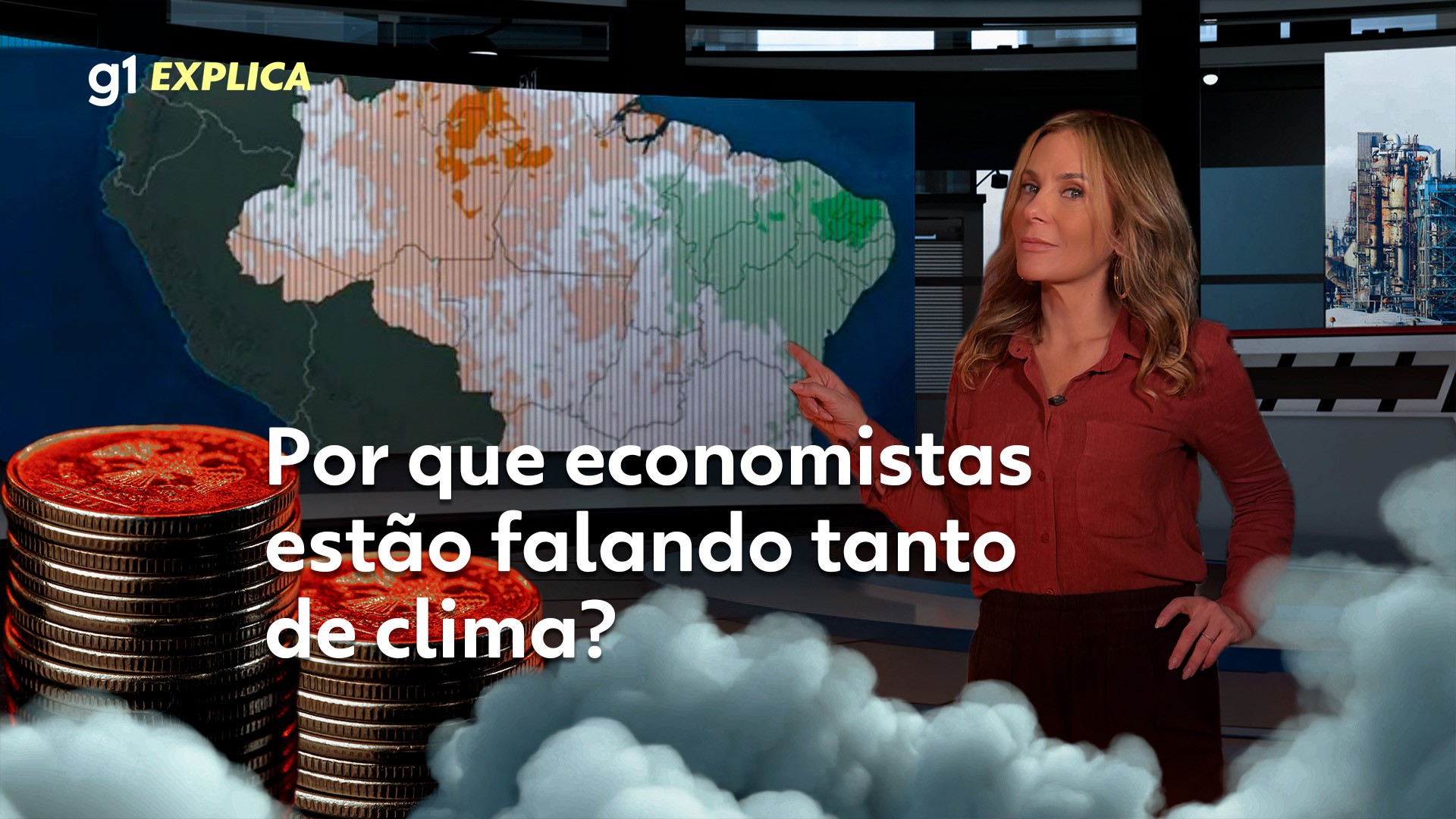
What does the weather have to do with your budget? Find out why extreme events began to worry economists
Why are economists talking so much about climate?Phenomena such as El Niño, heat waves, floods and droughts have become part of the projections of the Central B...
 Noticia
08/07/2026
Selling without stock: how to set up a business with little investment and high profit potential
Selling without stock: can you make money this way?Not every business requires the purchase of goods or the formation of stock. For those who want to start a bu...
 Noticia
08/07/2026
Oil price soars after new attacks between US and Iran
War in the Middle East directly affects sectors of Brazilian industry that use petroleum derivatives as raw materialJornal Nacional/ ReproductionAsian stock exc...
Participe da conversa
Seu comentario ajuda a manter a discussao viva e ainda convida outros leitores a continuar navegando pelo portal.
Seja o primeiro a comentar esta noticia.