

Leia a noticia completa
The IAA (International Academy of Astronautics, in free translation) presented, last Friday (5), updated rules for evaluating and revealing the detection of extraterrestrial intelligence.
The guidelines guide individuals, institutions and organizations participating in the search for technosignatures (defined as observable evidence of technology built or used by extraterrestrial beings) or evidence of intelligent life and technology, past or present, beyond Earth.
The guidelines, which address the current realities of social media, AI-generated disinformation, deepfakes and 24-hour news cycles, were constructed by Professor Michael Garrett (University of Manchester), Chair of the IAA SETI Committee, with input from an international team of experts.



The document's overarching goal is to conduct the search for extraterrestrial intelligence in a scientifically and academically rigorous manner, balancing the imperative of providing timely and accurate information to a broad audience with due consideration for the safety and exposure of the scientists involved, recognizing that the scientific and communications landscape is constantly changing.
CNN explains what will happen to the Artemis II ship in space | CNN PRIME TIME

Toque agora.
The document highlighted eight principles to be followed.
The first would be the treatment of candidate evidence, which corresponds to the fact that in the event of a supposed detection of extraterrestrial intelligence, the discoverer must make every effort to authenticate and prove the detection. Maintaining scientific responsibility and integrity throughout the process, recognizing humanity's interest in discovery.
The second would be communication and information sharing, which advises that institutions and organizations must take appropriate measures to ensure the safety of their researchers and protect them from negative professional repercussions. Responding appropriately to reasonable requests from news outlets, social media platforms, and other public media outlets.
The third is communication of verification, that is, when there is a signal or other evidence of extraterrestrial intelligence, the discoverers or their institutions must immediately communicate this conclusion in a complete, open and transparent manner to the public, the scientific community and the Secretary-General of the United Nations.
The fourth would be data monitoring, archiving and accessibility. The results must be preserved and disseminated to the international scientific community through peer-reviewed publications. All relevant data must be recorded, stored securely and archived to the greatest extent possible in at least two repositories located in different geographic regions.
The fifth is the protection of data and frequencies. Detection evidence must be protected using scientific practices, including tamper-proof records and preventive protocols.
The sixth is the post-detection protocol. Therefore, the IAA will maintain a Post-Detection Subcommittee to assist and advise on issues that may arise following a confirmed detection. This subcommittee will support scientific and public analysis by offering guidance, interpretation, and discussion of the broader implications of the discovery.
The seventh is communications with extraterrestrial intelligence after confirmed detection. Researchers should cooperate with appropriate international consultations to assess whether a response to a confirmed detection of extraterrestrial intelligence should be sent and, if so, what its content should be. These consultations should take place through the United Nations and other broadly representative international bodies.
The eighth is ethical and legal considerations. Researchers must adhere to the highest ethical standards, ensuring cooperation, honesty and integrity in all aspects of their work. Having to comply with all applicable laws and regulations.
The SETI Institute is a non-profit organization, founded in 1984, whose mission is to lead humanity's quest to understand the origins and prevalence of life and intelligence in the Universe and to share this knowledge with the world.
*Under the supervision of Thiago Félix
Source: CNN
As músicas que o Mundo está tocando agora
-
1
 Balancê
Sara Tavares
Balancê
Sara Tavares
-
2
 Majestade
Carlos A. Moyses
Majestade
Carlos A. Moyses
-
3
 It's A Great Day (for Me To Whoop Somebody's Ass)
Paul Thorn
It's A Great Day (for Me To Whoop Somebody's Ass)
Paul Thorn
-
4
 Paraíso
Danilo Santos
Paraíso
Danilo Santos
-
5
 Yesterday
Petula Clark
Yesterday
Petula Clark
-
6
 Maybe someday
The Cure
Maybe someday
The Cure
-
7
 Un Trocito De Cielo
Jaci Velasquez
Un Trocito De Cielo
Jaci Velasquez
-
8
 Call Me Up
Ezio
Call Me Up
Ezio
-
9
 Por Onde Anda Você?
Nina Fernandes
Por Onde Anda Você?
Nina Fernandes
-
10
 Con El Cielo
Hillsong Worship
Con El Cielo
Hillsong Worship
-
11
 Vem Com Teu Fogo
Adorazione
Vem Com Teu Fogo
Adorazione
-
12
 Excelente
Lucas Santos Tiago
Excelente
Lucas Santos Tiago
-
13
 Fake Amor
Melody
Fake Amor
Melody
-
14
 Rock And Roll In The Hay
Brad Cotter
Rock And Roll In The Hay
Brad Cotter
-
15
 Nunca Había Sentido Tanto Miedo
Alejandro Neri
Nunca Había Sentido Tanto Miedo
Alejandro Neri
-
16
 Hipnose
Manu Gavassi
Hipnose
Manu Gavassi
-
17
 Hey, Good Lookin'
Dean Martin
Hey, Good Lookin'
Dean Martin
-
18
 Augusta, Angélica e Consolação
Tom Zé
Augusta, Angélica e Consolação
Tom Zé
-
19
 Enquanto Cê Não Vem
Eu, Trovador
Enquanto Cê Não Vem
Eu, Trovador
-
20
 Pelo Teu Nome
Leonardo Campos
Pelo Teu Nome
Leonardo Campos

Historias das musicas em destaque
 Historia da musica
Learn to play Yesterday, by Petula Clark, and discover a beautiful classical interpretation
07/07/2026
Singer Petula Clark built a career marked by elegant interpretations and hits that spanned decades. His version of "Yesterday" presents...
 Historia da musica
Learn to play Call Me Up, by Ezio, and discover folk music full of personality
07/07/2026
The Ezio group is recognized for its compositions that combine folk, rock and sophisticated melodies. The song "Call Me Up" draws atten...
 Historia da musica
Learn to play Maybe Someday, by The Cure, and improve on the guitar
07/07/2026
Among alternative rock's most influential bands, The Cure has built a career full of memorable songs. "Maybe Someday" is one of the son...
 Historia da musica
Learn to play It's a Great Day for Me to Whoop Somebody's Ass by Paul Thorn
07/07/2026
With great humor and a vibe that mixes country, blues and rock, "It's a Great Day for Me to Whoop Somebody's Ass", by Paul Thorn, becam...
 Historia da musica
Learn to play Balancê, by Sara Tavares, and discover all the richness of Lusophone music
07/07/2026
Singer Sara Tavares marked international music with her unique identity, mixing African, Portuguese influences and contemporary sounds....
 Historia da musica
Learn to play Majestade, by Carlos A. Moyses, on the guitar with more emotion and technique
07/07/2026
Some songs manage to cross generations carrying messages of faith, hope and adoration. "Majesty", performed by Carlos A. Moyses, is one...
 Historia da musica
Learn to play Quem Você Exalta, by ExaltaSamba, on the guitar
07/07/2026
For those who like samba and pagode, "Quem Você Exalta", by ExaltaSamba, is a great song to develop new guitar skills. With a character...
 Historia da musica
Learn to play Con el Cielo, by Hillsong Worship, and strengthen your worship repertoire
07/07/2026
Hillsong Worship's "Con el Cielo" is an excellent choice for musicians who enjoy congregational worship and want to develop a solid gui...
 Historia da musica
Learn to play Por Onde Anda Você, by Nina Fernandes, and improve on the guitar
07/07/2026
The song "Por Onde Anda Você", performed by Nina Fernandes, conquers with the delicacy of the melody and the way it conveys feelings th...
 Historia da musica
Learn to play Para Só, by Danilo Santos, on the guitar with more emotion and technique
07/07/2026
If you're looking for an exciting song to expand your guitar repertoire, "Para Só", by Danilo Santos, is an excellent choice. The song...
Mais noticias para voce
 Noticia
09/07/2026
Iran accuses US of committing war crimes after attacks on bridges
Iran has accused the United States of committing a "blatant war crime" after attacks on two bridges in the east of the country. Iran's Foreign Ministry said in...
 Noticia
09/07/2026
Jeff Machado case: defendant who helped hide actor's body is convicted
Jeander Vinícius da Silva Braga was sentenced to 22 years and 9 months in prison, initially in a closed regime, for the murder of actor Jeff Machado in January...
 Noticia
09/07/2026
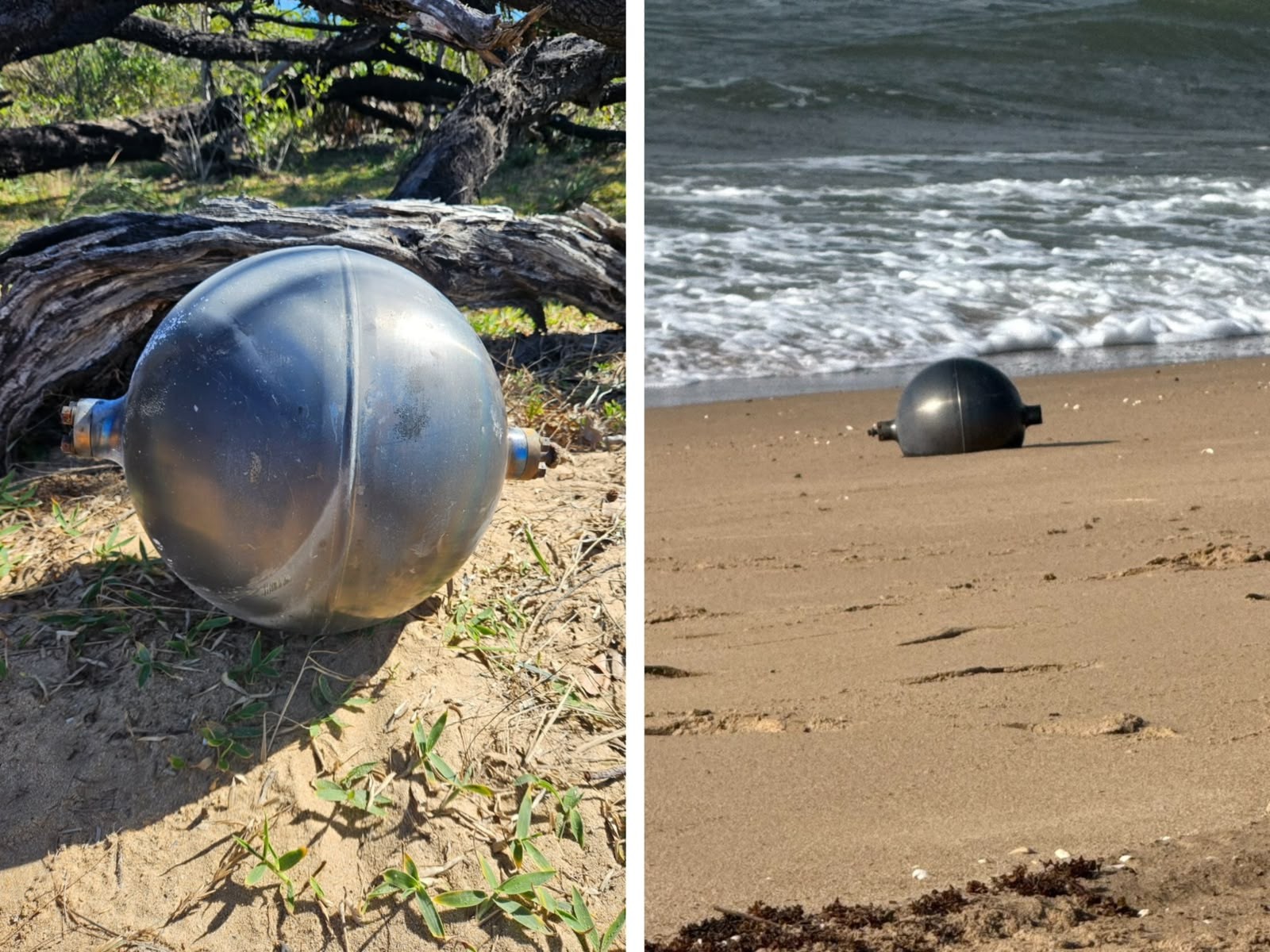
Mystery in Australia: titanium balls fall from the sky and force authorities to close the beach
Titanium spheres washed up on beach in AustraliaQueensland firefightersThe discovery of six metallic spheres on a beach in northeastern Australia is keeping exp...
 Noticia
09/07/2026
Accumulation of tension fronts increases challenges in the relationship between Brazil and the USA
The relationship between Brazil and the United States began to simultaneously bring together different fronts of tension. To the negotiations to try to avoid th...
 Noticia
09/07/2026
France coach is scolded for refusing to respond to the Moroccan press
The day before the clash between Morocco and France in the quarter-finals of the World Cup there was tension off the field. At this Wednesday's press conference...
 Noticia
09/07/2026
France meets Morocco again in the World Cup four years after historic semi-final
France and Morocco meet again in a World Cup this Thursday (9), at 5pm (Brasília time), in the quarter-finals of the 2026 World Cup. The clash, played at the Bo...
Participe da conversa
Seu comentario ajuda a manter a discussao viva e ainda convida outros leitores a continuar navegando pelo portal.
Seja o primeiro a comentar esta noticia.