
Leia a noticia completa
A Japanese ship was sailing in convoy through the South China Sea on September 21, 1944, with around 1,200 British and Dutch prisoners of war crammed into its hold. American warplanes, mistaking the unmarked vessel for a military cargo ship, launched four torpedoes.
One of them hit the ship. The vessel broke in half and sank within minutes, dooming most of the Allied prisoners trapped below decks. Only about 200 of the weakened and sick POWs survived, and the exact location of the wreck was lost to the depths.
Now, some 80 years later, researchers have discovered the military's final resting place. The team combed through documents buried in Japanese and American military archives before carrying out sonar surveys and technical dives. These efforts ultimately located the wreck of the Hōfuku Maru near the province of Zambales, off the west coast of Luzon, the largest island in the Philippines.

The Japanese army used 56 unmarked vessels, nicknamed "hell ships", to transport more than 62,000 prisoners of war during World War II. Allied fire sank 19 of these vessels. The location of five of these wrecks remains unknown.
"We're talking about a dark, metal basement. It stinks, it's suffocatingly hot. There are no sanitary conditions. They're not being fed properly, if at all. Almost no water," said Tim Beckensall, a World War II historian and director of searches for the Hellships Memorial Foundation. "These are the worst conditions you could imagine."
The Hellships Memorial Foundation, with support from the Netherlands Cultural Heritage Agency and the Discovery Channel, found the wreck of the Hōfuku Maru. The search is documented in a two-part season premiere of the show "Expedition Unknown," which will air June 24 on the Discovery Channel. (Discovery Channel and CNN are part of Warner Bros.)

Toque agora.
"The most surprising part of this investigation is actually the story itself - the tragic legacy of the Hellships is a chapter of World War II that many people have never heard of," said explorer Josh Gates, who hosts the program.
"But it's a vital story; the men who died aboard these ships made the ultimate sacrifice and have been waiting 80 years to be found," he said in an email.
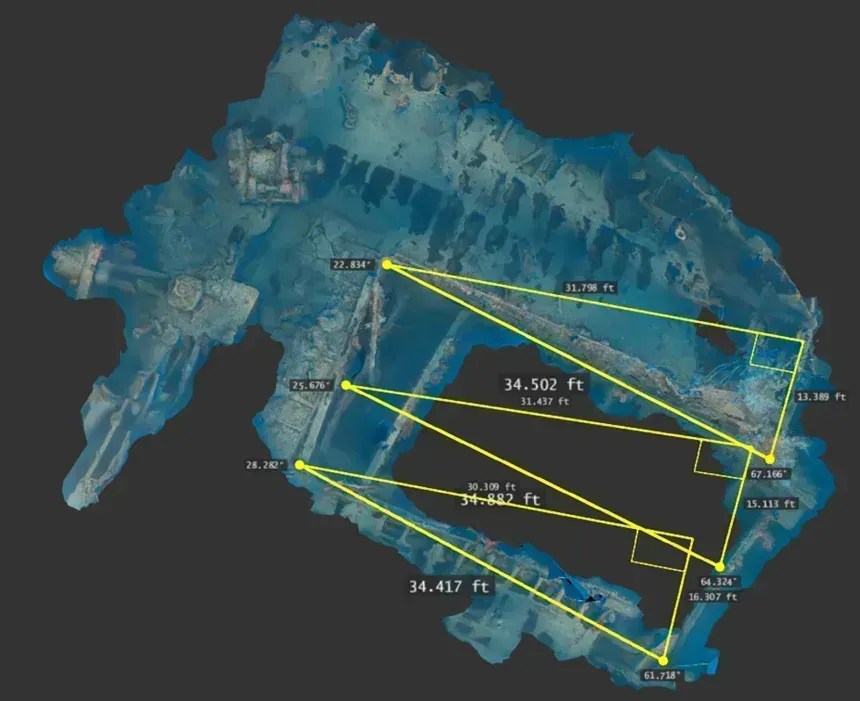
Researchers created a 3D model of the Hōfuku Maru using a technique called photogrammetry - Hellships Memorial Foundation
Finding the wreck
Official records detailing the sinking of the Hōfuku Maru were incomplete and inconsistent, Beckensall said. Japanese records were fragmentary, and Allied attack reports provided only approximate locations.
However, in June 2025, Beckensall's colleague John Duresky discovered a digitized Japanese document written by officers aboard the convoy's lead ship. The document included a timeline and map describing where the convoy was hit; he claimed the Hōfuku Maru was second in line when it was struck and split in half, according to Beckensall.
The researchers were then able to cross-reference some of the details with an "aircraft action report" from the aircraft carrier USS Bunker Hill, which documented the sinking of an AK - short for auxiliary cargo - ship, which was the second ship in its convoy. The location was more than 30 miles (48 kilometers) from where the ship was presumed lost.
Beckensall also spoke to local fishermen, who said they had known for a long time that there was a large shipwreck there.
"It was the Japanese document that started it all, and it was the definitive proof that really led to all the others," Beckensall said.
Beckensall, who was based in Manila at the time, shared the archive's findings with the British Embassy, who organized a meeting with the Dutch and Philippine military attachés, at which Beckensall and Hellships Memorial Foundation founder Randy Anderson presented the evidence found so far.
The Netherlands Cultural Heritage Agency then agreed to fund an initial sonar survey and preliminary diving mission to the site, which took place last December and January.
Documents from U.S. and Japanese military archives helped the team locate the wreck near Zambales province on the west coast of Luzon in the Philippines - National Archives and Records Administration
To the researchers' relief, divers discovered some kind of wreckage at a depth of about 164 feet (50 meters), exactly where they expected.
However, volcanic ash that was carried into rivers and the sea during the 1991 eruption of Mount Pinatubo is slowly swallowing the wreck. Due to extremely poor conditions, identifying any distinguishing features has been nearly impossible.
Discovery Channel got involved in early 2026 and recruited Calvin Mires, a maritime archaeologist with Marine Imaging Technologies who worked on many WWII shipwrecks. Mires, along with underwater imaging expert Evan Kovacs, captured hundreds of images of the wreck.
The pair used specialized computer software to transform them into a 3D model using a technique known as photogrammetry.
"Visibility is really very low, and the camera eliminates a lot of that," Mires said. "The camera sees much more."
Mires said he initially had "healthy skepticism", but stated that the "preponderance of evidence" pointed to the wreck being the Hōfuku Maru.
The team compared the vessel's size, along with the position of its masts and cargo holds, with blueprints of the Hōfuku Maru, built in 1919. The wreck is divided into two pieces, which matches both American and Japanese accounts of its fate.
The Netherlands Cultural Heritage Agency reviewed a report written by Mires, Beckensall and their colleagues on the investigation and issued a statement on June 8 stating that the wreck was "almost certainly" the Hōfuku Maru.
"Terrible conditions"
Although most of the POWs aboard the Hōfuku Maru perished, some survived. At least two British military personnel, the late Captain Nigel Evans and the late Captain James Gibson, gave disturbing testimony about their treatment aboard the ship during war crimes trials held in Singapore by the British shortly after the end of the conflict. Sergeant Major Jotani Kitaichi of the Imperial Japanese Army was sentenced to death by hanging as a result.
Most of the Allied troops captured aboard the ship had begun their journey in Singapore and were destined for Japan, where the prisoners worked in factories and mines to support the war effort.
About 1,000 British and 250 Dutch prisoners of war were crammed into two cellars so cramped that they had to take turns lying down, according to a court document.
Each man survived on three-quarters of a pint of water a day in sweltering temperatures, the document noted. Although there were rudimentary toilets on deck, many POWs were too weak to climb up and use them, and were forced to use "lunchboxes for bedpans", Gibson said.
At one point, prisoners were given life jackets, but they were later confiscated after guards found them being used as pillows, according to the court document.
Evans said the situation had worsened in Manila, where almost 100 British prisoners died while the ship was docked for more than a month after experiencing engine problems. Prisoners of war were not allowed on deck.
"Conditions on board became terrible," he said. "It was common to see prisoners of war eating their meals within six feet of a corpse being prepared for burial. The day before we left, more than a third of the officers and men were unable to walk without assistance and there were several cases of mental disturbances," said Evans, who managed to board another Japanese ship after the sinking of the Hōfuku Maru and was taken to a prisoner of war camp in Taiwan.
Gibson jumped overboard and swam to shore, where he spent five months with Philippine guerrillas. "I made complaints during the trip about medical supplies, conditions and food, but nothing was done and all I received for my efforts were scams from JOTANI," he said in a statement.
Encounter with remains
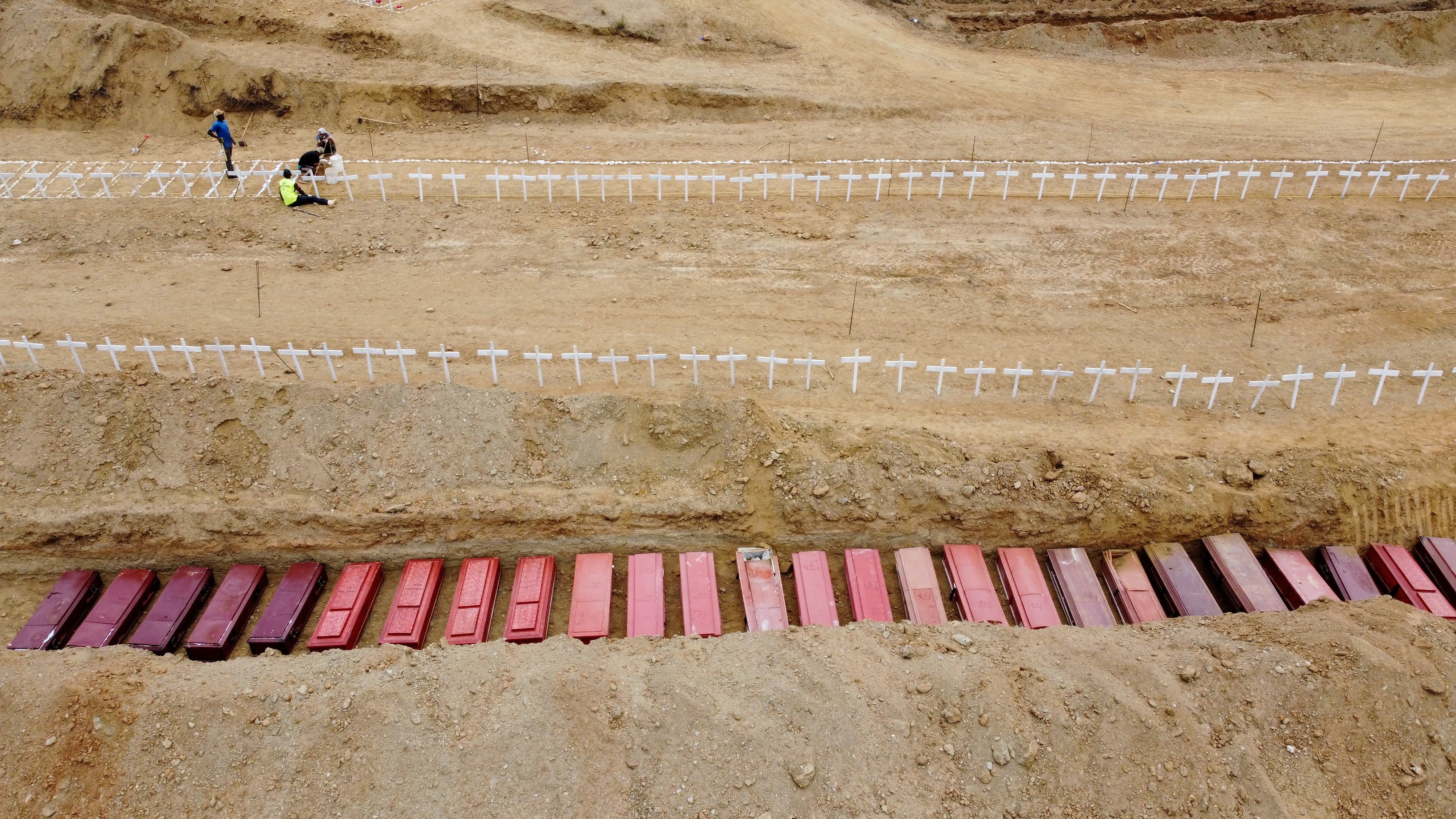
During the dives to the wreck, Mires and Gates said they found remains on the decks, but did not enter the holds. "This ship is a grave, and now that it has been identified, the governments of the United Kingdom, the Netherlands and the United States have been notified, and they will determine the next course of action," Gates said.
The Netherlands Cultural Heritage Agency said the wreck was considered a war grave and would not be excavated, out of respect for the victims and their families.
It is believed that there are no remains of American prisoners of war aboard the Hōfuku Maru.
However, the U.S. Department of Defense's Prisoner of War and Missing in Action Accounting Agency, DPAA, which is charged with repatriating service members killed in action, began efforts in February to identify Americans associated with another POW transport ship, the Oryoku Maru.
The vessel sank in Subic Bay, on the west coast of Luzon, Philippines, in December 1944, a few months after the Hōfuku Maru. Meghan Mumford, DPAA scientific recovery specialist for the Oryoku Maru and underwater archaeologist, described the recovery operation as "one of the largest, if not the largest, and certainly one of the most complex missions we have ever undertaken."
Earlier this year, Mumford and a team of expert divers began removing sediment from one of the wreck's cargo holds, where prisoners of war were believed to be held. Efforts to identify the human remains are ongoing.
The exact coordinates of the Hōfuku Maru, which rests off the coast of San Narciso, are not being released publicly to protect the site.
The Hellships Memorial in Subic Bay honors the memory of the servicemen who died aboard the Hōfuku Maru, and the Netherlands has said it will work with other nations to find an appropriate way to commemorate the victims.
"Throughout my career, I've recovered remains and it affects you a lot," said Mires, who worked with DPAA on recovery missions. "POW ships are truly a forgotten part of battles and warfare, and they are dramatic, horrific, and monumental on every level."
Source: CNN
As músicas que o Mundo está tocando agora
-
1
 Balancê
Sara Tavares
Balancê
Sara Tavares
-
2
 Majestade
Carlos A. Moyses
Majestade
Carlos A. Moyses
-
3
 It's A Great Day (for Me To Whoop Somebody's Ass)
Paul Thorn
It's A Great Day (for Me To Whoop Somebody's Ass)
Paul Thorn
-
4
 Paraíso
Danilo Santos
Paraíso
Danilo Santos
-
5
 Yesterday
Petula Clark
Yesterday
Petula Clark
-
6
 Maybe someday
The Cure
Maybe someday
The Cure
-
7
 Un Trocito De Cielo
Jaci Velasquez
Un Trocito De Cielo
Jaci Velasquez
-
8
 Call Me Up
Ezio
Call Me Up
Ezio
-
9
 Por Onde Anda Você?
Nina Fernandes
Por Onde Anda Você?
Nina Fernandes
-
10
 Con El Cielo
Hillsong Worship
Con El Cielo
Hillsong Worship
-
11
 Vem Com Teu Fogo
Adorazione
Vem Com Teu Fogo
Adorazione
-
12
 Excelente
Lucas Santos Tiago
Excelente
Lucas Santos Tiago
-
13
 Fake Amor
Melody
Fake Amor
Melody
-
14
 Rock And Roll In The Hay
Brad Cotter
Rock And Roll In The Hay
Brad Cotter
-
15
 Nunca Había Sentido Tanto Miedo
Alejandro Neri
Nunca Había Sentido Tanto Miedo
Alejandro Neri
-
16
 Hipnose
Manu Gavassi
Hipnose
Manu Gavassi
-
17
 Hey, Good Lookin'
Dean Martin
Hey, Good Lookin'
Dean Martin
-
18
 Augusta, Angélica e Consolação
Tom Zé
Augusta, Angélica e Consolação
Tom Zé
-
19
 Enquanto Cê Não Vem
Eu, Trovador
Enquanto Cê Não Vem
Eu, Trovador
-
20
 Pelo Teu Nome
Leonardo Campos
Pelo Teu Nome
Leonardo Campos

Historias das musicas em destaque
 Historia da musica
Learn to play Yesterday, by Petula Clark, and discover a beautiful classical interpretation
07/07/2026
Singer Petula Clark built a career marked by elegant interpretations and hits that spanned decades. His version of "Yesterday" presents...
 Historia da musica
Learn to play Call Me Up, by Ezio, and discover folk music full of personality
07/07/2026
The Ezio group is recognized for its compositions that combine folk, rock and sophisticated melodies. The song "Call Me Up" draws atten...
 Historia da musica
Learn to play Maybe Someday, by The Cure, and improve on the guitar
07/07/2026
Among alternative rock's most influential bands, The Cure has built a career full of memorable songs. "Maybe Someday" is one of the son...
 Historia da musica
Learn to play It's a Great Day for Me to Whoop Somebody's Ass by Paul Thorn
07/07/2026
With great humor and a vibe that mixes country, blues and rock, "It's a Great Day for Me to Whoop Somebody's Ass", by Paul Thorn, becam...
 Historia da musica
Learn to play Balancê, by Sara Tavares, and discover all the richness of Lusophone music
07/07/2026
Singer Sara Tavares marked international music with her unique identity, mixing African, Portuguese influences and contemporary sounds....
 Historia da musica
Learn to play Majestade, by Carlos A. Moyses, on the guitar with more emotion and technique
07/07/2026
Some songs manage to cross generations carrying messages of faith, hope and adoration. "Majesty", performed by Carlos A. Moyses, is one...
 Historia da musica
Learn to play Quem Você Exalta, by ExaltaSamba, on the guitar
07/07/2026
For those who like samba and pagode, "Quem Você Exalta", by ExaltaSamba, is a great song to develop new guitar skills. With a character...
 Historia da musica
Learn to play Con el Cielo, by Hillsong Worship, and strengthen your worship repertoire
07/07/2026
Hillsong Worship's "Con el Cielo" is an excellent choice for musicians who enjoy congregational worship and want to develop a solid gui...
 Historia da musica
Learn to play Por Onde Anda Você, by Nina Fernandes, and improve on the guitar
07/07/2026
The song "Por Onde Anda Você", performed by Nina Fernandes, conquers with the delicacy of the melody and the way it conveys feelings th...
 Historia da musica
Learn to play Para Só, by Danilo Santos, on the guitar with more emotion and technique
07/07/2026
If you're looking for an exciting song to expand your guitar repertoire, "Para Só", by Danilo Santos, is an excellent choice. The song...
Mais noticias para voce
 Noticia
09/07/2026
Mega-Sena 3029: draw this Thursday (9) could pay R$45 million
Caixa Econômica Federal is holding contest 3029 of the Mega-Sena this Thursday (9). With no winners on Tuesday (7), the lottery has accumulated and the maximum...
 Noticia
09/07/2026
Is it worth the investment? See Arthur's numbers, Corinthians target
Midfielder Arthur entered Corinthians' radar at the request of coach Fernando Diniz. Although negotiations have not progressed due to the player's high salary r...
 Noticia
09/07/2026
Abvidro goes to Cade against Petrobras for abuse of dominant position
Abvidro (Brazilian Association of Glass Industries) filed a representation with Cade (Administrative Council for Economic Defense) against Petrobras for alleged...
 Noticia
09/07/2026
Rolling Stones sound reinvigorated on 'Foreign Tongues', album with great feats and mention of Musk
Cover of 'Foreign Tongues', the Rolling Stones' new albumDisclosureTitle: "Foreign Tongues"Artist: Rolling Stones Rating: 7.5/10Continuing having fun and creati...
 Noticia
09/07/2026
Dwayne Johnson saves the trip in 'Moana', a live action that adds nothing to the animation; g1 already seen
Watch the teaser for 'Moana'The Moana that arrived in theaters this Wednesday (8) is, essentially, the same princess without a prince that won over the public i...
 Noticia
09/07/2026
Can the senator who made racist attacks on Mbappé be punished? Understand what Paraguayan law says
Paraguayan senator makes racist insults against French striker Kylian MbappéDespite international pressure following racist attacks against France player Kylian...
Participe da conversa
Seu comentario ajuda a manter a discussao viva e ainda convida outros leitores a continuar navegando pelo portal.
Seja o primeiro a comentar esta noticia.