
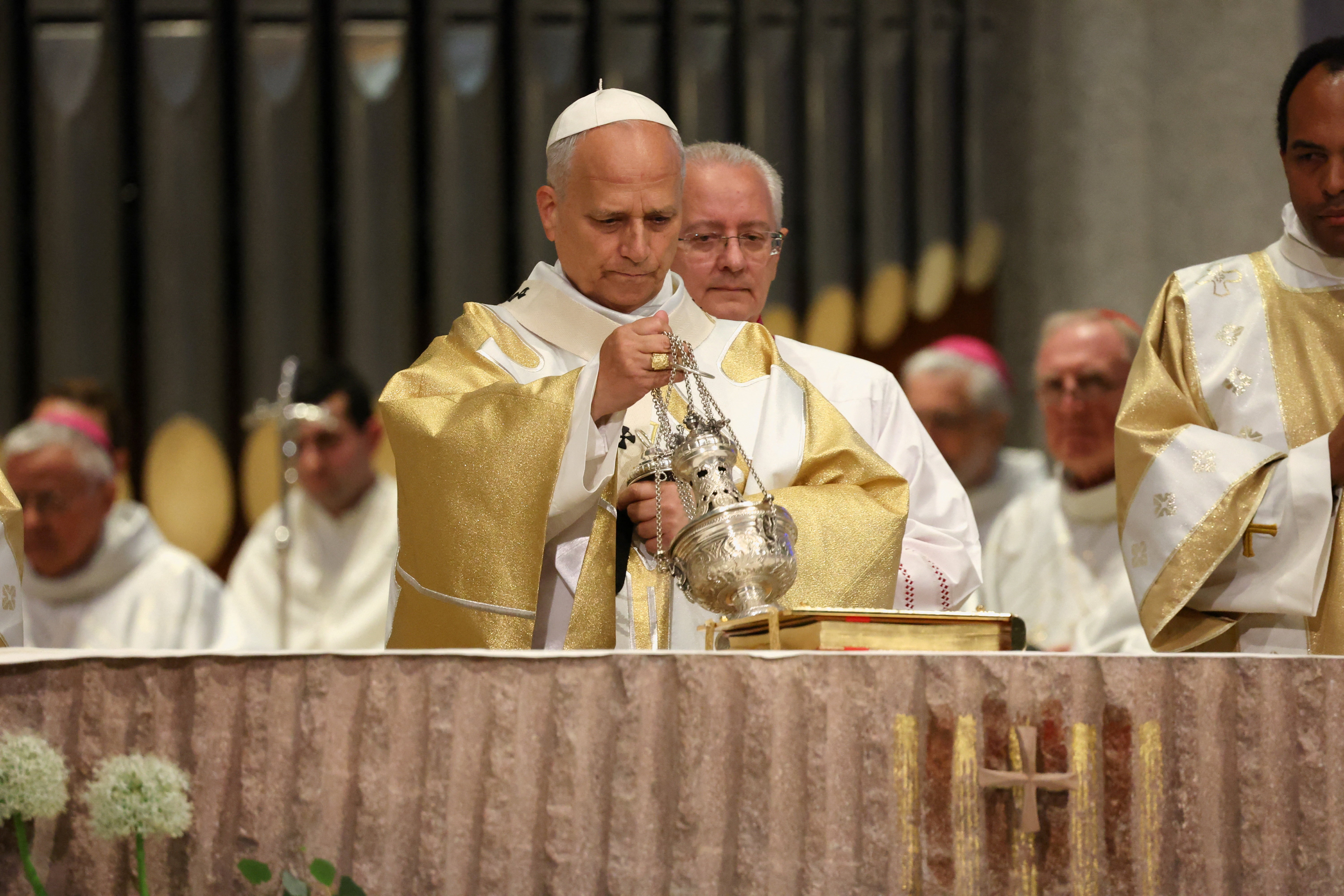
Leia a noticia completa
Church of the Priestly Fraternity of Saint Pius It has among its flags precisely the celebration in the old language.
Those who think it is the same thing are mistaken, however. In the liturgical aspect, the problem is not in the language, but in the rite practiced and the entire political-ideological aspect of this decision.
✅ Follow the g1 international news channel on WhatsApp
The now excommunicated Fraternity was not punished for its predilection for the old-fashioned language. She was punished for disrespecting papal authority and for insisting on denying the decisions of the Second Vatican Council, a series of meetings held by the Catholic leadership between 1962 and 1965 with the aim of modernizing the Catholic Church. The tip of the iceberg of this movement is in the group's celebrations, in the way before the council, that is, following the so-called Tridentine rite.
Religious historian and scientist Víctor Gama, researcher at the Pontifical Catholic University of Minas Gerais (PUC-MG), remembers that among all the differences that the Fraternity has with the contemporary Catholic Church, the "most visible" is the liturgical issue. "They understand that the 'ancient mass', the Tridentine mass, is the most perfect expression of Catholic worship."
This format of ancient mass is always in Latin and with the priest with his back to the assembly. The model approved at the council and adopted by the Western Church after it does not prohibit the Latin language, nor does it restrict the way in which the priest must position himself before the faithful.
However, in the name of greater accessibility and ease of communication, he suggests that masses be in the vernacular language of the community and that the priest address the people, optimizing understanding.
Latin, as the official language of the Vatican, present in countless official documents, can be used, especially on solemn occasions.
But even so, as occurred in the recent mass dedicated to Saints Peter and Saint Paul, the liturgical rite is contemporary and, for everyone understand, both the biblical readings and the celebrant's homily are given in the current language of the community.
Pope Leo Vatican II did not ban Latin, but it facilitated the use of local languages", summarizes theologian and historian Gerson Leite de Moraes, professor at Universidade Presbiteriana Mackenzie. "The orientation was that the mass should become more inclusive."
READ ALSO:
Archbishop of Aparecida receives special sash from the hands of Pope Leo XIV in a ceremony at the Vatican
Amazonian couple receives blessing and advice from the pope during a visit to the Vatican; VIDEO
Antoni Gaudí: 100 years ago, the architect who designed Sagrada Familia was mistaken for homeless and died after being denied help
"The Latin Mass was not abolished. This is one of those parish legends that were repeated by people who never read half a page of the Council", comments Father José Eduardo de Oliveira e Silva, doctor in theology from the Pontifical University of Santa Cruz, in Rome.
"The Code of Canon Law says that the Eucharistic celebration can be done in Latin or in another language, as long as the texts are legitimately approved. And the Second Vatican itself said that the use of Latin should be preserved in Latin rites, although it admitted a wider use of the vernacular language when this was pastorally useful."
"So, in a common parish, in the current Roman rite, the priest can celebrate in Latin", adds the priest.
"What he cannot do is invent a particular liturgy, make the Mass a personal manifesto or use Latin as a battle flag against the Church itself."
The Tridentine rite, used by the followers of the Saint Pius Fraternity, refers to the Council of Trent, held between 1545 and 1563. It turns out that, at that time of more difficult communication, the masses ended up being different from each other. "There was a tendency for the liturgy to develop differently in each place. After Trent, we sought to unify this", he points out.
It was necessary to standardize. One of the issues debated in that series of Church meetings was precisely the desire to create a rite that unified the celebrations. Hence the rite, which ended up being the practice in Catholic parishes in the West until the Second Vatican Council.
The format ended up being popularly known as "Latin Mass" or "Old Mass". With the priest's back turned. In fact, the idea was that the priest would also be facing the altar, as well as the assembly - in that format, in a language that few mastered, it was in fact difficult to predict an interaction between the priest and the faithful.
As the centuries passed, this liturgy underwent updates. The last text of this type of celebration is in the Roman Missal of 1962, precisely the one that is usually used by those who deny the advances of the council held in the 1960s.
Pope Leo canonical today, the insistence on sticking to this obsolete missal - the "so-called liturgical form prior to the post-conciliar reform", as Father Oliveira e Silva defines it - is.
"The expression 'Mass in Latin' was a way of simplifying a much more complex issue", says Domingues.
The issue, he contextualizes, involves the so-called traditionalist movement of the Church, a series of conservative groups that emphasize the pre-conciliar period - and, to a greater or To a lesser extent, they do not accept the decisions of the Second Vatican Council.
Concerned with the advance of ultra-conservative traditionalist groups, Pope Francis (1936-2025) published a document in 2021, called Traditionis Custodes, determining that such celebrations can only take place with authorization from the bishop responsible for the circumscription.
"Based on this document, this Tridentine Mass can only be celebrated in some specific situations. Francis stated that the Second Vatican Council had already decided on a single form of celebration, so what could be done was for the Church to make exceptions for some communities, for pastoral reasons", contextualizes Vaticanist Domingues.
"The document also demands that groups linked to this liturgy not deny the validity and legitimacy of the Vatican's liturgical reform 2nd and the magisterium of the popes", highlights Oliveira e Silva.
The idea was to curb schisms and maintain unity, whilst respecting pastorally options outside the contemporary script.
"Francisco established some criteria for this. One of them is that new traditionalist groups should not be created, as the Tridentine mass could only be granted to existing groups", points out Gama. "It also could not be celebrated in parish churches, but only in chapels."
Previously, Pope Benedict XVI (1927-2022) had facilitated the rite of the "old mass". "He granted universal authorization, a document, in 2007, which said that any priest could decide to celebrate in this rite, without needing to ask for authorization", says Gama. "There was universal freedom and it was a moment in the growth of the Tridentine Mass in Brazil and around the world."
On your back
Regarding the position of the celebrant priest, Oliveira e Silva clarifies that the technically correct expression is not the popular "on your back", but rather the Latin form ad orientem. "In the old rite, this is normal. In the new rite, the celebration aimed at the people became the ordinary practice", he comments.
According to the General Instruction of the Roman Mission, the altar must be built so that it can be celebrated facing the people. "It is what is considered desirable wherever possible", emphasizes the priest.
"But the physical direction of the celebrant is not an automatic detector of faith", highlights Oliveira e Silva. "God does not fit into this sacristy geometry."
"This way of celebrating has not been abolished", highlights Gama. "But it ended up falling into disuse, because the liturgy underwent a series of reforms with the aim of becoming more adapted, of becoming more understandable for our time."
In the understanding of traditionalists, the importance of Latin can be understood under several layers. Firstly because the language functions as a historical sign. "It's continuity, universality and stability", says Oliveira e Silva. "It does not belong to a nation. It creates a kind of sacred distance in relation to the banal use of language. And because it is a stable language, it helps to protect doctrinal formulas from oscillations, fads and unfortunate translations."
Domingues remembers that when the contemporary rite uses Latin, it generally does so to emphasize the "dimension of the universality of the Church". "It is also used as the official language of the Holy See", he highlights.
There is the symbolic aspect. "Latin links the Roman liturgy to centuries of prayer, Gregorian chant, theology, canon law, saints, councils, pontifical documents", lists Oliveira e Silva. "It reminds the faithful that the Church did not begin yesterday."
"Latin has the character of universality and also the characteristic of immutability, as it is a dead language", analyzes Gama. He emphasizes that there is still the theological aspect, since the Catholic Church recommends that its priests understand the language well.
The problem, remembers the priest, is in the caricature. "It's thinking that Latin, in itself, is the criterion. That's ideology", he comments. "Latin can be used in a holy way, as the Church's language of prayer. Or it can become an aesthetic fetish."
For theologian Moraes, this emphasis on the use of Latin takes us back to a period in which the Catholic Church held hegemonic power in Europe. In a way, traditionalist groups want to recover this aura, in a perspective that denies contemporary, secularized society itself, according to the professor's analysis.
The current schism
In the case of the Fraternity of Saint Pius X, the Tridentine mass is just the outer shell of a much deeper problem. "The fundamental issue is ecclesiological: who has the authority to authentically judge tradition", comments Father Oliveira e Silva.
"The problem is not the Mass in Latin, the rite. It's that people are doing it because of a political, ideological and doctrinal issue", says Domingues.
Source: G1



Toque agora.
As músicas que o Mundo está tocando agora
-
1
 Balancê
Sara Tavares
Balancê
Sara Tavares
-
2
 Majestade
Carlos A. Moyses
Majestade
Carlos A. Moyses
-
3
 It's A Great Day (for Me To Whoop Somebody's Ass)
Paul Thorn
It's A Great Day (for Me To Whoop Somebody's Ass)
Paul Thorn
-
4
 Paraíso
Danilo Santos
Paraíso
Danilo Santos
-
5
 Yesterday
Petula Clark
Yesterday
Petula Clark
-
6
 Maybe someday
The Cure
Maybe someday
The Cure
-
7
 Un Trocito De Cielo
Jaci Velasquez
Un Trocito De Cielo
Jaci Velasquez
-
8
 Call Me Up
Ezio
Call Me Up
Ezio
-
9
 Por Onde Anda Você?
Nina Fernandes
Por Onde Anda Você?
Nina Fernandes
-
10
 Con El Cielo
Hillsong Worship
Con El Cielo
Hillsong Worship
-
11
 Vem Com Teu Fogo
Adorazione
Vem Com Teu Fogo
Adorazione
-
12
 Excelente
Lucas Santos Tiago
Excelente
Lucas Santos Tiago
-
13
 Fake Amor
Melody
Fake Amor
Melody
-
14
 Rock And Roll In The Hay
Brad Cotter
Rock And Roll In The Hay
Brad Cotter
-
15
 Nunca Había Sentido Tanto Miedo
Alejandro Neri
Nunca Había Sentido Tanto Miedo
Alejandro Neri
-
16
 Hipnose
Manu Gavassi
Hipnose
Manu Gavassi
-
17
 Hey, Good Lookin'
Dean Martin
Hey, Good Lookin'
Dean Martin
-
18
 Augusta, Angélica e Consolação
Tom Zé
Augusta, Angélica e Consolação
Tom Zé
-
19
 Enquanto Cê Não Vem
Eu, Trovador
Enquanto Cê Não Vem
Eu, Trovador
-
20
 Pelo Teu Nome
Leonardo Campos
Pelo Teu Nome
Leonardo Campos

Historias das musicas em destaque
 Historia da musica
Learn to play Yesterday, by Petula Clark, and discover a beautiful classical interpretation
07/07/2026
Singer Petula Clark built a career marked by elegant interpretations and hits that spanned decades. His version of "Yesterday" presents...
 Historia da musica
Learn to play Call Me Up, by Ezio, and discover folk music full of personality
07/07/2026
The Ezio group is recognized for its compositions that combine folk, rock and sophisticated melodies. The song "Call Me Up" draws atten...
 Historia da musica
Learn to play Maybe Someday, by The Cure, and improve on the guitar
07/07/2026
Among alternative rock's most influential bands, The Cure has built a career full of memorable songs. "Maybe Someday" is one of the son...
 Historia da musica
Learn to play It's a Great Day for Me to Whoop Somebody's Ass by Paul Thorn
07/07/2026
With great humor and a vibe that mixes country, blues and rock, "It's a Great Day for Me to Whoop Somebody's Ass", by Paul Thorn, becam...
 Historia da musica
Learn to play Balancê, by Sara Tavares, and discover all the richness of Lusophone music
07/07/2026
Singer Sara Tavares marked international music with her unique identity, mixing African, Portuguese influences and contemporary sounds....
 Historia da musica
Learn to play Majestade, by Carlos A. Moyses, on the guitar with more emotion and technique
07/07/2026
Some songs manage to cross generations carrying messages of faith, hope and adoration. "Majesty", performed by Carlos A. Moyses, is one...
 Historia da musica
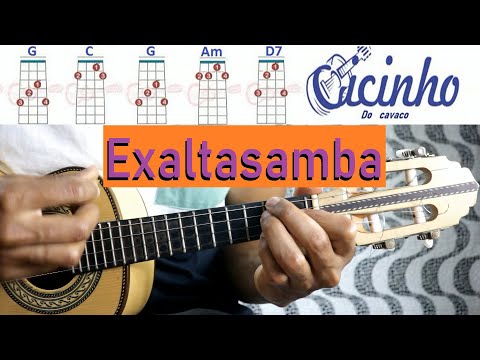
Learn to play Quem Você Exalta, by ExaltaSamba, on the guitar
07/07/2026
For those who like samba and pagode, "Quem Você Exalta", by ExaltaSamba, is a great song to develop new guitar skills. With a character...
 Historia da musica
Learn to play Con el Cielo, by Hillsong Worship, and strengthen your worship repertoire
07/07/2026
Hillsong Worship's "Con el Cielo" is an excellent choice for musicians who enjoy congregational worship and want to develop a solid gui...
 Historia da musica
Learn to play Por Onde Anda Você, by Nina Fernandes, and improve on the guitar
07/07/2026
The song "Por Onde Anda Você", performed by Nina Fernandes, conquers with the delicacy of the melody and the way it conveys feelings th...
 Historia da musica
Learn to play Para Só, by Danilo Santos, on the guitar with more emotion and technique
07/07/2026
If you're looking for an exciting song to expand your guitar repertoire, "Para Só", by Danilo Santos, is an excellent choice. The song...
Mais noticias para voce
 Noticia
09/07/2026
Mega-Sena 3029: draw this Thursday (9) could pay R$45 million
Caixa Econômica Federal is holding contest 3029 of the Mega-Sena this Thursday (9). With no winners on Tuesday (7), the lottery has accumulated and the maximum...
 Noticia
09/07/2026
Is it worth the investment? See Arthur's numbers, Corinthians target
Midfielder Arthur entered Corinthians' radar at the request of coach Fernando Diniz. Although negotiations have not progressed due to the player's high salary r...
 Noticia
09/07/2026
Abvidro goes to Cade against Petrobras for abuse of dominant position
Abvidro (Brazilian Association of Glass Industries) filed a representation with Cade (Administrative Council for Economic Defense) against Petrobras for alleged...
 Noticia
09/07/2026
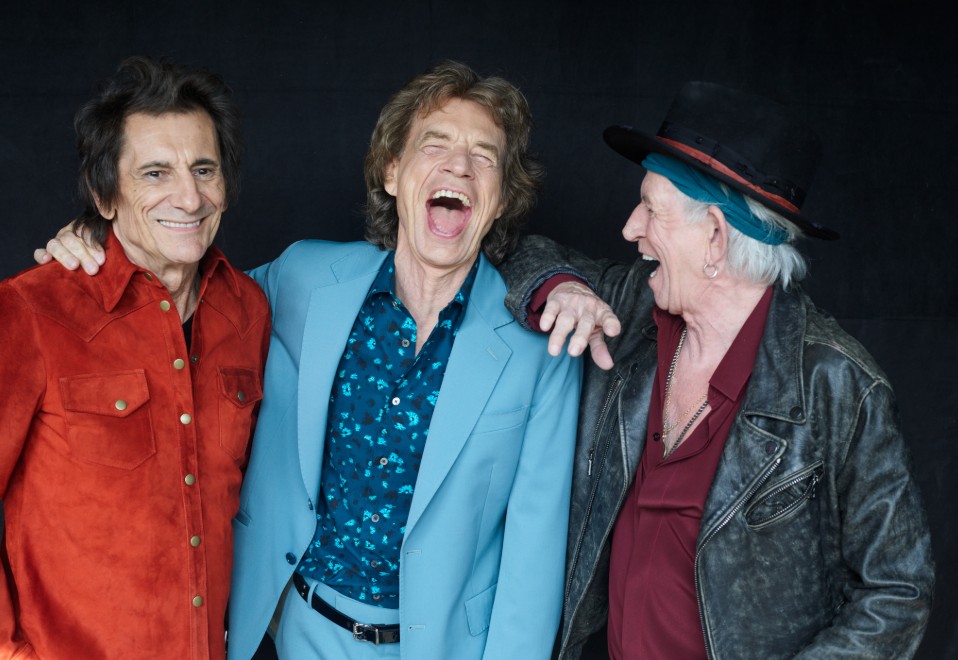
Rolling Stones sound reinvigorated on 'Foreign Tongues', album with great feats and mention of Musk
Cover of 'Foreign Tongues', the Rolling Stones' new albumDisclosureTitle: "Foreign Tongues"Artist: Rolling Stones Rating: 7.5/10Continuing having fun and creati...
 Noticia
09/07/2026
Dwayne Johnson saves the trip in 'Moana', a live action that adds nothing to the animation; g1 already seen
Watch the teaser for 'Moana'The Moana that arrived in theaters this Wednesday (8) is, essentially, the same princess without a prince that won over the public i...
 Noticia
09/07/2026
Can the senator who made racist attacks on Mbappé be punished? Understand what Paraguayan law says
Paraguayan senator makes racist insults against French striker Kylian MbappéDespite international pressure following racist attacks against France player Kylian...
Participe da conversa
Seu comentario ajuda a manter a discussao viva e ainda convida outros leitores a continuar navegando pelo portal.
Seja o primeiro a comentar esta noticia.