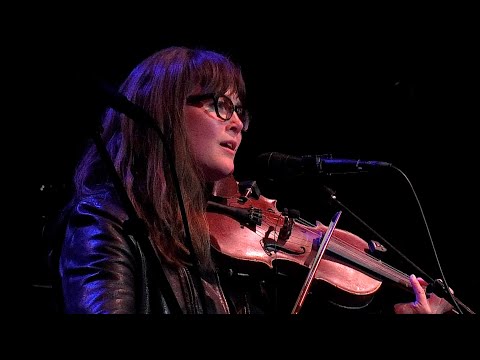
Where Is Love Now
View chords used in this chart
capo 4:
Intro:
C D/C C D/C
C Em
If I could wait here for you,
Am Am7/G F
Without hope or knowing what to do.
C Em
Watch the light fade away,
Am Am7/G F F/E
Without fear or knowing what to say.
Dm Dm/E F F/E
Cry the tears from my eyes.
Dm Dm/E F
Leave me here long enough to realize.
C Em
Where is love now?
C Em
Where is love now;
Am D
Out here in the dark?
C D/C
C Em
If I should hold all my dreams,
Am Am7/G F
Through the night of the way life sometimes seems.
C Em
And if I can't see which way to go,
Am Am7/G F F/E
I'll stay lost in silence 'til I know.
Dm Dm/E F F/E
Cry the tears from my eyes.
Dm Dm/E F
And leave me here long enough to realize.
C Em
Where is love now?
C Em
Where is love now;
Am D Em D
Out here in the dark?
Instrumental Solo:
C Em Am F
C Em Am F
Dm Dm/E F F/E
Cry the tears from my eyes.
Dm Dm/E F
Leave me here long enough to realize.
C Em
Where is love now?
C Em
Where is love now?
C Em
Where is love now?
C Em
Where is love now;
Am D
Out here in the dark?
Em D
Am D
Out here in the dark?
Outro:
Em D
Em D
C D/C
*Notes and Notations*
1. Adagietto con dolcezza: Slow, but not drudging. Don’t linger on chords too long or
else the sound will quickly get stale. As well, don’t heavy hand any of the
chords--delicate, like a somber lament.
2. In regards to picking, Sean Watkins (the guitarist for Nickel Creek) is fond of
mimicking finger picking with his style. Think of a hideous amalgamation of Travis picking,
flatpicking, alternating bass picking, and crosspicking. As such, there’s really no
RIGHT way to play this song. You can do delicate picking or finger style; it’s really
up to
you. I’m biased, as I learned finger style first, but that is just me.
3. Any chord that is marked with an asterisk is something that is PURELY OPTIONAL. As I
mentioned, Mr. Watkins is keen on alternating bass, considering Nickel Creek very seldom
runs with a double bassist, something odd for a bluegrass ensemble. As such, it is up to
the guitarist to provide the stepping motion between chords. When you see a chord that
is marked with a slash, it is a compound chord and is used as a stepping chord or a
neighboring chord between tones.
4. This part is theory babble, so feel free to disregard it. The only exception to the
optional choice is the D/C chord, which is actually a tonic chord with a neighboring step
up to the supertonic (D) while still holding the C. It’s not quite a suspended chord,
as the D/C eventually resolves back to the tonic. As such, the C to D/C to C motion is
an incomplete neighboring chord. As well, you’re probably wondering why there is an Em
present. Well, A minor is the relative minor of C major, and the song does occasionally
insinuate a modulation. However, seeing as it does not stay in A minor very long, this
is simply a borrowing of chords from the relative minor rather than a full blown key change.
That being said, you seldom (and I mean, very seldom), find a usage of a minor V chord
(Em) in a minor key. The V7 is much more enticing, as it allows a very quick segue into a
major IV chord in the original key and eventually back to tonic. In the context of this
song, however, a minor V chord does work as a pivot chord from Am to C, cutting out the
need for a bridge between a V7/vi to I. As well, it could be a vi/V chord, as Em is borrowed from the dominant of C. Then again, it could be as simple as a iii chord. It's really in the eye of the beholder. Again, just theory babble.
5. I added a second way to play the F major chord. This is because in the recording, you
never hear the octave F on the high E string in the recording, so it is, in my opinion,
unnecessary to play it. I’m fond of leaving things out to preserve a good sound rather
than a complete chord that doesn’t inherently do anything to enhance the harmony.
Again, feel free to disregard this if you aren’t interested.
6. Adh mor! (Good luck)
How to play Where Is Love Now
Use the controls above to change the key and text size. Follow the highlighted chords while listening, then practice each section slowly before playing at the original tempo.
What is the starting chord?
The first identified chord is C. You can transpose without leaving the page.
Can I play it on guitar or keyboard?
Yes. The chord progression works on acoustic guitar, electric guitar and keyboard. Adapt the voicings to your instrument and level.