



Leia a noticia completa
The pressure for greater transparency in food production has accelerated the adoption of traceability technologies in Brazilian livestock farming. Driven mainly by the requirements of the European Union, the sector seeks mechanisms to prove the origin of animals and record all stages of production, from birth to slaughterhouse.
For Thiago Parente, CEO of iRancho, traceability goes far beyond the simple individual identification of cattle provided for by the PNIB (National Cattle and Buffalo Identification Plan).
"The government is creating a type of CPF for each animal. This is a fundamental part of traceability, but it is not traceability itself. The challenge is to monitor everything that happens to that animal throughout its life," he said.
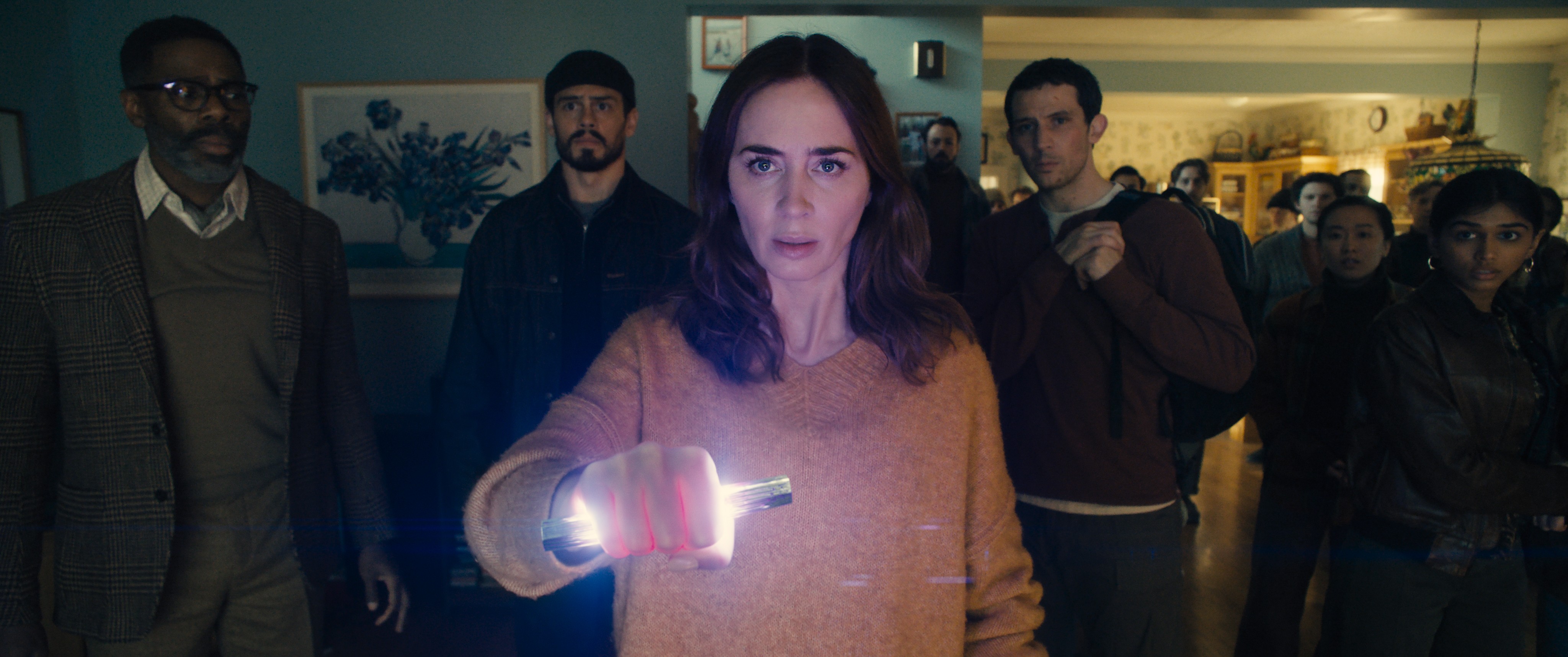
In 'D-Day', Spielberg seeks charm from alien classics like 'E.T.' and 'Close contacts'; g1 already seen
When the greatest director of all time returns to his favorite subject, aliens, you better pay attention. In "D-Day",...
Richarlison responds to criticism of his son's name and says: 'He won't need to work'
Richarlison alongside his son, Richarlison Jr.Social mediaRicharlison caused controversy on social media after respond...
Somali referee removed from the World Cup after being barred by the USA would make history for his country; get to know
Somali referee Omar Abdulkadir Artan in a photo from January 2024.Kenzo Tribouillard/AFPSomali referee Omar Artan, who...According to the executive, the main difficulty facing Brazilian livestock farming is the complexity of the production chain. A single animal can pass through several properties before reaching slaughter, making it difficult to reconstruct its complete history.
"Many times the cattle are born on a farm, pass through another property, go to a confinement and then go to the slaughterhouse. Throughout this process, information is lost", he highlighted.
To solve this problem, iRancho developed SafeBeef, a blockchain-based platform that records and stores information about animals throughout the entire production chain.

Toque agora.


"The system's differential is the guarantee of immutability of the data. Once registered, the information cannot be altered, which generates confidence for those who purchase and those who monitor", he pointed out.
The adoption of this type of technology gains relevance at a time when several markets increase the requirements for the purchase of animal protein. In addition to environmental rules, importing countries began to require proof related to the use of medicines, animal welfare and health control.
"Europe has increasingly higher health requirements. Other countries follow the same path. It is difficult to imagine a future in which traceability is not mandatory to access certain markets", says Parente.
The executive cites Uruguay as an example of a country that managed to transform traceability into a competitive differentiator. "Uruguay tracks practically its entire herd and is able to access markets with high added value. Brazil produces quality meat, but is often unable to demonstrate this to the buyer", he commented.
Despite advances in Brazilian livestock farming, technology is still far from being a reality for most producers.
"The overwhelming majority of properties still do not use advanced traceability systems. What is missing is not production quality, but tools that give visibility to the work being done", said Parente.
In addition to traceability, the company has also invested in artificial intelligence to simplify the collection of information on farms.
Recently, iRancho launched an AI tool that allows you to record information via voice command directly in the field, even in places without an internet connection.
"Data collection is one of the biggest challenges in livestock farming. The worker is often handling a heavy animal and needs to record information at the same time. We have developed technology that allows us to do this by voice, in a simple and intuitive way", he highlighted.
According to Parizotto, innovation has contributed to increasing digital inclusion in the field. "We have already had cases of employees who did not use the system due to difficulties with technology, but started using the platform when it became available via voice", he informed.
For the executive, the combination of traceability, blockchain and artificial intelligence will be fundamental to strengthening the position of Brazilian meat in the global market.
"The world wants to buy Brazilian protein. Our challenge is to show, in a transparent way, the quality of what we produce", he concluded.
Source: CNN

Historias das musicas em destaque
 Historia da musica
Vaneira for Meninas Affectionate: learn to play the lively swing of Grupo Tradição
09/06/2026
"Vaneira pras Meninas Carinhosas", by Grupo Tradição, is a song made to dance, sing along and liven up any environment. With a contagio...
 Historia da musica
Muse of Copacabana: learn to play Carlinho Motta's romantic song
09/06/2026
"Musa de Copacabana", by Carlinho Motta, is a romantic song with a light, poetic atmosphere and full of Brazilian images. The song walk...
 Historia da musica
It's Bad, But It's Good: learn to play Gilberto and Gilmar's good-natured hit
09/06/2026
"Tá Ruim, Mas Tá Bom", by Gilberto and Gilmar, is a fun, popular country song full of funny situations. The song works with a well-know...
 Historia da musica
A Pen e a Enxada: learn to play the country classic by Sérgio Reis
09/06/2026
The song "A Caneta e a Enxada", by Sérgio Reis, is one of those songs that carry the strength of country music roots, mixing memory, no...
 Historia da musica
Learn to Play Mulheres Em Missão on Guitar with Complete Tab and Updated Chords
09/06/2026
The song "Mulheres Em Missão", performed by the Seventh-day Adventist Church, is an inspiring song that conveys a powerful message of f...
 Historia da musica
For Whom the Bell Tolls Continues to Inspire Generations of Musicians
09/06/2026
"For Whom the Bell Tolls" is a composition that remains relevant thanks to its artistic strength and the depth of its interpretation. T...
 Historia da musica
Pynk Gains Prominence Among Musicians Seeking New Challenges
09/06/2026
"Pynk" is a song that draws attention for its different artistic proposal and modern sound. Composition offers musicians an excellent o...
 Historia da musica
Vai Esperar: A Song That Invites Reflection and Musical Learning
09/06/2026
The song "Vai Esperar" presents an interesting combination of engaging melody and striking interpretation. Its accessible style makes i...
 Historia da musica
Father From Heaven is a Beautiful Option for Praise on Guitar
09/06/2026
Worship songs have the ability to bring people closer to spirituality, and "Pai Do Céu" is a striking example of this type of compositi...
 Historia da musica
Marginal Revolution Unites Rap, Social Consciousness and Musicality
09/06/2026
"Marginal Revolution", by the band Mec'Roots, is a composition that combines social criticism, cultural identity and artistic expressio...
Mais noticias para voce
 Noticia
09/06/2026
SP: Defense of police officers accused of Gritzbach's death disputes expert opinion
Shortly before the popular jury of military police officers accused of participating in the death of Vinicius Gritzbach, whistleblower of the PCC (First Command...
 Noticia
09/06/2026
Artemis III: NASA reveals mission crew scheduled for 2027
NASA announced, this Tuesday (9), the astronauts chosen for the Artemis III mission, considered one of the most complex operations of the new era of lunar explo...
 Noticia
09/06/2026
When do you play? Understand the scheme for Hulk's debut at Fluminense
The expectation surrounding Hulk's debut for Fluminense after the World Cup continues without an exact date, generating anxiety for both the striker and the clu...
 Noticia
09/06/2026
Ancelotti outlines the team's possible lineup for their World Cup debut; look
The Brazilian team did another training session in the early afternoon of this Tuesday (9) in New Jersey, in the United States. Without Neymar, coach Carlo Ance...
 Noticia
09/06/2026
Thaís Regina completes six months without acting and is getting closer to returning to Corinthians
- By Mirella Ramos / Central do Timão Editorial Defender Thaís Regina reached, last Sunday (7), the six-month mark without playing an official match for Corinth...
 Noticia
09/06/2026
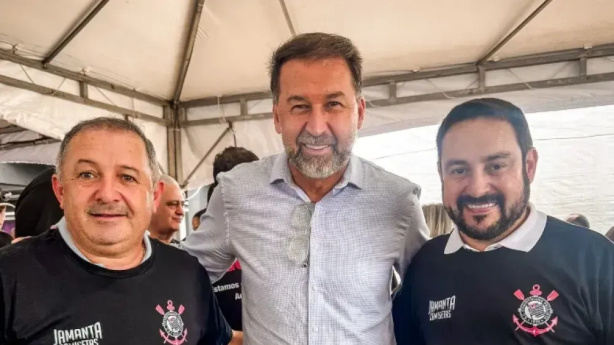
Former Corinthians base managers are expelled from the club by the Members' Ethics Committee
By Meu Timão on 09 of June of 2026 at 13:31 This Monday, Claudinei Alves and Valmir Costa, former directors of Corinthians' youth teams during Augusto Melo's ma...
Participe da conversa
Seu comentario ajuda a manter a discussao viva e ainda convida outros leitores a continuar navegando pelo portal.
Seja o primeiro a comentar esta noticia.