


Leia a noticia completa
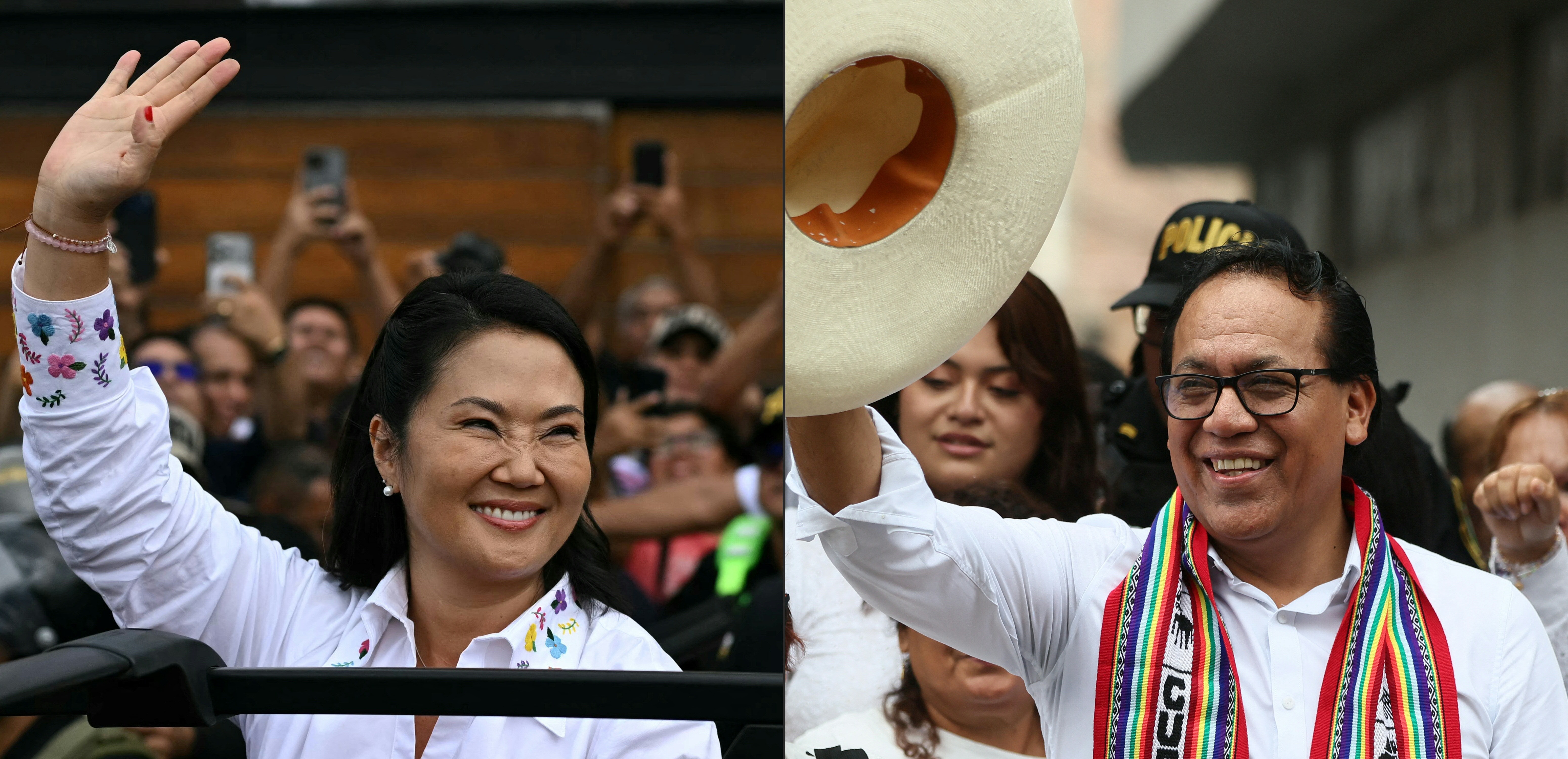
With more than 95% of the ballots counted, the second round dispute in Peru remains open this Tuesday (9), with the left-wing candidate Roberto Sánchez and the right-wing candidate Keiko Fujimori competing vote by vote.
In the early afternoon of Monday (8), Sánchez took the lead in the presidential race and remains ahead of Keiko in the number of votes.
Sánchez has 50.116% of the votes, while Fujimori has 49.884%, according to the latest update from the National Office of Electoral Processes (ONPE) at 11:58 pm, Brasília time. Due to the small difference, the result of the election remains undefined.
Favorite g1 on Google and follow the main news of the day
✅ Follow the g1 international news channel on WhatsApp
According to the official count from the country's electoral body, after several hours with the conservative candidate leading the count, the left-wing deputy turned at 2:58 pm (Brasília time).
The conservative candidate was considered the favorite by exit polls. ballot box, but it was already expected that the deputy would grow in the final stretch, as he is strong in rural electoral areas, the last to be counted.
Keiko, daughter of convicted former president Alberto Fujimori, was placed first in the first round, with 17.2% of valid votes. Sánchez won 12% of the valid votes in the first vote, which had a record 35 candidates.
The polling stations were closed at 5pm local time (7pm Brasília time) on Sunday (7), after a journey without major incidents, unlike the chaotic first round, marked by technical failures and allegations of fraud.
Montage shows candidates for the presidency of Peru Keiko Fujimori (right) and Roberto Sánchez on June 7, 2026, the day of voting for the second round
ERNESTO BENAVIDES / AFP
Fragmented first round
The country went to the polls in the midst of a fragmented political scenario and with a record number of candidates.
Lucas Berti, political scientist, researcher on Peru at the South American Political Observatory and executive coordinator of the Group on International Relations and the Global South, states that, in fact, what happened in these elections is a consequence of disbelief in institutions.
"It is a symptom of a process of institutional delegitimization that has been happening in recent years in the country. And this, to the extent that the elected presidents are unable to govern", he stated.
9 presidents in 10 years
Peru has had 9 presidents in 10 years. To give you an idea, presidential terms in Peru are 5 years. In other words, in democratic stability, the country would only have two presidents in the same period. However, the reality was different, and some leaders did not last even 5 days in office.
"In these years, the leadership that lasted the longest was that of Dina Boluarte, who was in power for almost three years. But, after displeasing the opposition led by Keiko's Fujimorist coalition in Congress, he also fell", says Berti
Furthermore, article 113 of the Peruvian Constitution states that a president can be overthrown due to "permanent moral or physical incapacity" - and those who evaluate this diagnosis are the parliamentarians.
So, for example, if Congress simply don't like a law that the president is trying to pass, they can activate that article, vote and, in less than 24 hours, overthrow a president who was elected by the majority of the population.
For political scientist Berti, this ease of the process demonstrates the institutional fragility at play in Peru. According to him, in recent years, the Fujimorist coalition, with an absolute majority in Congress, has been articulating powers, whether in the Legislature, in the courts or in the judicial system.
Since 2008, Alberto Fujimori's daughter has led this Fujimorist current by founding the Fuerza Popular party and trying to reach the Executive Power in Peru. But that doesn't happen, explains Berti.
"Keiko lost the last three elections (2011, 2016 and 2021) in the second round, by very tight margins. And now in this election, in 2026, he goes to the second round with a larger margin of votes. Some institutes give an advantage to Keiko, others to Sánchez.
Which indicates one thing: the election will be difficult and the result is still open", says Berti.
Democracy in crisis: 'chronic distrust'
The consequence of this struggle between the Executive and Legislative branches in the country resulted not only in a deep political crisis, but also in the way the population sees democracy.
"The credibility of institutions is very low if we look at the last 10 years. And distrust in Congress exceeds 90%, especially during the process that would result in the fall of former president Dina Boluarte, in 2025", explains Berti.
The most recent data from the Latinobarómetro survey, which measures the level of democracy in Latin American countries, shows that Peru faces one of the lowest levels of trust in institutions compared to other countries in Latin America. There is what can be classified as "chronic distrust".
According to the data, 90% of Peruvians have little or no confidence in the government and Congress; and only 10% say they are satisfied with democracy. Furthermore, the survey also noted another dangerous feeling: indifference to politics or the type of government regime.
"There is a great ease in creating parties in Peru and they are parties called 'little institutionalized'. These are parties that do not have effective roots in a society, which is not a party that enters the dispute for 20, 40 years. But rather parties that appear and disappear, just as there is no loyalty between the candidates and the parties, which also change coalitions easily", explains Berti.
This whole scenario reinforces in voters the logic that candidates often arrive at an election without a solid base or without a known party. This ends up generating a reading of distrust and, often, disbelief and fear of the ease with which these elected people can fall.
Unicameral system x bicameral
Unlike Brazil, Peru did not have the so-called bicameral system - in which the Legislative Power is exercised by the Senate and Chamber of Deputies. In Peru, the Congress was made up of just one of them, in which 130 parliamentarians served.
However, this year's elections in Peru also reestablished the bicameral legislative system, with a Chamber and Senate, for the first time in decades. The Andean country once again has a Chamber of Deputies, with 130 seats, and a Senate, with 60 seats.
Under the new system, the removal of a president will require approval in both Houses, with the Senate being the final body to determine the president's future.
Context: Until 1992, the country had a Chamber of Deputies and a Senate. That year, then president Alberto Fujimori (1938 -2024) gave one. "self-coup": among other measures, he closed Congress, sent soldiers into the streets and promulgated a new Constitution the following year. In the text, which was approved by a referendum, it was determined that the country would no longer have a Senate, and the rule was in force until this year.
*With information from Thais Fascina, from GloboNews
Source: G1
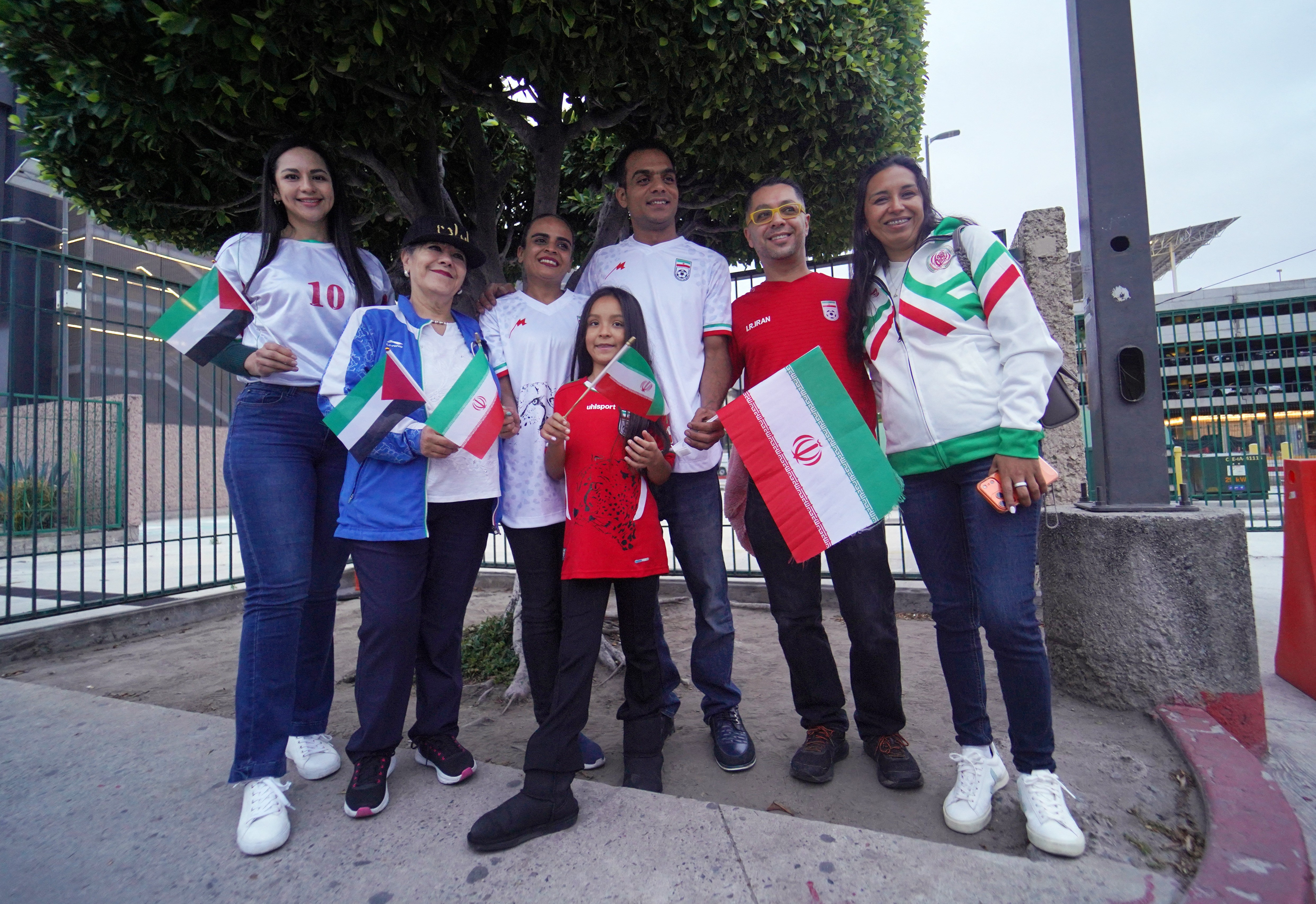
US revokes World Cup tickets from Iran fans, says country's Football Federation
Fans at Tijuana International Airport, in Mexico, welcome the Iran national team upon arrival for the World Cup, on Ju...
US and Israel have "differences" to resolve, Israeli ambassador tells CNN
Israel and the United States still have "some differences" to resolve over how to end the war with Iran, the Israeli a...
Operation targets illegal sale of weight loss pens in Rio and SP
An operation by Decon-RJ (Consumer Police) targets a cell selling illegal weight loss pens this Tuesday morning (9) in...
Toque agora.





Historias das musicas em destaque
 Historia da musica
On My Mind II: learn to play Anand Bhatt's song with a pop and engaging atmosphere
08/06/2026
On My Mind II, by Anand Bhatt, is a song with a pop, romantic and danceable atmosphere, bringing an immersive sound that can work very...
 Historia da musica
In Awe Of You: play an intense worship of Jesus Culture on the guitar
08/06/2026
In Awe Of You, by Jesus Culture, is a worship song with a deep atmosphere, worship lyrics and a musical construction aimed at moments o...
 Historia da musica
A Chance: learn to play a romantic song full of feeling
08/06/2026
A Chance, by Gutemberg Silveira, is a romantic song that talks about mistakes, forgiveness, regret and the possibility of starting love...
 Historia da musica
In Capernaum: learn to play a song of faith, miracle and overcoming on the guitar
08/06/2026
In Capernaum, by Alisson Santos, is a song marked by spiritual strength, biblical narrative and growing emotion. The song takes the lis...
 Historia da musica
At Canga: learn to play Jammil E Uma's hit Noites with a summer atmosphere
08/06/2026
"Na Canga", by Jammil E Uma Noites, is a song full of energy, sun, beach and high spirits. The song carries that contagious atmosphere...
 Historia da musica
Adorar: learn to play the Fluir song with emotion and presence
08/06/2026
"Adorar", by Fluir, is a praise song that translates in a few words a very strong feeling: the desire to prostrate oneself before God a...
 Historia da musica
It Is In Your Presence: learn to play this praise of surrender and adoration
08/06/2026
"Esta Em Tua Presença", by Cristiano Cruz, is a song of praise marked by a direct, deep and spiritual message. The song talks about the...
 Historia da musica
Nobody Explains God in Black and White and Gabriela Rocha: an inspiring figure for moments of worship
08/06/2026
Nobody Explains God is one of the most popular gospel songs of recent years. Performed by Preto no Branco with the participation of Gab...
 Historia da musica
Make a Miracle in Me by Régis Danese: a gospel song that marked generations
08/06/2026
Make a Miracle in Me is one of the best-known songs of Régis Danese's career. The song has become a true anthem of faith, hope and pers...
 Historia da musica
Lugar Secreto by Gabriela Rocha: a powerful worship chord for the guitar
08/06/2026
Lugar Secreto is one of the most impactful songs in Gabriela Rocha's repertoire. The song won over churches and worship ministries for...
Mais noticias para voce
 Noticia
09/06/2026
How to choose the ideal neighborhood to live with your family
Choosing a property goes beyond analyzing the plan, size, finishing or structure of the condominium. The neighborhood where it is located directly influences da...
 Noticia
09/06/2026
Viridis signs energy contract for rare earths project in MG
Viridis Mining and Minerals signed the first major contract for the execution of the Colossus rare earths project in Minas Gerais. The agreement was signed with...
Noticia
09/06/2026
BTG sees Solvay paving the way for European financing for Viridis
BTG Pactual assesses that the letter of intent signed between the Australian Viridis Mining and Minerals and Solvay could pave the way for new forms of European...
 Noticia
09/06/2026
EU demands accelerate race for traceability in livestock farming
The pressure for greater transparency in food production has accelerated the adoption of traceability technologies in Brazilian livestock farming. Driven mainly...
 Noticia
09/06/2026
Prada launches cooling suit for NASA astronauts on their way to the Moon
Italian fashion brand Prada revealed on Sunday (7) the inner layer suit to be worn by NASA astronauts on their way to the Moon, highlighting the brand's effort...
 Noticia
09/06/2026
'Neymar's call-up changed everything': popular businesses celebrate high sales for the World Cup
With Neymar called up, popular commerce celebrates high sales for the World CupA few days before the start of the World Cup, traders in the region of Rua 25 de...
Participe da conversa
Seu comentario ajuda a manter a discussao viva e ainda convida outros leitores a continuar navegando pelo portal.
Seja o primeiro a comentar esta noticia.