



Leia a noticia completa
The results of the second round of elections in Peru reveal, once again, a country deeply fragmented along political and socioeconomic lines, a scenario very similar to that of the 2021 elections, but with wounds that have worsened in recent years among marginalized sectors.
Pedro Castillo defeated Keiko Fujimori by a margin of just 50.1% that year, and this time the race between the Popular Force candidate and the leftist Roberto Sánchez is being decided again by a few tenths of a percentage point (as also occurred in 2016).
This will leave any eventual winner with little legitimacy and almost half of the population dissatisfied with the result.
Platforms will be notified about the obligation to obtain judicial approval for the activities of child influencers, says CNJ rapporteur
Adviser Fábio Esteves, from the National Council of Justice (CNJ), stated this Tuesday (9) that social networks will b...
European Union orders Goal to release free access to WhatsApp for rival AI chatbots
Meta AI can create images based on a command given by the userReproduction/WhatsAppEuropean Union antitrust regulators...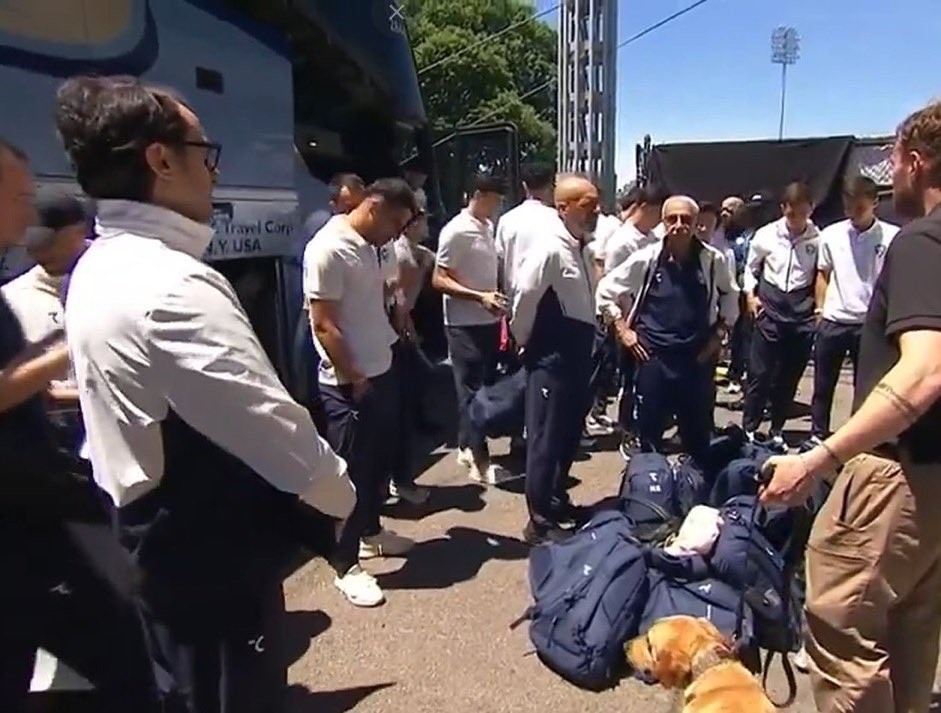
World Cup: USA receives selections with rigorous review; Mexico, with music and dance
Senegal team is searched on the track upon arriving in the USA; journalist reports approachTensions due to the harsh i...Polarization is no stranger to the rest of the region; on the contrary, it is the norm. However, in Peru, the lines that divide the population remain the same, with problems that persist unchecked over the years and that presidential and institutional instability make it practically impossible to resolve.
Anti-fujimorismo x fujimorismo
"Since 2011, the runoff campaign in Peru has boiled down to anti-fujimorismo versus fujimorismo," Peruvian analyst Elohim Monard, a political communication researcher at the University of Wisconsin-Madison, told CNN.
According to the professor, although right-wing and left-wing groups have clearly defined their support, there is "an undecided centrist group that recognizes that both candidacies are bad for the country."

Toque agora.



Continuing the authoritarian and populist legacy of the late Alberto Fujimori (1990-2000), his eldest daughter reached the second round four times and hopes to win the Presidency this time.
"Fujimorism, the largest right-wing populist movement in Peru, has a resilient character, with a very broad social and political base, particularly strong in Lima and the north of the country. It tends to be very loyal," political scientist Gonzalo Banda, a doctoral researcher at University College London, told CNN.
The analyst indicated that there was a "revisionism" of the figure of Fujimori Sr., who died in 2024.
"I thought the funeral would be small, private, like that of all dictators. But no, it was a state funeral, he received honors, a public wake. He was buried with the smell of a huge crowd. This would not have been possible in Peru 10 years ago; society would not have tolerated it", he commented.
Keiko's own image has also changed over these 15 years, and the negative feeling around her is no longer as severe as before.
"This Keiko is very different; she praises her father as the best in history. She herself sowed his unpopularity.
Young people (who didn't experience Fujimori's father's presidency) have a negative image of Keiko because of her own decisions", he highlighted.
Regional Division
The results once again revealed two opposing worlds within the same country: the capital and regions, Lima and what is known as "deep Peru."
Despite countless promises from different presidents, the country has not taken concrete steps towards decentralization, and the capital continues to concentrate wealth (as has been the case since Peru was a colony), while some provinces, even those that should be reaping the rewards of mining royalties, remain far from development.
While Fujimori has some strongholds, such as the north coast, and is competitive in the jungle, Sánchez dominates the south, just as Castillo did in 2021 and Ollanta Humala in 2011.
Hernán Chaparro, social psychologist and professor at the Catholic University of Peru, explained that, in the country's medium-sized urban areas, "there is a greater concentration of poverty and a population with low levels of education", which impacts voting patterns.
"As they don't believe in any of the existing politicians, they end up making last-minute decisions, and it is often the speech of those excluded that ends up favoring candidates like Sánchez," he told CNN.
"What happened, more than a difference between left and right, which certainly exists, is a difference between Lima and the rest of the country," Patricia Zárate, senior researcher at the Institute of Peruvian Studies, told CNN after the first round, which already showed these patterns.
"Especially in the mountain region, because, if you look at the districts that voted most for Sánchez, it is the districts in the mountain region, not the provincial capitals, which are much more urban. So, there is an Andean component", added Zárate.
When more than 90% of the votes had already been counted, Fujimori obtained almost two-thirds of the votes in the capital. But in Puno, Sánchez won with 86%; in Apurímac, with 81%; and in Ayacucho, with 79%.
These are three regions where several of the nearly 50 deaths occurred during the repression of protests that followed the arrest of Pedro Castillo, who tried to dissolve Congress and was convicted of conspiracy to rebel.
For Monard, the south "does not forgive" that episode of social upheaval and even partially blames Fujimorism.
"After Pedro Castillo's coup, when there were riots, some parties in Congress, particularly Fujimori's, said nothing about the deaths; they were indifferent, if not actively fueling the problem", he said.
It was during these moments of outrage that then-president Dina Boluarte crystallized marginalization and inequality with a phrase that still resonates.
"Puno is not Peru," she said, trying to downplay the protests.
Peru's institutional instability, with a succession of presidents in the last decade, has also worn out the population and increased apathy.
"There is a certain lack of interest in politics, an electorate that starts to worry about the elections a week before and even decides the day before the vote", said the expert.
Weariness with political turmoil was also one of the themes of Fujimori's campaign. She promised order and, for the second round, she had a crucial advantage: a block in the Senate that, although not a majority, is enough to defend itself from an impeachment attempt.
Frustrated, indignant and fed up, the population is now preparing for weeks of waiting until the official announcement of the winner. The National Electoral Council announced that the declaration will be made in mid-July, a few days before the change of government.
Who is Keiko Fujimori, candidate for president of Peru
Source: CNN

Historias das musicas em destaque
 Historia da musica
Learn to Play Mulheres Em Missão on Guitar with Complete Tab and Updated Chords
09/06/2026
The song "Mulheres Em Missão", performed by the Seventh-day Adventist Church, is an inspiring song that conveys a powerful message of f...
 Historia da musica
For Whom the Bell Tolls Continues to Inspire Generations of Musicians
09/06/2026
"For Whom the Bell Tolls" is a composition that remains relevant thanks to its artistic strength and the depth of its interpretation. T...
 Historia da musica
Pynk Gains Prominence Among Musicians Seeking New Challenges
09/06/2026
"Pynk" is a song that draws attention for its different artistic proposal and modern sound. Composition offers musicians an excellent o...
 Historia da musica
Vai Esperar: A Song That Invites Reflection and Musical Learning
09/06/2026
The song "Vai Esperar" presents an interesting combination of engaging melody and striking interpretation. Its accessible style makes i...
 Historia da musica
Father From Heaven is a Beautiful Option for Praise on Guitar
09/06/2026
Worship songs have the ability to bring people closer to spirituality, and "Pai Do Céu" is a striking example of this type of compositi...
 Historia da musica
Marginal Revolution Unites Rap, Social Consciousness and Musicality
09/06/2026
"Marginal Revolution", by the band Mec'Roots, is a composition that combines social criticism, cultural identity and artistic expressio...
 Historia da musica
Love So Big Moves Musicians and Faithful with Its Message of Faith
09/06/2026
The song "Amor Tão Grande", by Júnior de Lima, is a composition that conveys a powerful message about the love of Christ and the sacrif...
 Historia da musica
Learn to Play Double Talkin' Jive on Guitar and Acoustic Guitar with the Complete Tab
09/06/2026
Fans of classic rock and hard rock will find "Double Talkin' Jive", by the band Guns N' Roses, a true lesson in technique, attitude and...
 Historia da musica
On My Mind II: learn to play Anand Bhatt's song with a pop and engaging atmosphere
08/06/2026
On My Mind II, by Anand Bhatt, is a song with a pop, romantic and danceable atmosphere, bringing an immersive sound that can work very...
 Historia da musica
In Awe Of You: play an intense worship of Jesus Culture on the guitar
08/06/2026
In Awe Of You, by Jesus Culture, is a worship song with a deep atmosphere, worship lyrics and a musical construction aimed at moments o...
Mais noticias para voce
 Noticia
09/06/2026
PT members see Guimarães and Jaques on a collision course
The minister of the Secretariat of Institutional Relations, José Guimarães, and the government leader in the Senate, Jaques Wagner (PT-BA), have been on a colli...
 Noticia
09/06/2026
England should use R$2,400 device to alleviate World Cup heat
The England team will have help to combat the heat during the 2026 World Cup. According to the English press, Thomas Tuchel will bet on a device to improve the...
 Noticia
09/06/2026
MG: Police conclude investigation into accident that killed Band journalists
The police investigation that investigated the cause and circumstances of the traffic accident that killed Band Minas cameraman, Rodrigo Lapa, aged 49, and repo...
 Noticia
09/06/2026
World Cup: Mexico City suspends classes and adopts home office
The president of Mexico, Claudia Sheinbaum, issued this Tuesday (9) a decree ordering federal public employees in the capital to work from home on June 11 and s...
Noticia
09/06/2026
Senegalese delegation is searched on the tarmac upon arriving in the USA; look
The arrival of the Senegal team in the United States to compete in the 2026 World Cup was marked by rigorous supervision, which drew attention on social media a...
 Noticia
09/06/2026
Corinthians full-back values the growth of the sport and projects his post-career off the field
By Meu Timão on 09 of June of 2026 at 12:30 The women's football calendar also went into recess due to the break for the men's World Cup, which will take place...
Participe da conversa
Seu comentario ajuda a manter a discussao viva e ainda convida outros leitores a continuar navegando pelo portal.
Seja o primeiro a comentar esta noticia.