


Leia a noticia completa
How Trump tries to influence elections in other countries and why his support does not always have the expected result
Getty Images via BBC
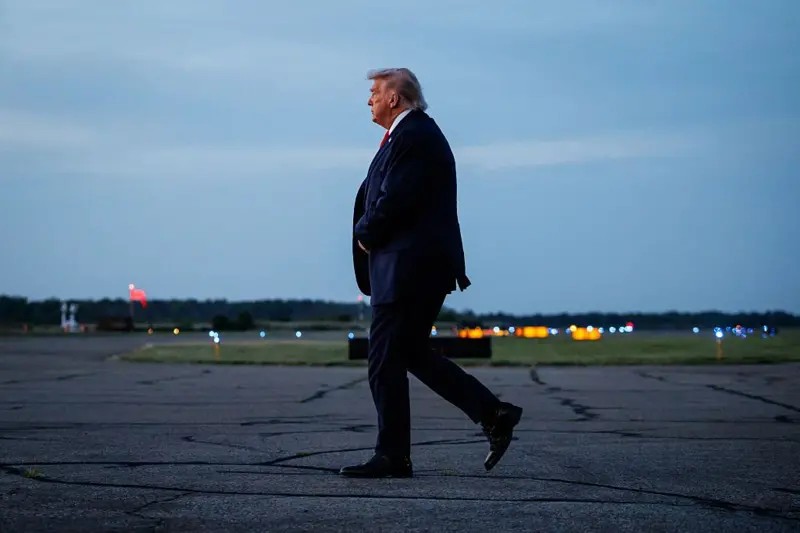
When United States President Donald Trump declared "complete and total" support for the right-wing candidate in the Colombian presidential election at the end of May, he was repeating a rare gesture among his predecessors, but increasingly common in this second term.
The candidate, Abelardo De La Espriella, will compete in the second round with Iván Cepeda, from the Historic Pact party, the same as President Gustavo Petro. On his social network, Truth Social, Trump congratulated De la Espriella, whom he called by the nickname "El Tigre", on his victory in the first round.
"Abelardo will face a radical left-wing Marxist in the second round on June 21," he added, referring to Cepeda. "The results of this election are of extreme importance for the future of Colombia and for its relations with the United States."
De La Espriella thanked Trump for his "decisive support." Cepeda, in turn, denounced what he described as an "interventionist tone" and demanded respect for Colombia's sovereignty.
Why is the PIX in Trump's sights?
Colombia is just the most recent example in which Trump tries to influence the outcome of an election by expressing a preference for a certain candidate or party. Also part of this growing list are countries such as Argentina, Honduras, Hungary and Japan, among many others.
Although, historically, the United States has interfered in the elections of several countries in the past, the way in which this has been done by the Trump administration has attracted attention.
"It was usually done in a covert way, it was not usually explicit on the part of the presidents", History professor Mikael Wolfe, from Stanford University in California, tells BBC News Brasil.
"It was rare for a president, before Trump, to intervene directly in an ongoing election and in such a public way," says Wolfe. "Trump has broken with the modus operandi."
Instead of secret operations by the CIA, the American intelligence agency, as documented during the Cold War, or subtle manifestations of diplomacy in defense of fair and transparent elections, Trump turns to social networks to openly ask for votes, sometimes with threats, for ideologically aligned candidates.
The American president, who began his second term with a rhetoric of non-interventionism, also stands out for the scale of his involvement in the domestic affairs of others countries.
"At this moment, the Trump government is adopting a stance of seeking to somehow influence all the elections that it follows", political scientist Oliver Stuenkel, researcher at Harvard University and the Carnegie Endowment for International Peace, tells BBC News Brasil.
"In Latin America, what we see is that some type of opinion or attempt to influence has become the rule", he observes.
"The exception now is the American government not doing this."
Stuenkel recalls that, on the eve of the second round in the Peruvian presidential elections, on Sunday (7/6), many were wondering why Trump had not yet declared support for the right-wing candidate, Keiko Fujimori.
In this context, discussions are growing in Brazil about the possibility that the United States will try to interfere in the October presidential elections.
The perception of attempted interference has been reinforced in recent weeks, with the American government's decision to classify the Brazilian factions Primeiro Comando da Capital (PCC) and Comando Vermelho (CV) as terrorist organizations and with threats of new tariffs against Brazilian products.
These measures were announced a few days after a visit to Washington by Senator Flávio Bolsonaro (PL-RJ), pre-candidate for the Presidency and son of former president Jair Bolsonaro, an ally of Trump.
Twenty days earlier, President Luiz Inácio Lula da Silva (PT) himself, who is expected to seek re-election in October, had been received by Trump at the White House, in another sign of rapprochement after months of tension between the two countries last year.
Given this scenario, there is an expectation in Brazil that, with or without an attempt at American interference, issues linked to foreign policy and relations between Brasilia and Washington should gain relevance in the campaign.
The impact of Trump's support
Even if Trump seeks to influence the Brazilian election, it is difficult to measure the possible impact. In some countries, candidates supported by him emerged victorious.
In the legislative elections in Argentina, in October last year, Trump went beyond the mere public expression of support, and suggested that financial aid to the country depended on the victory of President Javier Milei's coalition, his ally. "If he loses, we will not be generous with Argentina", said the American.
Milei's coalition won a clear victory in the election, which was celebrated by Trump on his social network: "GREAT VICTORY in Argentina for Javier Milei, a wonderful candidate supported by Trump!"
A month later it was Trump's turn to speak out about the presidential election in Honduras, declaring support for the conservative Nasry Asfura in several posts and insinuating that, if the candidate were defeated, the States United States would not continue to allocate resources to the country.
After the vote, in the midst of a long vote counting process, Trump posted, without offering evidence, that electoral authorities were trying to "change the results" of the election. Asfura ended up being elected by a small margin.
Shortly before Japan's legislative elections in February, Trump posted a message of support for Prime Minister Sanae Takaichi's coalition, which ended up winning a victory considered historic.
"As President of the United States of America, it is my Honor to extend my Complete and Total Support to her and what her highly respected coalition is representing," Trump posted before the election.
Last year, on a visit to Poland, the then Secretary of American Homeland Security, Kristi Noem, openly asked Poles to vote for the conservative candidate, Karol Nawrocki, who ended up elected president.
However, if in these cases the candidates supported by the Trump administration emerged victorious, in other countries American interference seems not to have helped, or even hindered, apparently favoring parties opposed to the right-wing agenda.
During the parliamentary elections in Hungary, in April this year, Trump expressed support for the then prime minister, Viktor, on several occasions. Orbán, his close ally.
US President Donald Trump and former Hungarian leader Viktor Orbán, right
Getty Images via BBC
"Hungary: TAKE THE STREETS AND VOTE FOR VIKTOR ORBÁN," Trump wrote in one of several posts on Truth Social.
"He is a true friend, a fighter and a WINNER, and he has my Complete and Total Support for his Re-election as Prime Minister of Hungary."
The American vice-president, JD Vance, even visited Budapest a few days before the vote, to demonstrate the American government's support for Orbán's campaign. Despite these efforts, Orbán ended up defeated by Péter Magyar.
In Canada, American interference ended up harming the conservative candidate in last year's elections. Instead of explicit support, Trump's influence was mainly through tariffs and provocations, insisting that Canada should be annexed as the 51st American state.
These statements ended up awakening a wave of national pride in Canada. Pierre Poilievre's Conservative Party, ahead in the polls until the final stretch, was defeated by Prime Minister Mark Carney's Liberal Party.
"When a country is very dependent and has no ability to resist this type of interference, as is the case in Honduras, I think voters know that a good relationship with the United States is fundamental to the country's well-being," says Stuenkel.
"In less exposed countries, where the attempt to influence is seen as undue interference, there is a risk of this becoming something counterproductive", he says.
"[In Canada], the threats created a problem for the pro-Trump candidate, who became the target of criticism. In this case, Trump's threats decided the election, gave victory to Mark Carney", highlights Stuenkel.
What to expect in the elections in Brazil
In the case of Brazil, a country that is not so dependent on the United States, previous attempts at interference by Trump seem not to have had the desired effect.
Last year, the Trump administration adopted a series of measures in response to what it described as "persecution" suffered by former president Jair Bolsonaro. The measures included tariffs on Brazilian products and sanctions on authorities, such as financial restrictions on Federal Supreme Court (STF) minister Alexandre de Moraes.
But American pressure did not help Bolsonaro, who in September was sentenced by the STF to 27 years and three months in prison for attempting a coup d'état after losing the 2022 election.
"Every time Trump sort of intervenes, he posts something on his networks, either to favor Bolsonaro or to try to punish Lula somehow, through tariffs or other means, this seems to benefit Lula himself", notes Wolfe.
In reaction to the American measures, President Lula adopted a stance defending national sovereignty which, according to polls, appears to have increased his support.
"Tariffs last year produced a reaction among business elites in São Paulo, and in the country as a whole", political scientist Will Freeman, researcher at the Council on Foreign Relations, tells BBC News Brasil.
"They believed Lula when Lula said this was treasonous behavior."
Stuenkel recalls that the issue of sovereignty is something very deep-rooted in Brazil, which makes attempts to influence the elections from outside more difficult.
In 2018, when Jair Bolsonaro won the election, he was dubbed by many as "the Trump of the tropics", due to his affinity with the American president, who was at the time in his first term.
No However, in that election the American government maintained standard diplomatic neutrality, and it was only after Bolsonaro's victory that Trump officially spoke out, congratulating the Brazilian.
In the 2022 election, when he was outside the White House, Trump openly supported Bolsonaro and asked Brazilians to vote for him, but the dispute was won by Lula.
In that election, there were also reports that the government of then American President Joe Biden had carried out a "silent pressure campaign" to urge Brazilian political and military leaders to respect Brazilian democracy.
Flávio Bolsonaro met with Trump at the White House at the end of May
Reproduction/Instagram/@FlavioBolsonaro via BBC
The American government would be concerned about the possibility of an institutional crisis in Brazil, amid allegations of voter fraud made by Bolsonaro. The United States' actions were criticized by some as meddling in the Brazilian elections.
"I think the way the Democrats (in Biden's party) saw it was that the process was at risk, and that they were defending the process, not one candidate or another," says Freeman.
"Conservatives looked at this and said 'you can say you were defending the process, but what you did benefited the center-left, or the left, or whatever you want to call it'", notes.
"So I think there's a debate there. But to me, the clear difference is that the Democrats and Biden were very careful to publicly justify their policies as process-driven, to ensure that the process was respected no matter who won," says Freeman. 'arm wrestling'
Trump is not the first American president to take sides in elections. A few years ago, a survey by American political scientist Dov Levin found more than 80 episodes in which the United States interfered in foreign elections in the period between 1946 and 2000.
But when looking for examples of support provided in such an open way, the cases cited are rare. Wolfe, from Stanford University, mentions the presidential election in Nicaragua in 1990, contested by the Sandinistas and the opposition, which was supported by the United States.
"(The American president at the time) George H. W. Bush (1989-1993) made it clear that, if the Sandinistas won, the Contra war (against the government) in Nicaragua and the trade sanctions would continue", says Wolfe. "It was explicit interference, and the opposition ended up victorious."
Another commonly cited example is Bill Clinton (1993-2001), whose government, fearing the return of communism in Russia, provided political, financial and diplomatic aid to Russian President Boris Yeltsin in the 1990s.
"But it wasn't something so explicit, it wasn't Bill Clinton writing a letter to the Russian people", observes Stuenkel. "Now it is completely open and even hinders other key strategies of the United States."
One of the differences often pointed out between the Trump administration's stance and that of its predecessors is in relation to the motivations for seeking to interfere in other countries. Before, the goals tended to be strategic, to advance American interests.
"Trump seems more concerned with the declared loyalty of these leaders than with their positions on issues like the United States versus China," says Freeman.
"It is supporting people just because they are right-wing, even if they are not bringing great results in the geopolitical priorities of the United States."
Freeman points out that, in the case of Latin America, there is the issue of drug cartels, which is important for the Trump administration. "I think they see the election of these right-wing leaders as part of a plan to align the countries of the hemisphere in a militarized approach against the cartels."
However, in addition to breaking diplomatic norms, publicly supporting a particular candidate abroad can harm bilateral relations, which become based on affinities between individual leaders rather than shared interests between the countries. Furthermore, there is a risk that the favored candidate will lose.
"This party interventionism introduces instability into the bilateral relationship", observes Stuenkel. "Either you establish solid relations to try to contain China (in Latin America, as defended by a group within the government), or you want to support right-wing governments, and this inevitably produces friction with left-wing governments."
In the case of relations with Brazil, there are two groups in the American government vying for Trump's attention: one more pragmatic and the other more ideological and aligned to the right. This ideological wing is led by Secretary of State Marco Rubio, who recently described Brazil as a country that is not friendly to American interests.
"There is a real struggle in relation to Brazil", highlights Freeman. "There are only a few people who are deeply interested in this issue, and they are pulling Trump in one direction or another, one day at a time."
"These specific lobbies, it's interesting how this has become a kind of lever to direct White House policy toward Latin America, and how it can be used in future elections," says Freeman. "It's not just Trump doing this out of personal preference, because he wakes up thinking and caring about Colombia or something like that."
For Stuenkel, Trump's explicit stance in supporting candidates around the world is also part of a broader erosion of the norms according to which a president would not meddle in elections in other countries.
"It has to do, in part, with greater articulation, especially on the right, at the international level. of communication, construction of narrative", says Stuenkel.
"Trump is a symbol of this. But I think this is a phenomenon that is here to stay and that goes beyond it."
Source: G1
US revokes World Cup tickets from Iran fans, says country's Football Federation
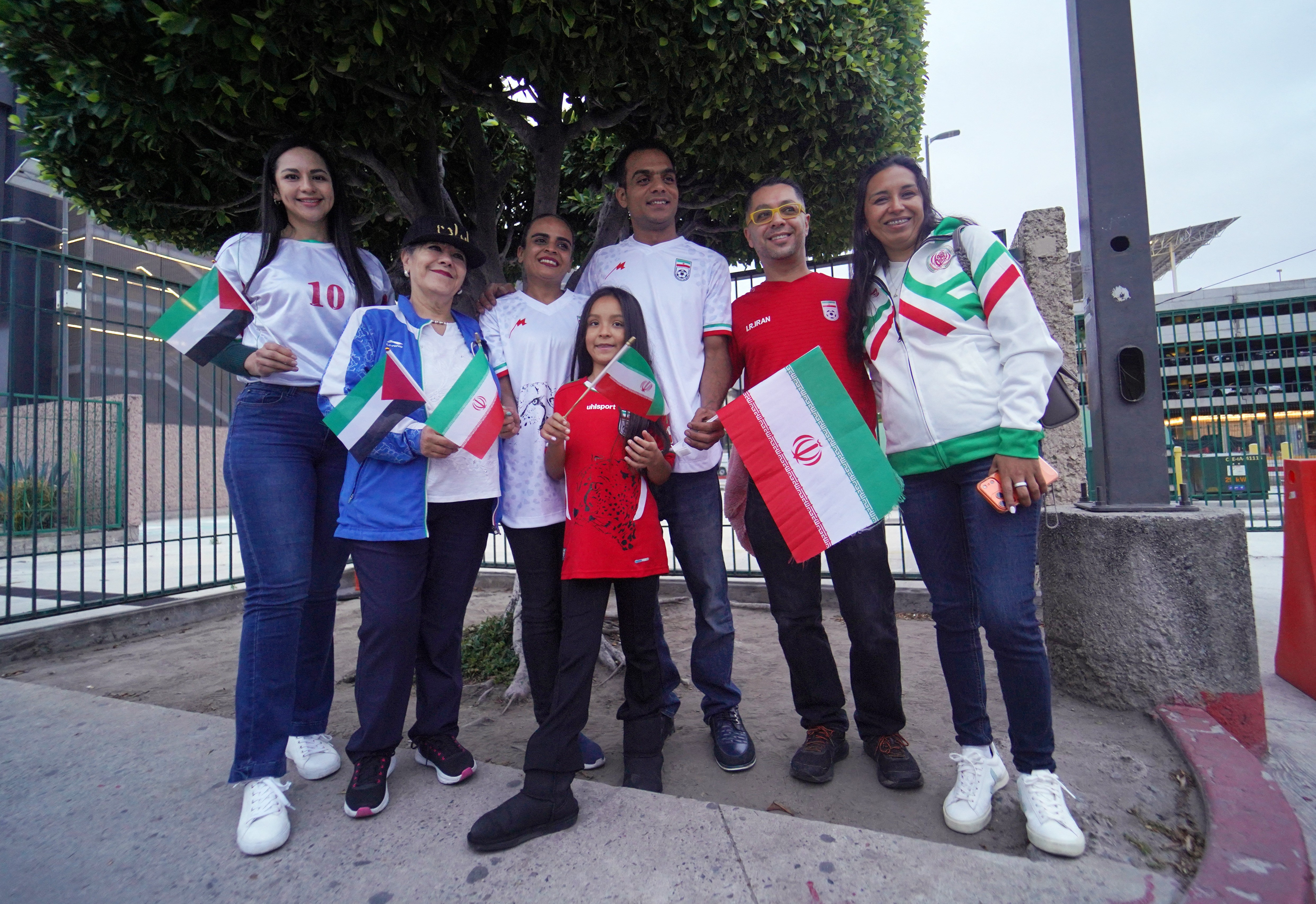
Fans at Tijuana International Airport, in Mexico, welcome the Iran national team upon arrival for the World Cup, on Ju...
US and Israel have "differences" to resolve, Israeli ambassador tells CNN
Israel and the United States still have "some differences" to resolve over how to end the war with Iran, the Israeli a...
Operation targets illegal sale of weight loss pens in Rio and SP
An operation by Decon-RJ (Consumer Police) targets a cell selling illegal weight loss pens this Tuesday morning (9) in...
Toque agora.




Historias das musicas em destaque
 Historia da musica
On My Mind II: learn to play Anand Bhatt's song with a pop and engaging atmosphere
08/06/2026
On My Mind II, by Anand Bhatt, is a song with a pop, romantic and danceable atmosphere, bringing an immersive sound that can work very...
 Historia da musica
In Awe Of You: play an intense worship of Jesus Culture on the guitar
08/06/2026
In Awe Of You, by Jesus Culture, is a worship song with a deep atmosphere, worship lyrics and a musical construction aimed at moments o...
 Historia da musica
A Chance: learn to play a romantic song full of feeling
08/06/2026
A Chance, by Gutemberg Silveira, is a romantic song that talks about mistakes, forgiveness, regret and the possibility of starting love...
 Historia da musica
In Capernaum: learn to play a song of faith, miracle and overcoming on the guitar
08/06/2026
In Capernaum, by Alisson Santos, is a song marked by spiritual strength, biblical narrative and growing emotion. The song takes the lis...
 Historia da musica
At Canga: learn to play Jammil E Uma's hit Noites with a summer atmosphere
08/06/2026
"Na Canga", by Jammil E Uma Noites, is a song full of energy, sun, beach and high spirits. The song carries that contagious atmosphere...
 Historia da musica
Adorar: learn to play the Fluir song with emotion and presence
08/06/2026
"Adorar", by Fluir, is a praise song that translates in a few words a very strong feeling: the desire to prostrate oneself before God a...
 Historia da musica
It Is In Your Presence: learn to play this praise of surrender and adoration
08/06/2026
"Esta Em Tua Presença", by Cristiano Cruz, is a song of praise marked by a direct, deep and spiritual message. The song talks about the...
 Historia da musica
Nobody Explains God in Black and White and Gabriela Rocha: an inspiring figure for moments of worship
08/06/2026
Nobody Explains God is one of the most popular gospel songs of recent years. Performed by Preto no Branco with the participation of Gab...
 Historia da musica
Make a Miracle in Me by Régis Danese: a gospel song that marked generations
08/06/2026
Make a Miracle in Me is one of the best-known songs of Régis Danese's career. The song has become a true anthem of faith, hope and pers...
 Historia da musica
Lugar Secreto by Gabriela Rocha: a powerful worship chord for the guitar
08/06/2026
Lugar Secreto is one of the most impactful songs in Gabriela Rocha's repertoire. The song won over churches and worship ministries for...
Mais noticias para voce
 Noticia
09/06/2026
How to choose the ideal neighborhood to live with your family
Choosing a property goes beyond analyzing the plan, size, finishing or structure of the condominium. The neighborhood where it is located directly influences da...
 Noticia
09/06/2026
Viridis signs energy contract for rare earths project in MG
Viridis Mining and Minerals signed the first major contract for the execution of the Colossus rare earths project in Minas Gerais. The agreement was signed with...
Noticia
09/06/2026
BTG sees Solvay paving the way for European financing for Viridis
BTG Pactual assesses that the letter of intent signed between the Australian Viridis Mining and Minerals and Solvay could pave the way for new forms of European...
 Noticia
09/06/2026
EU demands accelerate race for traceability in livestock farming
The pressure for greater transparency in food production has accelerated the adoption of traceability technologies in Brazilian livestock farming. Driven mainly...
 Noticia
09/06/2026
Prada launches cooling suit for NASA astronauts on their way to the Moon
Italian fashion brand Prada revealed on Sunday (7) the inner layer suit to be worn by NASA astronauts on their way to the Moon, highlighting the brand's effort...
 Noticia
09/06/2026
'Neymar's call-up changed everything': popular businesses celebrate high sales for the World Cup
With Neymar called up, popular commerce celebrates high sales for the World CupA few days before the start of the World Cup, traders in the region of Rua 25 de...
Participe da conversa
Seu comentario ajuda a manter a discussao viva e ainda convida outros leitores a continuar navegando pelo portal.
Seja o primeiro a comentar esta noticia.