


Leia a noticia completa
The dream lasted 11 years, and was largely the initial idea. The MAVEM (Mars Atmosphere and Volatile Evolution) adventure was closed by NASA last Wednesday (5) and put an end to the project that lasted 10 times longer than expected.
In a statement, NASA clarified that since February, the orbiter no longer met the calls and needs of its exploration. After getting lost on December 6, 2025, the company sought for months to reestablish contact, but was unsuccessful.
-

Elections in Peru: Roberto Sánchez turns on Keiko Fujimori with 94.4% of the votes counted
Peru closes voting in the second round of the presidential election.With 94.42% of the votes counted, Roberto Sánchez...
Demi Moore is the target of family dispute and accused of threatening ex-son-in-law
Actress Demi Moore, 63, was named in the legal dispute between her daughter, Rumer Willis, 37, and her ex-partner, mus...
Bitcoin rises and recovers part of the losses with the recovery of ETFs
Bitcoin rose on Monday afternoon, recovering part of the losses recorded the previous week. The market evaluates inves...Swap imageSwap imageSwap image
1 of 30
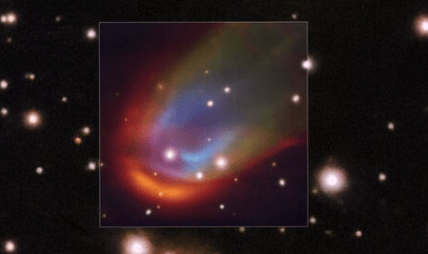
Discoveries of 2026 - (1): Astronomers at the European Southern Observatory have identified a "shock wave" around a dead star. The phenomenon was formed from a collision between gas and dust ejected by the dead star RXJ0528+2838, and was identified with the help of the VLT (Very Large Telescope) - ESO/K. Iłkiewicz and S. Scaringi et al. Background: PanSTARRS

Toque agora.




-
Change imageChange image
2 of 30
Discoveries of 2026 - (2): Jupiter's moon Europa is on the short list of places in our Solar System considered promising in the search for life beyond Earth, with a large underground ocean believed to be hidden beneath an outer layer of ice. However, new research is raising doubts. After modeling conditions on Europa, the researchers concluded that its rocky floor is probably too mechanically strong to allow this type of activity. - NASA/JPL-Caltech/SETI Institute
-
Swap imageSwap imageSwap image
3 out of 30
2026 Discoveries - (3): The solar wind, in combination with Earth's magnetic field, has been transporting particles from our planet's atmosphere to the Moon's surface for billions of years, reveals research from the University of Rochester - Shubhonkar Paramanick/University of Rochester
-
Change imageChange image
-
Swap imageSwap imageSwap image
4 out of 30
Discoveries of 2026 - (4): Astronomers may have discovered a previously unknown type of object, dubbed "Cloud-9", that could shed light on dark matter. Research published in The Astrophysical Journal Letters shows that Cloud-9 is a cloud of dark matter that may be a remnant of the formation of galaxies in the early universe - NASA/ESA/VLA/Gagandeep Anand/Alejandro Benitez-Llambay/Joseph DePasquale
-
Change imageChange image
5 out of 30
Discoveries of 2026 (5) - An object from space collided with Earth around six million years ago, scattering fragments across Brazil. Only now, in 2026, has science been able to confirm the event, which gave rise to pieces of glass known as tektites. - Álvaro Cóstra/Unicamp
-
Swap imageSwap imageSwap image
6 of 30
Discoveries of 2026 (6) - Observations carried out by the James Webb Space Telescope have identified hundreds of small reddish objects in deep images of the early Universe. A study led by Rusakov et al., published in the journal Nature in January, presented a new interpretation for these objects. According to the authors, LRDs correspond to black holes in the initial growth phase - Reproduction NASA, ESA, CSA, STScI, JWST; Dale Kocevski (Colby College)
-
Change imageChange image
-
Swap imageSwap imageSwap image
7 out of 30
Discoveries of 2026 (7) - Astronomers have long searched for clues that a hidden companion star lies out of sight near the red supergiant Betelgeuse. Now, they have discovered new evidence: a boat-like wake across Betelgeuse's upper atmosphere, likely formed by the invisible companion - Elizabeth Wheatley/ESA/NASA
-
Change imageChange image
8 out of 30
Discoveries of 2026 (8) - An international team of astronomers revealed the discovery of an unprecedented structure of ionized iron inside the Ring Nebula.
Scientists have detected the narrow "bar" that emits light specifically through iron atoms - James Webb Space Telescope
-
Swap imageSwap imageSwap image
9 out of 30
Discoveries of 2026 (9) - A team of astronomers, with the help of ALMA (Atacama Large Millimeter Array), a radio observatory in Chile, managed to record 24 debris disks around stars in high resolution. The photographed rings are part of the Kuiper Belt, which is in the same Solar System as Earth, after Neptune. - Disclosure/ESO
-
Change imageChange image
-
Swap imageSwap imageSwap image
10 out of 30
Discoveries of 2026 (10) - Astronomers recorded one of the most impressive examples ever seen in space after observing the presence of a black hole "reborn" after 100 million years of inactivity in a scene compared to the eruption of a "cosmic volcano". According to the study published in the scientific journal Monthly Notices of the Royal Astronomical Society, the phenomenon was observed in the center of the galaxy J1007+3540 - LOFAR/Pan-STARRS/S. Kumari et al.
-
Change imageChange image
11 out of 30
Discoveries of 2026 (11) - Artist's concept of candidate exoplanet HD 137010 b, nicknamed "Cold Earth" because it is a possible rocky planet slightly larger than Earth, orbiting a Sun-like star about 146 light-years away - NASA/JPL-Caltech/Keith Miller (Caltech/IPAC)
-
Swap imageSwap imageSwap image
12 out of 30
Discoveries of 2026 (13) - A 13-atom molecule containing sulfur (as seen in this illustration) was discovered in interstellar space for the first time. Researchers consider the discovery a "missing link" in understanding the cosmic origins of the chemistry of life. - Disclosure/ MPE/NASA/JPL-Caltech
-
Change imageChange image
-
Swap imageSwap imageSwap image
13 out of 30
Discoveries of 2026 (14) - Jupiter is, without a doubt, the largest planet in our Solar System. However, a recent discovery has shown that it is not as big - by a very small margin - as scientists thought. According to Juno observations, Jupiter has an equatorial diameter of 142,976 km (88,841 miles), approximately 8 km (5 miles) smaller - NASA
-
Change imageChange image
14 out of 30
Discoveries from 2026 (15) - Scientists are monitoring the behavior of a supermassive black hole that has specific disordered eating habits. Using mostly radio telescopes in New Mexico and South Africa, they follow the black hole, located at the center of a galaxy far beyond the Milky Way, as it continues to expel a high-speed jet of material after ripping apart and devouring a star that made the mistake of getting too close - NASA
-
Swap imageSwap imageSwap image
15 out of 30
Discoveries from 2026 (16) - A new analysis of radar data from Venus, obtained by NASA's Magellan probe in the 1990s, indicated the presence of an underground cavity created by a lava flow, the first underground structure ever detected on Earth's neighboring planet - Disclosure/RSLab, University of Trento
-
Change imageChange image
-
Swap imageSwap imageSwap image
16 out of 30
Discoveries of 2026 (17) - Imagine all of Earth's oceans, which cover about 70% of the planet and are composed mainly of hydrogen. Now multiply that by nine. That could be the amount of hydrogen in Earth's core, scientists reported in the journal Nature Communications. - Tumeggy/Science Photo Library RF/Getty Images
-
Change imageChange image
17 out of 30
Discoveries of 2026 (18) - Researchers have tracked a large, bright star that, in its death throes, practically disappeared from view as it turned into a black hole without exploding.
Now, it is only detectable due to a subtle glow caused by the heating of the remaining gas and dust, which is sucked into the newborn black hole's irresistible gravitational pull. The star, called M31-2014 - DS1, was located in the Andromeda Galaxy - Keith Miller, Caltech/IPAC - SELab
-
Swap imageSwap imageSwap image
18 out of 30
Discoveries from 2026 (19) - An exoplanetary system about 116 light years from Earth could completely change the way planets form. Four planets orbit LHS 1903 - a red dwarf star, the most common type of star in the Universe - and are arranged in a peculiar sequence. - Reproduction/ESA
-
Change imageChange image
-
Swap imageSwap imageSwap image
19 out of 30
Discoveries of 2026 (20) - A view of Saturn and Titan, the planet's largest moon, captured by the Cassini spacecraft. Researchers suggest that an ancient collision of Saturn's largest moon with another celestial body may have given rise to the rings - NASA/JPL-Caltech/Space Sciences Institute
-
Change imageChange image
20 out of 30
Discoveries of 2026 (21) - The European Space Agency (ESA) released a stunning photograph of the interstellar comet 3I/ATLAS. It was Juice's first record of the comet's passage. - ESA/JUICE/JANUS
-
Swap imageSwap imageSwap image
21 out of 30
Discoveries from 2026 (22) - Celestial bodies with a shape similar to "snowmen" are more common in the Solar System than previously imagined. The curious shape, marked by two joined blocks, is the result of the slow merger of smaller objects at the beginning of planetary formation. The best-known example is Arrokoth, visited in 2019 by the New Horizons probe - Reproduction/Google
-
Change imageChange image
-
Swap imageSwap imageSwap image
22 out of 30
Discoveries of 2026 (23) - Astronomers have identified a galaxy so faint it is almost invisible - a discovery that could help shed light on one of the most elusive substances in the Universe. Researchers have found Candidate Dark Galaxy-2, or CDG-2, using the Hubble Space Telescope, and believe it is made up of at least 99.9% dark matter - Li (utoronto), Ima/ESA/NASA
-
Change imageChange image
23 out of 30
Discoveries of 2026 (24) - Astronomers say the mysterious "little red dots" observed by the James Webb Space Telescope may be giant stars from the early Universe, not black holes, as initially thought - Bangzheng "Tom" Sun
-
Swap imageSwap imageSwap image
24 out of 30
2026 Discoveries (25) - Scientists have obtained the most complete, high-resolution map of the cold gas at the center of the Milky Way, which contains the raw material from which stars and planets are formed. The image information could help astronomers understand the origin of our solar system. The image is the result of a four-year international effort, using one of the most powerful telescopes on Earth, the Atacama Large Millimeter/submillimeter Array, or ALMA, a set of more than 50 radio antennas spread across a plateau in the Chilean Andes - ALMA(ESO/NAOJ/NRAO)/S. Longmore/D. Minniti et al.
-
Change imageChange image
-
Swap imageSwap imageSwap image
25 out of 30
Discoveries of 2026 (26) - An intense fireball crossed the sky in Europe at around 2:55 pm on Sunday (8/3), leaving a trail of smoke. The glow lasted approximately six seconds, according to the European Space Agency (ESA). The record was observed by many people in Belgium, France, Germany, Luxembourg and the Netherlands. - AllSky7/ESA
-
Change imageChange image
26 out of 30
Discoveries of 2026 (27) - A superluminous supernova involving a huge star in a galaxy about a billion light-years from Earth is now helping scientists solve this mystery.
Researchers determined that it became extremely bright because the explosion left behind a magnetar, an extremely compact, rapidly rotating stellar remnant with an immensely powerful magnetic field - Joseph Farah and Curtis McCully
-
Swap imageSwap imageSwap image
27 out of 30
Discoveries from 2026 (28) - A study published in the scientific journal Astronomy & Astrophysics suggests that the Sun may not be exactly in its place of origin. According to the researchers, the Solar System star may have been born in a region closer to the center of the Milky Way and migrated over billions of years to its current position. - NASA
-
Change imageChange image
-
Swap imageSwap imageSwap image
28 out of 30
Discoveries of 2026 (29) - Astronomers have identified a possible new type of planet outside the Solar System, with a molten interior and a sulfur-rich atmosphere. The object, called L 98-59 d, is about 35 light-years from Earth and was analyzed using data from the James Webb Space Telescope and ground-based observatories. The planet's interior may be made up of molten rock, similar to lava - Mark A. Garlick
-
Change imageChange image
29 out of 30
2026 Discoveries (30) - A supernova - the explosive death of a star - is always violent, hurling material into space and usually leaving behind a compact stellar remnant, like a neutron star or black hole. But some supernovae involving the biggest stars in the cosmos can be so immensely powerful that they leave absolutely nothing behind - Monash University
-
Swap imageSwap imageSwap image
30 out of 30
2026 Findings (31) - Daily satellite observations have revealed a continued increase in nighttime brightness around the world due to artificial lighting, with important regional variations, including an increase in sub-Saharan Africa and Southeast Asia, along with a deliberate reduction in Europe, driven by concerns about energy conservation and light pollution. - Reuters
-
Change imageChange image
-
-
-
-
-
-
-
-
-
-
-
-
-
-
-
-
-
-
-
-
-
-
-
-
-
-
-
-
-
-
default view
full view
grid view
Martian atmosphere
11 years were dedicated to sending information from the Martian atmosphere. MAVEN was declared unrecoverable after a critical power failure, which resulted in a lack of communication with NASA engineers.
In an official statement, the space agency explains that the probe went into safety mode and rotated at a high rate, which exhausted the batteries.
Legacy
The probe was essential to understanding how the sun and solar storms eroded Mars' atmosphere, transforming it from a potentially habitable planet into the cold desert it is today.
Maven probe reached Mars orbit in 2014, and lost contact on December 6, 2025 - NASA
The legacy of knowledge goes much further. The radiation data collected by MAVEN is vital to the safety of future astronauts sent to Mars.
In addition to science, MAVEN served as a communication bridge (relay) between robots on the surface of Mars and Earth, breaking data transfer records.
NASA mission finds clues to what made Mars uninhabitable
Source: CNN

Historias das musicas em destaque
 Historia da musica
On My Mind II: learn to play Anand Bhatt's song with a pop and engaging atmosphere
08/06/2026
On My Mind II, by Anand Bhatt, is a song with a pop, romantic and danceable atmosphere, bringing an immersive sound that can work very...
 Historia da musica
In Awe Of You: play an intense worship of Jesus Culture on the guitar
08/06/2026
In Awe Of You, by Jesus Culture, is a worship song with a deep atmosphere, worship lyrics and a musical construction aimed at moments o...
 Historia da musica
A Chance: learn to play a romantic song full of feeling
08/06/2026
A Chance, by Gutemberg Silveira, is a romantic song that talks about mistakes, forgiveness, regret and the possibility of starting love...
 Historia da musica
In Capernaum: learn to play a song of faith, miracle and overcoming on the guitar
08/06/2026
In Capernaum, by Alisson Santos, is a song marked by spiritual strength, biblical narrative and growing emotion. The song takes the lis...
 Historia da musica
At Canga: learn to play Jammil E Uma's hit Noites with a summer atmosphere
08/06/2026
"Na Canga", by Jammil E Uma Noites, is a song full of energy, sun, beach and high spirits. The song carries that contagious atmosphere...
 Historia da musica
Adorar: learn to play the Fluir song with emotion and presence
08/06/2026
"Adorar", by Fluir, is a praise song that translates in a few words a very strong feeling: the desire to prostrate oneself before God a...
 Historia da musica
It Is In Your Presence: learn to play this praise of surrender and adoration
08/06/2026
"Esta Em Tua Presença", by Cristiano Cruz, is a song of praise marked by a direct, deep and spiritual message. The song talks about the...
 Historia da musica
Nobody Explains God in Black and White and Gabriela Rocha: an inspiring figure for moments of worship
08/06/2026
Nobody Explains God is one of the most popular gospel songs of recent years. Performed by Preto no Branco with the participation of Gab...
 Historia da musica
Make a Miracle in Me by Régis Danese: a gospel song that marked generations
08/06/2026
Make a Miracle in Me is one of the best-known songs of Régis Danese's career. The song has become a true anthem of faith, hope and pers...
 Historia da musica
Lugar Secreto by Gabriela Rocha: a powerful worship chord for the guitar
08/06/2026
Lugar Secreto is one of the most impactful songs in Gabriela Rocha's repertoire. The song won over churches and worship ministries for...
Mais noticias para voce
 Noticia
08/06/2026
Disney hid Taylor Swift's participation in "Toy Story 5"; understand
The participation of singer Taylor Swift, 36, in "Toy Story 5" was kept confidential even by part of the team involved in the production of the animation. Accor...
 Noticia
08/06/2026
After shooting at police, vehicle invades condominium in Indaiatuba
A fleeing vehicle caused, in the early hours of this Monday (8), a shootout against the police and invaded a condominium of houses, in Indaiatuba, in the interi...
 Noticia
08/06/2026
Patrocinadora do time feminino do Corinthians faz campanha para lançamento de produto
By Meu Timão on 08 of June of 2026 at 17:32 Na tarde desta segunda-feira, a Vizzela, empresa de cosméticos que patrocina o time feminino do Corinthians desde 20...
 Noticia
08/06/2026
Governor of RJ says he hopes to recover R$1.4 billion from RioPrevidência investments in Master
The acting governor of Rio de Janeiro, Ricardo Couto, stated this Monday (8) that there is an expectation of recovering around R$ 1.4 billion of the resources t...
Noticia
08/06/2026
Elections in Peru: Roberto Sánchez turns on Keiko Fujimori with 94.3% of the votes counted
Peru closes voting in the second round of the presidential election.With 94.34% of the votes counted, Roberto Sánchez took the lead in the presidential race and...
 Noticia
08/06/2026
Coffee closes in fall in NY as the harvest advances in Brazil
Arabica coffee prices fell again on the New York Stock Exchange this Monday (8), pressured by the advance of the Brazilian harvest and the prospects of an incre...
Participe da conversa
Seu comentario ajuda a manter a discussao viva e ainda convida outros leitores a continuar navegando pelo portal.
Seja o primeiro a comentar esta noticia.