


Leia a noticia completa
Trump government says that PIX harms competition for American companies
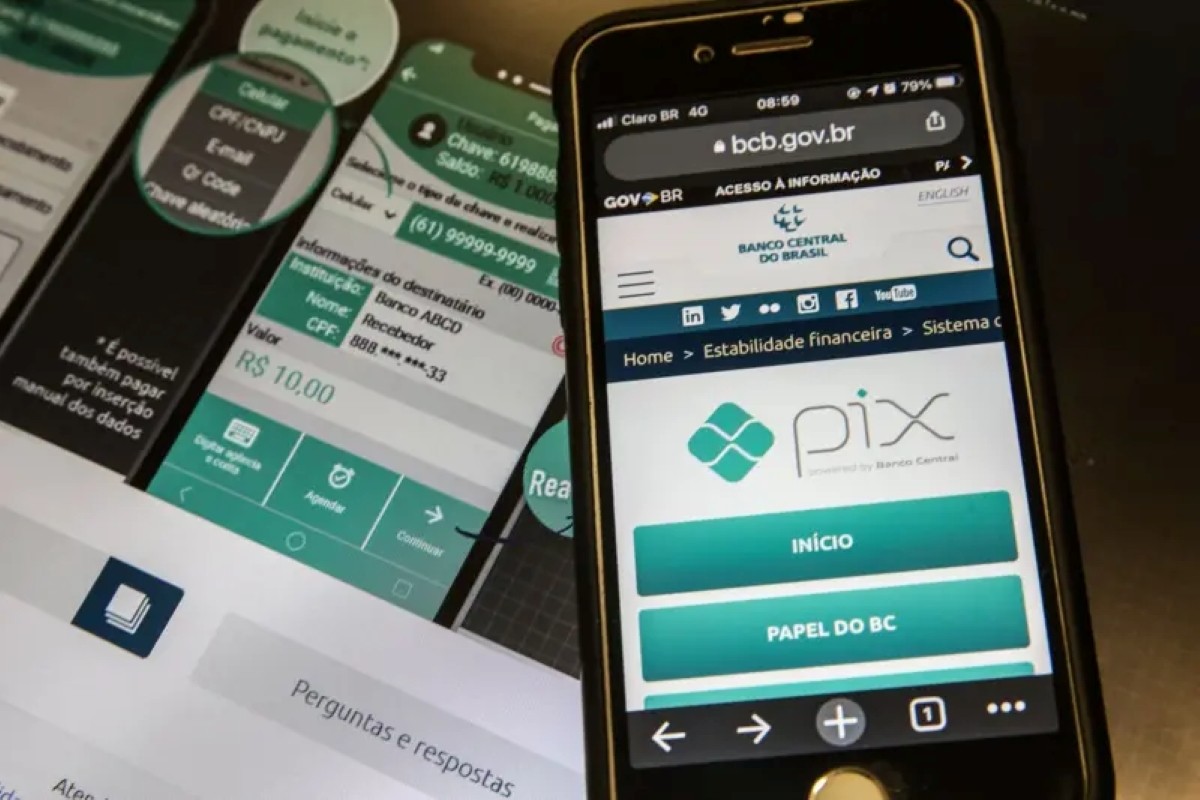
The United States investigation reignites the debate about the sovereignty of payment systems. Despite accusations of "unfair competition", the use of credit cards has grown 125% in Brazil since the creation of PIX.
This new episode of tension in the relationship between Brazil and the United States shows how payment methods have become a strategic topic in an increasingly digital world. After the threat of new trade measures from Washington, last Tuesday (2), President Luiz Inácio Lula da Silva blamed Flávio Bolsonaro and participated in an event in Goiás holding a poster with the phrase: "The PIX is from Brazil".
During the speech in Goiás, Lula once again defended the system. "No one is going to make us change the PIX", said the president, who also said he expected a call from Donald Trump to discuss the impasses between the two countries.
The reaction occurred hours after the Office of the United States Trade Representative (USTR) concluded an open investigation based on the so-called Section 301 of the Trade Act of 1974.
In the document, Brazil is accused of adopting practices considered "irrational" or "discriminatory" against American electronic payment companies by favoring the PIX, an instant transfer system created by the Central Bank.
Trump government concludes that Pix is 'unfair': why does the Brazilian system bother the US so much and what can happen to it now?
Marcello Casal Jr/Agência Brasil
Although the decision does not automatically lead to sanctions, it paves the way for possible commercial measures against Brazil. The investigation questions, among other points, the fact that the Central Bank acts at the same time as regulator and operator of the system, the mandatory offering of PIX by large financial institutions and the rules that guarantee the service's prominence in bank applications.
In response to the preliminary conclusion of the investigation, the Brazilian government classified the accusations as unjustified and reiterated that PIX is a public payments infrastructure, open to national and foreign companies. In a statement, Planalto expressed "indignation" with the USTR's decision and reported that it will continue negotiating with Washington until the release of the final report, scheduled for July 15.
The controversy arises amid a broader escalation of tensions between Brasília and Washington. Last Friday (29), the United States classified the Brazilian factions PCC and Comando Vermelho as terrorist organizations. For political scientist Feliciano Guimarães, professor of International Relations at the University of São Paulo (USP), the two episodes are part of a broader scenario of deterioration in relations between the two countries.
"We are entering one of the most dangerous chapters in the history of the relationship between Brazil and the United States since the Cold War", he says.
More instruments of pressure
In Guimarães' assessment, the classification expands the tools available to the United States to pressure individuals, companies and possibly Brazilian institutions linked to these organizations. This increase in possibilities for action becomes even more sensitive with the proximity of the presidential election, in October.
"Imagine what would happen to the Brazilian economy if, two weeks before the elections, the State Department designated Itaú as a bank linked to terrorist organizations such as the PCC and Comando Vermelho", he asks.
In the scenario projected by the researcher, the bank's shares would fall quickly, its assets in the United States could be blocked and the institution would run the risk of being removed from the Swift system, used for international financial transactions.
"There would be an automatic breakdown of the Brazilian financial system, and the federal government would not be able to cover it. The same thing could happen with other banks. This is, by far, the biggest danger.
Now, all Brazilian banks have to increase their compliance department fivefold to remove all money suspected of passing through PCC and CV from within the institution, immediately."
In the first reactions to the classification of these factions as terrorist organizations, members of the Brazilian government have already expressed concern about possible effects on PIX. The fear is that the United States will adopt measures against the payment system and the companies that use it, based on the interpretation that it could facilitate criminal activities. A few days later, when classifying the issue as "unfair commercial practice", PIX became the center of diplomatic tension.
Investigation against PIX was opened in 2025
The United States' offensive against PIX did not appear suddenly. PIX is a public payments infrastructure, open to any institution authorized to operate in the country, and the use of Section 301 is incompatible with the rules of the World Trade Organization (WTO). In April this year, representatives from the Ministry of Finance and Itamaraty traveled to Washington to provide clarifications to American authorities.
China has also consolidated its own platforms for instant payments, such as Alipay and WeChat Pay
Don Huh via DW
Economist Monica de Bolle, researcher at the Peterson Institute for International Economics, questions the very basis of the investigation. "PIX is not a commercial practice. PIX is a non-discriminatory public payment system", he defines.
For De Bolle, the investigation can only be understood when the economic interests involved are considered. Large American companies in the payments sector have been putting pressure on governments in different parts of the world in the face of the advancement of digital systems created or supported by States.
"These platforms end up affecting the businesses of these companies. Since the adoption of PIX, companies like Visa and Mastercard have complained a lot, claiming that they will lose market share", he states.
Credit card lobby
According to the economist, the political weight of these companies helps explain why PIX was included in the United States trade investigation.
"These companies have a very strong lobby. As the Trump government works a lot with lobbying, it ended up accepting the complaints of these credit card companies in relation to PIX."
De Bolle considers that the Brazilian position is solid from a legal point of view. "The chance of the United States prevailing in this 301 investigation is relatively low. Brazil has recourse at the WTO and will probably win this case because, again, PIX is not a commercial policy instrument", he states.
Despite the accusation of unfair competition, the wide adoption of PIX in Brazil had the main effect of replacing cash, without reducing the use of cards. In 2020, the year the system was launched, the volume moved with cards in the country was around R$2 trillion. In 2025, this total reached R$ 4.5 trillion - a growth of approximately 125%, according to data from the Brazilian Association of Credit Card and Services Companies (Abecs).
Political scientist Denilde Holzhacker, professor of International Relations at ESPM and coordinator of the Center for American Studies and Business, adds that technology companies such as Meta, Apple and Google also have a direct interest in the evolution of the Brazilian digital payments market and exert significant influence on the current American government.
PIX aims for inclusion financial
PIX was created with the aim of expanding financial inclusion, increasing competition in the banking system and modernizing the country's payments infrastructure.
In 2018, the Central Bank invited the private sector to develop a national instant payments platform.
As the initiative did not progress, the monetary authority decided to take over the project and develop PIX with its own technical team.
Launched in November 2020, the system already has more than 175 million registered users, of which around 160 million are individuals. Today, it is used by approximately 93% of the country's adult population and accounts for almost half of all financial transactions carried out in Brazil.
According to a study by ACI Worldwide and the Center for Economics and Business Research (CEBR), PIX could add around R$280 billion to the Brazilian economy by 2028.
"PIX was not created to replace Visa and Mastercard. It was created to promote financial inclusion, technology and innovation", says German Ralf Germer, founder and CEO of fintech PagBrasil. "Brazil is clearly a global reference. It was not the first country to create a system of this type, but it was probably the most successful and became an example for other countries."
Germer attributes the success of the initiative to a longer trajectory of digitalization of the Brazilian financial system. When he was in the country for the first time, in 1986, he was surprised to be able to get a statement from his account at any bank branch.
"In Germany, it wasn't possible yet. I could only do it at my own branch. This shows that Brazil has always been very advanced in this area", he recalls.
India developed the Unified Payments Interface (UPI), today the largest instant payments system in the world
Indranil Aditya/NurPhoto/picture alliance via DW
When commenting on the investigation in the United States, the executive questions the accusation of unfair competition and highlights that PIX is a payment infrastructure.
"Perhaps we can compare it to a country's road network. The road network is, to a large extent, operated by the State. Some roads are built by the State itself, others by the private sector. But the rules - where the roads go, what the traffic rules are - are defined by the State."
"And there is a point very important: PIX is an open infrastructure. All companies operating in Brazil can participate: merchants, banks and also American card operators, who actually participate in the system", he highlights.
Brazil is not alone
Brazil is not alone in the search for greater autonomy. India developed the Unified Payments Interface (UPI), today the largest instant payments system in the world, while China consolidated its own platforms such as Alipay and WeChat Pay. The challenge now is to integrate these systems. Initiatives such as BRICS Pay and bilateral agreements seek to facilitate international payments, and Brazilians are already able to use PIX to pay for purchases in countries such as Argentina.
The increasing use of financial instruments as a form of geopolitical pressure in recent years has led governments and central banks to intensify the debate on how to reduce dependence on financial infrastructures controlled by third parties.
Economist Carla Beni, from Fundação Getulio Vargas (FGV), points to the exclusion of Russian banks from the Swift system after the invasion of Ukraine as a milestone of this transformation.
"Today's world is no longer the post-war world. It has become an important necessity not to leave a payments infrastructure in the hands of a foreign company or another government", he states.
The debate has gained strength especially in Europe. In a recent speech, the president of the German Central Bank (Bundesbank), Joachim Nagel, classified the digital euro as a matter of "strategic autonomy" for the continent. At the same time, European financial institutions are developing Wero, an initiative created to offer a regional alternative to international payment networks.
Proponents of these projects say that Europe still relies excessively on foreign companies to process electronic payments.
Just as occurred in Brazil with the PIX, the discussion involves the ability to maintain under local control infrastructures considered strategic for the digital economy.
For Guimarães, the way Washington will deal with the Brazilian case will be closely watched by other countries.
"If they manage to break Brazil or reverse the PIX, they will be sending a signal to the world. Any country that wants to seek digital sovereignty on the same terms will know that it will have problems."
Source: G1

VIDEO shows exact moment Russian missile hits city in Ukraine
Video shows missile hitting the city of Zaporizhzhia, in UkraineA security camera captured the exact moment a missile...
Shakira reveals that she almost abandoned music to live in the countryside: "Madness"
Singer Shakira, 49, revealed that she was determined to leave her career in the industry and exchange for a calm life...
Itatiaia National Park records -4.4ºC, lowest temperature in Brazil
The Itatiaia National Park, which is located in the Serra da Mantiqueira region, recorded, on the morning of this Mond...
Toque agora.




Historias das musicas em destaque
 Historia da musica
On My Mind II: learn to play Anand Bhatt's song with a pop and engaging atmosphere
08/06/2026
On My Mind II, by Anand Bhatt, is a song with a pop, romantic and danceable atmosphere, bringing an immersive sound that can work very...
 Historia da musica
In Awe Of You: play an intense worship of Jesus Culture on the guitar
08/06/2026
In Awe Of You, by Jesus Culture, is a worship song with a deep atmosphere, worship lyrics and a musical construction aimed at moments o...
 Historia da musica
A Chance: learn to play a romantic song full of feeling
08/06/2026
A Chance, by Gutemberg Silveira, is a romantic song that talks about mistakes, forgiveness, regret and the possibility of starting love...
 Historia da musica
In Capernaum: learn to play a song of faith, miracle and overcoming on the guitar
08/06/2026
In Capernaum, by Alisson Santos, is a song marked by spiritual strength, biblical narrative and growing emotion. The song takes the lis...
 Historia da musica
At Canga: learn to play Jammil E Uma's hit Noites with a summer atmosphere
08/06/2026
"Na Canga", by Jammil E Uma Noites, is a song full of energy, sun, beach and high spirits. The song carries that contagious atmosphere...
 Historia da musica
Adorar: learn to play the Fluir song with emotion and presence
08/06/2026
"Adorar", by Fluir, is a praise song that translates in a few words a very strong feeling: the desire to prostrate oneself before God a...
 Historia da musica
It Is In Your Presence: learn to play this praise of surrender and adoration
08/06/2026
"Esta Em Tua Presença", by Cristiano Cruz, is a song of praise marked by a direct, deep and spiritual message. The song talks about the...
 Historia da musica
Nobody Explains God in Black and White and Gabriela Rocha: an inspiring figure for moments of worship
08/06/2026
Nobody Explains God is one of the most popular gospel songs of recent years. Performed by Preto no Branco with the participation of Gab...
 Historia da musica
Make a Miracle in Me by Régis Danese: a gospel song that marked generations
08/06/2026
Make a Miracle in Me is one of the best-known songs of Régis Danese's career. The song has become a true anthem of faith, hope and pers...
 Historia da musica
Lugar Secreto by Gabriela Rocha: a powerful worship chord for the guitar
08/06/2026
Lugar Secreto is one of the most impactful songs in Gabriela Rocha's repertoire. The song won over churches and worship ministries for...
Mais noticias para voce
 Noticia
08/06/2026
Dengue vaccine: Adverse cases were higher than expected, says ASBAI
The temporary suspension of the dengue vaccine developed by the Butantan Institute, announced on Monday (8), raised questions about the safety of the vaccine an...
 Noticia
08/06/2026
Corinthians: Armando Mendonça requests removal from vice-presidency
The vice-president of Corinthians, Armando Mendonça, announced his departure from the position in a statement released this Monday (8). The director is being in...
 Noticia
08/06/2026
Steering wheel talks about the expectation of playing for the first time at the Neo Química Arena for Corinthians
By Diego Coppio, Marcelo Nascimento and Júlia Forner on 08 de June 2026 at 20:32 Midfielder Ana Vitória is experiencing a moment of reunion in her career. The a...
08/06/2026
VIDEO: Iran releases images of the team's trip to the World Cup
Iranian Football Federation releases images of the team's trip to the World CupThe Iranian football federation released this Monday (8) images of the Iranian te...
 Noticia
08/06/2026
Peru has a fragmented political landscape different from the rest of the region; understand
The results of the second round of elections in Peru reveal, once again, a country deeply fragmented along political and socioeconomic lines, a scenario very si...
 Noticia
08/06/2026
Brazil wins crucial phase and is close to launching 1st orbital rocket
The MLBR (Brazilian Microlauncher) has advanced in one of the stages considered most important in the national rocket project that is being developed to launch...
Participe da conversa
Seu comentario ajuda a manter a discussao viva e ainda convida outros leitores a continuar navegando pelo portal.
Seja o primeiro a comentar esta noticia.