


Leia a noticia completa
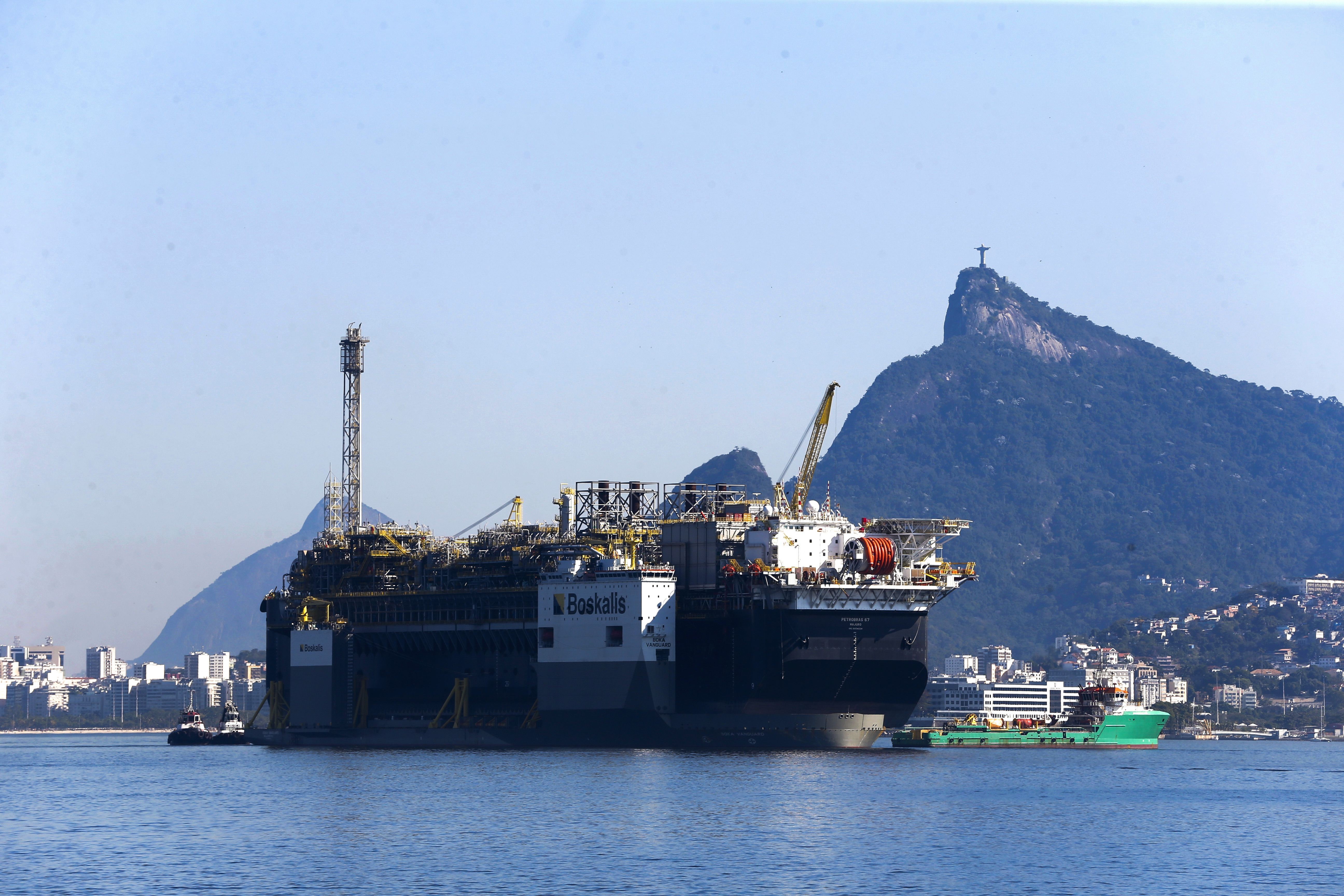
Platform destined for the Lula Field Production System, in the pre-salt of the Santos Basin
Tânia Rêgo/ Agência Brasil
Since the start of the war in Iran and the repeated threats to the Strait of Hormuz, a strategic waterway through which approximately 20% of the world's oil passes, the oil market has entered a new era of uncertainty.
Prices have soared, states are seeking to guarantee their supplies and several oil producers are trying to profit from this instability. Among them is Brazil.
Download GloboPop to watch short vertical videos from Globo
The South American giant is emerging as an alternative to Gulf oil. Its offshore oil, extracted on the Atlantic coast, avoids the threatened shipping routes of the Middle East.
This geographic position, in times of crisis, becomes a strategic advantage. "It is perfectly logical for large consumers to look for more stable suppliers, who are not affected by the chaos that reigns in the Middle East. And this is, obviously, the case in Brazil", confirms Adel El Gammal, expert in energy geopolitics and secretary general of the European Energy Research Alliance (EERA).
See the trending videos on g1
Now on g1
This stability is already reflected in the numbers. Brazil, the ninth largest oil producer in the world, accounts for approximately 4% of global production.
"To give you an idea of the scale, Brazil produces around 4 million barrels per day, which is equivalent to the production of the United Arab Emirates", continues the expert.
A race for Brazilian oil
Amid the war in Iran, Brazil saw an increase in oil purchases. Two countries, in particular, stood out: China and India. China, which traditionally imported most of its crude oil from the Persian Gulf, massively redirected its purchases to Brazil.
According to Brazilian government data, oil exports to China doubled in the first quarter, reaching a record US$7.2 billion. More than 60% of Petrobras' exports are now destined for China.
"China represented around 40% of Brazilian crude oil exports before the crisis in the Strait. Now, it is approaching 70%", reveals Adel El Gammal.
The two main Chinese oil companies, the China National Petroleum Corporation (CNPC) and the China National Offshore Oil Corporation (CNOOC), already had a presence in Brazil through partnerships, but "the conflict in the Middle East has only accelerated and strengthened their relationship."
High-quality oil versus poor infrastructure
The strength of Brazilian oil also lies in its nature. The immense offshore reserves discovered in the last twenty years off the coast of Rio de Janeiro are among the most promising in the world.
Extracted from the ultra-deep waters of the Atlantic, this crude oil, known as "pre-salt", has remarkable characteristics.
"Brazilian oil has the advantage of being light and with a low sulfur content. It is an oil that is close to the quality of Brent oil, being considered high quality. Unlike, for example, Venezuelan oil, which is very heavy and difficult to refine", emphasizes Adel El Gammal.
According to Samuele Furfari, doctor in Applied Sciences and professor of Energy Geopolitics at the Free University of Brussels, "the government has encouraged the exploration of the equatorial margin, which is the geological zone that stretches from the Brazilian Amazon coast to Guyana. It is a new Eldorado. This entire area is rich in oil", a valuable asset in global markets that seek easily refinable crude oil.
However, Brazil faces structural constraints that hinder any rapid development. "The increase in production capacity must be accompanied by an increase in refining capacity.
And, in Brazil, this is one of its limitations; is far from being enough", observes Adel El Gammal.
Added to this is what economists call low elasticity, that is, the fact that "it is difficult to significantly increase production in the short term without additional investments and infrastructure development", continues the researcher.
The same observation was made by Samuele Furfari, who pointed out that "in the oil sector, we work on a long-term scale. What we decide today will have effects ten years from now. Any significant increase in capacity requires investments of several billion dollars and projects that unfold over years."
An ecological paradox?
Petrobras headquarters in Rio de Janeiro.
Fernando Frazão/Agência Brasil
Thanks to exports, President Lula intends to continue capitalizing on this sector. In recent months, his government has sent several favorable signals to the oil industry.
Petrobras continued the exploration of its gigantic offshore fields, and Brasília announced recently the resumption of drilling in the Urucu field, in the Amazon, where hydrocarbon wells had been stopped for more than ten years.
This position may seem paradoxical for a president who, at the same time, tries to present himself as one of the leaders in the fight against climate change.
However, according to Adel El Gammal, this contradiction mainly illustrates the economic realities that Brazil continues to face.
"Lula is in favor of the energy transition, but he is the head of energy. an oil-producing State and needs to take this reality into consideration. Petrobras is a fundamental actor in the Brazilian economy and drives the entire national economy", he explains.
Another reality is that of Brazilian politics. This South American giant operates within a decentralized political system. Lula, even as president, does not have complete freedom of action on all issues.
"Lula is also obliged to negotiate, to find a balance with regional powers, with the opposition and with the financial interests deeply rooted in the country. It is the combination of all these factors that reduces its room for maneuver", observes the energy analyst.
For Samuele Furfari, there is nothing absurd about Brasília continuing to develop its oil resources.
"Every State seeks the prosperity of its population. And when a country has resources, it wants to exploit them." The Belgian expert sees this strategy, in fact, as a natural evolution for a country that he describes as "a land of the future, rich in agricultural, water and energy resources". hegemonic, where a minority of actors dictate the rules; it is a dispersed market, where each producer can find its place."
The departure of the United Arab Emirates from the Organization of Petroleum Exporting Countries (OPEC) appears, for him, as the symbol of this rupture, because "they understood that the world has changed; OPEC is a thing of the past."
Good news for Brasilia, but this dynamic has its limits. For now, there remains one unknown for Brazil: the duration of the current crisis. While tensions in the Strait of Hormuz offer Brazil an immediate opportunity, there is no guarantee that it will be sustainable in the long term.
Brazil could seize a window of opportunity, but competition is intensifying everywhere. Guyana, Angola, Mozambique, Azerbaijan and Canada are also seeking to strengthen their position in the global market.
With the entry of new producers, the scarcity premium that Brazil currently enjoys is gradually eroding. However, the oil market remains deeply cyclical and extremely sensitive to geopolitical developments.
Source: G1

Elections in Peru: Roberto Sánchez turns on Keiko Fujimori with 94% of the votes counted
Peru closes voting in the second round of the presidential election.With 94.2% of the votes counted, Roberto Sánchez t...
US judge considers $100,000 fee created by Trump for work visas for foreigners illegal
Trump signs executive order for new visa conditions.Reuters/Ken CedenoA United States federal judge annulled this Mond...
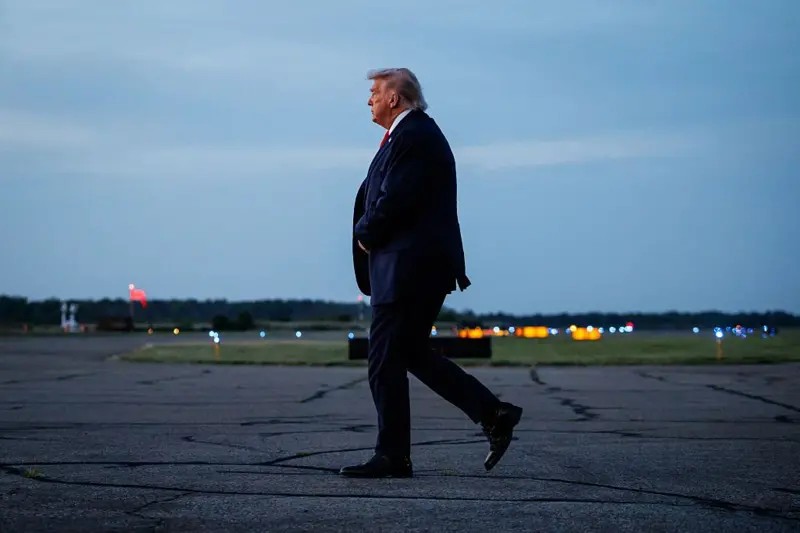
Magnitude 6.1 earthquake in the Gulf of Mexico is felt in Havana
Earthquake hits Havana, Cuba, on June 8, 2026Reproduction/USGSA 6.1 magnitude earthquake with an epicenter in the Gulf...
Toque agora.




Historias das musicas em destaque
 Historia da musica
On My Mind II: learn to play Anand Bhatt's song with a pop and engaging atmosphere
08/06/2026
On My Mind II, by Anand Bhatt, is a song with a pop, romantic and danceable atmosphere, bringing an immersive sound that can work very...
 Historia da musica
In Awe Of You: play an intense worship of Jesus Culture on the guitar
08/06/2026
In Awe Of You, by Jesus Culture, is a worship song with a deep atmosphere, worship lyrics and a musical construction aimed at moments o...
 Historia da musica
A Chance: learn to play a romantic song full of feeling
08/06/2026
A Chance, by Gutemberg Silveira, is a romantic song that talks about mistakes, forgiveness, regret and the possibility of starting love...
 Historia da musica
In Capernaum: learn to play a song of faith, miracle and overcoming on the guitar
08/06/2026
In Capernaum, by Alisson Santos, is a song marked by spiritual strength, biblical narrative and growing emotion. The song takes the lis...
 Historia da musica
At Canga: learn to play Jammil E Uma's hit Noites with a summer atmosphere
08/06/2026
"Na Canga", by Jammil E Uma Noites, is a song full of energy, sun, beach and high spirits. The song carries that contagious atmosphere...
 Historia da musica
Adorar: learn to play the Fluir song with emotion and presence
08/06/2026
"Adorar", by Fluir, is a praise song that translates in a few words a very strong feeling: the desire to prostrate oneself before God a...
 Historia da musica
It Is In Your Presence: learn to play this praise of surrender and adoration
08/06/2026
"Esta Em Tua Presença", by Cristiano Cruz, is a song of praise marked by a direct, deep and spiritual message. The song talks about the...
 Historia da musica
Nobody Explains God in Black and White and Gabriela Rocha: an inspiring figure for moments of worship
08/06/2026
Nobody Explains God is one of the most popular gospel songs of recent years. Performed by Preto no Branco with the participation of Gab...
 Historia da musica
Make a Miracle in Me by Régis Danese: a gospel song that marked generations
08/06/2026
Make a Miracle in Me is one of the best-known songs of Régis Danese's career. The song has become a true anthem of faith, hope and pers...
 Historia da musica
Lugar Secreto by Gabriela Rocha: a powerful worship chord for the guitar
08/06/2026
Lugar Secreto is one of the most impactful songs in Gabriela Rocha's repertoire. The song won over churches and worship ministries for...
Mais noticias para voce
 Noticia
08/06/2026
Tissue survives outside the body and challenges knowledge about life and death
A discovery made by researchers at Memorial University in Canada is challenging fundamental biological concepts about life, death and aging. A study published i...
 Noticia
08/06/2026
MP with the TCU admits error and reviews position on capacity auction
The deputy attorney general of the MPTCU (Public Prosecutor's Office at the Federal Court of Auditors), Lucas Rocha Furtado, reviewed his position on the LRCap...
 Noticia
08/06/2026
See new images of tourist jumping into the Falls to rescue cell phone
New images show the moment in which a Brazilian tourist tries to return to the walkway of the Iguaçu National Park after jumping near the waterfalls of the Igua...
 Noticia
08/06/2026
See what Inter's service channels are
In addition to telephones and 24-hour chat, Inter's service channels offer options such as Seven, an AI assistant launched by the financial institution in early...
 Noticia
08/06/2026
Xuxa reveals about her relationship with Junno Andrade: "I didn't know how to date"
The artist and presenter Xuxa Meneghel, 63, made unprecedented revelations about her relationship with Junno Andrade, 62, during the program "Em Família com Eli...
 Noticia
08/06/2026
Corinthians gives 15-day vacation to women's squad during World Cup break
By Maria Beatriz de Teves and Marcelo Nascimento on 08 de June de 2026 at 16:09 The Corinthians women's squad will have 15 days of vacation during the break in...
Participe da conversa
Seu comentario ajuda a manter a discussao viva e ainda convida outros leitores a continuar navegando pelo portal.
Seja o primeiro a comentar esta noticia.