



Leia a noticia completa
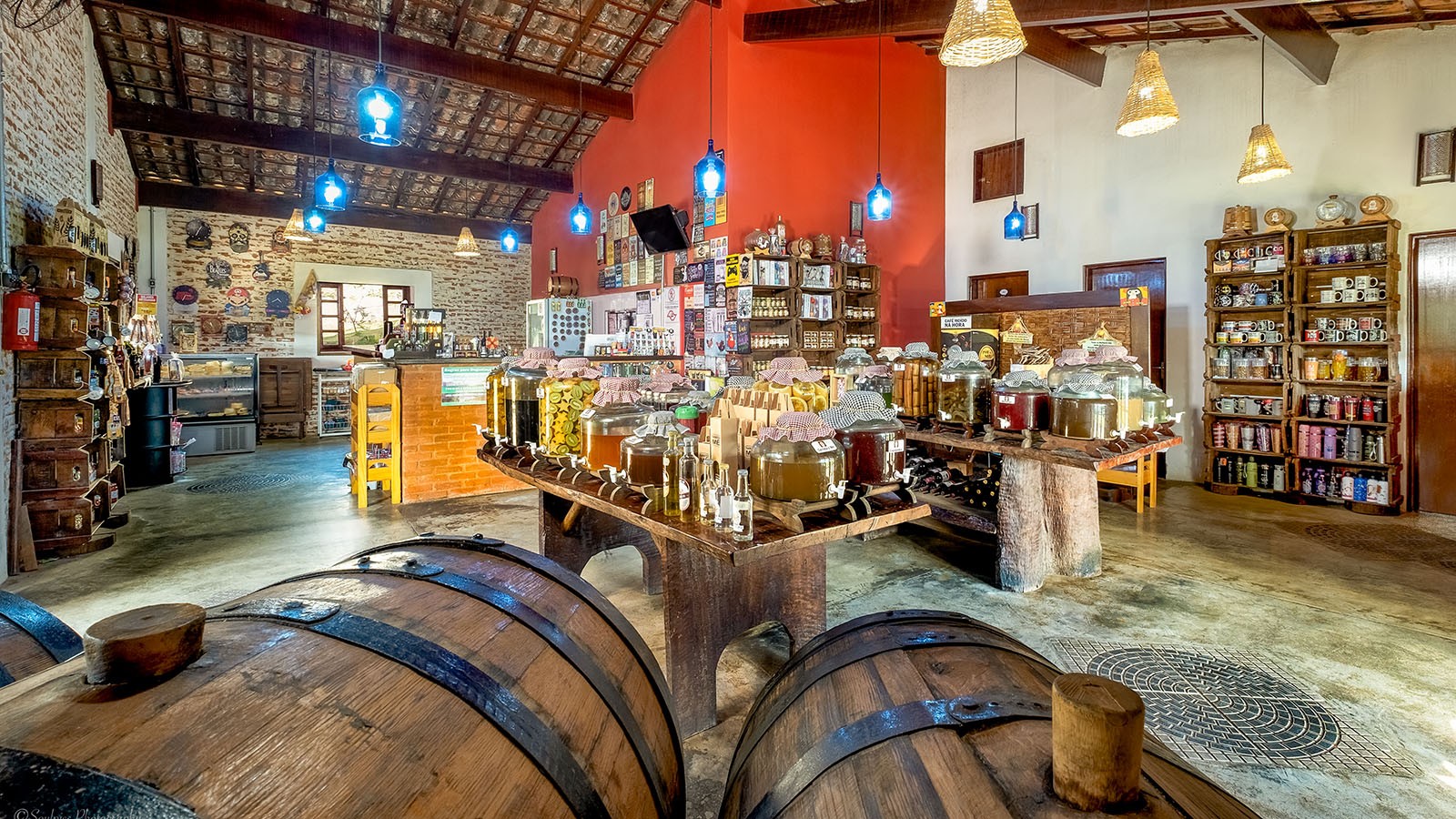
Emporium in São Paulo sells alcoholic beverages and food
Credit: Soulpics photography
Approved as part of the tax reform on consumption, the selective tax, known as sin tax, begins in 2027 and aims to make products or activities that cause harm to health or the environment more expensive.
The list includes alcoholic drinks, soft drinks and cigarettes. The new tax will also apply to some vehicles, depending on the level of pollution, on the extraction of mineral goods, and on lotteries, betting and fantasy sports games.
To g1, the Ministry of Finance reaffirmed its "interest in implementing the Selective Tax for next year, mainly due to its regulatory effect of reducing the consumption of products that are harmful to health and the environment".
To effectively start taking effect, the National Congress needs to approve the tax regulations, but the federal government's proposal has not yet been sent. The Executive says this will be done by the end of this year.
➡Survey by Fiocruz, cited by the Ministry of Health, says that, in 2019, alcohol consumption cost R$ 18.8 billion, of which R$ 1.1 billion related to direct federal costs with hospitalizations and outpatient procedures in the SUS, and R$ 17.7 billion to lost productivity due to premature mortality, leaves of absence and early retirement resulting from diseases associated with consumption of alcohol, loss of working days due to hospital admission and social security sick leave.
➡In Brazil, according to the Ministry of Health, diseases related to smoking generate an indirect cost of R$86.3 billion per year, which results in a total annual expenditure of R$153.5 billion for the government, equivalent to 1.6% of GDP. "On the other hand, the collection of federal taxes on the sale of cigarettes is only R$8 billion per year, which highlights an imbalance between health spending and the revenue generated by the sale of the product", he says.
➡Considering ultra-processed drinks, such as soft drinks, isotonic drinks and soft drinks, the government estimated, in a study to support the use of the selective tax, that the costs accounted for by the Unified Health System (SUS) with the treatment of diseases associated with the consumption of these products are estimated at almost R$3 billion per year.
Merchants from Alto Tietê explain how 'sin tax' can impact sales
Amount of tax to be charged
➡The amount of tax to be charged on each product has not yet been defined. In the regulation, which will have to be made by the end of this year, to take effect from 2027, the economic area will propose, and the Legislature will define, what the rates will be.
"The project is under internal development at a technical government level and depends on final adjustments and definitions, before its publication. Only after defining the rates will it be possible to estimate possible economic impacts", communicated the Ministry of Finance.
➡National producers say that the drinks alcoholic beverages, for example, already have high taxation in Brazil, with a tax burden varying from 40% to more than 80% of the price of the product, and they assess that a possible increase in taxes charged will put pressure on profit margins, potentially generating price transfers, layoffs and stimulating the illegal market (see below). and municipalities on consumption).
Unlike these taxes, any use of sin tax credits in the previous or subsequent stages of the chain will be prohibited.
According to the approved text of the tax reform, the sin tax will replace the current Tax on Industrialized Products (IPI), which will remain, from 2027, only for items from the Manaus Free Trade Zone (ZFM) produced in other regions of the country.
"Although restricted to a few goods and services, the selective tax is a complement to the Reform regulations Tax, considering that a significant number of products will have their IPI rates zeroed in 2027", informed the Ministry of Finance.
The selective tax will apply to the following products:
alcoholic drinks;
cigarettes and smoking products;
sugary drinks (soft drinks and similar);
vehicles (depending on the level of pollution), vessels and aircraft;
extraction of mineral goods, such as iron ore, oil and natural gas;
lotteries, betting and fantasy sports games.
➡For alcoholic beverages in accordance with the rule approved in the tax reform, the tax will be a combination of:
A specific rate: fixed value, in reais (R$), according to the alcohol content, that is, drinks with a higher alcohol content will have a higher tax.
An ad valorem rate: percentage of the value of the product, according to the type of drink.
What sector representatives say
Jones Valduga, the president of the Brazilian Wine Culture Union (Uvibra), stated that the sector views the determination of the rate that will apply to wines with "great concern". He recalls that the sector employs more than 90 thousand people directly, is present in 17 states and receives three million tourists per year in wine tourism.
"Determining the rate is in the hands of the National Congress, and the sector has qualified technical subsidies to contribute to this debate. Our position is clear: a balanced rate protects revenue, combats the illegal market and preserves an economic, cultural and social heritage that took Brazil more than 150 years to build", assessed the executive of Uvibra.
According to Eduardo Cidade, president of the Brazilian Distilled Beverages Association (ABBD), as the selective tax rates have not yet been defined by the government, this makes any projection of impact on the sector premature. He noted that the weight of taxes on spirits currently exceeds that on beers in Brazil.
"What ABBD advocates is not an increase in the burden on any category - it is the correction of an asymmetry. A model that taxes the alcohol molecule [only the quantity in each bottle], not the label [type of each drink] With a single rate per liter of pure alcohol and a single rate on the price, the bill is proportional: those who have more alcohol pay more, those who cost more pay more. Without category privileges", says Eduardo Cidade.
Márcio Maciel, executive president of the National Beer Industry Union (Sindicerv), reported that sector estimates point to a current tax burden of 56% on beer, that is, the proportion of taxes in the final price, and that a possible increase could lead to an increase in consumer prices.
"The issue of price is something very specific to companies. If taxes increase, it is reflected in the market. The beer margin is smaller than wines and spirits, beer is very competitive. Any tax increase is something that is very difficult, especially because beer inflation has been above the IPCA [official inflation] in recent years", said Márcio Maciel, from Sindicerv.
Carlos Lima, president of the executive board of the Instituto Brasileiro da Cachaça (IBRAC), informed that the The weight of taxes is already high on the product, accounting for more than 80% of its final price. Therefore, the executive assesses that the sector would not be able to pass on potential tax increases to prices.
The sector encompasses more than 600 thousand direct and indirect jobs.
"Any increase in this taxation, we will begin to feel the negative effects, such as a large migration to the informal market, the closure of factories and the dismissal of employees. Taxation in the cachaça sector today is far above what it can handle. It is not a question of the timing of the selective tax. Any movement by the government to tax more, collects less and the illegal market grows", declared Carlos Lima, from IBRAC.
In a formal statement, the Brazilian Association of Soft Drinks and Non-Alcoholic Beverage Industries (Abir) reported that the sector includes more than two million direct and indirect jobs. The entity says it does not agree with the selective tax on sugary drinks, which, in its view, "brings a series of inconsistencies regarding its objective".
"The argument of an increase in obesity due to sugary drinks is also not sustainable, according to data from the Ministry of Health itself, which points to exponential growth in the index in Brazil and a halving in the frequency of consumption", says Abir, in a note.
The Brazilian Tobacco Industry Association (Abifumo) assessed, through a note, that the possible definition of an excessive rate for cigarettes in the sin tax could lead to a loss of competitiveness of national production in the face of the illegal market, "creating an environment favorable to the expansion of criminal organizations". According to the association, tobacco is already among the most taxed segments in the country.
Federal, state and municipal governments publish rules for implementing tax reform

2026 World Cup exposes billion-dollar dispute between Nike, Adidas and Puma
Brazilian team will be at the 2026 World CupGetty Images via BBCBehind the football dispute of the 2026 World Cup hide...
Cost crisis threatens delivery of MCMV housing in the North and Northeast
The gap between the values transferred by the federal government and the real cost of civil construction puts at risk...
70% of Congress supports the installation of the CPI to investigate the Master case
Requests for CPIs (Parliamentary Commissions of Inquiry) to be created to investigate the Master case have so far mobi...
Source: G1

Toque agora.




Historias das musicas em destaque
 Historia da musica
Theme from the Soap Opera Rei do Gado: learn to play a notable song from Brazilian music
05/06/2026
Theme from the soap opera Rei do Gado, performed by Orquestra da Terra in CifraNet, is a song that carries a strong Brazilian identity,...
 Historia da musica
For You Stay by Talita Ribeiro: learn to play a romantic song full of feeling
05/06/2026
Para Você Ficar, by Talita Ribeiro, is a romantic song that talks about vulnerability, reunion and the courage to declare a feeling eve...
 Historia da musica
Red Rubber Ball by Cyrkle: learn to play a pop classic with a light and nostalgic atmosphere
05/06/2026
Red Rubber Ball, by Cyrkle, is a song that crosses generations with its light, melodic and optimistic sound. Even though it is about fa...
 Historia da musica
It Makes It Rain by David Quinlan: learn to play a worship classic on guitar
05/06/2026
Faz Ver, by David Quinlan, is one of the best-known worship songs among Christian musicians who seek simple, intense and spiritual repe...
 Historia da musica
Bottle 600 of Netto and Henrique: learn to play a country tune full of emotion
05/06/2026
Garrafa 600, by Netto and Henrique, is one of those country songs that mix regret, longing and that bar table atmosphere that speaks di...
 Historia da musica
Heaven's Not For Saints: Learn to Play A-Ha's Hit and Understand What Makes This Song So Special
05/06/2026
A-Ha is one of the most memorable bands in the history of world pop, known for creating music that spans generations with engaging melo...
 Historia da musica
Psalm 107: learn to play Samara Lourenço in a song of gratitude
05/06/2026
Psalm 107, by Samara Lourenço, is a song of praise inspired by gratitude, God's faithfulness and the recognition of his wonders. The so...
 Historia da musica
Só Por Amor A Ti: learn to play Ana Paula Valadão in a song of dedication and faith
05/06/2026
Só Por Amor A Ti, by Ana Paula Valadão, is a profound song of praise, marked by delivery, obedience and devotion. The song talks about...
 Historia da musica
De Bem Com a Vida: learn to play Os Serranos in a happy and passionate song
05/06/2026
De Bem Com a Vida, by Os Serranos, is a light, lively and romantic song. With positive lyrics and a melody that conveys joy, the song i...
 Historia da musica
January 6, 2003: learn to play Fernando and Sorocaba on the guitar
05/06/2026
6 January 2003, by Fernando and Sorocaba, is a country song full of longing, memory and emotion. The lyrics talk about a date that was...
Mais noticias para voce
 Noticia
07/06/2026
PL and PT benches lead signatures for Master CPI requests
The PL and PT benches were the ones that signed the most requests to open a CPI (Parliamentary Commission of Inquiry) of Banco Master, according to a survey car...
 Noticia
07/06/2026
Elections in Peru: Meet the candidates who will contest the 2nd round
Peru is holding the second round of the presidential election this Sunday (7), putting conservative Keiko Fujimori and Roberto Sánchez, from the left, face to f...
 Noticia
07/06/2026
After recent tragedies, new El Niño tests Brazil's preparedness for extreme events
Extreme rain in Rio Grande do Sul in 2024, caused by overlapping climatic events, including El NiñoRenan Mattos/REUTERS via DWA new episode of El Niño is alread...
 Noticia
07/06/2026
Eating chocolate and chewing ice: Guide presumed dead on Everest told BBC how he survived
From the hospital bed where he is recovering, the guide told the BBC how he left the highest mountain in the world alive.Prabin Ranabhat/ AFP via Getty ImagesTh...
 Noticia
07/06/2026
Pay in installments via card or Pix on credit: which is the best option?
Is it worth paying in installments using a traditional credit card or using Pix for credit? The answer depends on the cost of the operation, financial planning...
 Noticia
07/06/2026
Without Messi, Argentina spares starters and beats Honduras in a pre-World Cup friendly
Argentina beat Honduras 2-0 on Saturday night (6), at Kyle Field, in Texas, in a friendly preparatory match for the 2026 World Cup. With several starters rested...
Participe da conversa
Seu comentario ajuda a manter a discussao viva e ainda convida outros leitores a continuar navegando pelo portal.
Seja o primeiro a comentar esta noticia.