



Leia a noticia completa
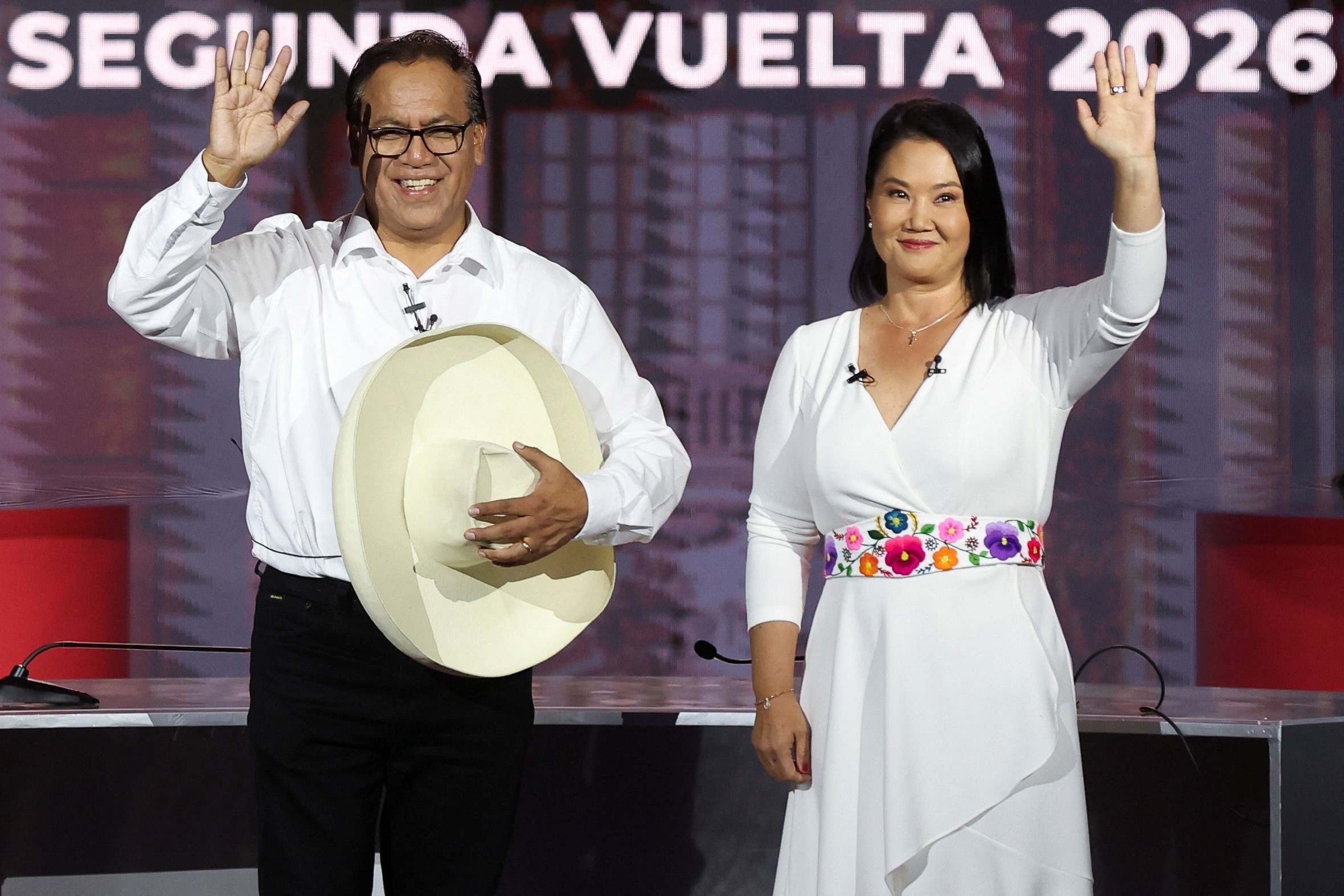
Peru's right-wing presidential candidate, Keiko Fujimori, and left-wing candidate Roberto Sánchez before a televised debate on May 31 in Lima, on the eve of the second round of presidential elections, scheduled for June 7.
Reuters/Alessandro Cinque
Peru will go to the polls this Sunday (7) to choose between Keiko Fujimori and Roberto Sánchez. Whoever is elected will become, on July 28, the ninth president in ten years.
The country has experienced a decade of political instability thanks, in part, to a unicameral system that facilitates impeachment processes and "express" dismissals - unlike the Brazilian system, for example, which has a Chamber and Senate.
The name elected this Sunday will succeed the interim president José María Balcázar Zelada, who was not elected, but chosen by Congress to fulfill a buffer mandate between the dismissal of José Jerí and the elections.
Jerí's dismissal was not an isolated episode. Since Ollanta Humala, who left power on July 28, 2016, no one has managed to govern for a full term.
Now in g1
Balcázar has been the head of the Executive since February. He was a deputy when Congress approved an "express dismissal" of Jerí, involved in a scandal after the discovery of undisclosed meetings with a Chinese businessman.
Before him, Dina Boluarte faced strong popular rejection - her approval varies between 2% and 4% - at the same time as she was responding to allegations of illicit enrichment. In the end, the Legislature approved his impeachment.
José María Balcázar
Ernesto Arias/Peru Congress/Handout via REUTERS
Incomplete mandates
Jerí was supposed to remain in the Presidency until April 2026, filling out a buffer term himself before the scheduled date for the next presidential elections.
Neither he nor most of his predecessors managed the feat of remaining in office until the end of the allotted time. Dina Boluarte, who held the seat for almost 3 years, is the record holder for remaining in the seat since 2016.
See how long the last presidents of Peru lasted:
Pedro Pablo Kuczynski, from July 28, 2016 to March 23, 2018 (1 year and 238 days)
Martín Vizcarra, from March 23, 2018 to November 9, 2020 (2 years and 231 days)
Manuel Merino, from November 10 to 15, 2020 (5 days)
Francisco Sagasti, from November 17, 2020 to July 28, 2021 (253 days)
Pedro Castillo, from July 28, 2021 to December 7, 2022 (1 year and 132 days)
Dina Boluarte, from December 7, 2022 to October 10, 2025 (2 years and 307 days)
José Jerí, from October 10, 2025 to February 17, 2026 (130 days)
José María Balcázar, from February 18 to July 28, 2026 (161 days, considering his term ends)
Since Kuczynski's government, the relationship between the president and Congress has been tense in Lima. Not all heads of the Executive, however, were formally removed.
Kuczynski resigned from his position after the release of videos showing an attempt to buy votes from deputies so that he could survive an impeachment vote. Vizcarra, his successor, effectively fell due to impeachment.
Merino took his place, but political figures questioned his legitimacy in office, which precipitated his resignation in just 5 days. Sagasti was promoted as president of Congress, by constitutional succession, carrying the buffer mandate under intense social and political crises until the end.
Pedro Castillo was elected in 2021. The following year, he tried to stage a coup and ended up arrested and removed from office. At the end of 2025, Castillo was sentenced to 11 years in prison.
After Castillo's fall, command of the country passed to vice president Dina Boluarte. She remained in office until October last year, when she was impeached for "moral incapacity".
Peruvian President, Pedro Castillo, during a speech to the population on December 6, 2022
Jhonel RODRIGUEZ / Peruvian Presidency / AFP
The Andean neighbor has a political system with important points different from Brazil - and most of Latin America.
Impeachment and dismissal processes have an "express" process because there are no two chambers in the Legislature to debate and impede such decisions. Understand better below:
why Peru has a unicameral system;
what it entails;
how it relates to the impeachment process;
the position of Peruvian prime minister;
Unicameral system
Peruvian Congress Building in Lima.
Cris Bouroncle / AFP
Unlike Brazil, Peru does not have the so-called bicameral system - in which the Legislative Branch It is exercised by the Senate and Chamber of Deputies. In Peru, Congress is made up of just one, with 130 parliamentarians serving.
But it wasn't always like that. Until 1992, the country had a Chamber of Deputies and a Senate. That year, then president Alberto Fujimori (1938 -2024) carried out a "self-coup": among other measures, he closed Congress, sent soldiers into the streets and promulgated a new Constitution the following year.
In the text, which was approved by a referendum, it was determined that the country would no longer have a Senate - and the rule is still in force today.
The former president of Peru, Alberto Fujimori, in a file photo.
Reuters/Mariana Bazo
"Fujimori had a discourse and practice of strong criticism of institutions - which were slow, inoperative, inefficient. For him, Peruvian politicians were a disgrace for the country - so, why have two Chambers?", points out professor Jorge Aragón Trelles, one of the main researchers at the Institute of Peruvian Studies, in Lima.
One of the reasons why the text has never been changed since 1993 continues to be, as Aragón explains, the opinion public opinion.
"There is distrust and annoyance in public opinion with Congress and congressmen - no president wanted to carry out the reform because it is very unpopular. People don't want congressmen anymore", says Aragón.
Even so, Vizcarra's government tried to recreate the bicameral system, sending a project to Congress that provided for the re-creation of the Senate. When the text reached parliament, it was modified by congressmen. The changes made "distorted the spirit of the reform, in Vizcarra's opinion, and that is why it did not pass", explains Aragón.
Other changes, however, were implemented: in December 2018, the country approved, by referendum, a reform that ended re-election for parliamentarians.
How Congress works in practice
Former president of Peru, Martin Vizcarra, announced the dissolution of Congress in 2019 in a televised message
Renato Pajuelo / Andina / AFP
The fact that Peru's Congress only has one legislative chamber means, in practice, that a project only needs to be approved - or not - by a single house before going to presidential sanction.
Professor Jorge Aragón believes that it would be better for the country to have a bicameral system.
"As we don't have two chambers, there are certain things that don't work well. We don't have a second instance that can review the quality of the laws", evaluates.
"If we had two Chambers, we could have representation by parties and territorial representation. We could better organize the work of Congress - the Lower Chamber [of Deputies] could do some things and the Senate could do others. All of this is simply lost when there is no bicameral system", he explains.
On the other hand, Peru is not the only country with this system, recalls professor of international relations at Fundação Getulio Vargas (FGV) in São Paulo Oliver Stuenkel. Venezuela, Ecuador, Portugal, Denmark and New Zealand are other examples of countries that only have one legislative chamber.
"Basically, all political systems are imperfect. You can't say that one system is better than another - it depends on many factors, it is linked to the country's political process. There is no clear decision about which system is superior to the other", assesses Stuenkel.
"With just one Chamber, decisions are usually made more quickly."
On the other hand, he considers, "having two Chambers increases the complexity of the systems, but at the same time it serves as a braking mechanism -- it limits the possibility of rapid radicalization because, often, there is a distribution of power that differs. It's like in the American case, where the Senate has a Republican majority and the Congress has a Democratic majority", assesses Stuenkel.
He also remembers that the Senate, as it is made up of territorial representation, ends up giving greater weight to regions that have a smaller population.
Congress, impeachment and impeachment
To remove a president, the Constitution of Peru requires 87 votes, from a total of 130 deputies.
Under Peruvian law, the president can "dissolve Congress if it has censured or denied its confidence to two cabinets."
Dissolution of Congress
Before being removed from office and arrested, former president Pedro Castillo had tried to dissolve Congress. Castillo was responding to a third impeachment process in the House.
The Constitution of Peru provides for this possibility in article 134: "The President of the Republic has the power to dissolve Congress if it has censured or denied his confidence to two cabinets", in other words, Castillo used the other two previous impeachment processes to make this decision.
The same article says that the president is obliged to call new elections within 4 months, without making any type of change in the electoral process.
In 2019, Martín Vizcarra, who was president at the time, also dissolved Congress and called new elections. In 1992 the same thing happened during the administration of Alberto Fujimori, who later included this article in the Constitution.
President and 'prime minister'
In addition to the president, Peru has in its government a rare figure in Latin America: a kind of prime minister. His position is officially called "president of the Council of Ministers" and, in practice, he acts as head of ministers, a type of chief of staff, according to professor Jorge Aragón.
Some people say that the Peruvian political system is "parliamentary presidential", but that's not the case. "The 'prime minister' is like an ally that the president has. The Peruvian system is strongly presidential and has the role of the prime minister as coordinator of the ministers. But no more than that", he explains.
Source: G1
2026 World Cup exposes billion-dollar dispute between Nike, Adidas and Puma
Brazilian team will be at the 2026 World CupGetty Images via BBCBehind the football dispute of the 2026 World Cup hide...
Cost crisis threatens delivery of MCMV housing in the North and Northeast
The gap between the values transferred by the federal government and the real cost of civil construction puts at risk...
70% of Congress supports the installation of the CPI to investigate the Master case
Requests for CPIs (Parliamentary Commissions of Inquiry) to be created to investigate the Master case have so far mobi...

Toque agora.


Historias das musicas em destaque
 Historia da musica
Theme from the Soap Opera Rei do Gado: learn to play a notable song from Brazilian music
05/06/2026
Theme from the soap opera Rei do Gado, performed by Orquestra da Terra in CifraNet, is a song that carries a strong Brazilian identity,...
 Historia da musica
For You Stay by Talita Ribeiro: learn to play a romantic song full of feeling
05/06/2026
Para Você Ficar, by Talita Ribeiro, is a romantic song that talks about vulnerability, reunion and the courage to declare a feeling eve...
 Historia da musica
Red Rubber Ball by Cyrkle: learn to play a pop classic with a light and nostalgic atmosphere
05/06/2026
Red Rubber Ball, by Cyrkle, is a song that crosses generations with its light, melodic and optimistic sound. Even though it is about fa...
 Historia da musica
It Makes It Rain by David Quinlan: learn to play a worship classic on guitar
05/06/2026
Faz Ver, by David Quinlan, is one of the best-known worship songs among Christian musicians who seek simple, intense and spiritual repe...
 Historia da musica
Bottle 600 of Netto and Henrique: learn to play a country tune full of emotion
05/06/2026
Garrafa 600, by Netto and Henrique, is one of those country songs that mix regret, longing and that bar table atmosphere that speaks di...
 Historia da musica
Heaven's Not For Saints: Learn to Play A-Ha's Hit and Understand What Makes This Song So Special
05/06/2026
A-Ha is one of the most memorable bands in the history of world pop, known for creating music that spans generations with engaging melo...
 Historia da musica
Psalm 107: learn to play Samara Lourenço in a song of gratitude
05/06/2026
Psalm 107, by Samara Lourenço, is a song of praise inspired by gratitude, God's faithfulness and the recognition of his wonders. The so...
 Historia da musica
Só Por Amor A Ti: learn to play Ana Paula Valadão in a song of dedication and faith
05/06/2026
Só Por Amor A Ti, by Ana Paula Valadão, is a profound song of praise, marked by delivery, obedience and devotion. The song talks about...
 Historia da musica
De Bem Com a Vida: learn to play Os Serranos in a happy and passionate song
05/06/2026
De Bem Com a Vida, by Os Serranos, is a light, lively and romantic song. With positive lyrics and a melody that conveys joy, the song i...
 Historia da musica
January 6, 2003: learn to play Fernando and Sorocaba on the guitar
05/06/2026
6 January 2003, by Fernando and Sorocaba, is a country song full of longing, memory and emotion. The lyrics talk about a date that was...
Mais noticias para voce
 Noticia
07/06/2026
PL and PT benches lead signatures for Master CPI requests
The PL and PT benches were the ones that signed the most requests to open a CPI (Parliamentary Commission of Inquiry) of Banco Master, according to a survey car...
 Noticia
07/06/2026
Elections in Peru: Meet the candidates who will contest the 2nd round
Peru is holding the second round of the presidential election this Sunday (7), putting conservative Keiko Fujimori and Roberto Sánchez, from the left, face to f...
 Noticia
07/06/2026
After recent tragedies, new El Niño tests Brazil's preparedness for extreme events
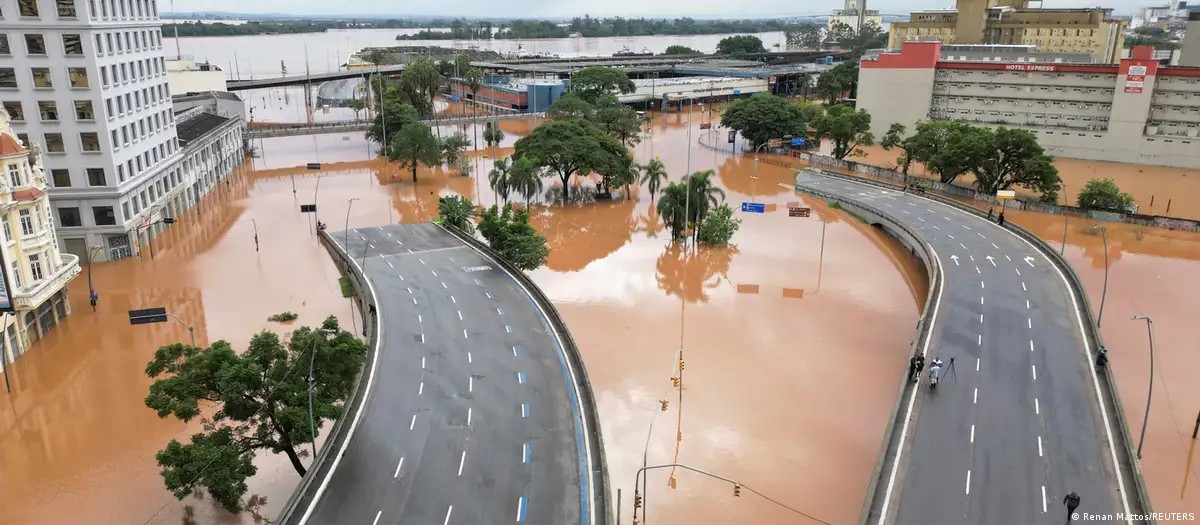
Extreme rain in Rio Grande do Sul in 2024, caused by overlapping climatic events, including El NiñoRenan Mattos/REUTERS via DWA new episode of El Niño is alread...
 Noticia
07/06/2026
Eating chocolate and chewing ice: Guide presumed dead on Everest told BBC how he survived
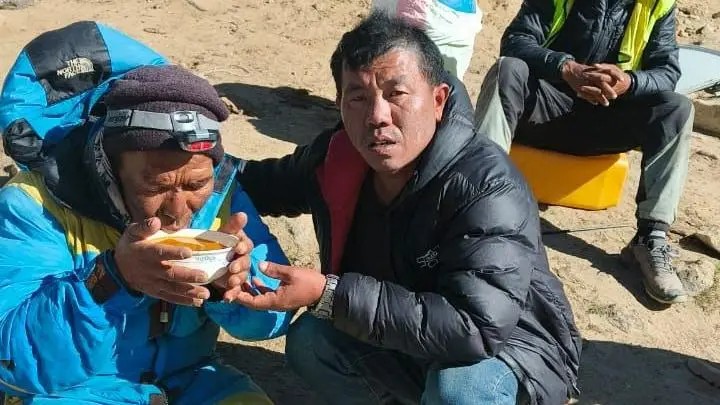
From the hospital bed where he is recovering, the guide told the BBC how he left the highest mountain in the world alive.Prabin Ranabhat/ AFP via Getty ImagesTh...
 Noticia
07/06/2026
Pay in installments via card or Pix on credit: which is the best option?
Is it worth paying in installments using a traditional credit card or using Pix for credit? The answer depends on the cost of the operation, financial planning...
 Noticia
07/06/2026
Sin tax: alcoholic beverages, soft drinks and cigarettes; government says taxation starts in 2027 to reduce consumption
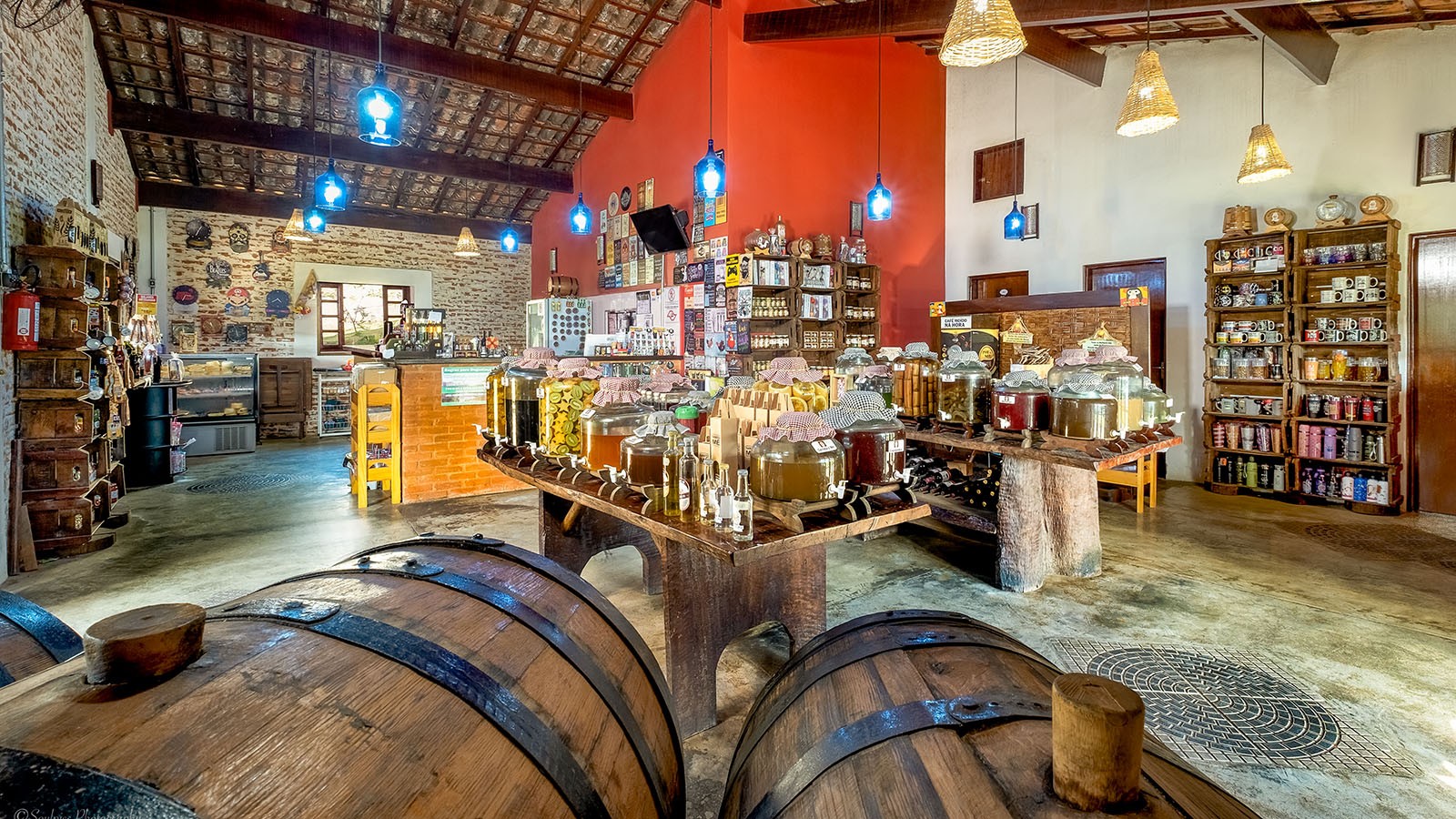
Emporium in São Paulo sells alcoholic beverages and food Credit: Soulpics photographyApproved as part of the tax reform on consumption, the selective tax, known...
Participe da conversa
Seu comentario ajuda a manter a discussao viva e ainda convida outros leitores a continuar navegando pelo portal.
Seja o primeiro a comentar esta noticia.