



Leia a noticia completa
The global luxury art market is worth billions of dollars annually, transforming fabric canvases and oil paint into financial assets more valuable than many multinational corporations.
The current public sales record belongs to the painting Salvator Mundi, attributed to Leonardo da Vinci, sold at Christie's auction house for US$450 million in 2017. Behind the scenes, however, private transactions and insurance policies from major museums already value historical masterpieces at the US$1 billion mark.
For the general public, investing the equivalent of the GDP (Gross Domestic Product) of a small nation in a single screen defies basic economic rationality. However, this ultra-reserve economy, dominated by billionaires and investment funds, operates under a very strict set of financial and psychological rules.
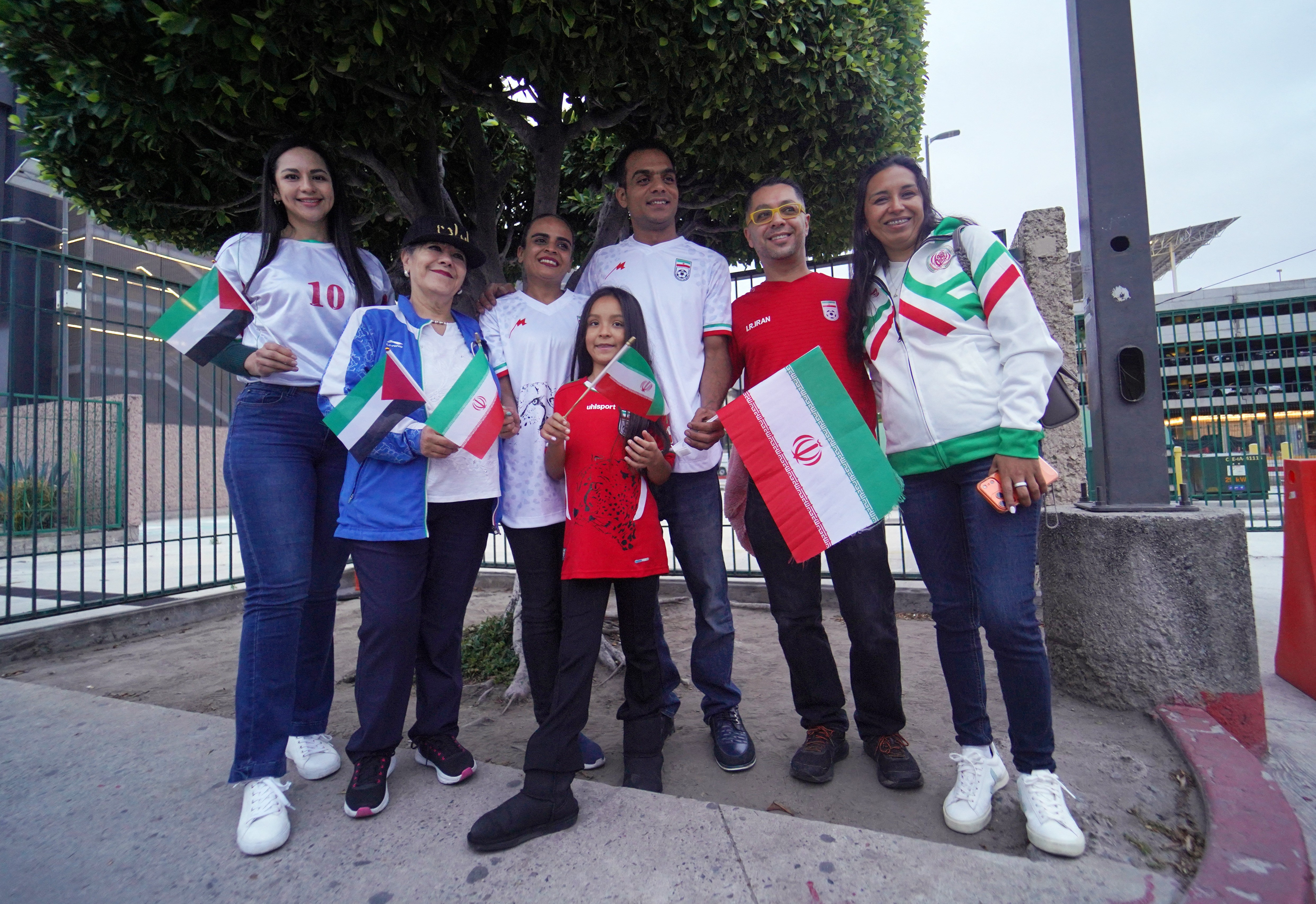
US revokes World Cup tickets from Iran fans, says country's Football Federation
Fans at Tijuana International Airport, in Mexico, welcome the Iran national team upon arrival for the World Cup, on Ju...
US and Israel have "differences" to resolve, Israeli ambassador tells CNN
Israel and the United States still have "some differences" to resolve over how to end the war with Iran, the Israeli a...
Operation targets illegal sale of weight loss pens in Rio and SP
An operation by Decon-RJ (Consumer Police) targets a cell selling illegal weight loss pens this Tuesday morning (9) in...The value of a work is not calculated by the cost of its materials, but supported by three rigorous pillars: the absolute scarcity of supply, the history of ownership and capital speculation in tax havens.
The golden rule: absolute scarcity
The first factor that supports these high values is the mathematical finiteness of supply. Traditional luxury goods, such as state-of-the-art yachts, private jets or hypercars, can be ordered and reproduced by the industry as demand increases.
An original painting, on the other hand, is an irreplicable asset. When a first-rate historical artist passes away (like Vincent van Gogh, Pablo Picasso or Jean-Michel Basquiat, for example), the production of that asset irreversibly drops to zero.

Toque agora.


In this scenario of frozen supply, the basic law of the market collapses. The number of billionaires with immediate liquidity grows every decade, but the volume of masterpieces available for purchase is constantly decreasing, as many pieces are donated to public institutions and leave the commercial circuit. This rush of excess capital after scarce products makes these works extremely expensive.
The weight of provenance
In the auction market, the work's ownership history (technically called "provenance") dictates the base price of the lot.
A painting once owned by European monarchs, industrial tycoons or respected foundations carries a built-in financial premium. The origin acts as the birth certificate and the certificate of suitability of the piece on the market.
In addition to status, this uninterrupted curriculum, from the painter's studio to the present day, is the main guarantee against counterfeits, the biggest financial risk in the sector. Screens with impeccable documentation offer legal security to the institutional buyer. In practice, the investor does not just acquire the painted image, but buys its insertion in the historical timeline of that creation.
Art as a financial asset and asset protection
Behind the scenes at large auction houses, luxury art operates as a strategic asset protection tool. Works signed by historical masters receive the status of blue-chip assets and enter investors' portfolios as highly secure stores of value.
In practice, these screens circumvent the instability of the common financial market. While currencies lose purchasing power to inflation and stocks suffer from global economic shocks, paintings guarantee the preservation and multiplication of fortunes in the long term.
A significant portion of these billion-dollar canvases do not even decorate their buyers' properties. They are sent directly to "Freeports", which are maximum security logistics complexes located in tax havens, such as Geneva, Switzerland.
In these warehouses, paintings can be purchased, resold and stored indefinitely without incurring government taxes or customs duties.
The consensus that creates value
A work of art does not generate accounting dividends, does not produce commercial crops and does not collect rent.
Sustaining its market value strictly depends on the unbreakable consensus among curatorial institutions, historians, critics and capital holders that that production is brilliant and indispensable.
The art market represents the ultimate degree of collective economic belief. The level of US$ 1 billion for a single screen confirms that investors are willing to anchor incalculable fortunes in what captures, in an exclusive and irreplaceable way, the milestones in the history of humanity.
Supposedly lost Rembrandt painting is auctioned for R$8 million
Source: CNN

Historias das musicas em destaque
 Historia da musica
On My Mind II: learn to play Anand Bhatt's song with a pop and engaging atmosphere
08/06/2026
On My Mind II, by Anand Bhatt, is a song with a pop, romantic and danceable atmosphere, bringing an immersive sound that can work very...
 Historia da musica
In Awe Of You: play an intense worship of Jesus Culture on the guitar
08/06/2026
In Awe Of You, by Jesus Culture, is a worship song with a deep atmosphere, worship lyrics and a musical construction aimed at moments o...
 Historia da musica
A Chance: learn to play a romantic song full of feeling
08/06/2026
A Chance, by Gutemberg Silveira, is a romantic song that talks about mistakes, forgiveness, regret and the possibility of starting love...
 Historia da musica
In Capernaum: learn to play a song of faith, miracle and overcoming on the guitar
08/06/2026
In Capernaum, by Alisson Santos, is a song marked by spiritual strength, biblical narrative and growing emotion. The song takes the lis...
 Historia da musica
At Canga: learn to play Jammil E Uma's hit Noites with a summer atmosphere
08/06/2026
"Na Canga", by Jammil E Uma Noites, is a song full of energy, sun, beach and high spirits. The song carries that contagious atmosphere...
 Historia da musica
Adorar: learn to play the Fluir song with emotion and presence
08/06/2026
"Adorar", by Fluir, is a praise song that translates in a few words a very strong feeling: the desire to prostrate oneself before God a...
 Historia da musica
It Is In Your Presence: learn to play this praise of surrender and adoration
08/06/2026
"Esta Em Tua Presença", by Cristiano Cruz, is a song of praise marked by a direct, deep and spiritual message. The song talks about the...
 Historia da musica
Nobody Explains God in Black and White and Gabriela Rocha: an inspiring figure for moments of worship
08/06/2026
Nobody Explains God is one of the most popular gospel songs of recent years. Performed by Preto no Branco with the participation of Gab...
 Historia da musica
Make a Miracle in Me by Régis Danese: a gospel song that marked generations
08/06/2026
Make a Miracle in Me is one of the best-known songs of Régis Danese's career. The song has become a true anthem of faith, hope and pers...
 Historia da musica
Lugar Secreto by Gabriela Rocha: a powerful worship chord for the guitar
08/06/2026
Lugar Secreto is one of the most impactful songs in Gabriela Rocha's repertoire. The song won over churches and worship ministries for...
Mais noticias para voce
 Noticia
09/06/2026
How to choose the ideal neighborhood to live with your family
Choosing a property goes beyond analyzing the plan, size, finishing or structure of the condominium. The neighborhood where it is located directly influences da...
 Noticia
09/06/2026
Viridis signs energy contract for rare earths project in MG
Viridis Mining and Minerals signed the first major contract for the execution of the Colossus rare earths project in Minas Gerais. The agreement was signed with...
Noticia
09/06/2026
BTG sees Solvay paving the way for European financing for Viridis
BTG Pactual assesses that the letter of intent signed between the Australian Viridis Mining and Minerals and Solvay could pave the way for new forms of European...
 Noticia
09/06/2026
EU demands accelerate race for traceability in livestock farming
The pressure for greater transparency in food production has accelerated the adoption of traceability technologies in Brazilian livestock farming. Driven mainly...
 Noticia
09/06/2026
Prada launches cooling suit for NASA astronauts on their way to the Moon
Italian fashion brand Prada revealed on Sunday (7) the inner layer suit to be worn by NASA astronauts on their way to the Moon, highlighting the brand's effort...
 Noticia
09/06/2026
'Neymar's call-up changed everything': popular businesses celebrate high sales for the World Cup
With Neymar called up, popular commerce celebrates high sales for the World CupA few days before the start of the World Cup, traders in the region of Rua 25 de...
Participe da conversa
Seu comentario ajuda a manter a discussao viva e ainda convida outros leitores a continuar navegando pelo portal.
Seja o primeiro a comentar esta noticia.