



Leia a noticia completa
Colombia goes to the 2nd round with a fierce dispute between the government and the populist right
This June, two South American countries neighboring Brazil will decide whether they want to be governed by the right or the left in the coming years: Peru, this Sunday (7), and Colombia, on June 21.
In both, the last presidential elections were won by the left. But now, right-wing candidates are favorites after finishing the first round ahead.
✅ Follow the g1 international news channel on WhatsApp
These are elections with the potential to tilt the political map of Latin America once and for all towards a right-wing aligned with Donald Trump's government in the United States, and this could have a direct impact on Brazil, according to analysts.
"The Americans are creating a circle of fire around Brazil, and this is already putting pressure on the country", analyzes Feliciano de Sá Guimarães, professor at the Institute of International Relations at USP (University of São Paulo).
If the left wins, the government of President Luiz Inácio Lula da Silva (PT) may feel relieved to maintain some ideological ally in the region, but the scenario is already complicated for Brazil, says Carolina Silva Pedroso, researcher at the Institute of Economic and International Studies at Universidade Estadual Paulista (Unesp).
"A victory for the left in these countries, especially in Colombia, will obviously be celebrated by Planalto. But it doesn't mean that Lula's life will be easier. It just won't get worse", says Pedroso.
In the case of Peru, the last elections, in 2021, were won by union leader Pedro Castillo, who was removed from office and arrested after trying to dissolve Congress at the end of 2022.
Since then, the country has experienced lasting political instability, with a sequence of presidents that went from Castillo's vice president, Dina Boluarte, to members of Congress from different ideological currents. The current president is José María Balcázar Zelada, a left-wing deputy who took power in Lima in February.
On Sunday, right-wing Keiko Fujimori, daughter of former president Alberto Fujimori, convicted of human rights violations, tries for the fourth time to become president. She faces Roberto Sánchez, Castillo's former minister who replicates the style of the imprisoned former president.
Colombia will decide at the end of the month whether to continue the political project of Gustavo Petro, a former guerrilla fighter who made history by becoming the country's first left-wing president, by winning the 2022 elections.
As the country does not allow re-election, Petro supports senator Ivan Cepeda, who finished the first round in second place. At the front was Abelardo de la Espriella, a radical right politician who is inspired by figures such as presidents Javier Milei, of Argentina, and Nayib Bukele, of El Salvador.
But how can the results of these two elections influence the direction of the region and what do they signal about the current state of South American societies?
Conservative wave and the Trump effect
The latest elections in South America show a clear sign of a shift to the right in the region.
In November 2023, libertarian Javier Milei removed the left from power in Argentina, with an ambitious liberal project for the country's economy.
In April 2025, liberal Daniel Noboa managed to be re-elected president of Ecuador, after assuming a buffer mandate.
In October of the same year, Rodrigo Paz, considered center-right, put an end to the almost 20 years of power of Evo Morales' Movement to Socialism in Bolivia.
And, in December, it was José Antonio Kast's turn to defeat the left in Chile.
The exception in the region came from Uruguay, which exchanged the right for the left with the victory of Yamandú Orsi, in November 2024.
The left still remains in power in Venezuela. The contested 2024 elections gave victory to Nicolás Maduro, who, earlier this year, was captured by the Trump government in Caracas.
Since then, Venezuela has been presided over by his vice president, Delcy Rodriguez, who has maintained relations with the USA and has been dismantling the Chavista economic model.
The two least populous countries in the region and which are not part of Latin America are also administered by parties linked to the left: Guyana and Suriname.
In Latin America, beyond the borders of the South, the right also achieved recent victories in elections in El Salvador, Honduras, Panama, Dominican Republic and Costa Rica. The left won in Mexico and Guatemala.
With this scenario, the elections in Peru and Colombia could tip the continent's political picture even further to the right, in a movement that can be compared with the so-called "pink wave", when several left-wing governments began to govern South American countries in the early 2000s.
"If you look at the history of Latin America over the last 20 years, you notice these movements to the right and left. Now, you have a majority of right-wing governments being elected in the region, but it is always good to look at the specificities of each country", says Feliciano de Sá Guimarães.
But an essential and common factor for this current wave is the election of Trump in the USA, in 2016 and 2024, according to analysts.
"In historical terms, it is the left that traditionally organizes itself internationally, but with Trump a clear integration between the right in the region was formed", explains Pedroso.
"This is now in a process of almost ten years of consolidating an integration between this right that ends up influencing each other", assesses the professor, who points out the victory of Milei in Argentina as the turning point of this new shift to the right in South America.
For Sá Guimarães, in addition to the Trump factor, Latin America suffers from a structural problem that he calls the "plague of incumbency".
"Those who have power have found it more difficult to be re-elected", says the researcher.
"It is the mismatch of expectations between what voters in Latin America expect from their governments and the capacity of fragile states to deliver economic, social and political benefits to citizens."
In the case of Brazil, President Lula faces high rejection and difficulty in reducing it, despite some improvement in the most recent polls. According to the Quaest survey in May, 53% of voters rejected him.
Lula leads the voting intentions in the electoral polls so far, but the surveys point to a tight dispute in a possible second round between the PT member and the right-wing candidates who have presented themselves so far.
According to the BBC News Brasil Research Aggregator, Lula has 46% of the voting intentions in the second round, against 41% for Senator Flávio Bolsonaro (PL-RJ), the president's opponent who appears easily as the best positioned in the first round surveys so far.
This difficulty for presidents to be re-elected or to appoint their successors explains, according to Sá Guimarães, why the balance of power in Latin America has changed quickly.
In 2022, for example, there was talk of a wave to the left, after the elections followed by victories in this political field in Mexico, Argentina, Bolivia, Peru, Honduras, Chile, Colombia and Brazil. Now, the wave has quickly changed.
In the researcher's assessment, even if the left loses the elections in Peru and Colombia, it is necessary to remember that the two largest economies in Latin America, Brazil and Mexico, will be, at least until the end of the year, in the hands of left-wing governments.
"So, I think it's unlikely that you will have a total capture of the right or a total capture of the left", says Sá Guimarães.
The current movement, however, has a different and essential component to understand the current state of South American societies: polarization and the right going more to the extreme, breaking with traditional groups in this field that have governed most countries for decades.
"The elections are a reflection of something that is more present in society, which is this radicalism that has tended much more to the right", explains Pedroso.
This is the case of the rise of so-called outsiders, figures from non-traditional political groups who come to power by "imploding" the system, as is the case of Milei or Bukele, with a lot of strength on social media and without being well captured in voting intention surveys.
The new representative of this group is precisely from La Espriella, in Colombia.
"There is really an analytical difficulty in understanding the depth of this phenomenon of outsiders in Latin America, because traditional tools cannot detect it, but it is increasingly present in all elections", says Pedroso.
The impacts on Brazil
For ten years, Feliciano de Sá Guimarães has been studying how Brazilians follow international politics and what influence it has on elections.
"We have shown here in the USP surveys that foreign policy is increasingly an electoral topic, it is not a decisive topic, but an important one", says the researcher.
In his assessment, however, the Trump factor is the most relevant issue in this context, with little influence on what happens in Brazil's neighboring countries.
"Of course, the Brazilian right will use these victories, if they occur, as an attempt at mobilization to show that the right is winning in the region. But Trump is more important than these two elections", says Sá Guimarães.
Even if the Colombian and Peruvian results do not influence the Brazilian vote, there will certainly be an influence on the way Lula or a next president will conduct their foreign policy or have strength on the international scene, Pedroso highlights.
If Lula loses the election to a name on the right, Pedroso still believes that the results of these two elections - and the size of Trump's influence over Latin America - will have an impact on the next Brazilian government.
"It is a new complex scenario, in which the United States enters in a much more aggressive way, not only with economic measures, but also with a military presence in the region", he says.
In second place in the polls, senator Flávio Bolsonaro has shown himself to be part of a Latin American right that is very aligned with Trump, as has Keiko Fujimori, in Peru, or de la Espriella, in Colombia.
In May, Flávio met with the American president at the White House, who called him "a young man who loves Brazil". Shortly after the meeting, the Trump administration classified Brazilian factions as terrorist groups, a measure defended by the Bolsonaro family with the American government for more than a year.
But the US also concluded an investigation that threatens Brazil with new trade tariffs. Flávio denied having suggested this measure and sent a letter to Trump asking him not to tax Brazil.
This would show how, even though he is an ally and in the event of reaching the Planalto, Flávio would need to deal with a much more intricate relationship with the USA, as explained by Feliciano de Sá Guimarães.
"The American objective is to reduce the growing Chinese influence in South America. And the cheapest way for them is to have allied presidents here", says the researcher.
"But I think that Flávio is very mistaken if he believes that he will have a first-time ally in President Trump. There are structural issues in Brazil (such as the relationship with China) that are independent of President Trump or whoever is in power in the USA."
In case of Lula's stay in Planalto, for professor Pedroso, a change in Peru would be "much less dramatic for Brazil" than a change in Colombia.
She cites as an example the constant criticism on social media that the current Colombian president, Petro, makes towards Trump and the USA.
"This, in a way, strengthens Brazil's position, because, if Lula cannot directly make this type of criticism, there is a neighbor who does", says Pedroso.
"The results end up reflecting on the way in which our countries will deal with all these issues that are posed in the world with the more incisive presence of the United States", adds the researcher.
Pedroso also highlights that what is at stake are also issues that go beyond the political-ideological dispute, with the so-called "phenomena transnational", which do not respect borders.
Colombia and Peru are border countries in the Amazon, with a strong presence of organized crime and drug trafficking. In other words, it is necessary to have some affinity between governments to deal with a common problem.
For Sá Guimarães, a possible scenario of ideological isolation of Brazil would have strong consequences on the way the country manages to resist Trump's policy towards the continent.
"It's one thing to have an opponent in Bolivia or Argentina. It's another thing to have ten opponents. The factor now is the United States. And President Trump seeks to isolate Brazil", says the researcher.
Source: G1
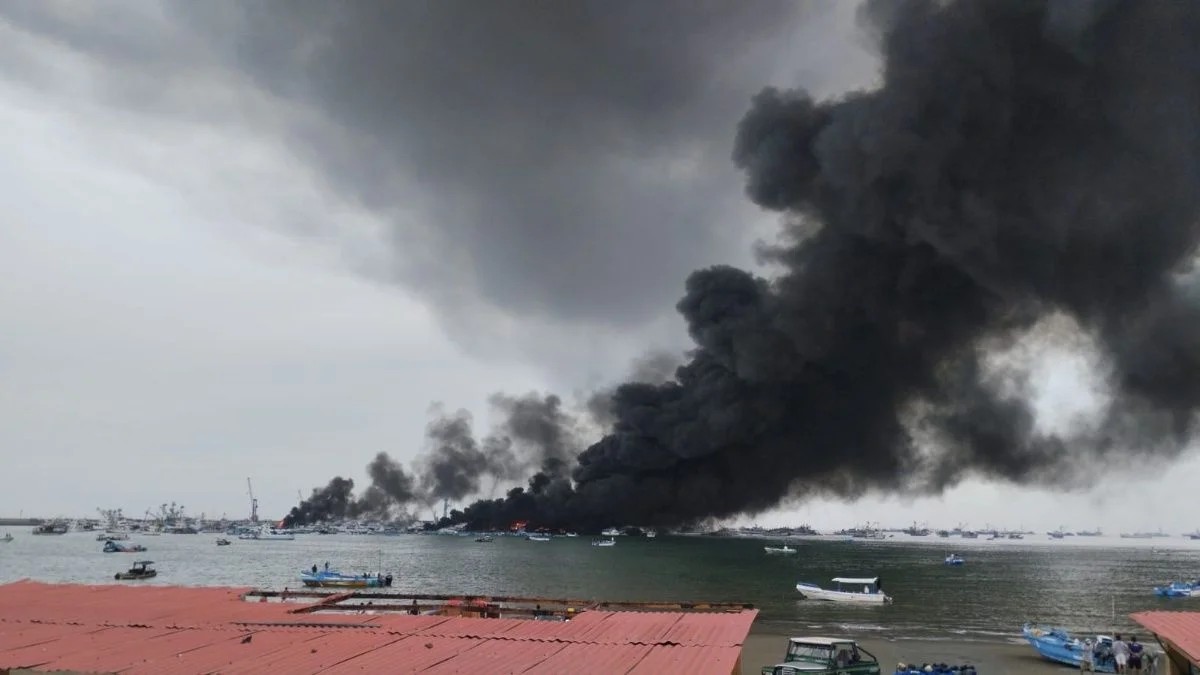
Fire in the port of Manta, Ecuador, affects at least 14 fishing boats
Fire in the port of Manta, Ecuador, hits several fishing boatsA fire hit fishing boats in the port of Manta, Ecuador,...
Brazil at the 2026 World Cup: see dates and times of the team's games
Carlo Ancelotti during the call-up of the Brazilian teamRafael Ribeiro/CBFBrazil and Egypt face each other this Saturd...
Shots injure police officers in operation to reopen highway in Bolivia
Bolivian police and armed forces cleared part of a major highway in San Julián, in the eastern region of Santa Cruz, o...

Toque agora.



Historias das musicas em destaque
 Historia da musica
Theme from the Soap Opera Rei do Gado: learn to play a notable song from Brazilian music
05/06/2026
Theme from the soap opera Rei do Gado, performed by Orquestra da Terra in CifraNet, is a song that carries a strong Brazilian identity,...
 Historia da musica
For You Stay by Talita Ribeiro: learn to play a romantic song full of feeling
05/06/2026
Para Você Ficar, by Talita Ribeiro, is a romantic song that talks about vulnerability, reunion and the courage to declare a feeling eve...
 Historia da musica
Red Rubber Ball by Cyrkle: learn to play a pop classic with a light and nostalgic atmosphere
05/06/2026
Red Rubber Ball, by Cyrkle, is a song that crosses generations with its light, melodic and optimistic sound. Even though it is about fa...
 Historia da musica
It Makes It Rain by David Quinlan: learn to play a worship classic on guitar
05/06/2026
Faz Ver, by David Quinlan, is one of the best-known worship songs among Christian musicians who seek simple, intense and spiritual repe...
 Historia da musica
Bottle 600 of Netto and Henrique: learn to play a country tune full of emotion
05/06/2026
Garrafa 600, by Netto and Henrique, is one of those country songs that mix regret, longing and that bar table atmosphere that speaks di...
 Historia da musica
Heaven's Not For Saints: Learn to Play A-Ha's Hit and Understand What Makes This Song So Special
05/06/2026
A-Ha is one of the most memorable bands in the history of world pop, known for creating music that spans generations with engaging melo...
 Historia da musica
Psalm 107: learn to play Samara Lourenço in a song of gratitude
05/06/2026
Psalm 107, by Samara Lourenço, is a song of praise inspired by gratitude, God's faithfulness and the recognition of his wonders. The so...
 Historia da musica
Só Por Amor A Ti: learn to play Ana Paula Valadão in a song of dedication and faith
05/06/2026
Só Por Amor A Ti, by Ana Paula Valadão, is a profound song of praise, marked by delivery, obedience and devotion. The song talks about...
 Historia da musica
De Bem Com a Vida: learn to play Os Serranos in a happy and passionate song
05/06/2026
De Bem Com a Vida, by Os Serranos, is a light, lively and romantic song. With positive lyrics and a melody that conveys joy, the song i...
 Historia da musica
January 6, 2003: learn to play Fernando and Sorocaba on the guitar
05/06/2026
6 January 2003, by Fernando and Sorocaba, is a country song full of longing, memory and emotion. The lyrics talk about a date that was...
Mais noticias para voce
 Noticia
06/06/2026
Dua Lipa and Callum Turner get married in a luxurious party in Italy; see details
Singer Dua Lipa, 30, and actor Callum Turner, 36, got married in a luxurious ceremony, held in Sicily, an island in Italy, this Saturday (6). The vows were made...
 Noticia
06/06/2026
Vitória defeats Fortaleza and is five-time champion of the Copa do Nordeste
Vitória became champion of the Copa do Nordeste this Saturday (6). In the return game of the final of the regional competition, in Barradão, the Bahian team bea...
 Noticia
06/06/2026
Federation of Iran accuses US of "vindictive behavior" for denied visas
The Iranian Football Federation is accusing the United States of adopting "vindictive behavior" by denying visas to members of the administrative and management...
 Noticia
06/06/2026
Defender on loan from Corinthians wins the Copa do Nordeste against Filho do Terrão
By Matheus Fiuza on 06 de June de 2026 at 18:05 Cacá, defender loaned by Corinthians to Vitória, was champion of the Copa do Nordeste this Saturday afternoon. T...
06/06/2026
Brazilian government intensifies talks with the European Union to unlock negotiations on Brazilian meat
EU vetoes meat from Brazil from September 3rdThe Ministry of Foreign Affairs (MRE) intensified conversations with representatives of the European Union in an at...
Noticia
06/06/2026
Fire in the port of Manta, Ecuador, affects at least 15 fishing boats
Fire in the port of Manta, Ecuador, hits several fishing boatsA fire hit fishing boats in the port of Manta, Ecuador, this Saturday (6). A huge column of black...
Participe da conversa
Seu comentario ajuda a manter a discussao viva e ainda convida outros leitores a continuar navegando pelo portal.
Seja o primeiro a comentar esta noticia.