



Leia a noticia completa
Fifa is investigated for abusive prices in World Cup games
Falling prices, unstable availability and lack of clarity. With a week to go until the start of the 2026 World Cup, many questions remain unanswered about tickets for the matches.
FIFA promised the event would be sold out, but there are thousands of tickets available for sale across multiple platforms.
BBC Sport has discovered that tickets for matches involving less traditional teams are now available at prices well below their original price - both on FIFA's own resale site and on secondary markets.
FIFA has promised a sold-out World Cup, but tickets are still available available for more than half of the games
Getty Images
The world football governing body itself was accused of dumping tickets that it is now unable to sell on the resale site SeatGeek.
But after all, how "sold out" are the games? Will we see a repeat of last year's Club World Cup, when tickets were sold at rock-bottom prices to fill the stadiums?
Will the biggest World Cup of all time have empty stands?
World Cup tickets: what is known
When it comes to FIFA and World Cup tickets, perhaps it's easier to say what we don't know.
There has been so much secrecy that it seems impossible to be sure what a price would be fair and reasonable for a World Cup ticket.
Last week, the attorneys general of New York and New Jersey officially launched an investigation into FIFA's ticketing practices.
Football's governing body was ordered to respond to accusations of "artificial price inflation" and "harm to fans."
The ticket purchasing process has been like a scavenger hunt.
Some fans who have been successful and paid for tickets in one price category have ended up receiving tickets of lower value, further away from the field.
Even those who won the draw did so blindly - at no time was the price list published. The astronomical price of tickets only became clear when fans were asked to pay.
FIFA adopted variable pricing rather than dynamic pricing, which changes prices at each point of sale based on previous demand.
FIFA's final public sales window began in April. At the time, it was said that more tickets could be released by the start of the matches.
But for which games? When? And at what prices?
Stadium maps were changed and more expensive categories were added, without fans knowing.
These categories were generally in the first few rows and cost about 50% more than the seats directly behind them.
They were not made available to fans during the draw period.
The attorneys general claimed it was all part of a deliberate attempt to withhold information and leave fans unsure of how to purchase tickets.
Regular and gradual price variation, row by row, on a secondary market may indicate a deliberate and structured policy, announced by the same company or individual
BBC
How many tickets have already been sold?
"All games are already sold out," said FIFA president Gianni Infantino in February.
"We reserved some tickets for last-minute sales, of course, but all the games are sold out."
As with most things at this World Cup, the reality appears to be different.
FIFA should have no problem selling out tickets for games featuring the top teams - Argentina, Brazil, England, Germany and Spain, to name a few.
We should be able to say the same about the host countries, but FIFA has priced these games so high that only two of the nine matches involving Canada, Mexico or the United States are officially sold out.
Even the opening match, between Mexico and South Africa, still has more than 500 seats available on the FIFA website, with prices starting at US$2,273 (R$11,740) each.
Fifa's problem is the games with teams that don't have much appeal - matches like Bosnia-Herzegovina x Qatar, Cape Verde x Saudi Arabia and the Democratic Republic of the Congo x Uzbekistan.
So how many games are actually sold out?
TicketData, an independent website that tracks major sporting events in the United States, presented an intriguing picture.
The site indicates that on Saturday there were about 74,000 tickets available for 86 of the 104 matches.
That's just part of the story. There are thousands more tickets on FIFA's own sales website, with real availability, but at an even higher price - many were probably bought for resale, with no intention of attending the game.
Then something strange happened.
Within hours, TicketData reported that the number of tickets on FIFA's website, at the original price, had more than halved, to around 32,000. As of Tuesday (2/6), that number had fallen to 22,000, with 66 games on sale.
Has there really been a sudden increase in demand for these games?
Is FIFA trying to get rid of tickets on secondary sites?
FIFA has made efforts to encourage fans to use their own website to resell tickets they do not intend to use. The official website charges a 15% fee to both the buyer and the seller.
On its FAQ page, world football's governing body states that it "strongly encourages the purchase of all types of tickets" through its official platforms.
FIFA also warns that tickets purchased by other means "may be invalid and subject to cancellation without notice."
But on Tuesday, shortly after the drop in stock on FIFA's own website, availability on SeatGeek appeared to increase considerably.
This was not just random individual seats, but lots of seats in specific block rows.
This was highlighted on social media and within 24 hours availability on SeatGeek appeared to decrease again.
TicketData claims that on Wednesday the number of tickets on FIFA's own website rose again to 37,000.
It is impossible to verify who listed the tickets and why. Or why the numbers changed on the FIFA website.
In addition to SeatGeek, there are thousands of advertisements on sites like StubHub and VividSeats.
Anyone can advertise tickets on these external sites, and the tickets themselves may not even exist.
SeatGeek has denied any direct involvement, but that does not mean that FIFA, or one of its partners, cannot be operating and advertising tickets independently.
In a statement, the company said: "The SeatGeek is a trusted marketplace that offers fans secure access to tickets to tens of thousands of live events, including the World Cup. We have no partnership or distribution agreement with FIFA."
Viagogo-owned StubHub North America also distanced itself from the case.
"Viagogo is a safe and regulated marketplace.
It has no relationship with FIFA," the statement read.
FIFA was contacted for comment on the matter, but, as has been the case throughout the ticket sales process, there was no response.
There is also other evidence on SeatGeek.
Rather than ticket prices being random, it appears that they are set at regular prices and increase from row to row, becoming more expensive the closer they are to the front of the field.
Observing two sectors behind the goal for the República game Democratic Congo x Uzbekistan, there are 60 advertisements for multiple tickets with prices between US$250 (R$1,291) and US$296 (R$1,529) in sectors 102 and 103.
When FIFA launched its most expensive "front" tickets in April, it made it clear that it considered that the closer to the field, the more valuable the ticket.
The price increases by a few dollars, row by row. All prices are well below the face value of US$380 (R$1,963).
So either a lot of people are losing a lot of money, or it's a plan to get rid of stock.
So why would FIFA supposedly be trying to sell tickets on these sites?
FIFA is like any other promoter. The last thing it wants is a bunch of empty seats - not just for the sake of image, but also because any empty seat means zero value.
The numbers show that. fans are unwilling to pay the high ticket prices for the less attractive games.
BBC Sport selected five matches that would normally have lower demand and found that tickets for the most desirable seats in the lower stand are now well below their original price.
The Jordan v Algeria game in Santa Clara, California sees the biggest drop.
Two comparable tickets in block 121, with a face value of US$620 (R$ 3,202), could be purchased for R$ 1,179 on FIFA's own resale website - 64% cheaper.
On SeatGeek, tickets were listed for R$ 1,323 and, on StubHub, for 172 pounds R$ 1,185.
For the Czech Republic x South Africa game, tickets from block 122, with a nominal value of R$ 2,356, were under R$1,310 on SeatGeek and StubHub.
This indicates that FIFA is unable to maintain the high nominal value on its own website, leading to speculation that it is trying to sell the tickets elsewhere - without reducing prices itself.
And, after tickets for Chelsea's Club World Cup quarter-final game against Palmeiras dropped to just R$ 56.32, prices may still be far from bottoming out.
Source: G1
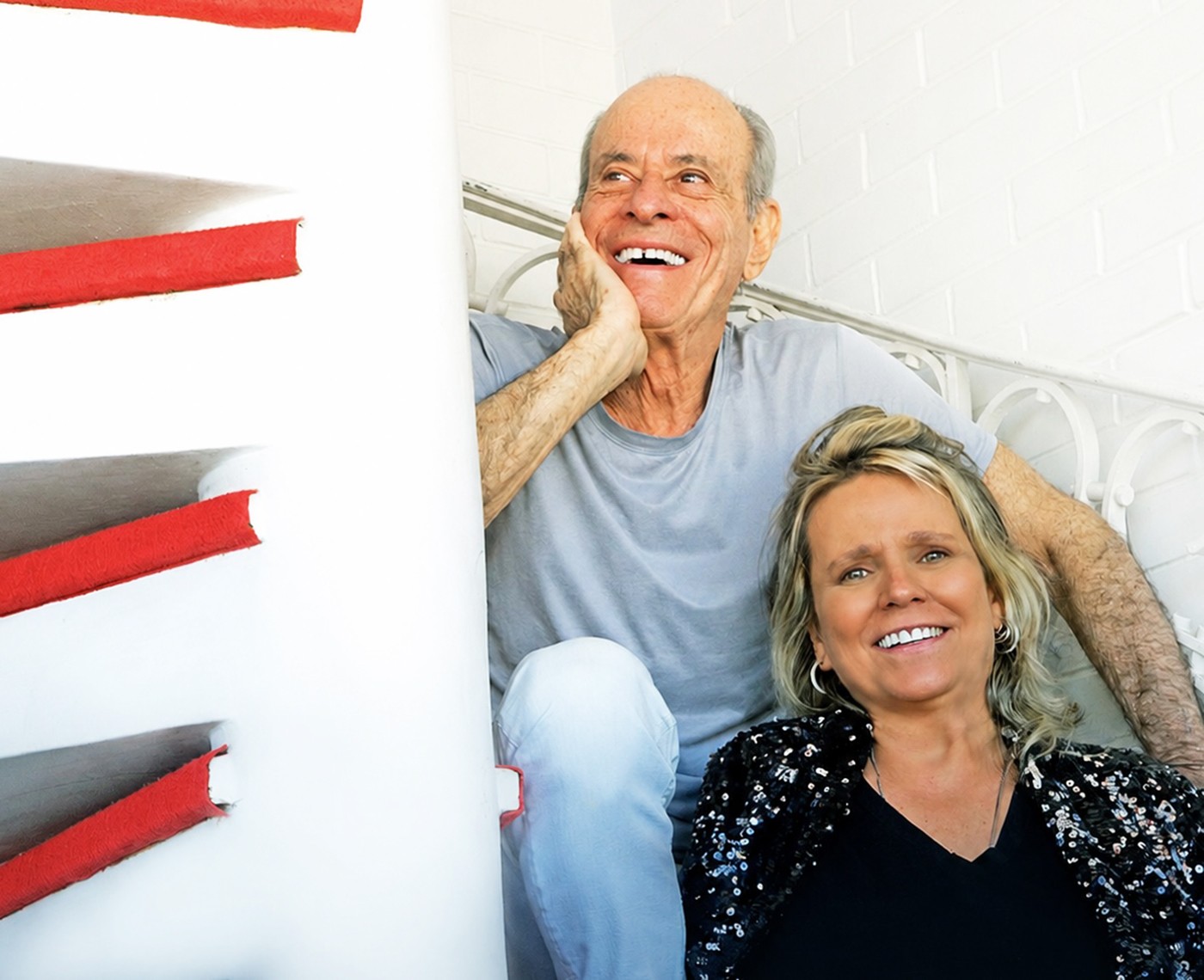
Ney Matogrosso records Luiz Melodia for the first time on Marília Bessy's EP
Ney Matogrosso and Marília Bessy sing 'Magrelinha' (1973), a song by Luiz Melodia (1951 - 2017), in a recording made f...
US attacks Iranian radars after shooting down drones
The United States Army struck "coastal surveillance radar sites" in Iran this Friday (5) after shooting down four Iran...
Jury voted for Henry's mother's fraud, but judge interfered, says prosecutor
Prosecutor Fábio Vieira, from the MPRJ (Public Ministry of Rio de Janeiro), stated that the jurors of the II Jury Cour...

Toque agora.


Historias das musicas em destaque
 Historia da musica
Theme from the Soap Opera Rei do Gado: learn to play a notable song from Brazilian music
05/06/2026
Theme from the soap opera Rei do Gado, performed by Orquestra da Terra in CifraNet, is a song that carries a strong Brazilian identity,...
 Historia da musica
For You Stay by Talita Ribeiro: learn to play a romantic song full of feeling
05/06/2026
Para Você Ficar, by Talita Ribeiro, is a romantic song that talks about vulnerability, reunion and the courage to declare a feeling eve...
 Historia da musica
Red Rubber Ball by Cyrkle: learn to play a pop classic with a light and nostalgic atmosphere
05/06/2026
Red Rubber Ball, by Cyrkle, is a song that crosses generations with its light, melodic and optimistic sound. Even though it is about fa...
 Historia da musica
It Makes It Rain by David Quinlan: learn to play a worship classic on guitar
05/06/2026
Faz Ver, by David Quinlan, is one of the best-known worship songs among Christian musicians who seek simple, intense and spiritual repe...
 Historia da musica
Bottle 600 of Netto and Henrique: learn to play a country tune full of emotion
05/06/2026
Garrafa 600, by Netto and Henrique, is one of those country songs that mix regret, longing and that bar table atmosphere that speaks di...
 Historia da musica
Heaven's Not For Saints: Learn to Play A-Ha's Hit and Understand What Makes This Song So Special
05/06/2026
A-Ha is one of the most memorable bands in the history of world pop, known for creating music that spans generations with engaging melo...
 Historia da musica
Psalm 107: learn to play Samara Lourenço in a song of gratitude
05/06/2026
Psalm 107, by Samara Lourenço, is a song of praise inspired by gratitude, God's faithfulness and the recognition of his wonders. The so...
 Historia da musica
Só Por Amor A Ti: learn to play Ana Paula Valadão in a song of dedication and faith
05/06/2026
Só Por Amor A Ti, by Ana Paula Valadão, is a profound song of praise, marked by delivery, obedience and devotion. The song talks about...
 Historia da musica
De Bem Com a Vida: learn to play Os Serranos in a happy and passionate song
05/06/2026
De Bem Com a Vida, by Os Serranos, is a light, lively and romantic song. With positive lyrics and a melody that conveys joy, the song i...
 Historia da musica
January 6, 2003: learn to play Fernando and Sorocaba on the guitar
05/06/2026
6 January 2003, by Fernando and Sorocaba, is a country song full of longing, memory and emotion. The lyrics talk about a date that was...
Mais noticias para voce
 Noticia
05/06/2026
Maiara's team issues a note of rejection after criticism of the singer's appearance
The team of singers Maiara, 38, and Maraisa, 38, shared on social media this Friday (5) a note of repudiation after a video of the singer went viral and generat...
 Noticia
05/06/2026
European countries fear irregular war by Russia, says professor
A principal preocupação dos países europeus em relação ao conflito com a Rússia não é um eventual avanço territorial russo, mas sim o que especialistas denomina...
 Noticia
05/06/2026
Market coordinator highlights Corinthians' focus on fundraising in Brazil and abroad
By Meu Timão on 05 of June of 2026 at 20:35 Crisleison Santos, market coordinator for Corinthians' youth categories, spoke about the work of scouting athletes f...
 Noticia
05/06/2026
India starts selling fuel with 85% ethanol
India will start selling a fuel with a blend of 85% ethanol (E85) and 15% gasoline, which will be about 20 rupees per liter cheaper than E20, Petroleum Minister...
 Noticia
05/06/2026
Analysis: Ideology in international relations makes diplomacy difficult
Américo Martins, senior International analyst at CNN Brasil, stated that the interference of ideological issues in international relations is always a source of...
 Noticia
05/06/2026
Find out which groups the US considers terrorist organizations
The First Capital Command (PCC) and the Red Command (CV) officially joined the list of Foreign Terrorist Organizations in the United States. The designation was...
Participe da conversa
Seu comentario ajuda a manter a discussao viva e ainda convida outros leitores a continuar navegando pelo portal.
Seja o primeiro a comentar esta noticia.