



Leia a noticia completa
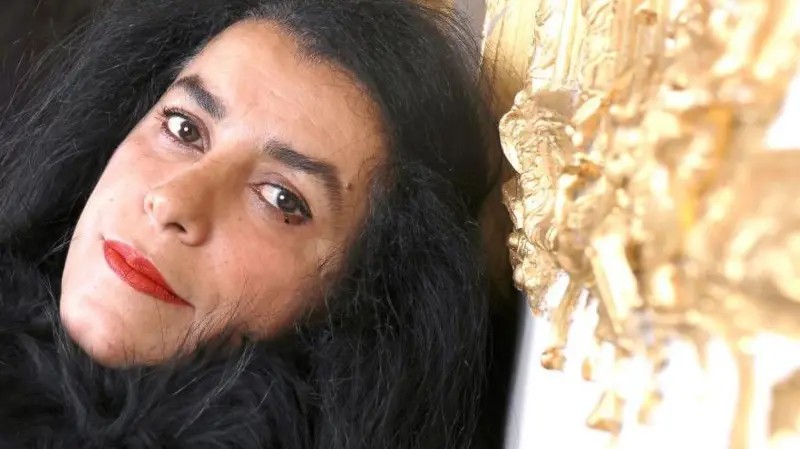
Marjane Satrapi has died aged 56
Getty Images / BBC
French-Iranian writer and filmmaker Marjane Satrapi, who has died in Paris aged 56, was an important chronicler of women's experiences under the political and social restrictions of the Iranian regime.
She was one of the few artists who managed to incorporate Iran's modern history into the global art scene through an entirely personal narrative.
With her autobiographical work Persepolis, Satrapi gained international attention and achieved worldwide acclaim. The graphic novel chronicles political repression during the era of Shah Reza Pahlavi - who was Shah of Iran from 1941 to 1979 - as well as the dark and painful first years of the Islamic Republic, after the Iranian Revolution of 1979.
According to friends of Satrapi cited by the French press, the author's death occurred approximately one year after the death of her husband, Matteo Ripa; some described her death as "out of sadness."
Now on g1
In a message released on Thursday (4/6), French President Emmanuel Macron described Satrapi as "a great artist" who turned her childhood into "a universal legend."
He added that through "her childlike perspective, her humor, her kindness and her inner demons," she created "a stunning universal work in which readers saw themselves reflected."
Numerous artists also responded to her death. Satrapi.
French cartoonist Joann Sfar wrote on Instagram: "You changed the world with comics, and you didn't care about comics. I lost my twin sister."
French-Syrian author Riad Sattouf, creator of the acclaimed memoir The Arab of the Future, wrote: "Your work opened a path that many followed; and, above all, me."
With Persepolis, Marjane explained the Iranian Revolution to the world like no one before her
Getty Images / BBC
From Iran to exile
Marjane Satrapi was born on November 22, 1969, in Rasht, north-central Iran, into a family with left-wing political views.
Her mother was a descendant of Shah Nasser al-Din Shah Qajar, monarch of Persia between 1848 and 1896.
Politics was deeply intertwined with the history of her family, and several of her relatives suffered arrest or repression. This memory of state violence shaped her political consciousness from childhood.
Later, her family moved to Tehran, the capital of Iran, where she grew up. She was nine years old when the Iranian Revolution broke out, and her adolescence coincided with increasing restrictions on individual freedoms, particularly the repression of women and limitations on freedom of dress.
Marjane's uncle Anoosh - a prominent member of the Iranian communist movement and someone with whom she had a very close relationship - was executed for his political convictions.
In 1983, at the age of 14, in the midst of the Iran-Iraq War, she was sent to Vienna, where he spent his adolescence in isolation.
After completing high school, he returned to Iran in 1989 and studied Visual Communication at the Faculty of Fine Arts at the Islamic Azad University.
After a failed marriage in Iran, he moved to France in 1994.
Until 1997, he studied illustration in Strasbourg before moving to Paris, where he developed a career in painting and children's literature, as well as contributing to several magazines and newspapers.
During this period, his illustrations were published in The New Yorker and The New York Times. In the 2000s, Satrapi made a profound impact with the publication of her comic book autobiography Persepolis, in which she recounts her childhood under the Islamic Republic and her painful departure for Europe.
Employing a simple visual style and black-and-white pages, Satrapi depicts the complexity of Iranian society as well as the personal and political consequences of Ayatollah Khomeini's rise to power.
Like many Iranians, her family hoped to see the end of monarchy, but soon became disillusioned with the establishment of the new religious government.
In Persepolis, Satrapi shows how schools adopted Islamic norms, the hijab became mandatory and everyday life was reshaped by ideological pressure.
In interviews with the French press, she stated that, at the age of 10, she was preparing to become a political prisoner, as such a possibility seemed completely plausible to her. This simple statement illustrates the atmosphere that marked his childhood.
Reports of torture, arrests and executions - elements that were part of the reality of his early years - would later become central themes in his most important artistic work.
The Iran-Iraq War (1980-1988) - the second major rupture in his life - also occupies a prominent place in the book.
The conflict transformed aerial bombings into a daily reality and added the violence of war to the political violence exercised by the State.
However, Satrapi did not conceive his narrative as something purely tragic. In the book, adolescence is also presented as a time of rebellion, musical discovery, and defiance.
She secretly listens to Western music, wears forbidden clothing, and repeatedly confronts the morality police. This everyday resistance would eventually become one of the central themes of her work.
In 2003, she declared: "That image of the woman dressed in black - looking like a raven - and the extremist man with a beard - what you saw on television - is what the government allowed to be seen. But Iran is a dictatorship, and a dictatorship doesn't show everything."
She also expressed her regret at what she described as stereotypes surrounding her home country.
The first volume of Persépolis won a prize at the Angoulême International Comics Festival, in France, in 2001.
Three more volumes followed and, in 2007, the work was adapted for cinema by Satrapi herself, in collaboration with Vincent Paronnaud.
The film won two César awards and the Jury Prize at the Cannes Film Festival that same year.
At the time, she declared: "Although this film is universal, I dedicate it to all Iranians."
The film adaptation of Persepolis, with director Vincent Paronnaud, won Satrapi an award at Cannes
Getty Images / BBC
A universal work
Her comic book autobiography - translated into several languages - allowed millions of readers understand the Iranian Revolution, the Iran-Iraq War, exile, and the contradictions of modern identity from the perspective of someone who experienced these events firsthand.
The book received numerous awards, including the Frankfurt Book Fair Award and the American Library Association's Alex Award.
Some observers have attributed Satrapi's success to her ability to give concrete form to highly abstract concepts; a skill that gave her work a universal language and allowed readers around the world to connect with Persepolis and its narrator's universe.
Western critics have often praised Persepolis for its subtle humor, simplicity, and eloquence - in both text and illustrations - and for Satrapi's frank account of the Iranian revolution and culture through the eyes of a curious young observer.
She sought to rescue the humanity of people who, in Western perception, are often reduced to mere stereotypes; a mission that remained present throughout his subsequent work.
However, the release of Persepolis was not without controversy.
In 2007, Iran's Ministry of Culture and Islamic Guidance lodged a formal protest with the cultural department of the French embassy in Tehran over the film's screening at the Cannes Film Festival.
Similarly, the Farabi Cinema Foundation, the main state organization promoting the Iranian film industry, described Persepolis as a work "anti-Iranian", conceived with the intention of inciting global public opinion against the Islamic Republic.
The film also provoked a wave of protests when it was shown on the Tunisian television channel Nessma.
Some religious circles, political activists and Internet users classified the film as "blasphemous", as one of its scenes depicts God in human form, an act that critics considered an act of idolatry.
Other books and films
Satrapi was awarded the Princess of Asturias Award
Getty Images / BBC
After the success of Persépolis, Satrapi created another comic book, Bordados, published in French in 2003 and in English in 2005.
A year later, she published Chicken with Plums, which won an award at the Angoulême International Comics Festival.
In 2011, the work was adapted for the cinema, directed by Satrapi herself and starring Golshifteh Farahani.
Chicken with Plums tells the story of Nasser Ali Khan, his beloved târ - a stringed musical instrument played in Iran, transformed into a violin in the film adaptation - and his love for a woman called Iran, all set in a specific context of Iranian history.
Nasser Ali Khan, a musician with a fondness for chicken stew with plums, ends up falling into a deep depression and takes his own life.
In these works, Satrapi explored the sphere of private life: families, secrets and aspirations. She demonstrated that politics resides not only in institutions but also in human relationships.
At the same time, Satrapi did not limit herself to the Iranian context. In 2019, she directed the film Radioactive.
It is a biographical drama centered on Marie Curie, the pioneering scientist in the field of radioactivity.
The film traces Curie's life path from her youth and her meeting with Pierre Curie, through the discovery of radium and polonium, to her two Nobel Prizes.
In addition to her scientific achievements, the film examines the challenges Curie faced as a female scientist in a male-dominated society, as well as the dangerous consequences of her discoveries.
'Woman, Life, Freedom'
Satrapi played a significant role, from exile, in the anti-government protests from Iran
Getty Images / BBC
During the Woman, Life, Freedom movement, which emerged in Iran after the death of young Mahsa Amini, Satrapi again became a prominent figure in the public debate.
In 2023 - a year after the movement began - she published the graphic novel Woman, Life, Freedom, in French and Persian, in collaboration with more than twenty illustrators, Iranian and from other countries. In Brazil, the work was published in 2024.
The book explores the historical and political roots of the movement.
In the introduction, Satrapi wrote: "This book seeks to portray what is happening in Iran and to explain - as clearly as possible to a non-Iranian audience - the events, both small and large and complex, that have occurred; it is the story of an ongoing movement that remains alive and dynamic."
"The second mission of the book is to tell Iranians that they are not alone. Even if the politicians of the world think only in political terms and do not take measures that exclusively benefit the Iranian people, Western civil society supports them," she added.
"Proof of this is the extraordinary collaboration of Western artists who helped us in this immense undertaking. For an artist, what could be more valuable than artistic support?"
Satrapi described the Iranian protesters as "beautiful and inspiring", adding: "What I experienced, young people are experiencing now."
She also emphasized that a striking feature of this period it was the joint participation of women and men in the protests, which she considered a source of hope.
Over the years, Satrapi established herself as an internationally recognized feminist voice, although she herself distanced herself from labels.
Her feminism was grounded in lived experience, rather than theory. She always emphasized the right of women to make their own decisions, both in their personal and professional lives.
On several occasions, she stated that returning to Iran had become, in practice, impossible. Although she considered this a high personal cost, she highlighted that those who protested in the streets of Iran paid an infinitely greater price.
Exile and activism
Exile and activism
Getty Images / BBC
In addition to her experience of life in Iran, exile played a crucial role in shaping Satrapi's identity.
In an interview republished by Le Monde after her death, she spoke candidly about a period when she lived in poverty.
For For her, exile was not simply freedom; it was also an experience of profound rupture. This tension between freedom and loss became one of the central themes of his work.
The tension between longing and freedom marked his entire life. She never emotionally detached herself from Iran, but she was also not willing to sacrifice her intellectual freedom for anything, not even her adopted country.
Although she acquired French citizenship in 2006, she did not hesitate to openly criticize French policies.
In fact, she was one of the few Iranian artists who criticized both her own culture and the West.
In 2024, Satrapi refused the Legion of Honor - the French state's highest decoration - citing what she described as the French government's "hypocritical policy" towards Iran. Many of Satrapi's works explored the intersection between personal experience and political history. She demonstrated that an individual life can serve as a mirror for an entire historical era.
Through her art, she also showed that comic books - not yet fully established in Iran - can serve as tools of memory and resistance against political simplification.
Her legacy lies in the way she used personal stories to challenge simplistic views of Iran and its people.
Source: G1

Drone explodes in port in Romania; VIDEO shows detonation
See the moment when a drone explodes in a port in RomaniaThe self-detonation of a maritime drone caused a large explos...
Israeli army orders evacuation of Lebanon residents amid attacks
The Arab spokesman for the Israel Defense Forces issued warnings this Friday (5) to residents of parts of southern Leb...
Almost 500 kg of drugs valued at R$10 million are seized in SP
Almost 500 kg of drugs hidden in a refrigerated truck were seized, on Thursday afternoon (4), on the Washington Luís h...

Toque agora.


Historias das musicas em destaque
 Historia da musica
Psalm 107: learn to play Samara Lourenço in a song of gratitude
05/06/2026
Psalm 107, by Samara Lourenço, is a song of praise inspired by gratitude, God's faithfulness and the recognition of his wonders. The so...
 Historia da musica
Só Por Amor A Ti: learn to play Ana Paula Valadão in a song of dedication and faith
05/06/2026
Só Por Amor A Ti, by Ana Paula Valadão, is a profound song of praise, marked by delivery, obedience and devotion. The song talks about...
 Historia da musica
De Bem Com a Vida: learn to play Os Serranos in a happy and passionate song
05/06/2026
De Bem Com a Vida, by Os Serranos, is a light, lively and romantic song. With positive lyrics and a melody that conveys joy, the song i...
 Historia da musica
January 6, 2003: learn to play Fernando and Sorocaba on the guitar
05/06/2026
6 January 2003, by Fernando and Sorocaba, is a country song full of longing, memory and emotion. The lyrics talk about a date that was...
 Historia da musica
Savior: learn to play Billy Bob Thornton in a strong, reflective song
05/06/2026
Savior, by Billy Bob Thornton, is a song with a deep atmosphere, reflective lyrics and a sound that combines emotion, narrative and int...
 Historia da musica
Garden In The City: learn to play Melanie with a light and expressive chord
05/06/2026
Garden In The City, by Melanie, brings a delicate, artistic atmosphere full of personality. It is an ideal song for those who like song...
 Historia da musica
Aceto Mi Derrota: learn to play the emotional song by Marco Antonio Solis
05/06/2026
Aceto Mi Derrota, by Marco Antonio Solis, is an intense, romantic song full of feeling. With an interpretation marked by the pain of pa...
 Historia da musica
It's Luxury Only: learn to play Ary Barroso's classic samba on the guitar
05/06/2026
É Luxo Só, by Ary Barroso, is one of those songs that carries the soul of Brazilian samba in every chord. With an elegant rhythm, strik...
 Historia da musica
My Immortal: Learn to Play One of Evanescence's Greatest Classics on Guitar
04/06/2026
Few songs have managed to cross generations with the same emotional intensity as "My Immortal", one of Evanescence's biggest hits. Rele...
 Historia da musica
Learn to Play This Song on Guitar and Develop New Musical Techniques
04/06/2026
Some songs have the ability to mark moments, awaken emotions and remain alive in listeners' memories for many years. When a song brings...
Mais noticias para voce
 Noticia
05/06/2026
Leonardo mocks an employee's request for time off during the World Cup: "Are you going to play?"
Leonardo has been making waves on social media after being asked by one of his employees about taking time off when the Brazilian team is on the field at the Wo...
 Noticia
05/06/2026
Corinthians visits Mirassol to start the Paulista U20 campaign
By Marcelo Nascimento on 05 de June de 2026 at 09:31 This Friday, Corinthians plays its first game for the 2026 Paulista Sub-20 Championship. The black and whit...
 Noticia
05/06/2026
Pitty Appears in a Bikini Inspired by Abaporu, Delights Fans and Goes Viral with Rare Clicks on the Beach
Pitty once again made waves on social media by sharing rare footage of a moment of rest on a deserted beach. Always discreet when it comes to her personal life,...
/https://i.s3.glbimg.com/v1/AUTH_59edd422c0c84a879bd37670ae4f538a/internal_photos/bs/2026/T/v/kIvyRKStasvz7onALFag/shakira-em-copacabana-foto-panlo-porciuncula-afp.jpg) Noticia
Noticia
05/06/2026
Shakira will be the attraction of one of the three opening ceremonies of the World Cup; Anitta will also give a presentation
Singer Shakira will perform in Mexico City at the first of the three World Cup opening ceremonies.The Colombian singer will perform "Dai Dai", the tournament's...
 Noticia
05/06/2026
Amid uncertainty over ceasefire, 4 people die in attack in Lebanon
Israeli attacks killed four people in southern Lebanon this Friday (5), according to the Lebanese state news agency NNA. The attacks, which took place in the ci...
 Noticia
05/06/2026
Exclusive: Santos has an agreement with a company to build a new CT at the base
Marcelo Teixeira, president of Santos, told CNN Brasil that the club has an agreement with a company to build a new Training Center for the youth category. On t...
Participe da conversa
Seu comentario ajuda a manter a discussao viva e ainda convida outros leitores a continuar navegando pelo portal.
Seja o primeiro a comentar esta noticia.