



Leia a noticia completa
Groups designated as terrorists were included on the US Treasury's list, which applies economic and commercial sanctions, and their assets in the US were blocked
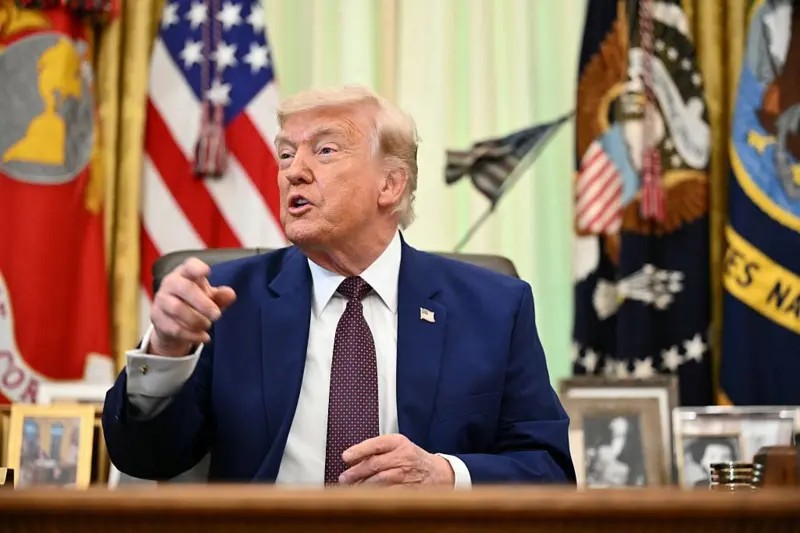
AFP via Getty Images/BBC
The designation by the United States of the First Capital Command (PCC) and the Red Command (CV) as terrorist organizations officially came into force this Friday (06/05).
The decision gives Brazilian factions the same legal status as groups that have been targeted, for over a year, by harsh interventions by Washington in Latin America, such as the Sinaloa and Jalisco Nova Geração cartels, in Mexico, the Trem de Aragua, in Venezuela, and the Gulf Clan, in Colombia.
According to experts consulted by BBC News Brasil, with the exception of the Venezuelan case, the designation as terrorist has not led, at least so far, to the weakening of these organizations or to a decrease in crime.
PCC and CV are classified as terrorists by the US as of this Friday (5)
But the classification meant, in some cases, harsher penalties for criminals captured and extradited to the United States and, mainly, specific economic sanctions and much more rigorous monitoring of the groups' financial transactions in the US and with companies that have ties in American territory.
In Mexico, where six criminal factions received the designation in February 2025, diplomatic pressure on the government of President Claudia Sheinbaum has intensified in recent months, with the indictment of ten government officials of the State of Sinaloa, including the governor himself, Rubén Rocha Moya, for alleged links with the powerful Sinaloa Cartel.
The Sheinbaum government also denounced an alleged unauthorized operation by the CIA, the American intelligence service, on Mexican soil. According to the government, two officers who were believed to be investigating drug laboratories in the north of the country were identified after dying in a car accident.
In Venezuela, pressure on organized crime reached its peak in the armed invasion with the capture of the then president, Nicolás Maduro, in January this year.
Although the designation of organizations as terrorist is not a legal requirement for the authorization of American intelligence operations abroad, experts say that the recent US actions in Mexico and Venezuela are part of the Donald Trump government's campaign against narcoterrorism.
"The designation definitely changes the tone [of the USA] in relation to these groups and how they qualify the threat they represent", says Cecilia Farfán-Méndez, head of the North American Observatory of the Global Initiative against Transnational Organized Crime (GI-TOC).
Also according to Farfán-Méndez, the American action did not cause major changes in the behavior of the affected criminal organizations, but it had a significant impact on the countries' private sector businesses involved.
Sanctions and financial monitoring
On the first day of his second term, in 2025, Trump signed an executive order asking the State Department to designate major cartels and other Latin American criminal organizations as Foreign Terrorist Organizations (FTOs).
The classification was confirmed about a month later by Secretary of State Marco Rubio. The list of organizations affected included the cartels of Sinaloa, Jalisco New Generation (CJNG), the Northeast, the Gulf, Unidos and Nova Família Michoacana, from Mexico, and Trem de Aragua, from Venezuela.
Later, the Gulf Clan, from Colombia, were also designated as terrorists; the Suns Cartel, from Venezuela; and the groups Los Choneros and Los Lobos, from Ecuador.
The groups Bairro 18 and Mara Salvatrucha (MS-13), which have branches in several Central American countries and the US, were also hit.
With the designations, all of these organizations were included on the list of the US Treasury Department's Office of Foreign Assets Control (Ofac), which administers and enforces economic and trade sanctions, and their assets in the US were blocked.
This also means that any company or individual that provides material support to members or institutions linked to these organizations could face penalties in the USA. This includes sending money, providing services, consulting, providing transport or any other direct or indirect economic assistance.
Gunmen from the Sinaloa Cartel clashed with security forces during an attempted mass escape from Aguaruto Prison, in Mexico
Anadolu via Getty Images/BBC
To date, the Mexican cartels have been the most targeted by American sanctions.
In the Ofac system, BBC News Brasil identified that at least 40 individuals linked to organizations classified as terrorist in Mexico have been personally listed since their designation last year. Of these, 23 belong to the Sinaloa Cartel.
More than 50 companies linked to the cartel or these individuals were sanctioned, as well as 31 businesses indicated as having connections with the CJNG and its members.
At least 14 individuals and 4 companies that would have some type of direct connection with Venezuela's Aragua Train have also entered the list of sanctions linked to terrorism since February 2025.
The Economist Welber Barral, former Secretary of Foreign Trade of Brazil and partner at the BMJ consultancy, explains that, in addition to the personal effect on the individuals and firms sanctioned, the inclusion of organizations on Ofac's lists meant a significant increase in the operating costs of companies that operate in the affected countries and also have a presence in the USA.
Many of these factions are quite infiltrated in local societies and have arms in different sectors of the economy, says the expert. As the definition adopted by the American law of material support is quite broad, companies that do business in the affected countries may end up penalized for some type of connection with the factions, even unintentionally.
"A bank in the USA that has accounts of people involved with one of the organizations or an American investor who invests in a company that has as a supplier someone linked to one of these groups can be criminally and civilly sanctioned in the United States if it does not demonstrate that it has done due diligence", explains Barral.
All of this, points out the expert, has increased companies' spending on compliance requirements and due diligence to avoid problems when investing and operating in countries such as Mexico and Colombia.
The US Treasury Department has increased pressure on banks to monitor customers
Bloomberg via Getty Images/BBC
Niko Passas, professor of Criminology and Criminal Justice at Northeastern University in the United States, also states that entities prosecuted for material support to an organization classified as terrorist by the United States have suffered, in addition to the economic impact, implications in relation to their reputation.
"In practice, according to the law, not having the intention to support a terrorist organization is not necessarily enough [to prove innocence].
Therefore, even without intention, someone can end up involved", says the expert, who collaborated in the implementation of the United Nations conventions against corruption and transnational organized crime.
There is still no extensive research on the real impact of all this on local economies, but a report from the market research company Mordor Intelligence, cited by the consultancy Control Risks, pointed out that, one year after the designation of six Mexican criminal organizations as terrorists, there was a significant increase in the costs of companies in Mexico.
The survey points to an increase of 8% to 12% in logistics expenses and a 30% increase in insurance prices for trucks transporting goods in the affected regions.
Law firms and specialist consultancies have also reported a significant increase in scrutiny in the agro-industrial sector in the Mexican states of Jalisco and Michoacán, where cartel members have infiltrated supply chains in recent decades.
In addition, the US Treasury has issued orders requiring that all banks operating in cities bordering Mexico in the States of California and Texas ask for identification from customers who make cash transactions over US$200 and report the transactions to the agency.
In June 2025, three Mexican banks were sanctioned on charges of laundering money from drug trafficking. Two of them were blocked by Visa and Mastercard from accessing their payment networks, which made the banks' debit and credit cards practically useless, as the two American companies dominate the payments sector in almost all of the world. world.
Another case that marked the discussion last year involved a private school in Florida, which had to pay a fine of more than US$ 1.7 million for receiving tuition and other fees from two students whose parents have ties to a Mexican cartel, according to the US Treasury. this scenario, Barral points out, may be driving potential investors away from the countries where the organizations are established.
"Banks increase the requirements for opening accounts and make operations with abroad more difficult, access to credit becomes more difficult", he explains.
"And, of course, the foreign investor will look with a magnifying glass at what investment he is making and whether it is worth it."
To date, there have been no clear signs of a decrease in foreign investment caused by the American action to designate terrorist organizations.
But, according to Barral, Barral, the scenario has the potential to be especially harmful for Mexico, which is extremely dependent on the United States and, in 2025, will allocate approximately 80% of its exports to the country.
Severer penalties and shaken relations in Mexico
In the criminal sphere, the designation as a terrorist organization leads to more severe penalties for those convicted in the United States, explains Niko Passas.
"Not only are they very severe in financial terms, but they also include prison sentences that can reach to 20 years", says the lawyer and criminologist.
In February of this year, one of the leaders of the Sinaloa Cartel, René Arzate-García (also known as La Rana) was charged with the crimes of narcoterrorism, running a criminal organization, material support for a foreign terrorist organization, international conspiracy to distribute methamphetamine, cocaine, fentanyl and marijuana, and money laundering in California.
The American government also offered a reward of up to US$10 million for information about the whereabouts of La Rana and his brother, Alfonso Arzate-García (Aquiles).
The US government's drug enforcement agency (DEA) says the two have controlled the Tijuana area for the Sinaloa Cartel for 15 years.
Since the Mexican cartels and their members were classified as terrorists, the governments of Donald Trump and Claudia Sheinbaum have held a series of closed-door negotiations. Sinaloa
DEA via BBC
The two countries even talked about increasing cooperation and creating joint strategies to combat cartels. Transfers of criminals captured in Mexico to the US were also intensified, with almost a hundred prisoners sent to American soil between January 2025 and January 2026.
Sheinbaum was also named as one of the world leaders who best managed to negotiate a truce with the White House in the face of Trump's accusations about crime at the border and the imposition of trade tariffs.
But recent events involving local leaders and statements from the National Palace raise doubts about what happens in the behind the scenes.
In January, after the military operation that captured Nicolás Maduro in Venezuela, Trump hinted that other Latin American countries, such as Colombia, Cuba and Mexico, could be his government's next targets.
In response, Sheinbaum stated during a press conference that Mexican sovereignty would be defended. "Few Mexicans agree to an intervention," he said.
"Not only will it not help - who are they going to bomb? - but our sovereignty will be at stake."
The relationship between the two countries reached an even more delicate point after the death of the two CIA employees in a car accident in northern Mexico. According to Mexican authorities, they did not have authorization to operate in the country.
A CNN report also pointed out that CIA agents participated directly in lethal attacks against cartel targets in Mexico last year.
Sheinbaum's government categorically denied this. The president has also been emphatic that foreign authorities can only operate in Mexican territory with prior authorization.
But shortly after the car accident involving American intelligence officers, the US formally charged Sinaloa governor Rubén Rocha and other local government officials for alleged involvement with the Sinaloa Cartel.
Sheinbaum has maintained that Mexican sovereignty will be defended
AFP via Getty Images/BBC
Although the US often has the targeting drug trafficking bosses, formal accusations against high-ranking Mexican politicians in office are rare.
According to the American Department of Justice, Rocha and others conspired with cartel leaders to import large quantities of drugs into the United States in exchange for political support and bribes.
After the accusations were released, the Mexican government received requests for preventive detention for the purpose of extraditing those being investigated. Sheinbaum demanded clear proof of authorities' involvement before the Mexican Public Prosecutor's Office can proceed in accordance with the law.
The president also accused "sectors of the extreme right" in the United States of leading a "campaign" against her government, but said she believes Donald Trump is not involved in the movement.
"I confess that I do not believe that President Trump has led this offensive on several issues," Sheinbaum said at his usual morning press conference.
"These are sectors of the extreme right in the United States that want to prevent a good relationship."
Colombian presidential circle in the US's sights
In Colombia, one of the main consequences of American pressure on organized crime was the inclusion of President Gustavo Petro and his family members on the list of individuals allegedly associated with drug trafficking last year.
In addition to Petro, his eldest son, Nicolás Petro, and the first lady, Verónica Alcocer, the Minister of the Interior, Armando Benedetti, was also sanctioned by Ofac on charges of involvement in illicit global drug trafficking.
According to the US Treasury, since taking power Petro had allowed drug cartels to prosper and "flood the United States and poison Americans" with cocaine.
More recently, in March, federal prosecutors in New York would officially open an inquiry to investigate the president's involvement with individuals linked to drug trafficking, as well as suspicions about the use of resources illicit activities in his 2022 presidential campaign.
Like Mexico and the other countries involved, this generated great concern among businesspeople and investors, who needed to reorganize themselves to avoid being penalized for any type of contact with Petro's close circle. illegal gold.
Gustavo Petro and his family were included in the list of individuals allegedly associated with drug trafficking by the US
Anadolu via Getty Images/BBC
The Colombian government believes that illegal gold mining has financed the Gulf Clan, designated as terrorists by the US, and that extending sanctions to gold traders would help Colombia combat the faction, according to the report.
The US Treasury Department did not confirm whether the request was being analyzed, but the issue of drug trafficking and security has become central in the local elections, which must be defined in a second round scheduled for June 21.
Iván Cepeda, a left-wing leader who offers continuity to the programs of the current government of Gustavo Petro, is running against Abelardo de la Espriella, a right-wing businessman who promises a radical approach to change everything.
Weakening of the Aragua Train in Venezuela
But despite all the actions taken by the US so far, experts and observers locals also point out that there has been no major decrease in violence caused by the factions.
Cecilia Farfán-Méndez, from GI-TOC, states that the organization's collaborators in Mexico and Central America have not noticed concrete effects of American measures in limiting the activities perpetrated by criminal organizations.
"But of course, it has only been a little over a year [since the designation was published by the USA]", says the expert.
The big exception pointed out by Farfán-Méndez is Venezuela, where there would be signs of the weakening of the Aragua Train.
According to reports, the organization is increasingly fragmented. Furthermore, it would have seen the pressure on its networks increase after Chile and Colombia began carrying out joint operations with American authorities to dismantle the group's cells in their countries.
In October, one of the faction's founders, Larry Alvarez, also known as Larry Changa, reportedly asked, in a letter, for help from the Colombian government in carrying out peace negotiations that would lead to the group's dissolution, an action that was interpreted by some as a sign of the faction's weakness.
Changa is in prison in Colombia since 2024.
In the message addressed to Gustavo Petro and the Ministry of Justice, he would have asked for help to "facilitate rapprochement and build a viable demobilization route".
Members of the Venezuelan gang Trem de Arágua and the MS-13 gang who were deported to El Salvador by the USA
Anadolu via Getty Images/BBC
The letter was signed by the criminal's lawyers and published in local and online media. The office of the Colombian peace commissioner confirmed the authenticity of the document to the AFP agency.
In addition, according to collaborators interviewed by GI-TOC, some actions by the American government, such as the indictment of Hector Rusthenford Guerrero Flores, known as Niño Guerrero and identified as the top leader of the Trem de Aragua, in the criminal case that also targets Nicolás Maduro and other members of his government, weakened the criminal structure.
In addition to all this Added to this are Maduro's arrest and the United States' control over the Venezuelan government, which would be harming the organization, according to reports published by the Global Initiative against Transnational Organized Crime.
Incentive for sophistication?
There remain, however, many doubts about the benefits of the strategy adopted by the US of classifying Latin American criminal factions as terrorists.
For Niko Passas, from Northeastern University, there is the possibility that the current pressure will have an effect the opposite.
"In the past, we have seen that the rigorous application of measures against these organizations has sometimes served as an incentive for them to become better organized, more sophisticated and, consequently, more powerful and resilient", he says.
In addition, says the lawyer, the application of sanctions can increasingly alienate groups from the American financial system and, consequently, from the dollar, making it increasingly difficult for the US to monitor their movements.
"This strategy also provides additional incentives for de-dollarization, aiming to avoid American jurisdiction", he points out.
"In other words, you can use your weapons on targets around you, but if they move elsewhere, they will be out of your reach."
Source: G1
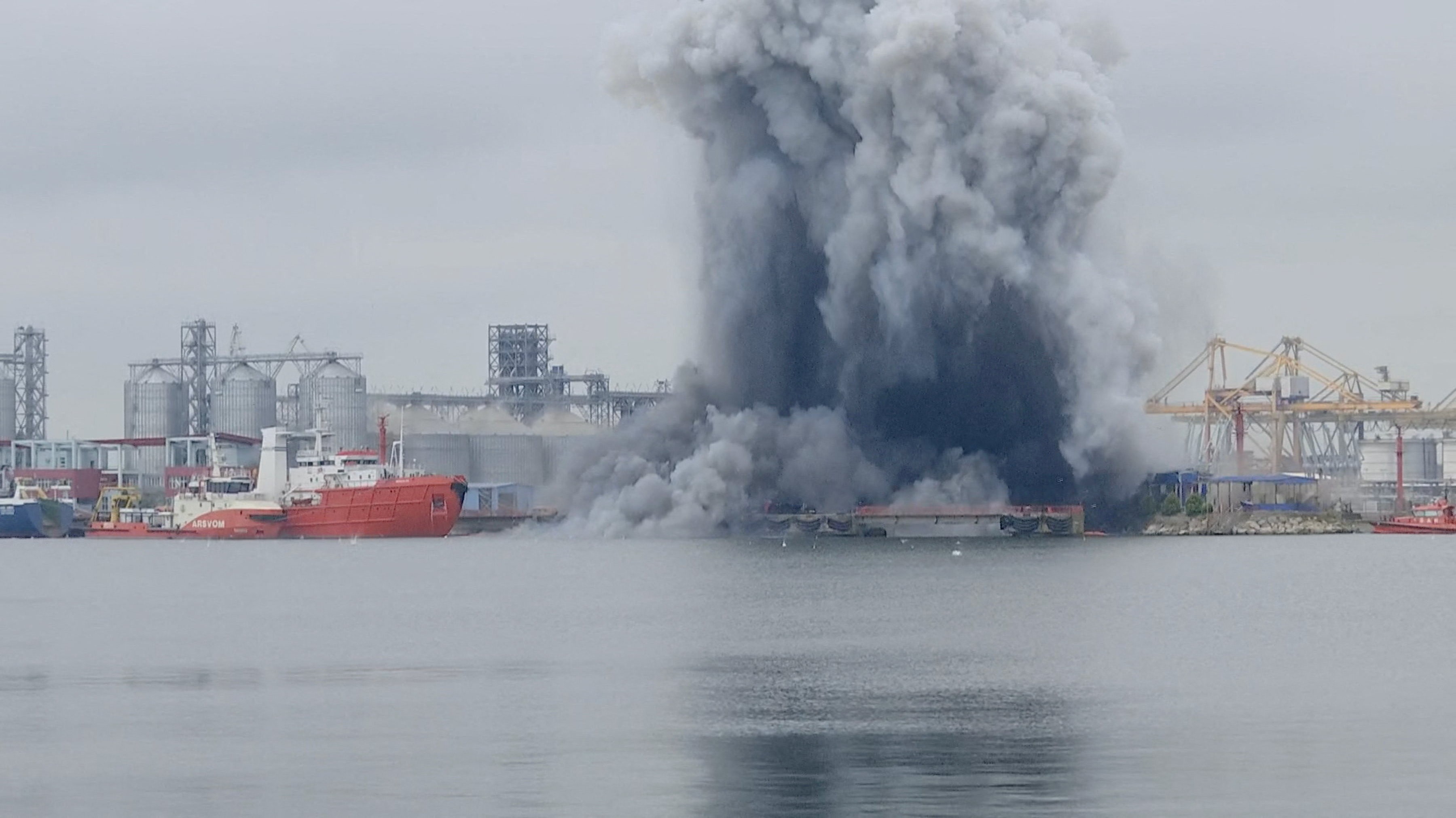
Drone explodes in port in Romania; VIDEO shows detonation
See the moment when a drone explodes in a port in RomaniaThe self-detonation of a maritime drone caused a large explos...
Israeli army orders evacuation of Lebanon residents amid attacks
The Arab spokesman for the Israel Defense Forces issued warnings this Friday (5) to residents of parts of southern Leb...
Almost 500 kg of drugs valued at R$10 million are seized in SP
Almost 500 kg of drugs hidden in a refrigerated truck were seized, on Thursday afternoon (4), on the Washington Luís h...

Toque agora.

Historias das musicas em destaque
 Historia da musica
Psalm 107: learn to play Samara Lourenço in a song of gratitude
05/06/2026
Psalm 107, by Samara Lourenço, is a song of praise inspired by gratitude, God's faithfulness and the recognition of his wonders. The so...
 Historia da musica
Só Por Amor A Ti: learn to play Ana Paula Valadão in a song of dedication and faith
05/06/2026
Só Por Amor A Ti, by Ana Paula Valadão, is a profound song of praise, marked by delivery, obedience and devotion. The song talks about...
 Historia da musica
De Bem Com a Vida: learn to play Os Serranos in a happy and passionate song
05/06/2026
De Bem Com a Vida, by Os Serranos, is a light, lively and romantic song. With positive lyrics and a melody that conveys joy, the song i...
 Historia da musica
January 6, 2003: learn to play Fernando and Sorocaba on the guitar
05/06/2026
6 January 2003, by Fernando and Sorocaba, is a country song full of longing, memory and emotion. The lyrics talk about a date that was...
 Historia da musica
Savior: learn to play Billy Bob Thornton in a strong, reflective song
05/06/2026
Savior, by Billy Bob Thornton, is a song with a deep atmosphere, reflective lyrics and a sound that combines emotion, narrative and int...
 Historia da musica
Garden In The City: learn to play Melanie with a light and expressive chord
05/06/2026
Garden In The City, by Melanie, brings a delicate, artistic atmosphere full of personality. It is an ideal song for those who like song...
 Historia da musica
Aceto Mi Derrota: learn to play the emotional song by Marco Antonio Solis
05/06/2026
Aceto Mi Derrota, by Marco Antonio Solis, is an intense, romantic song full of feeling. With an interpretation marked by the pain of pa...
 Historia da musica
It's Luxury Only: learn to play Ary Barroso's classic samba on the guitar
05/06/2026
É Luxo Só, by Ary Barroso, is one of those songs that carries the soul of Brazilian samba in every chord. With an elegant rhythm, strik...
 Historia da musica
My Immortal: Learn to Play One of Evanescence's Greatest Classics on Guitar
04/06/2026
Few songs have managed to cross generations with the same emotional intensity as "My Immortal", one of Evanescence's biggest hits. Rele...
 Historia da musica
Learn to Play This Song on Guitar and Develop New Musical Techniques
04/06/2026
Some songs have the ability to mark moments, awaken emotions and remain alive in listeners' memories for many years. When a song brings...
Mais noticias para voce
 Noticia
05/06/2026
Leonardo mocks an employee's request for time off during the World Cup: "Are you going to play?"
Leonardo has been making waves on social media after being asked by one of his employees about taking time off when the Brazilian team is on the field at the Wo...
 Noticia
05/06/2026
Corinthians visits Mirassol to start the Paulista U20 campaign
By Marcelo Nascimento on 05 de June de 2026 at 09:31 This Friday, Corinthians plays its first game for the 2026 Paulista Sub-20 Championship. The black and whit...
 Noticia
05/06/2026
Pitty Appears in a Bikini Inspired by Abaporu, Delights Fans and Goes Viral with Rare Clicks on the Beach
Pitty once again made waves on social media by sharing rare footage of a moment of rest on a deserted beach. Always discreet when it comes to her personal life,...
/https://i.s3.glbimg.com/v1/AUTH_59edd422c0c84a879bd37670ae4f538a/internal_photos/bs/2026/T/v/kIvyRKStasvz7onALFag/shakira-em-copacabana-foto-panlo-porciuncula-afp.jpg) Noticia
Noticia
05/06/2026
Shakira will be the attraction of one of the three opening ceremonies of the World Cup; Anitta will also give a presentation
Singer Shakira will perform in Mexico City at the first of the three World Cup opening ceremonies.The Colombian singer will perform "Dai Dai", the tournament's...
 Noticia
05/06/2026
Amid uncertainty over ceasefire, 4 people die in attack in Lebanon
Israeli attacks killed four people in southern Lebanon this Friday (5), according to the Lebanese state news agency NNA. The attacks, which took place in the ci...
 Noticia
05/06/2026
Exclusive: Santos has an agreement with a company to build a new CT at the base
Marcelo Teixeira, president of Santos, told CNN Brasil that the club has an agreement with a company to build a new Training Center for the youth category. On t...
Participe da conversa
Seu comentario ajuda a manter a discussao viva e ainda convida outros leitores a continuar navegando pelo portal.
Seja o primeiro a comentar esta noticia.