




Leia a noticia completa
Whether in a single shade, with prints or even featuring the colors of the rainbow, the fan has gone through centuries of history and gained enough strength to become one of the great protagonists of pop culture events, finding its deepest meaning in the hands of the LGBTQIA+ community.
In recent years, in a movement of cultural redefinition, the object is no longer a simple accessory to alleviate the heat. Adopted as a non-verbal communication tool and symbol of resistance, the act of opening and closing its stems has become its own language of empowerment.
Today, more than a piece of aesthetic composition or thermal relief, the fan carries the strength of a collective that, by occupying it as an extension of the body, celebrates identity, freedom and pride in belonging to a space conquered with courage and visibility.

Quina: bettor from Cariacica, ES, wins prize of R$ 19 million alone; see dozens drawn
Porto Novo Lottery, in Cariacica, where a prize of R$ 19 million from Quina was wonReproduction/Google Street ViewA pl...
Market sees greater chance of maintaining interest rates after strong payroll
The intermediate and long peaks of future interest rates renewed their maximum this afternoon and reached the highest...
Ana Maria Braga rides the subway in New York for the first time: "Being beaten"
Ana Maria Braga, 77, rode the New York subway, in the United States, for the first time this Friday (5). In a humorous...
But, after all, what is the history of the fan?
According to information from the Brazilian Fashion Museum, shared by Google Arts & Culture, it is believed that the fan originated in China around the 7th century, although it had been portrayed since ancient times in wall paintings in Egypt, Assyria and Persia. Spread in Japan, the accessory was taken to Europe in the 15th century.
Born as a utilitarian instrument for making wind, the item had its social language definitively established in the French courts of the 18th century, mainly during the government of Kings Louis XIV and Louis XV. In various formats and luxurious materials, the fan became indispensable in society's clothing during the 19th century, being considered a strong symbol of luxury, status and elegance.
Already in Brazilian lands, its use spread in the 19th century, with the arrival of the Portuguese Royal Family. D. João VI was responsible for introducing the custom of commemorative fans, which depicted important moments in the country's history.

Toque agora.



In the golden period, for example, the accessory was used by men and women, as an instrument of communication and flirtation between couples: depending on the positioning of the fan in relation to the body, a different message was sent.
The oldest specimens were made of noble materials, such as feathers and precious stones, leaves and even parchment. Later, they began to incorporate fabric, lace, silk, with painted bases, embroidered with sequins or gold and silver threads.
In the transition to the 20th century, fans gained a more commercial "face", becoming vehicles for advertising ideas to display distant messages on both sides - one for the bearer and the other for the observer.
Symbols in the LGBTQIA+ community
Gradually, the accessory became an important symbol of identity in the LGBTQIA+ community, strongly linked to the culture of nightclubs, parties, drag queens and, essentially, ballroom culture - a movement of resistance and celebration created in the 1970s, in New York, by black and Latin LGBTQIA+ people.
Far from being useful for alleviating the heat on the dance floor, the fan has become a performance item, since the act of opening and closing it in a rhythmic way produces a characteristic crack, the famous "clack", which, in addition to punctuating the choreographic steps, also attracts attention.
In the 2010s and, above all, after the Covid-19 pandemic, the object exploded in festivals, Carnival groups and pop shows. Some emblematic moments in recent years have consolidated this fever.
In 2022, with the release of the album "Renaissance", Beyoncé brought ballroom culture back to the mainstream. During his tour, the synchronous "tra" of fans in the performance of the song "Heated" was one of the most anticipated moments of the performance.
Beyoncé during the "Renaissance" tour - Instagram/Beyoncé
In 2024, the accessory was a constant presence in Madonna's audience, who performed a historic show on Copacabana beach, ending "The Celebration Tour".
There, the public "cut the air" rhythmically during the classic "Vogue".
Madonna adopted the use of fans during her shows - Instagram/Madonna
More recently, the item stole the show at Lady Gaga's performance in Rio de Janeiro. The accessory once again became a true extension of the audience, being beaten by thousands of fans in a display of energy and fervor.
Pinkwashing: In this LGBTQIA+ Pride month, understand what the practice is
Source: CNN

Historias das musicas em destaque
 Historia da musica
Theme from the Soap Opera Rei do Gado: learn to play a notable song from Brazilian music
05/06/2026
Theme from the soap opera Rei do Gado, performed by Orquestra da Terra in CifraNet, is a song that carries a strong Brazilian identity,...
 Historia da musica
For You Stay by Talita Ribeiro: learn to play a romantic song full of feeling
05/06/2026
Para Você Ficar, by Talita Ribeiro, is a romantic song that talks about vulnerability, reunion and the courage to declare a feeling eve...
 Historia da musica
Red Rubber Ball by Cyrkle: learn to play a pop classic with a light and nostalgic atmosphere
05/06/2026
Red Rubber Ball, by Cyrkle, is a song that crosses generations with its light, melodic and optimistic sound. Even though it is about fa...
 Historia da musica
It Makes It Rain by David Quinlan: learn to play a worship classic on guitar
05/06/2026
Faz Ver, by David Quinlan, is one of the best-known worship songs among Christian musicians who seek simple, intense and spiritual repe...
 Historia da musica
Bottle 600 of Netto and Henrique: learn to play a country tune full of emotion
05/06/2026
Garrafa 600, by Netto and Henrique, is one of those country songs that mix regret, longing and that bar table atmosphere that speaks di...
 Historia da musica
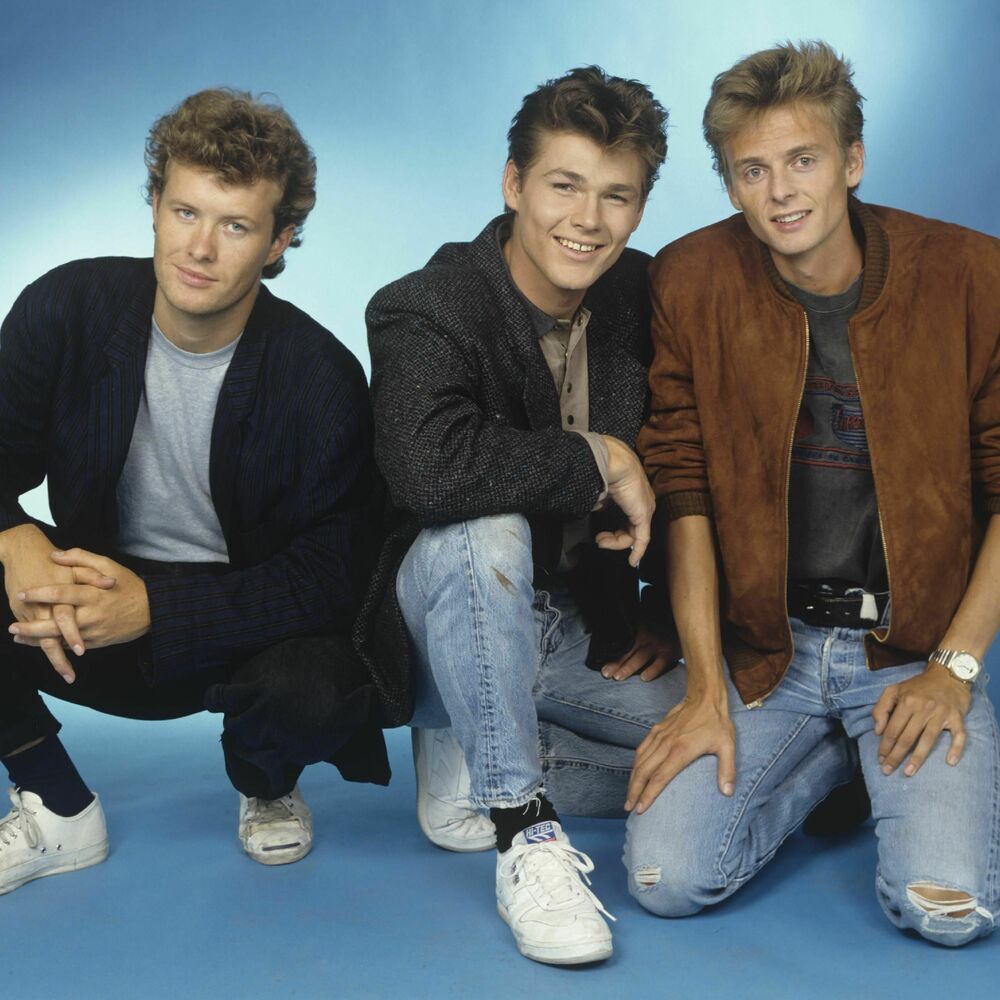
Heaven's Not For Saints: Learn to Play A-Ha's Hit and Understand What Makes This Song So Special
05/06/2026
A-Ha is one of the most memorable bands in the history of world pop, known for creating music that spans generations with engaging melo...
 Historia da musica
Psalm 107: learn to play Samara Lourenço in a song of gratitude
05/06/2026
Psalm 107, by Samara Lourenço, is a song of praise inspired by gratitude, God's faithfulness and the recognition of his wonders. The so...
 Historia da musica
Só Por Amor A Ti: learn to play Ana Paula Valadão in a song of dedication and faith
05/06/2026
Só Por Amor A Ti, by Ana Paula Valadão, is a profound song of praise, marked by delivery, obedience and devotion. The song talks about...
 Historia da musica
De Bem Com a Vida: learn to play Os Serranos in a happy and passionate song
05/06/2026
De Bem Com a Vida, by Os Serranos, is a light, lively and romantic song. With positive lyrics and a melody that conveys joy, the song i...
 Historia da musica
January 6, 2003: learn to play Fernando and Sorocaba on the guitar
05/06/2026
6 January 2003, by Fernando and Sorocaba, is a country song full of longing, memory and emotion. The lyrics talk about a date that was...
Mais noticias para voce
 Noticia
06/06/2026
Large fire hits warehouse in Guarulhos; see images
A large fire hit a commercial warehouse on Friday night (5), on Rua Guaporé, in the Itapegica neighborhood, in Guarulhos, Greater São Paulo. According to the Fi...
 Noticia
06/06/2026
James Handy's stepson formally charged with actor's murder
Prosecutors filed murder charges Friday against the man arrested in the fatal stabbing of veteran Hollywood actor James Handy, a familiar face in dozens of film...
 Noticia
06/06/2026
Tamires talks about plans after retirement, mentions memorable moments at Corinthians and praises Derby
- By Fabio Luigi / Central do Timão Editorial One of the main symbols of Brazilian women's football, left-back Tamires, 38 years old, who has an extensive caree...
 Noticia
06/06/2026
Quina today: results of contest 7043 and numbers drawn
Quina Resultg1See below the draw numbers for the Quina contest 7043 held this Friday (5):10 - 20 - 21 - 29 - 46Check the result of the Quina draw.See how many b...
 Noticia
06/06/2026
Lotofácil today: results of contest 3703 and numbers drawn
Lotofacil Resultg1See below the draw numbers for Lotofácil contest 3703 held this Friday (5):1 - 3 - 5 - 7 - 8 - 9 - 10 - 14 - 15 - 17 - 21 - 22 - 23 - 24 - 25C...
 Noticia
06/06/2026
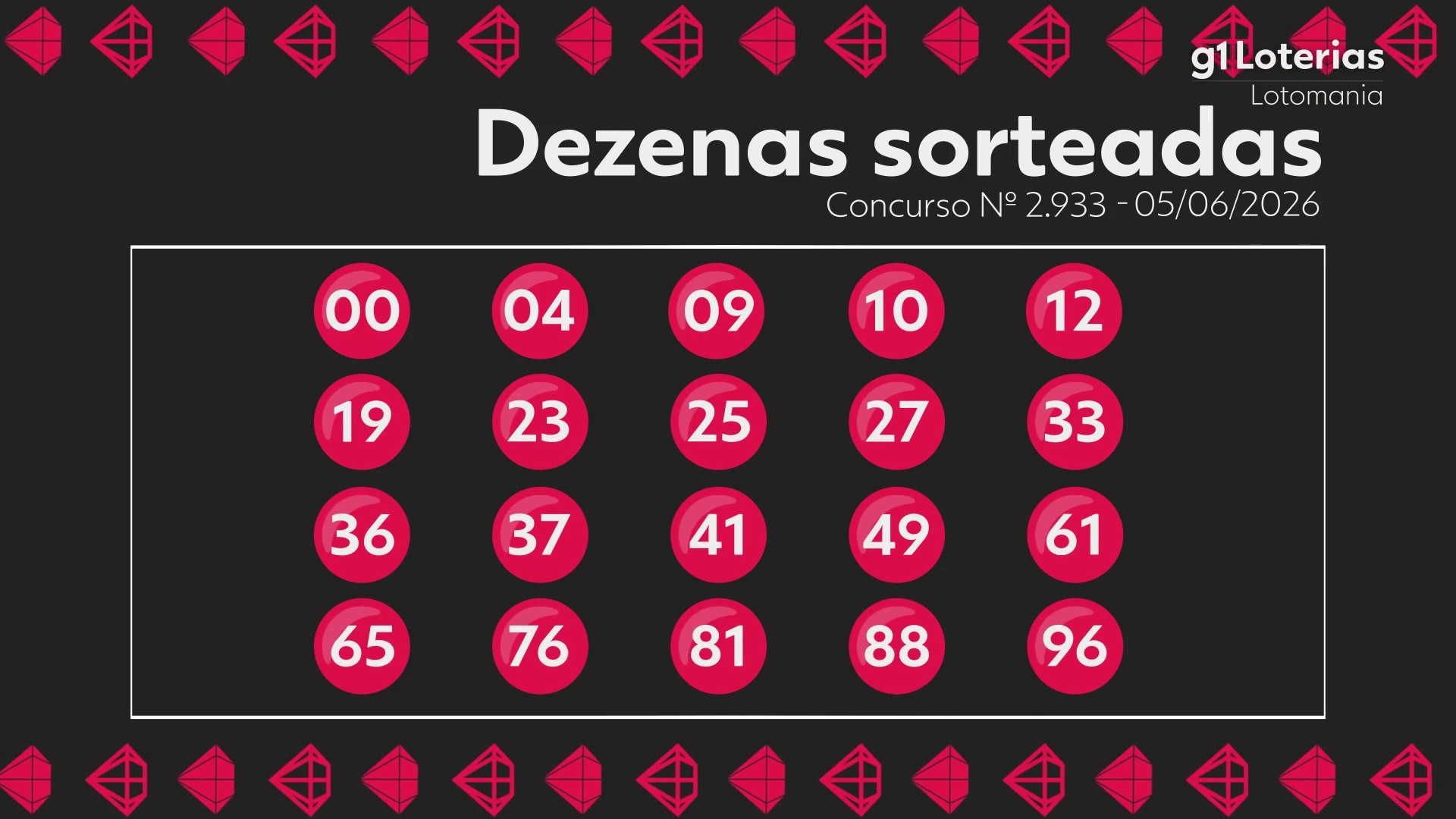
Lotomania today: results of contest 2933 and numbers drawn
Lotomania Resultg1See below the draw numbers for Lotomania contest 2933 held this Friday (5):0 - 4 - 9 - 10 - 12 - 19 - 23 - 25 - 27 - 33 - 36 - 37 - 41 - 49 -...
Participe da conversa
Seu comentario ajuda a manter a discussao viva e ainda convida outros leitores a continuar navegando pelo portal.
Seja o primeiro a comentar esta noticia.