



Leia a noticia completa
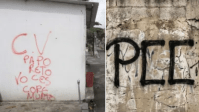
The designation of the PCC (First Command of the Capital) and the CV (Red Command) as Foreign Terrorist Organizations (FTO) by the United States comes into force this Friday (5).
This is the missing step since the announcement made by the US State Department on May 28, when the two factions had already been classified as "Specially Designated Global Terrorists" (SDGT), a classification that came into effect immediately.
The statement, signed by the Secretary of State, Marco Rubio, states that the CV and the PCC are among the most violent criminal organizations in Brazil and that their operations extend beyond Brazilian borders, reaching American territory. According to the US government, the measure seeks to interrupt the flow of resources that finance "violent narco-terrorists".
Drone explodes in port in Romania; VIDEO shows detonation
See the moment when a drone explodes in a port in RomaniaThe self-detonation of a maritime drone caused a large explos...
Israeli army orders evacuation of Lebanon residents amid attacks
The Arab spokesman for the Israel Defense Forces issued warnings this Friday (5) to residents of parts of southern Leb...
Almost 500 kg of drugs valued at R$10 million are seized in SP
Almost 500 kg of drugs hidden in a refrigerated truck were seized, on Thursday afternoon (4), on the Washington Luís h...
What changes with the two classifications
The designations are complementary and have different legal bases. The SDGT, in force since May, is anchored in a decree issued by George W. Bush after the attacks of September 11, 2001, which requires approval from the US Congress and blocks all assets and interests of the factions that are under the control of US persons or entities.
The designation of FTO, which comes into effect today, has been provided for in the Immigration and Nationality Act since 1996, requires notification to Congress and makes it a federal crime to provide "material support" to groups.
In practice, the two classifications enable asset freezing, prohibit transactions with designated groups, prohibit the entry of members into the United States - who can be deported - and oblige American financial institutions to report funds linked to the factions to the Treasury Department. Violations of these measures may result in civil and criminal penalties.

Toque agora.



The measure does not change Brazilian legislation. Unilateral classifications by one country do not produce automatic effects on the legal system of another: to be valid in Brazil, they would need to be incorporated by law, ratified treaty or binding resolution of the UN Security Council - none of these hypotheses are currently underway in the country.
With the decision, PCC and CV join a list of more than 90 organizations treated as foreign terrorists by the US, alongside groups such as Hamas, Hezbollah, Al Qaeda and the Islamic State, as well as Latin American cartels such as Sinaloa and Tren de Aragua, included in the wake of the Trump administration's pressure against drug trafficking in the region.
Trump government claims to want to "eliminate" the factions
In an interview with CNN, State Department spokeswoman Amanda Roberson stated that President Donald Trump wants to eliminate the PCC and the CV and that he will use all available tools to combat criminal groups that operate in the region and threaten US security.
According to the American representative, the government identified the activities of Brazilian factions in 12 US states, without detailing which ones. She assigned this specification to the judicial authorities.
On the Brazilian side, the Palácio do Planalto's assessment is that there is no possibility of the US retreating and that the entry into force of the measure should not bring immediate damage to the country's economy. Behind the scenes, assistants to President Luiz Inácio Lula da Silva began to assess that the decision had Trump's approval - and not just Rubio, whom the PT member has already called a "frustrated Latin American".
The Lula government's main concern is that the classification opens up space for unilateral US interventions on Brazilian soil under the pretext of combating terrorism - a fear amplified after the capture of Nicolás Maduro, Venezuelan dictator, in January this year.
The confirmation of Lula's visit to the G7, in France, between the 15th and 17th of this month, opens space for a possible bilateral meeting with Trump, amid discussions about the new tariff proposal and the classification of factions.
The government states that there are still no closed negotiations for the meeting.
Brazilians in favor of the US measure
AtlasIntel survey released on June 3 shows that 53.1% of Brazilians approve of the classification of the PCC and the CV as terrorist organizations, compared to 44.7% who disapprove.
The population, however, is divided on the effects: 47.7% see a risk to national sovereignty and 44.7% consider the measure necessary to strengthen the fight against crime. Regarding whether the decision violates sovereignty, the result is a technical tie - 49.7% say no and 49.4% yes.
In another section from the same institute, 55.9% of those interviewed say that the Brazilian government itself should classify the factions as terrorists, while 40.8% are against it.
Regarding the effect of the American measure on the country's security, 29.6% think it will have no relevant impact and 26.8% believe it will improve significantly; 17.2% believe it could get worse. The survey interviewed 1,273 people between May 30 and June 3, with a margin of error of 3 percentage points.
The PoderData survey followed the same direction: 53% of Brazilians consider the US decision to be good for Brazil, 33% see it as bad and 14% were unable to respond. The survey interviewed 2,500 voters in 166 municipalities in the 27 units of the Federation, between May 30th and June 1st, with a margin of error of 2 percentage points.
US decision divides security forces
Among police officers and investigators, the measure generates opposing readings. Part of the security forces see the designation as a way to financially stifle the factions; another part fears harm to cooperation with the USA. One of the most cited points is the possibility of the dialogue, currently carried out between the Federal Police and the FBI, migrating to the CIA, which, in practice, would make it difficult for classified information to be shared with the current agility.
Other experts warn of a kind of "trivialization" of the concept of terrorism. Brazilian anti-terrorism law would require, according to them, ideological motivation - political or religious - to form an organization, while factions are characterized by financial focus. The general director of the PF, Andrei Rodrigues, for example, has already taken a stance against equating factions with terrorist groups.
For jurists and prosecutors interviewed by CNN, the central point is motivation. PCC and CV bring together features that bring them closer to terrorist groups - parastate structures, "crime courts", territorial dominance and coordinated attacks - but, according to some experts, they lack the political or ideological element that defines terrorism. Prosecutor Lincoln Gakiya summarizes, to CNN, that the factions' objective is economic: to dominate territories to increase profits.
The distinction has legal support. The Anti-Terrorism Law (13,260/2016) classifies as terrorism acts motivated by xenophobia, discrimination or prejudice, or aimed at coercing authorities and attacking the democratic order. Therefore, the factions continue to be prosecuted based on the Criminal Organizations Law (12,850/2013), the Drug Law (11,343/2006) and the Penal Code.
Experts such as prosecutor Raissa Maximiliano and jurist Helena Folgueira consider that expanding the concept could generate legal uncertainty, although the American classification, if used well, could reinforce financial tracking.
The Brazilian Public Security Forum (FBSP) recognized the sovereignty of the American decision, but warned, in a note, that the issue has profound implications for the economy, the financial system and international cooperation mechanisms, and criticized the electoral use of the issue.
PCC CV TERRORISTS - Illustration generated by AI
The risks to the economy and the financial system
In the economic field, the main concern is with the financial system.
For prosecutor Lincoln Gakiya, if the US treats the PCC as a terrorist organization, institutions that have traded funds or securities under investigation for links to the faction - as in the cases of Reag and Banco Master - could be the target of sanctions, affecting practically the entire national financial system.
Economists and jurists point to three major effects: increased risk perception, more uncertainty and increased costs.
Robson Gonçalves, from FGV, recalls that simple suspicion would be enough to impose risk premiums and stop dollar transactions that go through American intermediaries. Professor Priscila Caneparo, from UFPR, assesses that Brazil tends to become a less attractive destination for foreign investment.
For the private sector, the experts' message is to immediately reinforce internal controls. The concept of "material support" in American legislation is broad and covers the sale of products, services and credit operations, according to Thiago Jabor Pinheiro, partner at Mattos Filho, who highlights that the risks are not limited to the financial system and reach the entire economy.
Another practical consequence is that the new designation should raise the compliance bar. For experts such as Servulo Mendonça (Holding SM), Pedro Henrique Rezende (Aroeira Salles) and Gustavo Niskier (Chalfin Goldberg), banks and companies with international exposure will need to deepen the checking of final beneficiaries and the prevention of money laundering.
More serious than formal punishment, they say, is the reputational risk: foreign banks could reduce limits, terminate relationships or demand additional controls from Brazilian institutions, with the loss of access to dollar compensation seen as the most severe sanction.
There is also debate about payment methods. The Minister of Finance, Dario Durigan - who stated that he did not consider PCC and CV to be terrorist organizations - raised concerns about a possible risk to Pix. Experts, however, believe that what matters is the type of relationship companies have with people and companies linked to the factions, and not the means by which the resource is transported.
*With information from: Alan Cardoso, Beatriz Oliveira, Duda Cambraia, Filipe Pereira, João Ker, João Nakamura, Jussara Soares, Léo Lopes, Lucas Schroeder, Malu Baccarin, Manuella Dal Mas, Poliana Santos and Tiago Tortella - and Reuters.
Source: CNN
Historias das musicas em destaque
 Historia da musica
Psalm 107: learn to play Samara Lourenço in a song of gratitude
05/06/2026
Psalm 107, by Samara Lourenço, is a song of praise inspired by gratitude, God's faithfulness and the recognition of his wonders. The so...
 Historia da musica
Só Por Amor A Ti: learn to play Ana Paula Valadão in a song of dedication and faith
05/06/2026
Só Por Amor A Ti, by Ana Paula Valadão, is a profound song of praise, marked by delivery, obedience and devotion. The song talks about...
 Historia da musica
De Bem Com a Vida: learn to play Os Serranos in a happy and passionate song
05/06/2026
De Bem Com a Vida, by Os Serranos, is a light, lively and romantic song. With positive lyrics and a melody that conveys joy, the song i...
 Historia da musica
January 6, 2003: learn to play Fernando and Sorocaba on the guitar
05/06/2026
6 January 2003, by Fernando and Sorocaba, is a country song full of longing, memory and emotion. The lyrics talk about a date that was...
 Historia da musica
Savior: learn to play Billy Bob Thornton in a strong, reflective song
05/06/2026
Savior, by Billy Bob Thornton, is a song with a deep atmosphere, reflective lyrics and a sound that combines emotion, narrative and int...
 Historia da musica
Garden In The City: learn to play Melanie with a light and expressive chord
05/06/2026
Garden In The City, by Melanie, brings a delicate, artistic atmosphere full of personality. It is an ideal song for those who like song...
 Historia da musica
Aceto Mi Derrota: learn to play the emotional song by Marco Antonio Solis
05/06/2026
Aceto Mi Derrota, by Marco Antonio Solis, is an intense, romantic song full of feeling. With an interpretation marked by the pain of pa...
 Historia da musica
It's Luxury Only: learn to play Ary Barroso's classic samba on the guitar
05/06/2026
É Luxo Só, by Ary Barroso, is one of those songs that carries the soul of Brazilian samba in every chord. With an elegant rhythm, strik...
 Historia da musica
My Immortal: Learn to Play One of Evanescence's Greatest Classics on Guitar
04/06/2026
Few songs have managed to cross generations with the same emotional intensity as "My Immortal", one of Evanescence's biggest hits. Rele...
 Historia da musica
Learn to Play This Song on Guitar and Develop New Musical Techniques
04/06/2026
Some songs have the ability to mark moments, awaken emotions and remain alive in listeners' memories for many years. When a song brings...
Mais noticias para voce
 Noticia
05/06/2026
Leonardo mocks an employee's request for time off during the World Cup: "Are you going to play?"
Leonardo has been making waves on social media after being asked by one of his employees about taking time off when the Brazilian team is on the field at the Wo...
 Noticia
05/06/2026
Corinthians visits Mirassol to start the Paulista U20 campaign
By Marcelo Nascimento on 05 de June de 2026 at 09:31 This Friday, Corinthians plays its first game for the 2026 Paulista Sub-20 Championship. The black and whit...
 Noticia
05/06/2026
Pitty Appears in a Bikini Inspired by Abaporu, Delights Fans and Goes Viral with Rare Clicks on the Beach
Pitty once again made waves on social media by sharing rare footage of a moment of rest on a deserted beach. Always discreet when it comes to her personal life,...
/https://i.s3.glbimg.com/v1/AUTH_59edd422c0c84a879bd37670ae4f538a/internal_photos/bs/2026/T/v/kIvyRKStasvz7onALFag/shakira-em-copacabana-foto-panlo-porciuncula-afp.jpg) Noticia
Noticia
05/06/2026
Shakira will be the attraction of one of the three opening ceremonies of the World Cup; Anitta will also give a presentation
Singer Shakira will perform in Mexico City at the first of the three World Cup opening ceremonies.The Colombian singer will perform "Dai Dai", the tournament's...
 Noticia
05/06/2026
Amid uncertainty over ceasefire, 4 people die in attack in Lebanon
Israeli attacks killed four people in southern Lebanon this Friday (5), according to the Lebanese state news agency NNA. The attacks, which took place in the ci...
 Noticia
05/06/2026
Exclusive: Santos has an agreement with a company to build a new CT at the base
Marcelo Teixeira, president of Santos, told CNN Brasil that the club has an agreement with a company to build a new Training Center for the youth category. On t...
Participe da conversa
Seu comentario ajuda a manter a discussao viva e ainda convida outros leitores a continuar navegando pelo portal.
Seja o primeiro a comentar esta noticia.