



Leia a noticia completa
A case of New World screwworm, or screwworm fly, has been detected in a herd in South Texas, the USDA (U.S. Department of Agriculture) said.
This is the first time in decades that this parasitic fly - whose larvae feed exclusively on the tissue of warm-blooded animals - has been detected in livestock in the US.
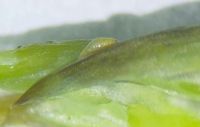
New World screwworms are the carnivorous larval form of Cochliomyia hominivorax, a species of blow fly.

'Top Gun: Maverick' actor James Handy dies aged 81 after being stabbed; girlfriend's son is a suspect
Actor James Handy is found dead in LAReproductionActor James Handy, known for his role in "Top Gun", was murdered, acc...
Xi will meet Kim Jong-un in North Korea on June 8-9
Chinese President Xi Jinping will visit North Korea between June 8 and 9, Chinese state news agency Xinhua reported th...
Vorcaro is in an "uncomfortable situation" with Mendonça, says partner at Arko
Former banker Daniel Vorcaro lives in a situation of uncertainty in front of the rapporteur of his case, minister Andr...
Although it does not pose a risk to food safety, an infestation can affect food production and could cost the economy billions. It would also increase the price of beef at a time when Americans are already paying record prices.
The USDA said its National Veterinary Services Laboratories in Ames, Iowa, tested a sample from a three-week-old calf in La Pryor, Texas, and confirmed on Wednesday that it was the New World screwworm.
The agency has mobilized teams in Texas to contain and eradicate the parasite, including a 20-kilometer infestation zone and implementing quarantines, movement controls and surveillance in the area.

Toque agora.


The agency is also accelerating the targeted release of sterile flies, which are used to overwhelm fertile flies in the area and limit spread.
"If we all work together and follow animal care protocols and movement restriction guidelines, there is no reason to believe that this incursion will result in the pest becoming established in our country," U.S. Secretary of Agriculture Brooke Rollins said during a press conference.
The New World screwworm had been declared eradicated in the US decades ago, thanks to efforts such as the breeding of sterile flies, awareness campaigns and initiatives to control the pest in other countries.
However, there has been a sudden increase in cases in South America, which is being closely monitored by public health experts and the Department of Agriculture.
Deadly parasite
The fly is not a contagious disease that spreads from animal to animal. Instead, adult females lay their eggs in fresh wounds of warm-blooded animals.
The larvae feed on the host and can damage vital organs or cause serious bacterial infections. Cases can be severe and even lead to the death of the host animal.
The parasite also poses a threat to wildlife and pets. Veterinarians in Texas, Arizona and New Mexico have been told to be on the lookout for new infections.
On Wednesday, the US Secretary of Agriculture warned pet owners to be alert for signs of discomfort, open wounds, or larvae or eggs near body orifices.
Human cases are rare but can be fatal. The last person in the U.S. to contract the blowfly infection was a case in Maryland in August of a person who had traveled outside the country. She recovered completely.
Low threat to humans
Brooke Rollins said Tuesday that the current threat to human health is extremely low and that the blowfly does not pose a risk to food security, but that "there is no doubt that this is a very, very serious threat to our livestock."
People most at risk of contracting the New World screwworm are those who work with cattle or other warm-blooded animals in areas where the flies are present and those who spend a lot of time outdoors, especially if they sleep outside.
People with health problems that cause bleeding or open wounds may also be vulnerable to infection.
Any open wound, even a small break in the skin such as a scratch or insect bite, can attract these flies, according to the U.S. Centers for Disease Control and Prevention.
In August, the US Department of Health and Human Services began allowing emergency use of medications to treat or prevent infestations in animals.
A shipment of that treatment is on its way to South Texas, Rollins said Wednesday.
The USDA says it has created new monitoring, testing and quarantine protocols in response to the outbreak spreading across Central and South America.
In May 2025, the agency suspended the import of live animals through U.S. ports of entry along the southern border.
The department has stationed sniffer dogs on the border with Mexico capable of detecting the New World screwworm and sent teams to the neighboring country and Panama to help increase production of sterile flies.
The US has also committed $750 million to build a facility in Texas that will produce hundreds of millions of sterile flies per week. This facility is expected to open next year.
Infestation could be devastating
A blow fly infestation in the US could be financially devastating, experts say.
The nation's worst outbreak occurred in 1972, when the Department of Agriculture estimated 90,000 cases, and another outbreak of that magnitude could cost the U.S. Southwest more than $3 billion, according to the Federal Reserve Bank of Dallas.
Max Scott, an entomologist and plant pathologist who genetically modified the blow fly so that it cannot reproduce, said outbreaks are typically controlled by breeding flies in a factory and sterilizing the insects through exposure to gamma rays while they are still in the pupal stage.
Scientists then release enough sterile flies to overwhelm the local population of fertile flies. When a fertile female mates with a sterile male, they do not produce offspring.
"The USDA, over the course of 50 years, has managed to eradicate this fly all the way to the Panama-Colombia border," said Scott, a professor at North Carolina State University.
"It was a huge effort by a lot of people, but unfortunately it's a little-known feat, even though it was a success story. They managed to keep it there, far from here, for 20 years, but the barrier failed a few years ago, and the flies quickly spread across Central America until we got to where we are today.
Source: CNN

Historias das musicas em destaque
 Historia da musica
My Immortal: Learn to Play One of Evanescence's Greatest Classics on Guitar
04/06/2026
Few songs have managed to cross generations with the same emotional intensity as "My Immortal", one of Evanescence's biggest hits. Rele...
 Historia da musica
Learn to Play This Song on Guitar and Develop New Musical Techniques
04/06/2026
Some songs have the ability to mark moments, awaken emotions and remain alive in listeners' memories for many years. When a song brings...
 Historia da musica
Lugar Secreto by Gabriela Rocha is a song that combines technique, emotion and spirituality
04/06/2026
Lugar Secreto is one of Gabriela Rocha's best-known songs and has become a reference in the Brazilian gospel scene. His message talks a...
 Historia da musica
The Nights by Avicii is a perfect song for those who like motivating and energetic music.
04/06/2026
The Nights is one of the most inspiring songs released by Avicii. With a message about enjoying life, creating memories and living each...
 Historia da musica
Ninguém Explica Deus é uma cifra emocionante para quem deseja tocar uma mensagem de fé e reflexão
04/06/2026
Ninguém Explica Deus se tornou uma das músicas religiosas mais populares dos últimos anos. Interpretada por Preto no Branco, a canção a...
 Historia da musica
More Than Words by Extreme continues to be one of the most sought after songs by guitar lovers
04/06/2026
More Than Words is a true international music classic. Recorded by the band Extreme, the song won over generations for its simplicity,...
 Historia da musica
Almighty God by Fhop Music is a worship track that strengthens technique and musical sensitivity
04/06/2026
Almighty God is a worship song that highlights divine greatness, sovereignty and power. Performed by Fhop Music, the song presents a mo...
 Historia da musica
Água Viva by Eliana Ribeiro is an inspiring song for musicians who want to play songs of faith and hope
04/06/2026
Água Viva is one of Eliana Ribeiro's best-known songs and carries a deep message of spirituality, confidence and renewal. With an excit...
 Historia da musica
Castle on the Hill by Ed Sheeran is an excellent song for developing rhythm and interpretation on the guitar
04/06/2026
Castle on the Hill is one of the most popular songs of Ed Sheeran's career and has won over millions of listeners around the world for...
 Historia da musica
Pretty Tied Up by Guns N Roses is a rock song to train your attitude and grip on the guitar
04/06/2026
Pretty Tied Up, by Guns N Roses, is a song with the raw and striking energy of hard rock. The song carries the band's identity, with ri...
Mais noticias para voce
 Noticia
05/06/2026
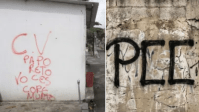
USA starts treating PCC and CV as terrorists from today: what changes
The designation of the PCC (First Command of the Capital) and the CV (Red Command) as Foreign Terrorist Organizations (FTO) by the United States comes into forc...
 Noticia
05/06/2026
Mirassol x Corinthians U20: where to watch, absences, lineups, refereeing
- By Lucas Barreiros/Central do Timão Editorial Corinthians visits, this Friday afternoon (05), Mirassol, at the Manoel Ferreira Stadium, Bálsamo (SP), in a mat...
 Noticia
05/06/2026
Carolina Dieckmmann is discharged after infection: "They performed a miracle"
Actress Carolina Dieckmmann reported that she was discharged from hospital after spending a few days in hospital with a serious infection in her left kidney. Th...
 Noticia
05/06/2026
Man held hostage inside car is rescued by PM in Guarulhos
A 62-year-old man who was held hostage in a car during a robbery was rescued by the Military Police in the early hours of Thursday (4), in Jardim Monte Alegre,...
 Noticia
05/06/2026
Brazil beats Dominican Republic and wins 2nd in a row in Women's VNL
Brazil beat the Dominican Republic by 3 sets to 1 (23/25, 25/18, 25/11 and 25/15), on Thursday night (4), at the Nilson Nelson gymnasium, in Brasília (DF), in t...
 Noticia
05/06/2026
Rosalía postpones series of shows in Florida after family emergency
Singer Rosalía, 33, had to cancel her shows in Orlando and Miami, in the US state of Florida, with the "Lux Tour" due to a family emergency. The performances wo...
Participe da conversa
Seu comentario ajuda a manter a discussao viva e ainda convida outros leitores a continuar navegando pelo portal.
Seja o primeiro a comentar esta noticia.