



Leia a noticia completa
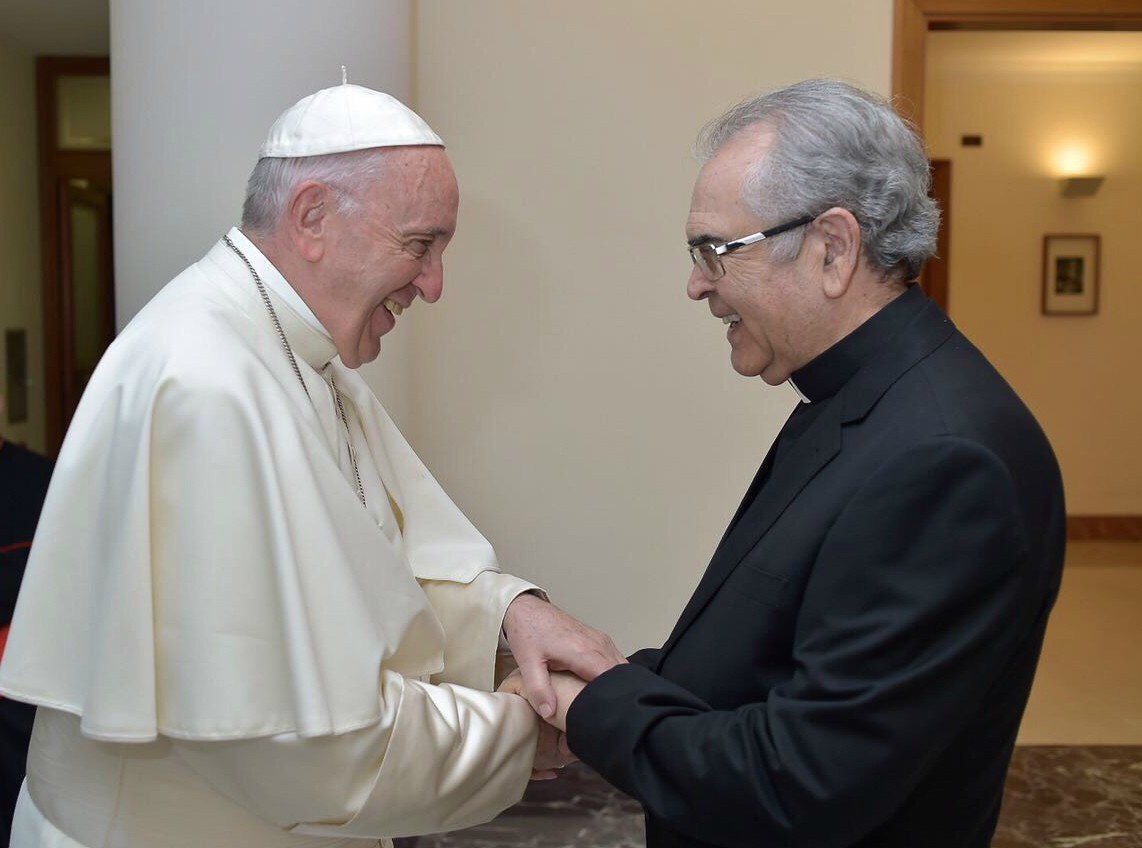
Father Zezinho met with the Pope after a youth event
Personal archive/Father Zezinho
Father José Fernandes de Oliveira, so, with his registered name, full name and two surnames, he doesn't seem like someone especially famous. But Padre Zezinho, as this Brazilian priest author of more than 1,800 songs became known, is an icon of Brazilian Catholicism.
He is the composer of profound and extremely well-known songs, some of which transcended the church environment and ended up becoming popular hits - the kind that are played on the radio and, sometimes, are re-recorded by non-religious artists.
Favorite g1 on Google and follow the main news of the day
In 1997, for example, Father Zezinho was one of the guests on Roberto Carlos' traditional end-of-year special, to sing his famous Prayer for the Family.
"May no family begin suddenly, may no family end due to lack of love."
Father Zezinho and Father Julio Lancelotti talk about the unshakable faith in the social function of the church
The verses of this song are those that echo in people's heads as if they were works of public domain, of popular tradition. We even forget that there is an author behind such a well-known song.
About to complete 85 years of life, on June 8, and in the year in which he celebrates 60 years of priesthood, Father Zezinho receives his first authorized biography, the book Só Um Cidadão do Infinito: Vida e Missão de Father Zezinho, written by journalist Gabi Bonvechio, who has worked as his advisor since 2019. And he says he is ready to the celebrations.
"I'm letting them do everything. I'm not saying anything else. If they want, they can make an appointment and I'll go", he says, in an interview with BBC News Brasil, given via video call from a space in the convent of the Sacred Heart of Jesus, known as Conventinho, in Taubaté, where he lives with other religious people. events.
In 2012, he suffered a stroke and was unable to speak for seven months. "God brought me back," he says. The following year, he was diagnosed with prostate cancer - he is still undergoing treatment, with the disease under control.
If his health and age no longer allow him to be intensely active in shows and masses, Father Zezinho continues to express his opinions - or "catechizing", as he prefers - on social media.
His official Facebook page has more than 1 million followers, and, there, the religious and his team post almost daily. In addition to phrases for reflection, the priest promotes his Christian ideas with articles. In today's polarized world, controversies often arise.
The most recent case occurred in May. It was precipitated by a text that was not even authored by the religious man, an article by the philosopher and sociologist Romero Venâncio, professor at the Federal University of Sergipe, which Zezinho republished on his page.
The academic expressed his concern about what he classified as the "delusional rise of Catholic extremists on digital networks", placing them among the "traditionalists" and as members of the "Catholic right".
The result was tense. Even fake videos associating the priest with communism went viral, including attacks and slander.
Father Zezinho dealt with the episode with the experience of someone who maintains coherence despite being stoned for six decades.
"Every day I am attacked. But these people are 2% [of Catholics]. The other 98% want catechesis, they want updating. The majority want the 2nd Vatican, the majority want the social encyclicals."
He refers to the 2nd Vatican Council, which took place between 1962 and 1965 - from those debates carried out by the leadership of Catholicism came the modernization of the Church.
Masses are no longer in Latin, and priests and bishops highlighted their commitment to working with the poor, to working for the social.
The "social encyclicals" mentioned by Zezinho are the set of papal letters inaugurated by Pope Leo 13 (1810-1903) with Rerum Novarum, 135 years ago - and the most recent example of which came out a few days ago, Magnifica Humanitas, by Leo 14. These are documents in which the pontiff expresses social concerns and, therefore, they ended up being called the social doctrine of the Church.
"They even say that I am a cancer for the Church. I don't wish cancer on anyone, especially because I have one in treatment. I will never call someone a cancer. I will disagree with many, but I will continue to be friends and seek dialogue."
When justifying his social outlook and his speech in favor of the poorest, he recalls the French Catholic priest Léon Gustave Dehon (1843-1925), founder of the Congregation of Priests of the Sacred Heart of Jesus, a religious order to which Zezinho belongs - that's why they are called "Dehonian priests". at 2 years old, with his family. "Father and mother were paralyzed, and we lived in a very poor neighborhood", he recalls.
"I was an altar boy and grew up helping at masses. Every day I went with my mother, early, then went to school. After class, I did the work I had to do, took food to my brothers at the factory [where they, older, worked], played for two hours and, again, went with my mother to the Conventinho, because we helped there."
The mother, Waldivina Messias de Oliveira, worked as a seamstress, washerwoman and cook in the religious house. "I grew up in a convent environment and I liked that", recalls the priest. He became a seminarian as a teenager - he was 12 years old when he entered the seminary maintained by the Dehonians in the city of Lavras, in Minas Gerais.
The path to ordination was a journey. From Lavras, he went to Corupá, in Santa Catarina, in another institution of the same order. At the age of 19, he moved again, to Jaraguá do Sul, also in the state of Santa Catarina, for another stage of his studies towards the priesthood.
The following year, having already taken his first vows, he went to Brusque - as a novice, he would study philosophy there. Two years later, he spent a brief period in the Taubaté of his childhood, studying Theology and missing his family.
That was when the superiors of the order decided that four young religious people should have an international experience. Two were posted to study in Rome. Two others, Zezinho among them, went to the United States.
From there, while graduating in Theology in Hales Corners, near Milwaukee, Zezinho followed the discussions that would transform the Church and its future: on the other side of the Atlantic, the Second Vatican Council was taking place.
Father Zezinho professed his so-called perpetual vows in September 1964, in a ceremony held in Honesdale, Pennsylvania. He became a deacon in June 1966 and, finally, a priest in September of the same year.
Music
Father Zezinho during the recording of his 116th album
Reproduction/ Instagram
A year later, Padre Zezinho celebrated his first mass in Taubaté - he was back in Brazil. It was in the spirit of the Council that had recently ended. Excited, young, he started using the guitar in celebrations. It was not the serious Father José, but the friendly Father Zezinho, who dispensed with the cassock in social life and was close, above all, to the youth.
On the one hand, an important chapter in the history of the Catholic Church in Brazil was born. On the other hand, Zezinho began to suffer criticism from conservatives.
Detractors called his early works "sweet and festive little songs", his meetings with young people "spiritual hallucinogens", his texts "inconsequential little books" - as Gabi Bonvechio recalls, in the recently released biography.
Father Zezinho says that his taste for music came from home - his father, Fernando José de Oliveira, liked to play the viola. His childhood in Taubaté, he remembers, was also very musical - land of stars like Hebe Camargo (1929-2012) and Celly Campelo (1942-2003), he emphasizes the religious. The eclectic hillbilly who liked rock and popular music in general became enchanted by country and blues during his time in the United States. This all shaped his style.
In a text published in the academic magazine Caminhos in 2020, theologian Antonio Manzatto, professor at the Pontifical Catholic University of São Paulo, located the genesis of Zezinho's trajectory in the political-cultural effervescence of the 1960s.
Manzatto remembers that these were times of military dictatorship in Brazil, rock on radio and TV and counterculture in the young world. The Catholic Church, post-Council, breathed an air of renewal, which, according to him, "allowed the religious experience to be organized into different structures." youth who were looking for new references, figures like this were very welcome; and for the Church, which was looking for new language and new ways of communicating with youth, the meeting was extremely beneficial."
Father Zezinho presented himself in this scenario, with his name "a familiar diminutive that brings people together, very much to the taste of Brazilians". His simple speech was different from the traditional stilted speech of the priests of the time. He listened to young people and talked to them. As a bonus, he brought music.
"Not the music of cloisters, orchestras or distant rhythms of youth", highlights Manzatto. "But contemporary music with guitars, guitars and drums in the style of musical ensembles of the time."
For sociologist Rogério Baptistini, professor at Universidade Presbiteriana Mackenzie, Zezinho is "one of the pioneers of modern evangelization." Zezinho as a "solid heritage" of Brazilian Catholicism.
Different mystics, one Church
If from the beginning there were criticisms from the more conservative side of the Church, on Zezinho's part there was never a wall between the different segments of Catholicism. He says that a group of religious people was formed in 1969, with eight priests of different styles who began to meet periodically - in a tradition that lasted until 1980.
Among them were Jonas Abib (1936-2022), who would later become notable as the founder of the Canção Nova community and one of the main exponents of the conservative and fundamentalist movement Catholic Charismatic Renewal (RCC), and also the Jesuit priest Casimiro Irala (1936-2024), Paraguayan musician based in Brazil and member of Ação Católica, a group known for its emphasis on the Church's social doctrine.
They were different mystics, remembers Zezinho. "But we were very close friends, like brothers." "I played with Father Jonas: his mysticism is teaching how to pray, mine is teaching how to share.
We didn't think alike, but we loved each other the same way."
With Irala, he said he learned a lot about music too.
As his songs were always more about social messages than about praise, he ended up being associated with the Liberation Theology (TL) line, a Christian current that emphasizes as necessary the preferential option for the poor - unlike the vast majority of singing priests who came later, such as Marcelo Rossi, linked to the RCC and with songs of praise. Since those early years, it was a stance that the left him the target of criticism from conservatives.
Father Zezinho is careful with his words. He refutes being called progressive, because he understands that this leaves conservatives in the antagonistic position of "backward": "I'm an updater. I respect conservatives and I respect progressives."
Contesting the contesters
From an early age, he remembers, his friends said that he was choosing a difficult path. "Because he was contesting the contesters, those who did not accept Vatican II. Rivers don't flow backwards. The fish, yes. But the river goes on."
"There was an ultra-conservative journalist who called me [along with other names in the Church] a 'sacred cow' when I was becoming very famous with my songs, and, even though I was criticized, the Church didn't mess with me."
About the TL, he likes to be specific. "I'm from the biblical TL, not the Marxist TL", he comments.
He says that his bias is the liberation found in the sacred texts, for the benefit of human beings. "That's where I'm going", he emphasizes, remembering that his songs talk about the joys, hopes, pains and struggles of "God's people".
"I made music about social doctrine. Music of justice and peace", he comments. A symbolic example is Prece Pelo Social, released in 2000. The song asks God for more work, more wages and more bread. "The rich less rich/ The poor less poor", says the lyrics. "I work for everyone/ A much more decent salary/ [...]. The way it is, it's not possible."
"This song of mine hurt a lot of people. I did it so that we can understand what social justice is", he explains, remembering that there are dozens of encyclicals saying that "too rich is not good for the Church, just as too poor is not good".
"I experienced hunger when I was 9 years old. I am the product of people who believe in progressing and not standing still. The poor have to do something to get out of poverty, but the rich also have to do something to help the poor. You can't be too rich," he highlights.
He considers himself "an opinion leader." "I've never used that expression they like today, influencer," he says. "I'm an explainer."
Regarding the fact that he is often included in internet controversies, Padre Zezinho argues that he's "not afraid." And that he chooses the path of kindness. "You can say everything without shouting. Microphone is not for swearing, it is for dialogue. I always respond in a kind way. Without kindness, there can be no Christianity."
He said that this split between RCC and TL began in the 1970s. "A right-wing group, political, lay, began to make these distinctions: 'we are spiritual, you are not', 'the TL is a shame for the Church' and terrible words that they still speak today", he recalls.
Father Zezinho remembers that he has worked a lot with people from the RCC and Catholic broadcasters linked to the movement and sees the proximity as a permanent and fruitful dialogue.
"Right and left exist, conservatives and advanced exist. We can disagree, but without hate", he says. "I'm not a leftist, nor a rightist, nor a centrist. I am a catechist. I am transformative, I am explicit."
The priest agrees that the current debate is contaminated by social and political polarization, intensified by the use of social networks. "We may be on separate tracks, but we meet from time to time, so we are together", he comments.
"I am obeying the popes who preach social justice, the founder of my congregation who preached social justice. That's what I do.
They all preached this", explains the priest.
He emphasizes that it doesn't matter about disagreements. "If a bourgeois doesn't like it, then let him be a bourgeois. I'm going to get beaten up by them, but I think that the poor need to grow and things need to be done in favor of the poor so that they can grow. Whether that's left or right, I don't care. What matters to me is the social doctrine", he says.
Father Zezinho recognizes that this position brings him a cost. "Do I pay a price for this? Paid. Every time someone says: 'poor Father Zezinho, it's a shame he's from the TL'", he says.
"I'm a biblical TL, not a Marxist TL. Am I against Marx? No. I just think that the emphasis on Marxism doesn't help the Church. But capitalism doesn't help either. Between capitalism and communism, I choose dialogue."
Biographer Gabi Bonvechio says that the priest is very labeled. "He is the result of the Second Vatican Council and embraced the cause of the Church's social doctrine and ends up very attacked for it", he assesses.
"I don't dare label him. He talks a lot about topics that conservatives talk about, such as family, spirituality and piety. And it also demands social justice. There was a time when the left called him right-wing and conservative. Now, the right-wingers call him a communist and TL", says Bonvechio, stating that any attempt to "put him in a little box" is "an injustice".
For sociologist Rogério Baptistini, what is happening is that "today the Church in Brazil is suffering a kind of Pentecostal reaction". conservatism. comments Domingues. "He lives what he preaches. And that brings credibility."
In 2019, the priest gained a space dedicated to his collection, in the convent where he lives. It is the Padre Zezinho Memorial - which can be visited by appointment.
As for the biography, the religious man needed to be convinced. Gabi Bonvechio said that she asked the priest for permission in August last year. She interviewed more than 50 people, in addition to the priest himself.
"I started to live the priest's life with him, so I could tell its history", she says.
Theologian Raylson Araujo, researcher at the Pontifical Catholic University of São Paulo, says that Father Zezinho is one of the great evangelizers of the Catholic Church in Brazil. "His impact is enormous and long-standing. It marked an era long before social media and the consolidation of Catholic TV", says Araujo.
"And more: There is a priest who sings, but does not reflect on theology. There are priests who reflect on theology, but don't sing. Father Zezinho did both and with mastery, translating deep theological reflections and songs that have been on the lips of God's people for decades."
Faithful work making carpets for Corpus Christ day
Source: G1

Drone explodes in port in Romania; VIDEO shows detonation
See the moment when a drone explodes in a port in RomaniaThe self-detonation of a maritime drone caused a large explos...
Israeli army orders evacuation of Lebanon residents amid attacks
The Arab spokesman for the Israel Defense Forces issued warnings this Friday (5) to residents of parts of southern Leb...
Almost 500 kg of drugs valued at R$10 million are seized in SP
Almost 500 kg of drugs hidden in a refrigerated truck were seized, on Thursday afternoon (4), on the Washington Luís h...

Toque agora.




Historias das musicas em destaque
 Historia da musica
Psalm 107: learn to play Samara Lourenço in a song of gratitude
05/06/2026
Psalm 107, by Samara Lourenço, is a song of praise inspired by gratitude, God's faithfulness and the recognition of his wonders. The so...
 Historia da musica
Só Por Amor A Ti: learn to play Ana Paula Valadão in a song of dedication and faith
05/06/2026
Só Por Amor A Ti, by Ana Paula Valadão, is a profound song of praise, marked by delivery, obedience and devotion. The song talks about...
 Historia da musica
De Bem Com a Vida: learn to play Os Serranos in a happy and passionate song
05/06/2026
De Bem Com a Vida, by Os Serranos, is a light, lively and romantic song. With positive lyrics and a melody that conveys joy, the song i...
 Historia da musica
January 6, 2003: learn to play Fernando and Sorocaba on the guitar
05/06/2026
6 January 2003, by Fernando and Sorocaba, is a country song full of longing, memory and emotion. The lyrics talk about a date that was...
 Historia da musica
Savior: learn to play Billy Bob Thornton in a strong, reflective song
05/06/2026
Savior, by Billy Bob Thornton, is a song with a deep atmosphere, reflective lyrics and a sound that combines emotion, narrative and int...
 Historia da musica
Garden In The City: learn to play Melanie with a light and expressive chord
05/06/2026
Garden In The City, by Melanie, brings a delicate, artistic atmosphere full of personality. It is an ideal song for those who like song...
 Historia da musica
Aceto Mi Derrota: learn to play the emotional song by Marco Antonio Solis
05/06/2026
Aceto Mi Derrota, by Marco Antonio Solis, is an intense, romantic song full of feeling. With an interpretation marked by the pain of pa...
 Historia da musica
It's Luxury Only: learn to play Ary Barroso's classic samba on the guitar
05/06/2026
É Luxo Só, by Ary Barroso, is one of those songs that carries the soul of Brazilian samba in every chord. With an elegant rhythm, strik...
 Historia da musica
My Immortal: Learn to Play One of Evanescence's Greatest Classics on Guitar
04/06/2026
Few songs have managed to cross generations with the same emotional intensity as "My Immortal", one of Evanescence's biggest hits. Rele...
 Historia da musica
Learn to Play This Song on Guitar and Develop New Musical Techniques
04/06/2026
Some songs have the ability to mark moments, awaken emotions and remain alive in listeners' memories for many years. When a song brings...
Mais noticias para voce
 Noticia
05/06/2026
Leonardo mocks an employee's request for time off during the World Cup: "Are you going to play?"
Leonardo has been making waves on social media after being asked by one of his employees about taking time off when the Brazilian team is on the field at the Wo...
 Noticia
05/06/2026
Corinthians visits Mirassol to start the Paulista U20 campaign
By Marcelo Nascimento on 05 de June de 2026 at 09:31 This Friday, Corinthians plays its first game for the 2026 Paulista Sub-20 Championship. The black and whit...
 Noticia
05/06/2026
Pitty Appears in a Bikini Inspired by Abaporu, Delights Fans and Goes Viral with Rare Clicks on the Beach
Pitty once again made waves on social media by sharing rare footage of a moment of rest on a deserted beach. Always discreet when it comes to her personal life,...
/https://i.s3.glbimg.com/v1/AUTH_59edd422c0c84a879bd37670ae4f538a/internal_photos/bs/2026/T/v/kIvyRKStasvz7onALFag/shakira-em-copacabana-foto-panlo-porciuncula-afp.jpg) Noticia
Noticia
05/06/2026
Shakira will be the attraction of one of the three opening ceremonies of the World Cup; Anitta will also give a presentation
Singer Shakira will perform in Mexico City at the first of the three World Cup opening ceremonies.The Colombian singer will perform "Dai Dai", the tournament's...
 Noticia
05/06/2026
Amid uncertainty over ceasefire, 4 people die in attack in Lebanon
Israeli attacks killed four people in southern Lebanon this Friday (5), according to the Lebanese state news agency NNA. The attacks, which took place in the ci...
 Noticia
05/06/2026
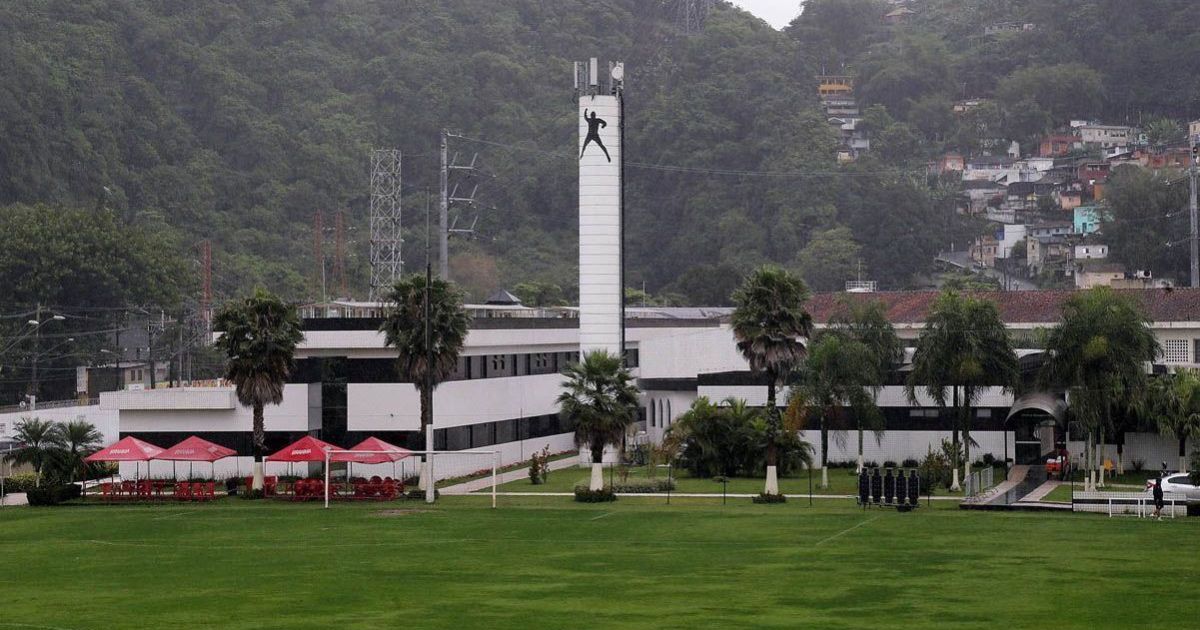
Exclusive: Santos has an agreement with a company to build a new CT at the base
Marcelo Teixeira, president of Santos, told CNN Brasil that the club has an agreement with a company to build a new Training Center for the youth category. On t...
Participe da conversa
Seu comentario ajuda a manter a discussao viva e ainda convida outros leitores a continuar navegando pelo portal.
Seja o primeiro a comentar esta noticia.