



Leia a noticia completa
Roberto Azevêdo headed the World Trade Organization (WTO) between 2013 and 2020
AFP
The announcement that the United States government may resume imposing tariffs on Brazilian products, which occurred in the last two days, triggered a political dispute between the two main pre-candidates for the Presidency of the Republic, President Luiz Inácio Lula da Silva (PT) and Senator Flávio Bolsonaro (PL-RJ), son of former president Jair Bolsonaro (PL).
Lula accuses Flávio of having asked for tariffs to be imposed on Brazil during a visit to Donald Trump, in the United States, last week. On the other side, Flávio Bolsonaro accuses the Brazilian government of failing to negotiate with the United States in a satisfactory manner.
Do you have any suggestions for a report? Send to g1
Now on g1
But although the measure, if implemented, could affect at least 20% of all products exported to the United States, part of the political clashes have been around one point: Pix.
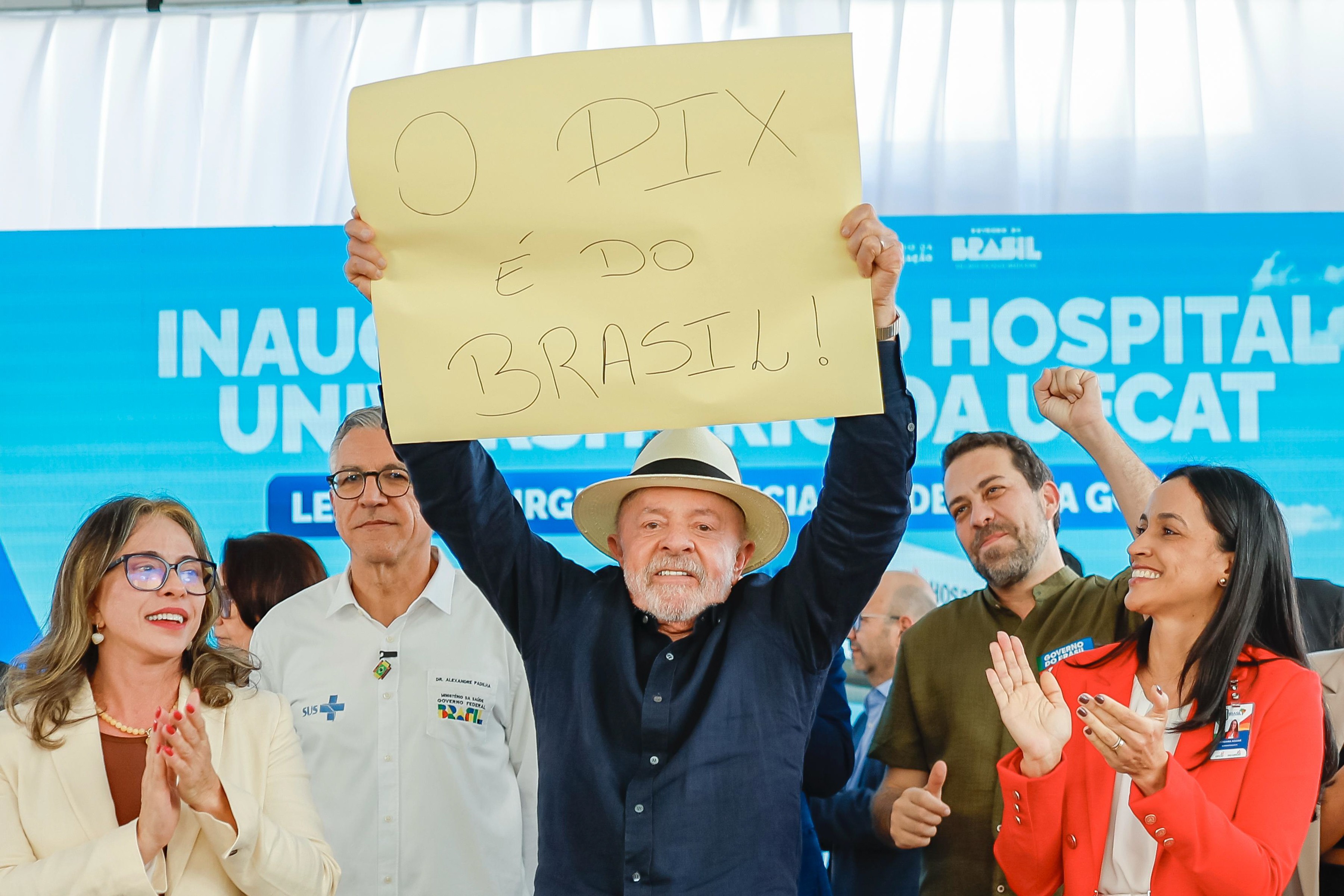
Lula has been using the argument that the United States would be against Pix, a mechanism created by the Central Bank that allows instant and free financial transactions. Flávio, on the other hand, uses as an argument the fact that Pix was launched in 2020, during the government of Jair Bolsonaro.
The document released by the United States Trade Office (USTR) on Monday as a result of a commercial investigation made several mentions of Pix, classifies the mechanism as a "national champion" and says that it would represent a threat to the operations of North American companies operating in the media segment. payment.
Flávio Bolsonaro met with Trump at the White House on Tuesday (27/5).
REPRODUCTION/INSTAGRAM/@FLAVIOBOLSONARO via BBC
Amid political debate, the Brazilian diplomat, former director of the World Trade Organization (WTO) and consultant Roberto Azevêdo, minimizes the supposed threats suffered by Pix.
"Pix itself is not under any threat", he says Azevêdo in an interview with BBC News Brasil. According to him, the only significant question Americans have about Pix is the fact that it is operated by the Central Bank, which is, at the same time, the regulatory body for payment method companies that compete with Pix. Brazil", adds Azevêdo.
With more than 30 years of diplomacy, Azevêdo is considered by Brazilian and foreign colleagues as an expert in international negotiations. At the Ministry of Foreign Affairs (MRE), he commanded the department's Economic Department between 2005 and 2006.
Afterwards, he was appointed as Brazil's ambassador to the WTO. In 2013, he assumed the presidency of the body, as recommended by the Brazilian government. In 2017, he was re-elected to the position, but resigned in 2020 to assume the vice-presidency of PepsiCo.
In 2023, he left the position and today works as a consultant and member of councils in bodies such as the National Confederation of Industry (CNI) and the Federation of Industries of the State of São Paulo (Fiesp).
In the interview, Azevêdo says that Brazil must continue trying to negotiate to reduce the impacts of the tariffs that the US government may want to impose on Brazil.
In a cautious tone, Azevêdo says he believes that the governments of Brazil and the United States would not have effectively engaged in negotiations on the matter, but he avoided explaining what would have led the Brazilian government to do so.
He says, however, that the climate of electoral conflict must not affect the negotiation process. of war for strictly electoral purposes", he says.
Lula and Flávio Bolsonaro exchange accusations about the possibility of imposing tariffs on Brazilian products exported to the USA
Getty Images
Check out the main excerpts from the interview:
BBC News Brazil - What is the immediate impact of this announcement in relation to tariffs on the Brazilian economy?
Roberto Azevêdo - We are back to the situation we were in before the US Supreme Court overturned the tariffs in January this year. What is happening now is that those tariffs are being reintroduced at a lower level. Until January, tariffs were at a level of 40%. Now, they are being reintroduced at 25%. Before, it was exorbitant, but it is still very high.
BBC News Brasil - How harmful could these tariffs be for the Brazilian economy?
Azevêdo - They were already quite harmful and will continue to be so for several reasons. Not only by closing the American market, but by preventing the integration of certain segments of the Brazilian production chain into global value chains that pass through the United States. The United States is a market in which Brazil can sell products with high added value, unlike our exports to China, where we sell many commodities. In the United States, we sell machinery, equipment, finished and semi-manufactured products. It is a very special market and this market is gradually closing.
BBC News Brasil - The government claims that there was an ongoing negotiation, with a 30-day deadline that had not yet expired. Was there a breach of trust in the negotiation?
Azevêdo - This negotiation was happening in a very incipient manner. All the information I have is that there were one or two very superficial contacts. There were high-level contacts, between Jamiesson Greer (US Secretary of Commerce) and our Minister of Industry and Commerce (Márcio Elias Rosa). But it is very difficult to reach results that change the context of the decision that was proposed through negotiations at this stage of the negotiations. We needed to have something more advanced, something more tangible and that wasn't there. The proposal to adopt measures as formulated is not surprising.
BBC News Brasil - What is left for the Brazilian government to do to prevent these sanctions from actually being imposed?
Azevêdo - Above all, negotiate, which is what all other countries are doing. I see some people in Brazil talking about retaliation, about using the law of reciprocity. We can do it, but, frankly, no other country has done this to date. Only China. But we cannot compare China's firepower with Brazil's. China did this and managed to make the United States rethink a lot of what it had been doing. But China is a market that is fundamental for the United States. Brazil is not. Brazil will have no ability to make the United States review its strategies through retaliation or reciprocity measures. We have to be careful not to let the electoral discourse win the game and prevail over the concrete interests and commercial interests of the Brazilian economy [...] The important thing is to have a cool head, negotiate and seek to reduce the economic, commercial and social impact on Brazil in the best possible way and not create animosity and a climate of controversy or war for strictly electoral purposes.
BBC News Brasil - In your opinion, is this what President Lula has done?
Azevêdo - I am not the one who will judge what the impact is.
I'm just saying that it is necessary for us to be very aware of the fact that those who will pay the bill for this friction and this non-convergence will be Brazilian companies, Brazilian workers who are employed and who will, possibly, lose their jobs or have their salaries affected by this situation of conflict with the United States.
BBC News Brazil - President Lula has attributed this announcement to the political actions of senator and presidential candidate Flávio Bolsonaro. What is your assessment regarding this? What responsibility did he have in this?
Azevêdo - I think that when it comes to politics, politicians understand each other. There will be accusations from both sides. One side will say that the other does not want to negotiate. The other will say that the other side was the one who caused this. These accusations, for me, do not solve the problem and will not carry out measures and actions that could reduce the impact on our economy.
BBC News Brazil - Has Brazil negotiated well with the United States government or does the announcement of these tariffs show that it has not and that the government has failed to attempt negotiation?
Azevêdo - Negotiation depends on two sides. Both sides need to want to negotiate and I am not very sure that both sides have done what is necessary to effectively engage in a negotiation that would lead to a positive or mutually satisfactory outcome. The negotiations could have been carried out in a more assertive, more constructive, more innovative, more creative way. I don't think this has happened and it won't be now, in the final stretch, that we will be able to change this situation in a very significant way. Personally, I don't believe this will happen.
BBC News Brasil - But, ambassador, objectively, was there a failure on the part of the Brazilian government in this process? And if so, which one?
Azevêdo - I think the two governments did not demonstrate the necessary commitment to resolve this problem in a negotiated way.
BBC News Brasil - And why would the Brazilian government do this?
Azevêdo - Then you should ask the Brazilian government, not me.
BBC News Brasil - There is a dispute of narratives to know who was responsible for this. In your assessment, does Senator Flávio Bolsonaro have responsibility for this or is President Lula responsible for this?
Azevêdo - The person who has the most responsibility for this is President Trump. It was he who made the decision to adopt these measures to reindustrialize the United States, to bring investments into the United States, to raise resources and raise funds to make fiscal incentive programs that he has been adopting in other areas viable. It is a decision that not only affected Brazil, but also several other countries.
BBC News Brazil - The report that was released by the United States commercial office makes many mentions of Pix. Why is there such a big emphasis on the Pix tool?
Azevêdo - It doesn't have a different emphasis than the others. There are six themes they raise. The report has corruption, deforestation, ethanol, intellectual property, digital platforms. Pix is one of them. I don't see anything exceptional in their treatment of Pix. On the contrary, they claim that the problem with Pix is not Pix itself, but the way Pix is administered, because it is administered by the regulatory body itself, which is the Central Bank. The question is about the fact that it is the central body that imposes the rules on Pix's competitors, which are, for example, Visa, Mastercard, etc. In Brazil, there is a lot of fuss around Pix, but I don't think Pix will undergo any changes. They (the US) will not ask for any of this. What they would like is for Pix to be managed differently and the request may or may not be met by Brazil.
BBC News Brasil - In your assessment, does Pix suffer any type of threats?
Azevêdo - No, in my opinion, no. Pix itself does not suffer any threat.
BBC News Brasil - But what is the interest of these large companies in relation to Pix?
Azevêdo - Pix has increased the ability of Brazilian consumers to participate in national digital platforms.
We in e-commerce and various other forms of economic engagement. They themselves recognize this. What I frequently hear is the fact that Pix is operated by the Central Bank and the Central Bank is the regulatory agent. Therefore, it would be unfair to Pix's competitors if Pix is operated by the regulatory agent itself. That's the complaint I hear and that's what I understand is on the table.
BBC News Brasil - Has the Pix issue been used in a political way?
Azevêdo - I think everything is being explored in a political way, on one side or the other. It's inevitable. We are in an election year. Of course, these things will be explored from an electoral point of view. It would be absolutely unthinkable if they were not explored. What we cannot do is lose perspective of the real impact on the economy.
BBC News Brasil - Is there a possibility of the government appealing to the WTO, being against these tariffs and what is the WTO's capacity to resolve a dispute like this today?
Azevêdo - Both Brazil and other countries have already appealed to the WTO, but as we all know, the WTO's dispute settlement body is inoperative and, therefore, will not lead to any practical consequences. Taking the issue to the WTO always has the power to increase the visibility of the issue and question the legitimacy of these measures. But we cannot expect a legally effective result at the WTO. This will certainly not happen.
President of the Republic, Luiz Inácio Lula da Silva, during Press announcement about the inauguration of the Instituto Federal Goiano - Campus Catalão, in Catalão - GO
Ricardo Stuckert / PR
Source: G1
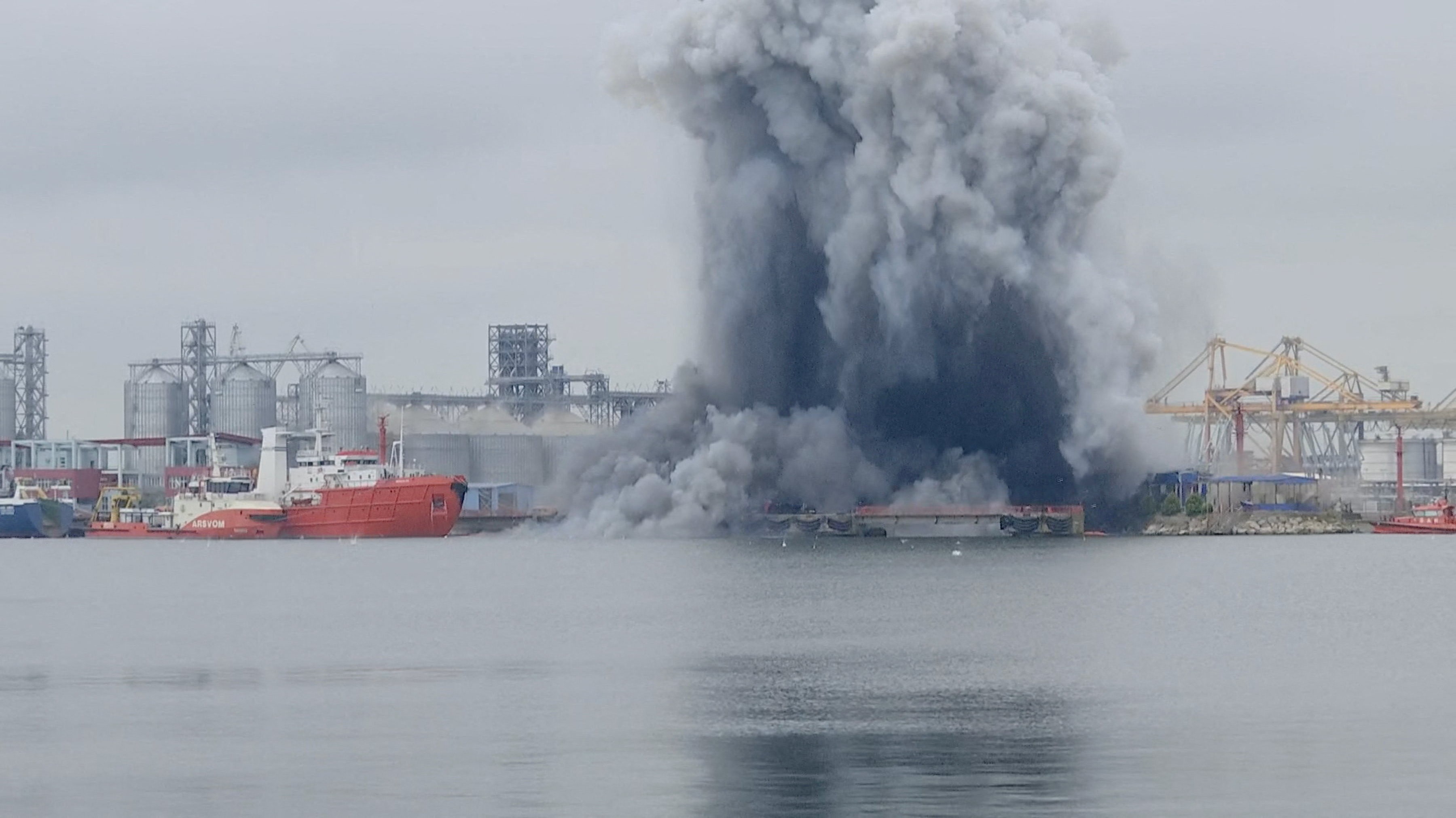
Drone explodes in port in Romania; VIDEO shows detonation
See the moment when a drone explodes in a port in RomaniaThe self-detonation of a maritime drone caused a large explos...
Israeli army orders evacuation of Lebanon residents amid attacks
The Arab spokesman for the Israel Defense Forces issued warnings this Friday (5) to residents of parts of southern Leb...
Almost 500 kg of drugs valued at R$10 million are seized in SP
Almost 500 kg of drugs hidden in a refrigerated truck were seized, on Thursday afternoon (4), on the Washington Luís h...

Toque agora.

Historias das musicas em destaque
 Historia da musica
Psalm 107: learn to play Samara Lourenço in a song of gratitude
05/06/2026
Psalm 107, by Samara Lourenço, is a song of praise inspired by gratitude, God's faithfulness and the recognition of his wonders. The so...
 Historia da musica
Só Por Amor A Ti: learn to play Ana Paula Valadão in a song of dedication and faith
05/06/2026
Só Por Amor A Ti, by Ana Paula Valadão, is a profound song of praise, marked by delivery, obedience and devotion. The song talks about...
 Historia da musica
De Bem Com a Vida: learn to play Os Serranos in a happy and passionate song
05/06/2026
De Bem Com a Vida, by Os Serranos, is a light, lively and romantic song. With positive lyrics and a melody that conveys joy, the song i...
 Historia da musica
January 6, 2003: learn to play Fernando and Sorocaba on the guitar
05/06/2026
6 January 2003, by Fernando and Sorocaba, is a country song full of longing, memory and emotion. The lyrics talk about a date that was...
 Historia da musica
Savior: learn to play Billy Bob Thornton in a strong, reflective song
05/06/2026
Savior, by Billy Bob Thornton, is a song with a deep atmosphere, reflective lyrics and a sound that combines emotion, narrative and int...
 Historia da musica
Garden In The City: learn to play Melanie with a light and expressive chord
05/06/2026
Garden In The City, by Melanie, brings a delicate, artistic atmosphere full of personality. It is an ideal song for those who like song...
 Historia da musica
Aceto Mi Derrota: learn to play the emotional song by Marco Antonio Solis
05/06/2026
Aceto Mi Derrota, by Marco Antonio Solis, is an intense, romantic song full of feeling. With an interpretation marked by the pain of pa...
 Historia da musica
It's Luxury Only: learn to play Ary Barroso's classic samba on the guitar
05/06/2026
É Luxo Só, by Ary Barroso, is one of those songs that carries the soul of Brazilian samba in every chord. With an elegant rhythm, strik...
 Historia da musica
My Immortal: Learn to Play One of Evanescence's Greatest Classics on Guitar
04/06/2026
Few songs have managed to cross generations with the same emotional intensity as "My Immortal", one of Evanescence's biggest hits. Rele...
 Historia da musica
Learn to Play This Song on Guitar and Develop New Musical Techniques
04/06/2026
Some songs have the ability to mark moments, awaken emotions and remain alive in listeners' memories for many years. When a song brings...
Mais noticias para voce
 Noticia
05/06/2026
Leonardo mocks an employee's request for time off during the World Cup: "Are you going to play?"
Leonardo has been making waves on social media after being asked by one of his employees about taking time off when the Brazilian team is on the field at the Wo...
 Noticia
05/06/2026
Corinthians visits Mirassol to start the Paulista U20 campaign
By Marcelo Nascimento on 05 de June de 2026 at 09:31 This Friday, Corinthians plays its first game for the 2026 Paulista Sub-20 Championship. The black and whit...
 Noticia
05/06/2026
Pitty Appears in a Bikini Inspired by Abaporu, Delights Fans and Goes Viral with Rare Clicks on the Beach
Pitty once again made waves on social media by sharing rare footage of a moment of rest on a deserted beach. Always discreet when it comes to her personal life,...
/https://i.s3.glbimg.com/v1/AUTH_59edd422c0c84a879bd37670ae4f538a/internal_photos/bs/2026/T/v/kIvyRKStasvz7onALFag/shakira-em-copacabana-foto-panlo-porciuncula-afp.jpg) Noticia
Noticia
05/06/2026
Shakira will be the attraction of one of the three opening ceremonies of the World Cup; Anitta will also give a presentation
Singer Shakira will perform in Mexico City at the first of the three World Cup opening ceremonies.The Colombian singer will perform "Dai Dai", the tournament's...
 Noticia
05/06/2026
Amid uncertainty over ceasefire, 4 people die in attack in Lebanon
Israeli attacks killed four people in southern Lebanon this Friday (5), according to the Lebanese state news agency NNA. The attacks, which took place in the ci...
 Noticia
05/06/2026
Exclusive: Santos has an agreement with a company to build a new CT at the base
Marcelo Teixeira, president of Santos, told CNN Brasil that the club has an agreement with a company to build a new Training Center for the youth category. On t...
Participe da conversa
Seu comentario ajuda a manter a discussao viva e ainda convida outros leitores a continuar navegando pelo portal.
Seja o primeiro a comentar esta noticia.