




Leia a noticia completa
The acquisition of a new property involves a series of legal safeguards designed to protect assets and the buyer. In the Brazilian legal system, these guarantees are divided into two main categories, each with different purposes, coverage and validity periods: the structural guarantee and the finishing guarantee.
These protections are regulated in a complementary manner by the Brazilian Civil Code and the Consumer Protection Code (CDC). Understanding the scope of action of each modality and the formal rites for activation is essential for the owner to protect his rights in the face of possible construction defects.
Structural guarantee protects the solidity and safety of the building
The structural guarantee covers the essential elements that make up the support, stability and safety of the building. This is protection aimed at what is conventionally called the "skeleton" of the property.

What causes abdominal fat to increase? 7 habits that help reduce belly fat
Fat accumulated in the abdominal region does not appear by chance. An unbalanced diet, lack of physical activity, poor...
See note from the Brazilian government that refutes the US proposal to apply new tariffs against Brazil
The Brazilian government issued a note this Tuesday (2) in which it rejects the United States' proposal for a new tari...Finance Minister says that the Bolsonaro family made a 'movement' against PIX and that the government will protect the tool
The Minister of Finance, Dario Durigan, stated this Tuesday (2) that the Bolsonaro family made a "movement against PIX...
Scope of coverage
Faults that directly compromise the solidity of the construction are covered by this modality. This includes problems in:
- Foundations and pilings;
- Reinforced concrete pillars, beams and slabs;
- Structural masonry;
- Roofing and roofing systems.
If any collapse, structural crack or serious infiltration occurs that threatens the stability of the building, the responsibility for full repair falls on the construction company responsible for the work.
Toque agora.



Legal deadlines
According to article 618 of the Civil Code, the guarantee period for the solidity and safety of large-scale works is five years, counting from the date of delivery of the property (granting of Habite-se and delivery of the keys).
The law establishes that, even after the end of this period, if it is proven through technical expertise that the structural defect originates from a latent failure in the execution of the project or in the quality of materials used in the construction phase, the construction company may still be taken to court to respond for the damage.
Finishing guarantee regulates aesthetic and functional details
Different from structural protection, the finishing guarantee is intended for the visible, aesthetic and daily functioning components of the property, which do not directly affect the support of the building, but impact the habitability and appreciation of the property.
Scope of coverage
This warranty covers aesthetic nonconformities and malfunctions of apparent items, such as:
- Detachment of tiles, tiles, ceramic floors or baseboards;
- Surface fissures and fine cracks in plaster, plaster or application of spackle;
- Early peeling of internal or external paint;
- Doors, windows or aluminum frames stuck or misaligned;
Loose electrical installations (such as sockets and switches) and leaks in external hydraulic connections (taps, siphons and toilets).
Legal deadlines
The standard deadline for complaining about apparent or easily detected defects is 90 days, as established by the Consumer Protection Code for durable products. The period begins when the owner actually receives the keys.
Some construction companies offer contractually extended deadlines, which can reach 180 days for specific items, such as frames and external painting. These additional deadlines are set out in the Owner's Manual delivered with the property.
Technical inspection ensures warranty periods
The technical inspection carried out at the time of delivery of the keys is the legal and operational instrument that validates the state of conservation of the new property.
According to the construction company MRV, this joint procedure between the buyer and the engineering team serves to formally record any apparent non-conformity before taking possession.
The signing of the unqualified inspection term or the immediate opening of calls for specific corrections is the milestone that defines the start of the 90-day period for guaranteeing completion, ensuring that the owner receives the apartment in strict accordance with the project's descriptive memorial.
Formal procedures for activating guarantees
To guarantee service without additional costs, the buyer must follow a formal registration and notification procedure as soon as any physical non-conformity in the property is identified.
1. Recording and production of evidence
The owner must document the failure in detail using high-resolution photographs and videos. In the case of complex structural problems, it is recommended that a civil engineer or architect be hired to issue an independent technical report, certifying that the failure is due to a construction defect and not due to natural wear and tear or lack of maintenance.
2. Formal written notification
The construction company must be officially notified through channels that generate proof of receipt. Sending emails to the after-sales sector, opening tickets to the company's Customer Service (SAC) with protocol generation or sending registered letters (AR) are the recommended routes. All photographic and technical documentation produced must be attached to this communication.
3. Technical inspection and repair
After receiving the notification, the construction company schedules a technical inspection on site so that its engineers can assess the origin of the problem. If a construction defect is found, the company has a legal obligation to correct the defect without any financial burden for the owner.
4. Administrative and judicial resources
If the construction company refuses to carry out the necessary repairs or does not respond to the notification within the legal deadline, the consumer can register a formal complaint with Procon or file a legal action for the obligation to carry out them combined with a request for compensation for material damage.
FAQ - Frequently Asked Questions
What is the difference between apparent defects and hidden defects in a property?
Apparent defects are those that can be easily detected immediately after handing over the keys, such as a cracked floor or a socket that doesn't work. A hidden defect is a defect that is not immediately noticeable and only manifests itself with continued use of the property over time, such as infiltration in the internal piping or failures in the waterproofing of the slab.
How should the buyer proceed when identifying a finishing problem?
The owner must record the incident through photos or videos and open a formal call. In the case of MRV properties, this communication can be made directly on the relationship portal or on the construction company's own after-sales application. The scheduling of the technical inspection will be carried out by the company's engineering team within the established contractual deadlines.
What happens if the 90-day finishing guarantee period expires?
After the 90-day period stipulated by the Consumer Protection Code ends, the right to complain for apparent defects in finishing occurs, unless there is a supplementary contractual guarantee period offered by the construction company itself in the Owner's Manual.
Can the construction company charge for repairs carried out within the warranty period?
No. Any repair resulting from a construction defect or material defect covered by the legal or contractual warranty periods must be carried out by the construction company completely free of charge for the property owner.
Do changes to the plant or renovations lose the right to the warranty?
Partially.
Renovations that alter the original characteristics of the project delivered by the construction company - such as demolishing walls, altering plumbing or electrical points and changing coverings yourself - may result in the loss of the warranty on the areas affected by the modification.
Source: CNN

Historias das musicas em destaque
 Historia da musica
Learn After So Much Love by Elizeth Cardoso on guitar
02/06/2026
"After De Tanto Amor", performed by Elizeth Cardoso, is a song marked by elegance, emotion and a very rich harmony. The music carries a...
 Historia da musica
Learn Sonhos by Evandro Marinho with chords for guitar
02/06/2026
"Sonhos", by Evandro Marinho, is a perfect song for those who like songs with an emotional atmosphere, good melody and chords that enha...
 Historia da musica
Learn I Don't Want to Know More Dela by Beth Carvalho on guitar
02/06/2026
A classic full of swing, "Não Quero Saber Mais Dela" is a great choice for those who want to study samba on the guitar with a striking...
 Historia da musica
Chameguinho by Murilo Guedes stands out for playing a romantic and engaging song
02/06/2026
Chameguinho, by Murilo Guedes, is a romantic song with direct language, a striking chorus and a popular atmosphere. On CifraNET, the so...
 Historia da musica
Sodade Meu Bem Sodade de Morais do Acordeon values Brazilian tradition in numbers
02/06/2026
Sodade Meu Bem, Sodade, by Morais do Acordeon, carries a Brazilian sound full of feeling, simplicity and affective memory. At CifraNET,...
 Historia da musica
Let Me Go by 1Kilo is a perfect song to play acoustic rap with emotion
02/06/2026
Let Me Go, by 1Kilo, is one of the songs that best combines voice, guitar and feeling. On CifraNET, the song appears in the current key...
 Historia da musica
Learn Roll Me Away by Bob Seger And The Silver Bullet Band on CifraNET
02/06/2026
Roll Me Away, by Bob Seger And The Silver Bullet Band, is a song with a road spirit, freedom and classic rock. The cipher appears on Ci...
 Historia da musica
Tiina Tahtois Tänään Jonkun by Juha Tapio stands out for studying Finnish pop on the guitar
02/06/2026
Tiina Tahtois Tänään Jonkun, by Juha Tapio, is a song with a strong melodic appeal and emotional atmosphere. On CifraNET, the song appe...
 Historia da musica
Learn to play Kamikaze by Blind Pigs with punk energy on guitar and acoustic guitar
02/06/2026
Kamikaze, by Blind Pigs, is a song made for those who like to play with attitude, a strong feel and a lot of energy. The song appears o...
 Historia da musica
Mineiro de Pernambuco: the song that unites cultures, nostalgia and identity through country music
01/06/2026
The song "Mineiro de Pernambuco", performed by Murilo Limma, is one of those compositions that manage to move people from the first ver...
Mais noticias para voce
 Noticia
02/06/2026
'Deixa a Vida Me Levar': see previews of the characterization of Zeca Pagodinho, Arlindo Cruz and other characters in the film about the singer
See how the characterizations of Zeca Pagodinho and friends turned out in the filmImages published on social networks have given small spoilers in recent weeks...
 Noticia
02/06/2026
Iran plans three-day funeral for supreme leader Ali Khamenei, more than 3 months after his death
People ride motorcycles near a billboard with the image of the late Supreme Leader of Iran, Ayatollah Ali Khamenei, in Tehran, Iran, May 6, 2026Majid Asgaripour...
 Noticia
02/06/2026
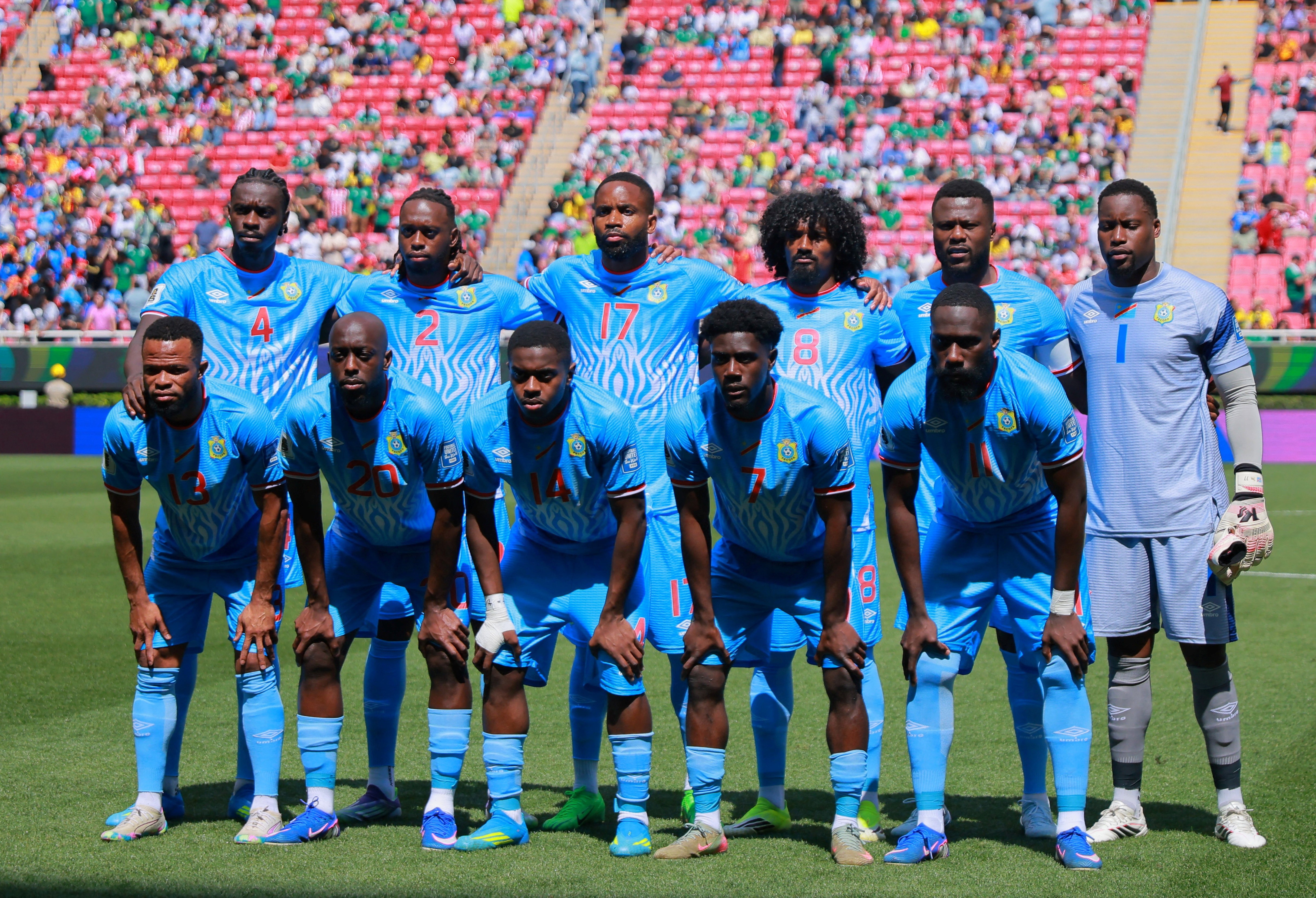
Spanish mayor bans friendly between Democratic Republic of Congo and Chile due to Ebola epidemic
Ebola infection ruled out in São Paulo patientThe mayor of La Línea de la Concepción, in southern Spain, banned this Tuesday (2) a friendly match between Chile...
 Noticia
02/06/2026
Trump secretary says Iran agreed to negotiate nuclear program
Trump's secretary says Iran agreed to negotiate nuclear program Marco Rubio denied that peace negotiations had been interrupted. More than three months after th...
 Noticia
02/06/2026
Death toll from Russian air strikes on Ukraine rises above 20
Russian air strikes on several cities in Ukraine leave people deadThe number of deaths in the air strikes that Russia carried out against Ukraine in the early h...
 Noticia
02/06/2026
Henry Borel case: "He was the love of my life", says Monique Medeiros in jury
"He was the love of my life." This is how Monique Medeiros, mother of Henry Borel, a boy who died at the age of four, spoke about her son during the testimonies...
Participe da conversa
Seu comentario ajuda a manter a discussao viva e ainda convida outros leitores a continuar navegando pelo portal.
Seja o primeiro a comentar esta noticia.