




Leia a noticia completa
Six fintechs targeted by Fluxo Oculto moved R$ 26 billion in four years
Federal Revenue
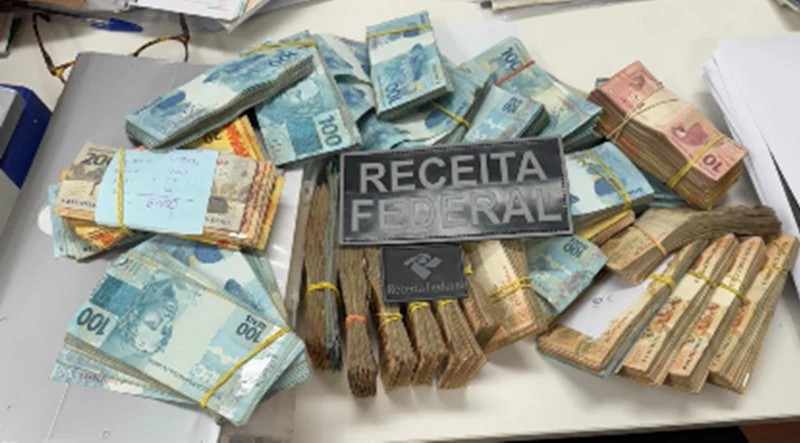
Organized crime continued to launder money and hide assets in the financial heart of São Paulo even after the launch of Carbono Oculto, the operation that drew attention to the entry of the Primeiro Comando da Capital (PCC) into the formal economy.
Nine months later, the second phase of the operation, called Fluxo Oculto, fulfilled part of the 59 search and seizure warrants were issued last Thursday (29/5) for six fintechs, technology companies that offer financial services, and four investment funds.
They were the final tip of a scheme to divert naphtha, a chemical solvent, imported by shell companies and passed on to distributors and gas stations for fuel adulteration.
The growing role of Faria Lima in organized crime business draws attention. In recent years, criminal organizations have taken advantage of the more lenient regulatory and transparency requirements to which fintechs were subject to move billions of reais through accounts and operations that are difficult to trace, according to investigations.
The practices have raised alarm among authorities, who have been trying to close these loopholes and the flow of money.
And they can also mobilize the financial market itself, especially after the United States began to classify the PCC and the Red Command (CV) as terrorist organizations, a measure that, for some analysts, can have consequences for companies in different segments.
The gears of the scheme
Flowchart shows the path of money in the scheme targeted by Fluxo Oculto
Federal Revenue
According to spokespeople from the Public Ministry of the State of São Paulo (MPSP), the Federal Revenue Service and the National Petroleum Agency (ANP), the fintechs targeted by Fluxo Oculto operated as "parallel banks", responsible for introducing money of illicit origin into the financial system. More than R$ 26 billion passed through them between 2022 and 2025.
"In this path of dirty money - both from the activities of the criminal organization and that gained from the sale of adulterated fuel -, it enters the financial system via fintech", stated Federal Revenue Secretary Robinson Barreirinhas in a press conference shortly after the launch of the operation.
"Fintech is the gateway."
Investment funds were the link in the stage next, to hide the assets of criminals.
"The amount is invested in an investment fund, which invests in another, which invests another, seeking to make tracking difficult in this chain", explained the secretary.
"And, at the end, the fund itself makes the investments, and can invest in companies, acquire goods or even remit resources abroad, which then return and benefit the criminal himself", said Barreirinhas.
Evidence collected in recent months, including the cell phones of PCC accountants, showed that these six fintechs had replaced the three that were targeted by Carbono Oculto in August 2025 and were used so that the crime continued to launder money even after the first operation.
"We identified a whole movement of the main leaders of the scheme redirecting all the money to these new fintechs", stated the prosecutor of the Special Action Group to Combat Organized Crime (Gaeco) of the MPSP João Paulo Gabriel.
Another point that drew attention was the fact that the structure was not just used by a criminal organization - in this case, the PCC. "The axis that is perhaps the most worrying is the phenomenon that we have been identifying of criminal convergences", highlighted Gabriel.
"These fintechs are being exploited not only by this criminal organization, but also by other criminal groups.
[There are] several criminal organizations sharing the same financial flow spaces."
Operation carried out 59 search and seizure warrants
Federal Revenue
How fintechs became a 'duct' for illicit money
Although they operate in the financial sector, fintechs are not banks, according to the Central Bank's classification - and this is a relevant difference.
Unlike banks, payment institutions cannot use the money deposited by customers to offer loans, for example. Fintechs are also required to have a much smaller financial security reserve to be able to operate than the rules stipulate for traditional banks.
In recent years, criminal organizations have taken advantage of a series of particularities of fintech regulation to launder billions of reais in illicit money, according to investigations, including weaker transparency requirements and the possibility of creating accounts that are difficult to trace.
Since Carbono Oculto, authorities have tried to block some of these channels. August 2025, the Federal Revenue equated the treatment of fintechs to that of banks, obliging them to present detailed information about their transactions through e-Financeira, a set of digital files that banks, brokers, insurance companies and consortium administrators send to the Revenue. should have come into force in January last year, but was the target of a wave of misinformation, which became known as "Pix fake news", and ended up being temporarily suspended.
"We were victims of the biggest wave of fake news in the history of the Revenue", stated the Secretary of Revenue during the collection.
'Hidden Flow': operation searches Faria Lima, in SP
"Lies saying that the Revenue would monitor or tax Pix, which every now and then try to score again. We saw who was interested in this: the criminal organizations that used and still use these fintechs to launder money."
One day after the outbreak of Carbono Oculto, when investigations revealed the use of fintechs as financial arms of organized crime, the rule came into force.
Three months later, the IRS also instituted DeCripto, a declaration that virtual financial asset service providers now have to send every month, informing about the transactions carried out in cryptocurrencies.
This type of asset is also popular among criminals, because it is easy to move internationally, and its owners are kept relatively anonymous. Fluxo Oculto identified the movement of R$365 million in crypto assets in the institutions targeted by the operation.
The Central Bank also announced measures in the same direction. pocket accounts, a modality that brings together resources from several people in a single account, without individual identification of the holders.
Fluxo Oculto involved the cooperation of different bodies, which detailed the investigations in a press conference last Thursday
Federal Revenue
Juliana Facklmann highlights that this modality was extensively exploited by criminal groups.
They took advantage of the fact that many fintechs do not have direct access to the Central Bank's settlement system and need a third party (a traditional bank, for example) to access this infrastructure, where the actual transfer of resources between banks and payment institutions is carried out every day.
The pocket account was the modality that fintech used to move resources with the institution that had access to the Central Bank's settlement system.
As the operations were not detailed by holder, but just a single cake, the BC was unable to monitor them.
"It was almost as if everything that was there belonged to fintech itself", illustrates the professor.
"On its part, [to prevent the money circulating through it from having illicit origins], fintech should have all the mechanisms to prevent money laundering and terrorist financing and follow the principle of 'know your customer' to know who is moving what in there", he adds Facklmann.
"So, it was this mechanism that these criminal groups used to manage to infiltrate money into Faria Lima: this issue of non-identification of pocket accounts, plus the point that fintechs - more specifically payment institutions - did not have good controls to prevent money laundering."
She considers the measures taken by the Central Bank and the Revenue in recent months to be "important" and assesses that they should avoid many situations similar to those revealed by Carbono Oculto and Fluxo Hidden.
"Now, the Central Bank is able to make the cross-checks it needs, the checks and analyzes it needs to understand that 'Mr. Francisco's bakery' is moving much more than it should and go after it to question it", she illustrates.
Fintechs and funds were the final link in the naphtha diversion scheme for fuel adulteration
Federal Revenue
Repression and inspection
The deputy superintendent of the Federal Revenue in São Paulo, Claudio Ferrer de Souza highlighted that, of the six fintechs targeted by Fluxo Oculto, three fulfilled their obligations with e-Financeira. In other words, they submitted detailed data to the Tax Authorities.
The other three did not send the information, drawing attention to another important point in the problem of crime infiltration in Faria Lima: inspection.
In a BBC News Brasil report, Souza commented after the press conference that inspection is fundamental and that the problem will not be solved with repression alone.
In early April, the president of the Central Bank, Gabriel Galípolo, told the Parliamentary Commission of Inquiry (CPI) on crime organized that the authority does not have sufficient resources to satisfactorily supervise companies in the financial sector.
The Securities and Exchange Commission (CVM), in turn, responsible for regulating the capital market, which is responsible for investment funds, has found itself at the center of several controversies and is accused by critics of failing in its mission.
One wonders, for example, why it was not able to identify the various irregularities committed by Banco Master in what it describes as the biggest bank fraud in the country.
The chief delegate for the repression of financial crimes of the Federal Police (PF), Guilherme Siqueira, said in a public hearing at the Federal Supreme Court (STF) in early May that the CVM operates with a deficit in human and technological capacity and is unable to keep up with market expansion. These weaknesses, according to him, are exploited by organized crime.
In addition to repression, it is also necessary to focus on inspection, says deputy superintendent of the IRS
Federal Revenue
Trump Effect
The pressure to improve inspection and close regulatory loopholes gained new momentum when the United States announced that it would start classifying PCC and CV as terrorist organizations.
On the one hand, experts warn that the measure could open up the possibility for the Trump government to promote military interventions in Brazilian territory.
On the other, to impose, through the Treasury Department, sanctions on financial organizations that maintain relationships with the factions.
For some analysts, this is where the Brazilian financial market and companies in other segments could be impacted.
Pedro Henrique Rezende, partner specializing in compliance (a mechanism to ensure that the operation is in accordance with legal standards) and investigations at Aroeira Salles Advogados, assesses that the measure "has the potential to significantly increase the regulatory risk for Brazilian companies with exposure to the system international finance or with commercial relations with the United States."
He recommends that companies that do business with ties to the United States carry out a thorough analysis of the organizations they work with to truly know their final beneficiaries and ensure that they do not have any relationship with organized crime so that they are not subject to punishments such as blocking of resources invested in the American banking system.
Insper professor Juliana Facklmann, in turn, assesses that "those who are already working in the correct way will not have greater impacts."
"I don't see it as something that will increase compliance rules", she says.
"I think it would only be about increasing the effectiveness of compliance rules, that is, making sure, for example, that a fintech knows the customer that is coming in, that it has efficient monitoring, that it notices the movement of large flows and asks itself: 'But why is this customer moving large flows?' And go after the customer to understand."
Source: G1

World Cup: football gastrobar with drinks from Messi and CR7 earns R$ 1.5 million in SP
World Cup: bar bets on drinks with player names and desserts inspired by flagsWith player graffiti on the walls, big s...
VIDEO: Passengers tie up man who tried to open plane door during flight to the USA
Passengers immobilize man who tried to open plane door during flightPassengers and crew immobilize a man who tried to...
Dominican Republic x Türkiye: time of where to watch the Women's VNL
The Dominican Republic and Turkey face each other this Wednesday (3), at 1 pm (Brasília time), in a game valid for the...
Toque agora.


Historias das musicas em destaque
 Historia da musica
Learn to play Psalm 137 on the guitar
02/06/2026
Psalm 137 is an excellent choice for musicians who wish to develop musical sensitivity, mastery of rhythm and liturgical accompaniment...
 Historia da musica
Learn to play Las Cosas Que Pasan on Guitar
02/06/2026
Some songs win over musicians due to the beauty of the melody and the simplicity of the chords. This is exactly the case with Las Cosas...
 Historia da musica
The emotional music that transforms any moment of prayer on the guitar
02/06/2026
Few songs can convey as much gratitude and trust in God as "Psalm 137", based on the well-known liturgical refrain "O Lord, your goodne...
 Historia da musica
Learn This Classic Song on Guitar and Evolve Your Musical Technique
02/06/2026
Some songs remain relevant over the years because they manage to combine melody, emotion and a musical construction capable of enchanti...
 Historia da musica
Learn to Play Las Cosas Que Pasan on Guitar and Discover the Musical Secrets of Tan Biónica
02/06/2026
The song "Las Cosas Que Pasan", by the Argentine band Tan Biónica, is one of those songs that wins over the public due to the combinati...
 Historia da musica
Learn After So Much Love by Elizeth Cardoso on guitar
02/06/2026
"After De Tanto Amor", performed by Elizeth Cardoso, is a song marked by elegance, emotion and a very rich harmony. The music carries a...
 Historia da musica
Learn Sonhos by Evandro Marinho with chords for guitar
02/06/2026
"Sonhos", by Evandro Marinho, is a perfect song for those who like songs with an emotional atmosphere, good melody and chords that enha...
 Historia da musica
Learn I Don't Want to Know More Dela by Beth Carvalho on guitar
02/06/2026
A classic full of swing, "Não Quero Saber Mais Dela" is a great choice for those who want to study samba on the guitar with a striking...
 Historia da musica
Chameguinho by Murilo Guedes stands out for playing a romantic and engaging song
02/06/2026
Chameguinho, by Murilo Guedes, is a romantic song with direct language, a striking chorus and a popular atmosphere. On CifraNET, the so...
 Historia da musica
Sodade Meu Bem Sodade de Morais do Acordeon values Brazilian tradition in numbers
02/06/2026
Sodade Meu Bem, Sodade, by Morais do Acordeon, carries a Brazilian sound full of feeling, simplicity and affective memory. At CifraNET,...
Mais noticias para voce
 Noticia
03/06/2026
US proposes tariffing Brazil and 59 economies for failure to combat forced labor
The USTR (United States Trade Representative) proposed, in a document released on Tuesday night (2), the imposition of additional tariffs on products from Brazi...
 Noticia
03/06/2026
US shoots down new wave of Iranian drones, says Central Command
CENTCOM (United States Central Command) stated that its air defenses successfully shot down multiple waves of Iranian drones that were targeting American milita...
 Noticia
03/06/2026
Possible new Corinthians sponsorship includes record amounts and social actions with the women's team
By Daniel Keppler on 03 de June 2026 at 01:06 In recent days, Corinthians has advanced in negotiations to sign a new sponsorship, aiming above all to boost the...
 Noticia
03/06/2026
US proposes surtax on 60 countries for failure to combat forced labor; Brazil is on the list
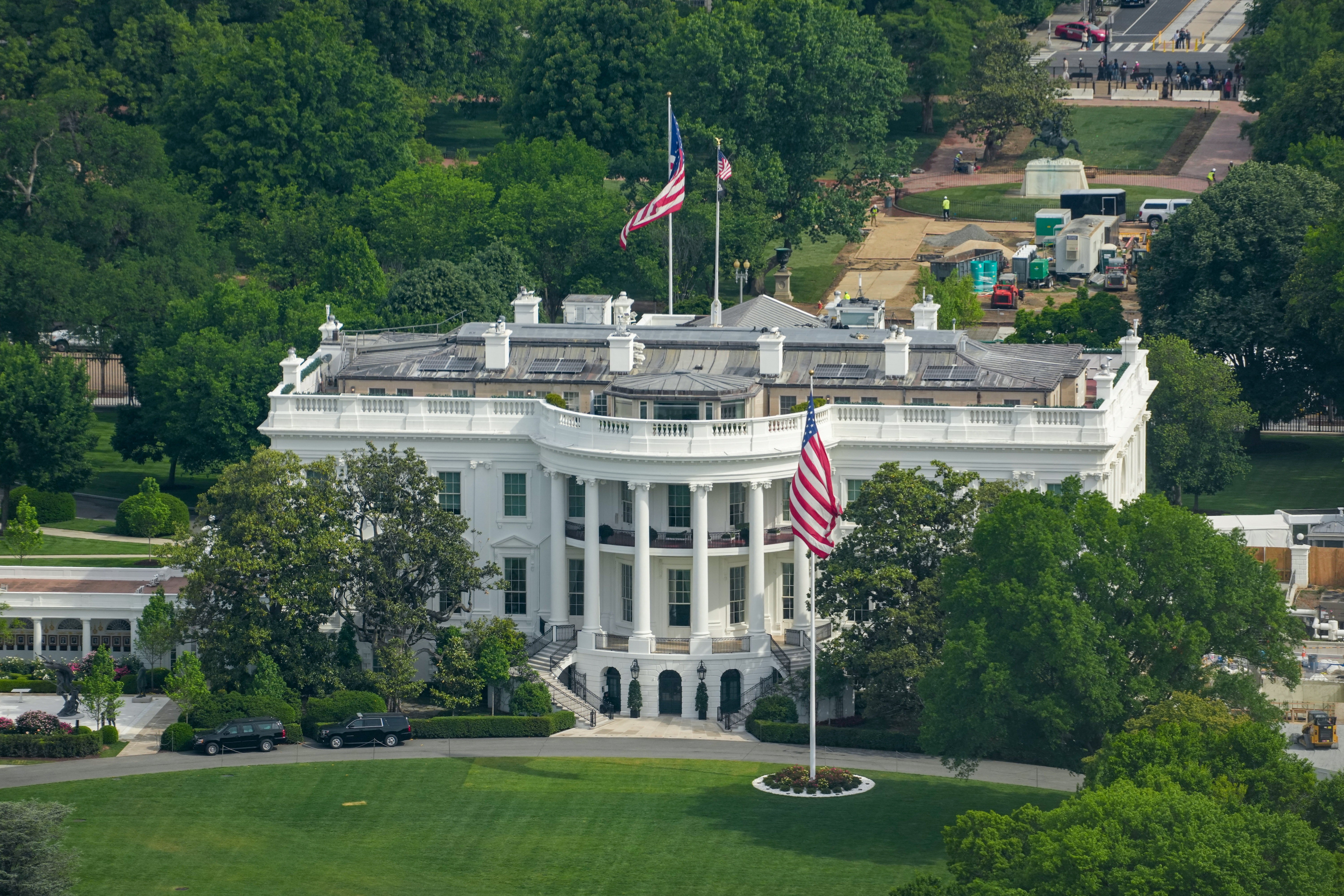
Aerial view of the White House, on May 2, 2026REUTERS/Ken CedenoThe United States Trade Representative (USTR) determined, this Wednesday (3), that 60 countries,...
 Noticia
03/06/2026
Trump's new tariff against Brazil - The Issue #1733
The investigation conducted by the United States Commerce Office concluded that Brazil adopts unfair practices and proposed the application of 25% tariffs on Br...
 Noticia
03/06/2026
"Casa do Patrão": how was the sixth Tá Na Reta formed?
The participants of "Casa do Patrão" sent three more of their players to the sixth Tá Na Reta of the program. Now, Sheila, JP and João Victor compete for the pu...
Participe da conversa
Seu comentario ajuda a manter a discussao viva e ainda convida outros leitores a continuar navegando pelo portal.
Seja o primeiro a comentar esta noticia.