



Leia a noticia completa
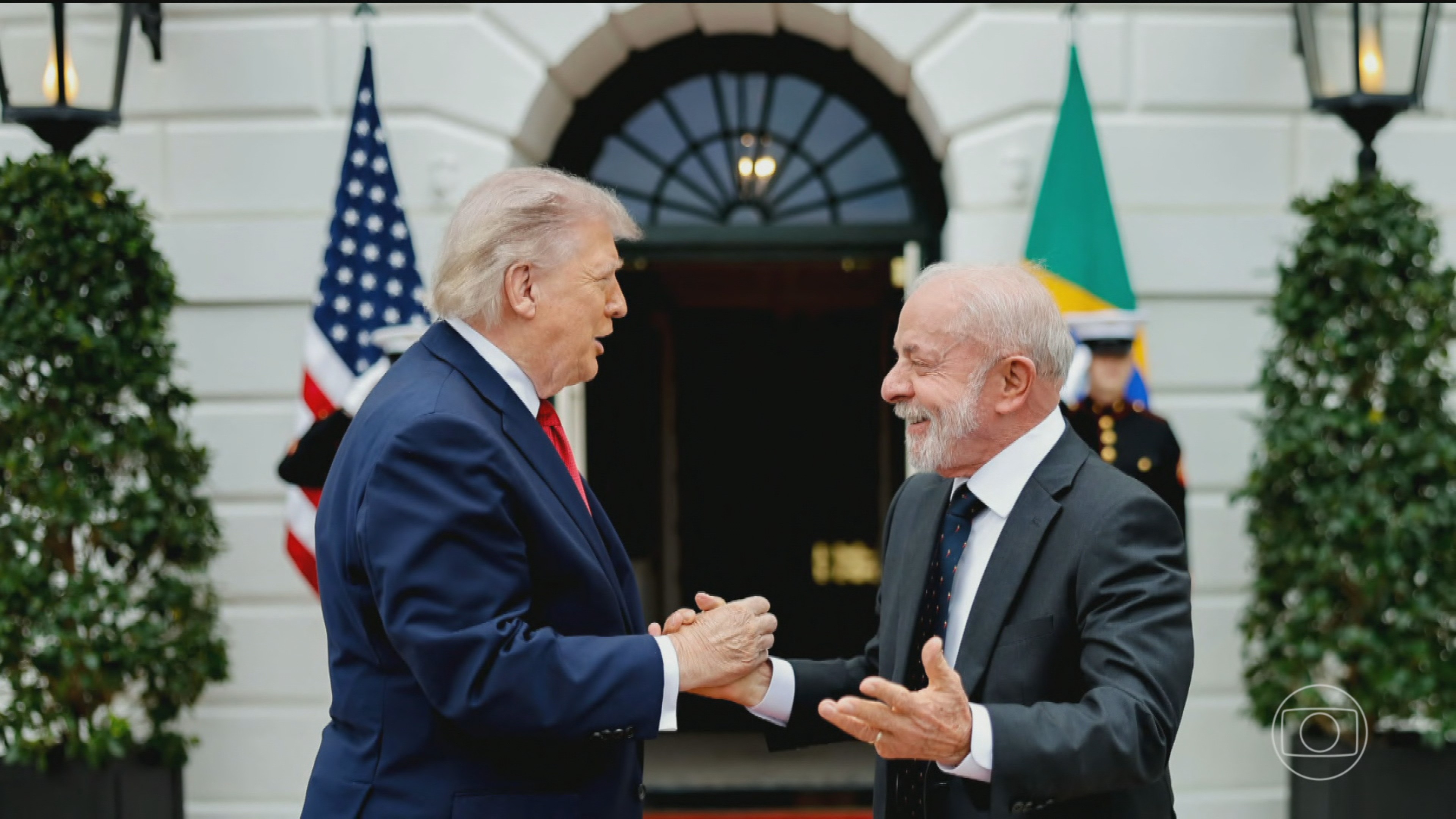
At the White House, Lula and Donald Trump discuss rare earths, organized crime and trade
Jornal Nacional/ Reproduction
The Office of the United States Trade Representative (USTR) determined, this Monday (1), that a series of acts, policies and practices of the Brazilian government are "unreasonable" and "encumber or restrict" North American trade. With the conclusion of the investigation, supported by Section 301 of the Commerce Law of 1974, the agency proposed the application of corrective measures and opened the case for public consultation. The USTR's proposal is to apply tariffs of 25% on all goods from Brazil, with some exemptions.
The investigation had been initiated on July 15, 2025 by order of President Donald Trump. According to the US Ambassador and Trade Representative, Jamieson Greer, the American government maintains an intense dialogue with the government of President Luiz Inácio Lula da Silva, but there are still substantial differences.
The legal deadline for taking corrective measures expires on July 15, 2026.
"Over the last year, President Trump and I have had several constructive meetings with President Luiz Inácio Lula da Silva and his cabinet, which have intensified in recent weeks. However, we continue to have substantial disagreements in resolving the issues identified in this investigation," said Greer.
Products that would be exempt
According to the released document, some items would be spared from this tariff, including informative materials, donations and a specific list of products - such as certain meats, fruits, minerals, coffee, tea, spices, cereals, seeds, oilseed fruits, industrial and medicinal plants, straw and fodder -. Brazilian aircraft and aircraft parts, rare earths, organic chemicals, pharmaceuticals and fertilizers would also be exempt.
The points criticized by the US
The USTR's final report points out irregularities and trade barriers distributed across six main axes:
Digital Commerce and Payment Services: The USTR cites that Brazilian courts issued secret orders for American social media companies to remove political content and suspend profiles of US residents - in some cases, globally -, prohibiting the disclosure of orders. The body also criticizes the imposition of severe fines, restrictions on assets and bank accounts and, in at least one case, the complete closure of a website. Furthermore, the text points to Brazil's favoring local competitors in electronic payment services.
Unfair Preferential Tariffs: The American government contests the partial scope trade agreements maintained by Brazil with Mexico and India. According to the USTR, Brazil grants lower tariffs to hundreds of products from these countries in sectors in which both are advanced and globally competitive producers.
Illegal Deforestation: The document states that, although Brazil has a legal framework to combat illegal deforestation, the country has historically failed to apply it effectively, allowing the problem to persist.
Ethanol Market Access: The American body argues that Brazil abruptly stopped treatment in 2017 balanced tariff it applied to ethanol and, since then, has not offered reciprocal treatment to fuel exports from the US.
Intellectual Property Protection: The US points to a lack of sufficient enforcement of criminal and customs laws against counterfeiting products, excessive slowness in examining patents (especially biopharmaceuticals) and a lack of continuous anti-piracy measures.
The USA criticizes the National Institute of Industrial Property (INPI)'s delay in analyzing patents (especially biopharmaceuticals, which take up to 109 months).
Fighting Corruption: The American representation concluded that Brazil does not adopt sufficient measures to combat bribery and corruption.
The document specifically cites the annulment of Operation Lava Jato processes by the STF in 2023, the "without transparency" renegotiation of leniency agreements and Brazil's fall in Transparency International's Corruption Perception Index.
Next steps and deadlines
Before the definitive application of any sanction or corrective measure, the US government has established a schedule of public hearings and consultations to collect testimonies from interested parties:
By June 22, 2026: Deadline for submitting requests to appear at the public hearing, accompanied by a summary of the testimony.
Until July 1, 2026: Deadline for submitting written comments on the measures proposed by the USTR.
July 6, 2026: Official public hearing held by the USTR to discuss the proposed actions.
July 15, 2026: Legal deadline for the definition and application of corrective measures against Brazil.
During the initial phase of the investigation, the USTR had already collected statements from more than 30 witnesses and received more than 295 comments and replies before issuing the current opinion.
Source: G1

What causes abdominal fat to increase? 7 habits that help reduce belly fat
Fat accumulated in the abdominal region does not appear by chance. An unbalanced diet, lack of physical activity, poor...
See note from the Brazilian government that refutes the US proposal to apply new tariffs against Brazil
The Brazilian government issued a note this Tuesday (2) in which it rejects the United States' proposal for a new tari...Finance Minister says that the Bolsonaro family made a 'movement' against PIX and that the government will protect the tool
The Minister of Finance, Dario Durigan, stated this Tuesday (2) that the Bolsonaro family made a "movement against PIX...
Toque agora.




Historias das musicas em destaque
 Historia da musica
Learn After So Much Love by Elizeth Cardoso on guitar
02/06/2026
"After De Tanto Amor", performed by Elizeth Cardoso, is a song marked by elegance, emotion and a very rich harmony. The music carries a...
 Historia da musica
Learn Sonhos by Evandro Marinho with chords for guitar
02/06/2026
"Sonhos", by Evandro Marinho, is a perfect song for those who like songs with an emotional atmosphere, good melody and chords that enha...
 Historia da musica
Learn I Don't Want to Know More Dela by Beth Carvalho on guitar
02/06/2026
A classic full of swing, "Não Quero Saber Mais Dela" is a great choice for those who want to study samba on the guitar with a striking...
 Historia da musica
Chameguinho by Murilo Guedes stands out for playing a romantic and engaging song
02/06/2026
Chameguinho, by Murilo Guedes, is a romantic song with direct language, a striking chorus and a popular atmosphere. On CifraNET, the so...
 Historia da musica
Sodade Meu Bem Sodade de Morais do Acordeon values Brazilian tradition in numbers
02/06/2026
Sodade Meu Bem, Sodade, by Morais do Acordeon, carries a Brazilian sound full of feeling, simplicity and affective memory. At CifraNET,...
 Historia da musica
Let Me Go by 1Kilo is a perfect song to play acoustic rap with emotion
02/06/2026
Let Me Go, by 1Kilo, is one of the songs that best combines voice, guitar and feeling. On CifraNET, the song appears in the current key...
 Historia da musica
Learn Roll Me Away by Bob Seger And The Silver Bullet Band on CifraNET
02/06/2026
Roll Me Away, by Bob Seger And The Silver Bullet Band, is a song with a road spirit, freedom and classic rock. The cipher appears on Ci...
 Historia da musica
Tiina Tahtois Tänään Jonkun by Juha Tapio stands out for studying Finnish pop on the guitar
02/06/2026
Tiina Tahtois Tänään Jonkun, by Juha Tapio, is a song with a strong melodic appeal and emotional atmosphere. On CifraNET, the song appe...
 Historia da musica
Learn to play Kamikaze by Blind Pigs with punk energy on guitar and acoustic guitar
02/06/2026
Kamikaze, by Blind Pigs, is a song made for those who like to play with attitude, a strong feel and a lot of energy. The song appears o...
 Historia da musica
Mineiro de Pernambuco: the song that unites cultures, nostalgia and identity through country music
01/06/2026
The song "Mineiro de Pernambuco", performed by Murilo Limma, is one of those compositions that manage to move people from the first ver...
Mais noticias para voce
 Noticia
02/06/2026
'Deixa a Vida Me Levar': see previews of the characterization of Zeca Pagodinho, Arlindo Cruz and other characters in the film about the singer
See how the characterizations of Zeca Pagodinho and friends turned out in the filmImages published on social networks have given small spoilers in recent weeks...
 Noticia
02/06/2026
Iran plans three-day funeral for supreme leader Ali Khamenei, more than 3 months after his death
People ride motorcycles near a billboard with the image of the late Supreme Leader of Iran, Ayatollah Ali Khamenei, in Tehran, Iran, May 6, 2026Majid Asgaripour...
 Noticia
02/06/2026
Spanish mayor bans friendly between Democratic Republic of Congo and Chile due to Ebola epidemic
Ebola infection ruled out in São Paulo patientThe mayor of La Línea de la Concepción, in southern Spain, banned this Tuesday (2) a friendly match between Chile...
 Noticia
02/06/2026
Trump secretary says Iran agreed to negotiate nuclear program
Trump's secretary says Iran agreed to negotiate nuclear program Marco Rubio denied that peace negotiations had been interrupted. More than three months after th...
 Noticia
02/06/2026
Death toll from Russian air strikes on Ukraine rises above 20
Russian air strikes on several cities in Ukraine leave people deadThe number of deaths in the air strikes that Russia carried out against Ukraine in the early h...
 Noticia
02/06/2026
Henry Borel case: "He was the love of my life", says Monique Medeiros in jury
"He was the love of my life." This is how Monique Medeiros, mother of Henry Borel, a boy who died at the age of four, spoke about her son during the testimonies...
Participe da conversa
Seu comentario ajuda a manter a discussao viva e ainda convida outros leitores a continuar navegando pelo portal.
Seja o primeiro a comentar esta noticia.